

No products in the cart.
Reproductions
Reproductions of original watercolor paintings inspired by Venice, digitally printed with great attention to detail and color. Each subject is reproduced while preserving the character of the original artwork.
The original artwork, in a more accessible form.
Showing all 11 results
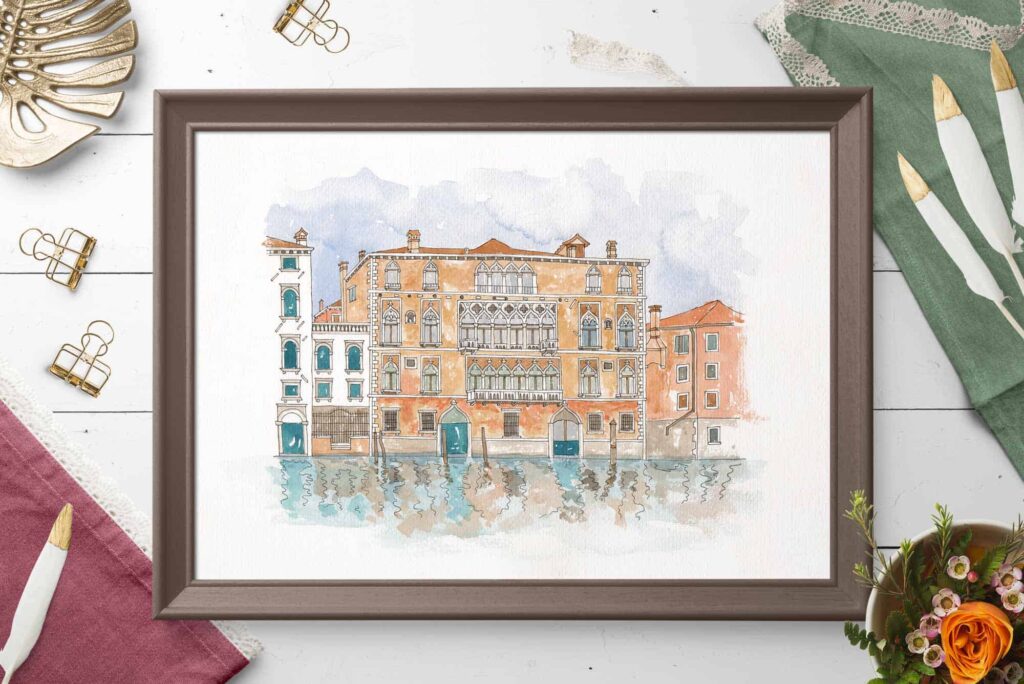
Bernardo Palace – Reproduction
Palazzo Bernardo, also known as Palazzo Giustiniani Bernardo, is a Venetian palace located in the San Polo district, not far from Campo San Polo, overlooking the Grand Canal.
The building was likely completed in 1442, when the Republic of Venice hosted the Duke of Milan, Francesco Sforza, and his wife Bianca Visconti there.
Reproduction printed on 260 gsm Modigliani ivory hammered paper.
Paper size: 13.78 × 9.84 inches.
SOLD WITHOUT FRAME.
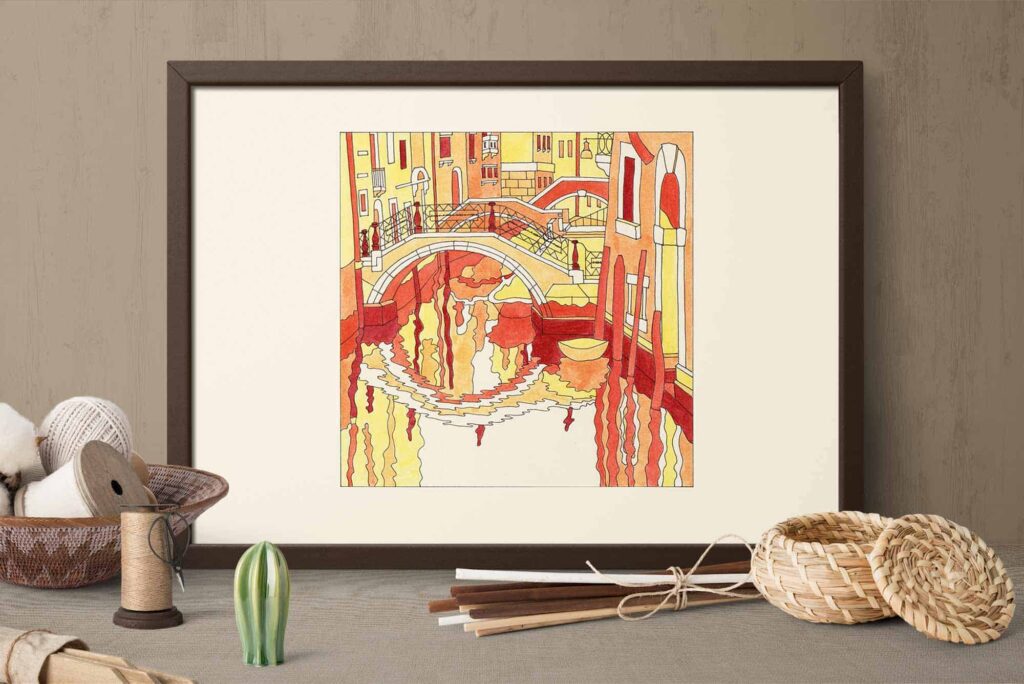
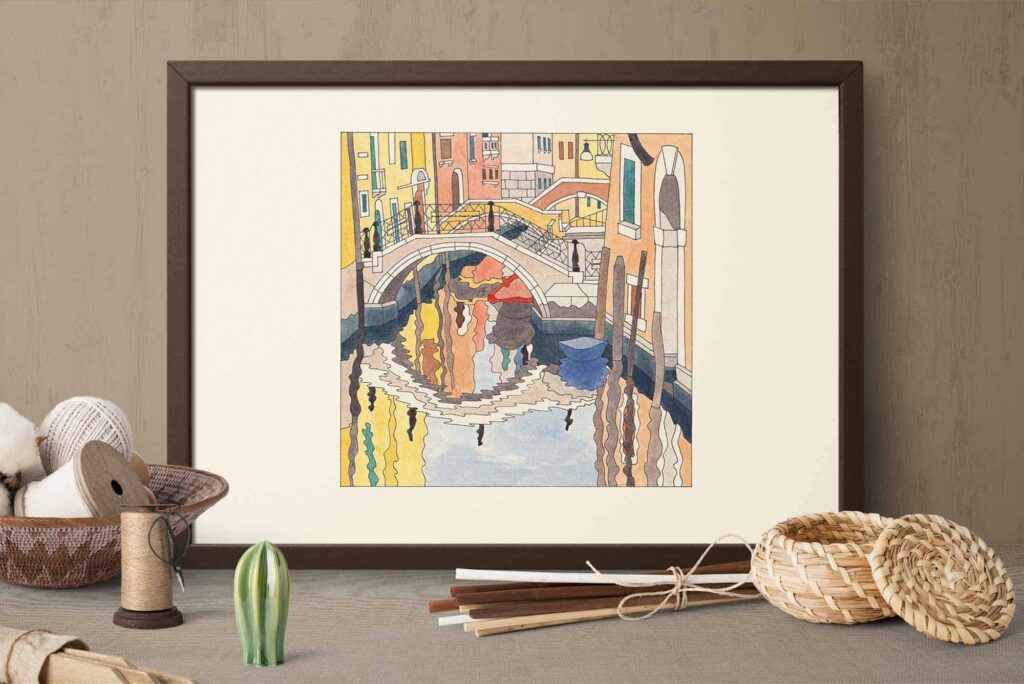
Canal crossed by three bridges
A typical Venetian landscape: a canal crossed by three bridges.
Reproduction printed on 260 gsm Modigliani ivory hammered paper.
Paper size: 13.50 × 9.69 inches
Image size: 7.60 × 7.64 inches
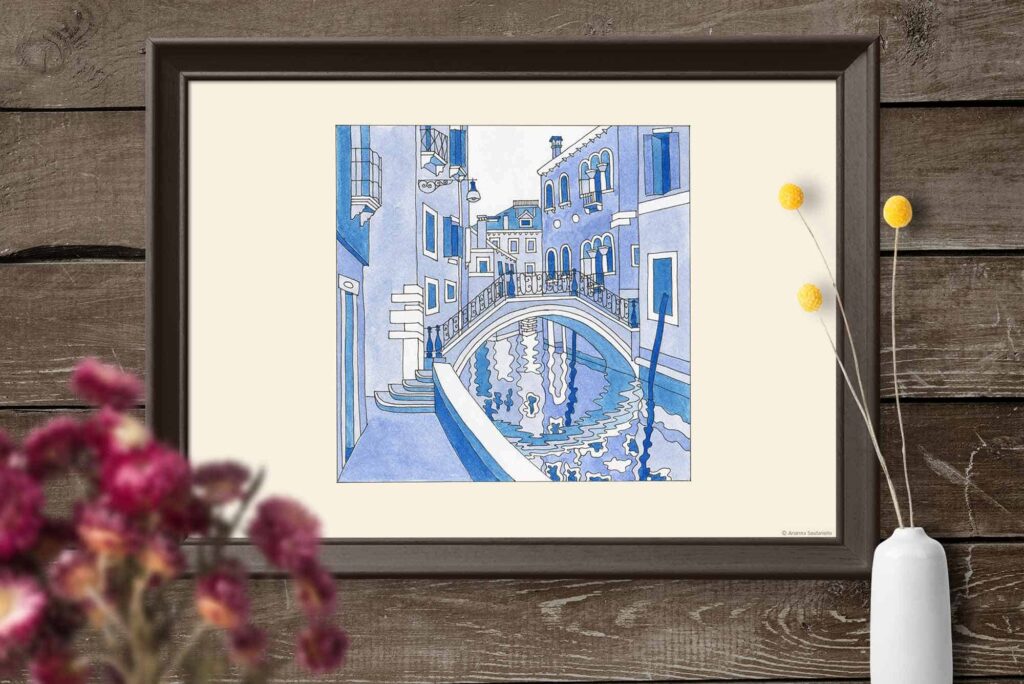
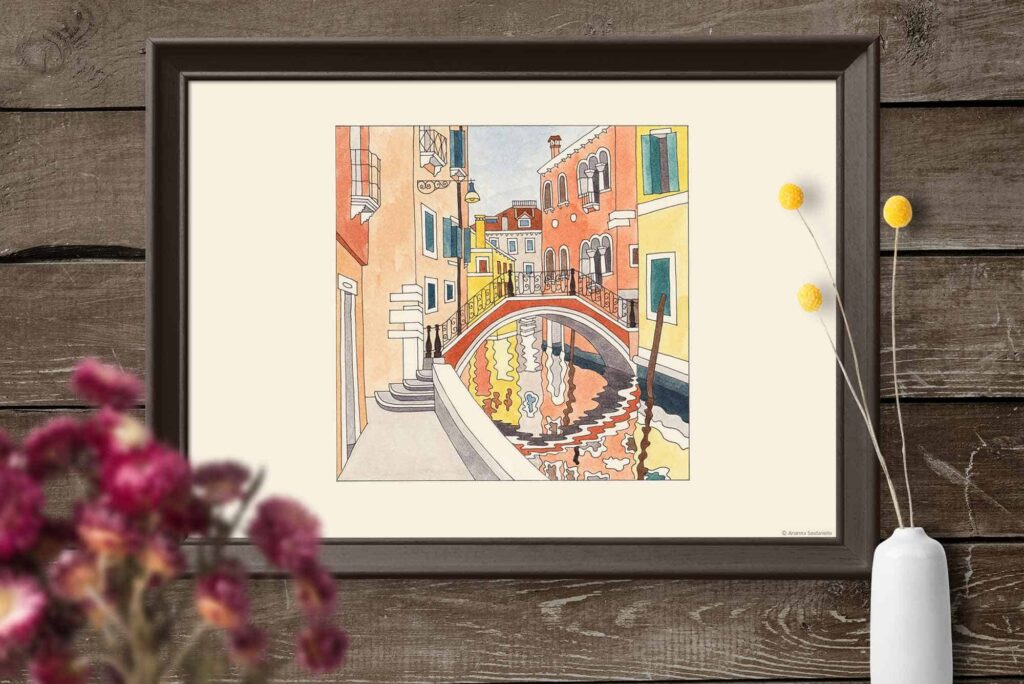
Canal, bridge and fondamenta
Drawing of a typical Venetian landscape: a canal crossed by a bridge and its fondamenta.
In Venice, the word fondamenta refers to a street running alongside a canal.
Reproduction printed on 260 gsm Modigliani hammered paper, produced by the Cordenons paper mill (PN).
Paper size: 13.35 × 9.45 inches
Image size: 7.56 × 7.60 inches
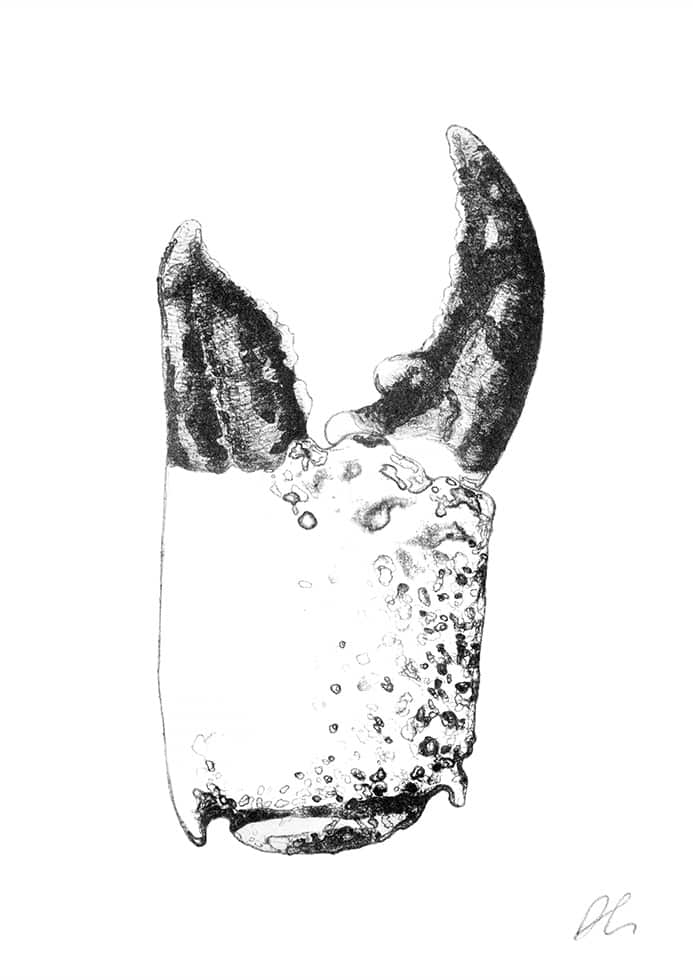
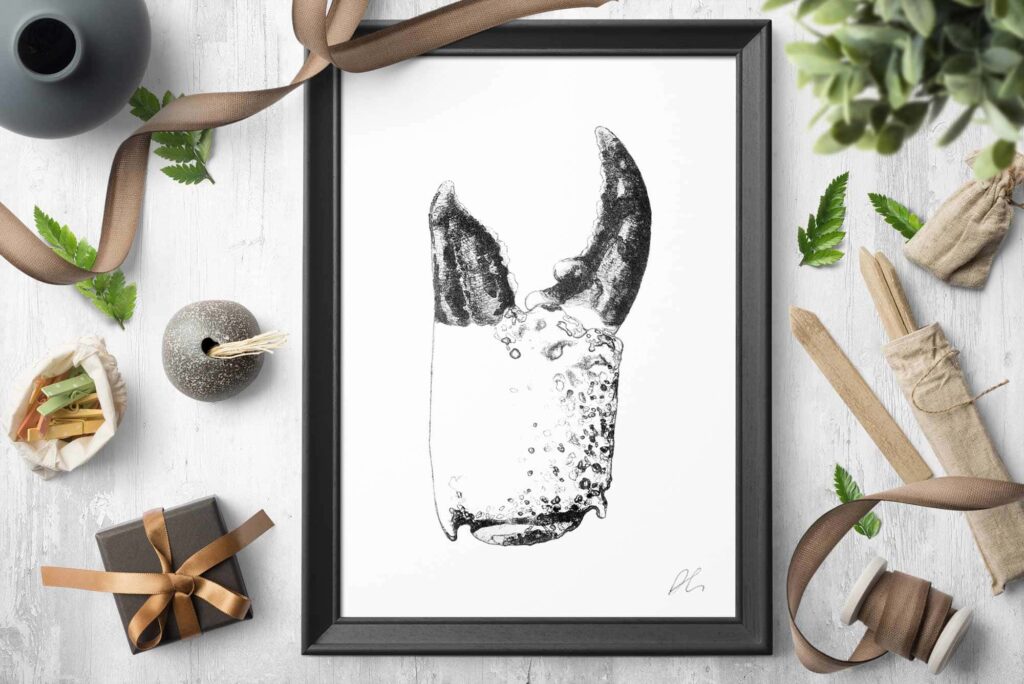
Crab Claw
Crab Claw is a reproduction of an original lithograph I created some time ago.
The original drawing on stone was created using lithographic pencil and lithographic ink. I drew the crab from life during a personal study of marine biology.
Printed in high definition on 300 gsm smooth white eco-friendly paper.
Format: A4 (8.27 × 11.69 inches)
Sold without frame.
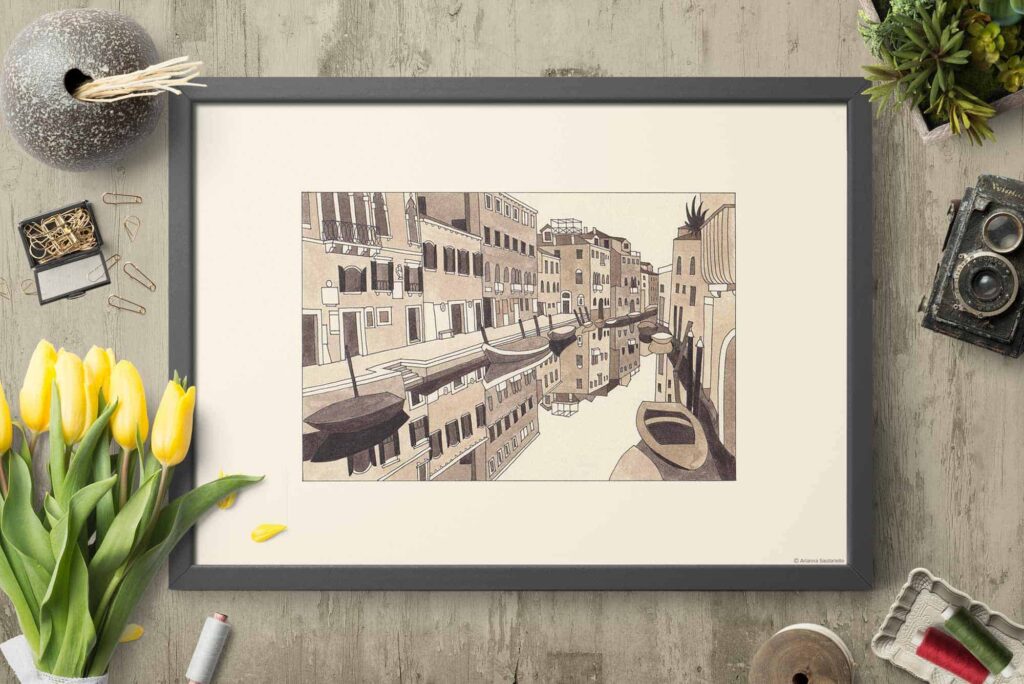
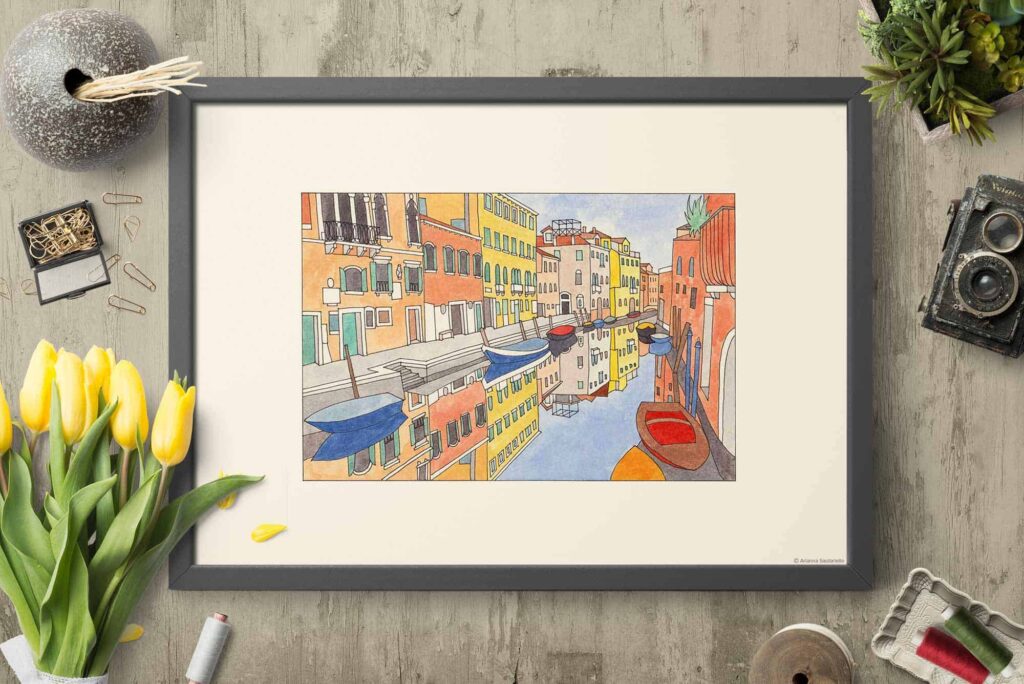
Fondamenta dei Mori
Along the route leading to Madonna dell’Orto lies the Fondamenta dei Mori, with the square of the same name, which takes its name from the three 13th-century statues of Moors wearing turbans set against the buildings of the campo. A fourth Moor, known as “Sior Antonio Rioba,” with an iron nose, stands at the foot of the bridge and, like Rome’s Pasquino, served as a voice for Venetian satire against the Republic.
Reproduction printed on 260 gsm Modigliani ivory hammered paper.
Paper size: 13.50 × 9.57 inches
Image size: 9.33 × 6.18 inches
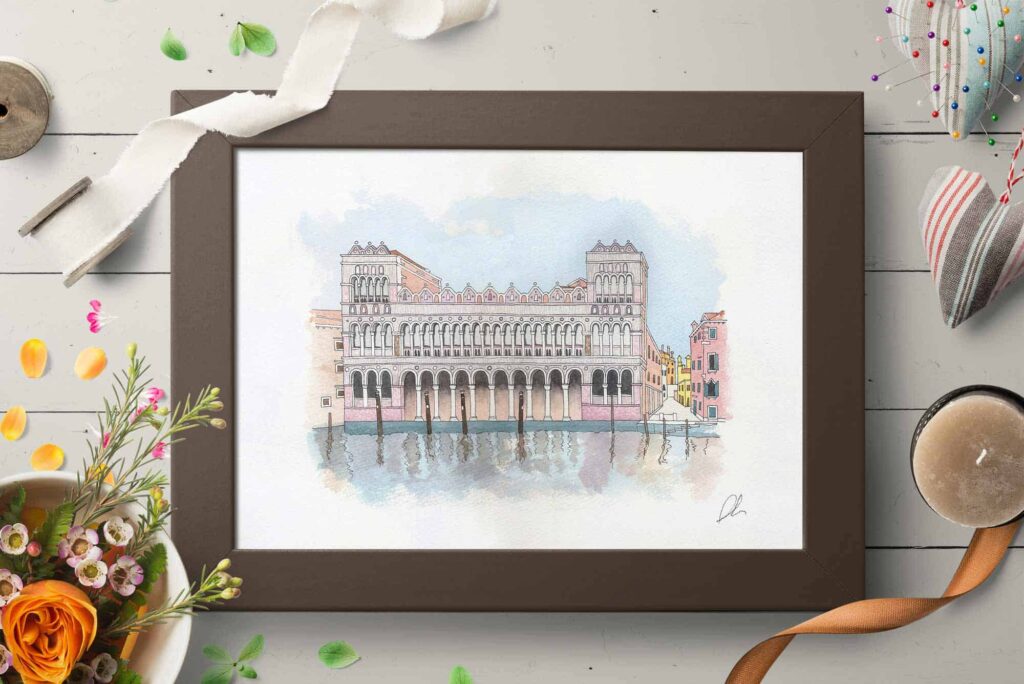
Fontego dei Turchi – Reproduction
The Fontego dei Turchi was built as a palace for the Pesaro family in the 13th century.
Its double Venetian-Byzantine style loggia reflects the purpose for which the building was created: a commercial warehouse for goods arriving from the East.
In 1381 the building was given to Nicolò d’Este, Lord of Ferrara, and later (in 1621) — after changing hands several times — it became the Fontego of the city’s Turkish merchants. From 1865 onward, it underwent extensive restoration work. It later housed the Correr Museum and, from 1923, the Natural History Museum.
(source MUVE)
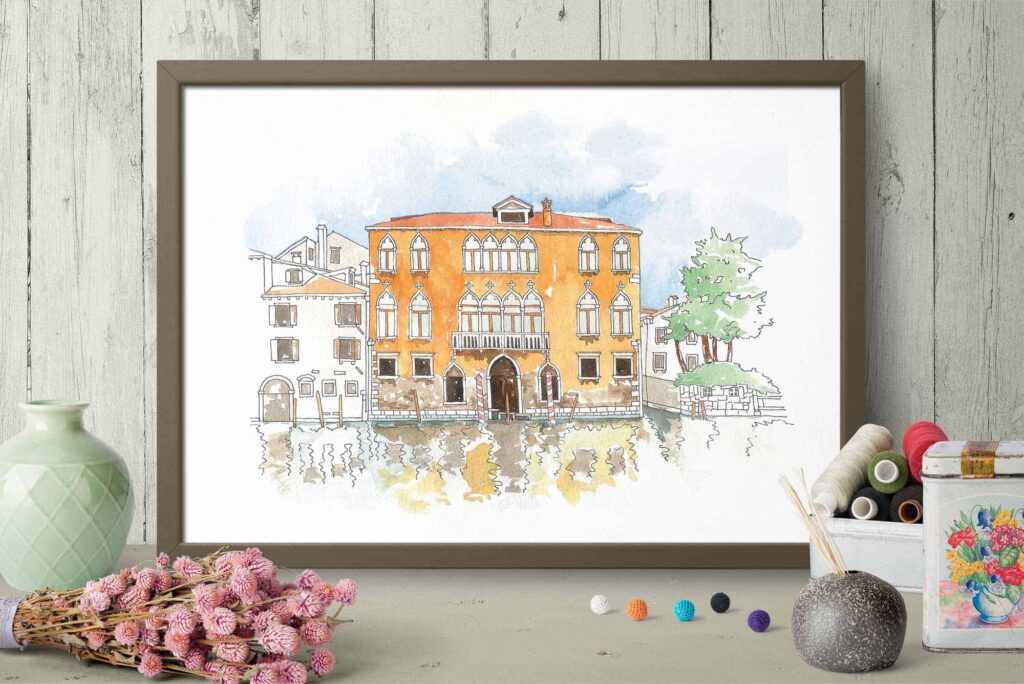
Foscarini Giovanelli Palace – Reproduction
Palazzo Giovanelli (also known as Palazzo Foscarini Giovanelli) is a palace in Venice, located in the Santa Croce district, overlooking the right side of the Grand Canal and the Rio di San Giovanni Decollato, just before the Fondaco dei Turchi.
Reproduction printed on 260 gsm Modigliani ivory hammered paper.
Paper size: 13.7 × 9.8 inches.
SOLD WITHOUT FRAME.
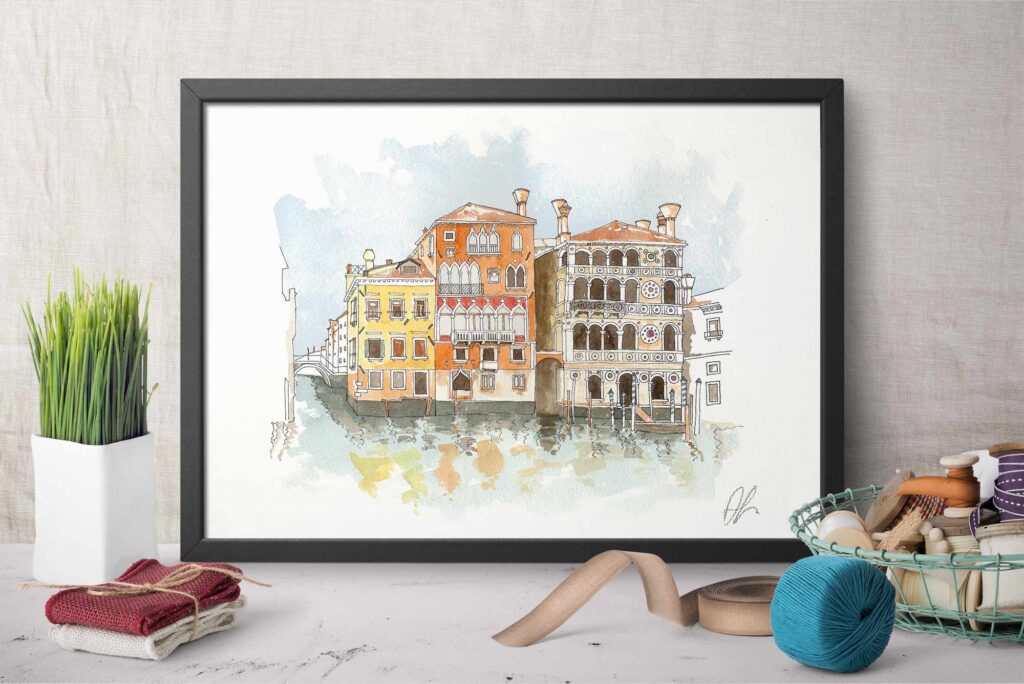
Palaces facing the Grand Canal with Palazzo Dario – Reproduction
This reproduction depicts three of the most famous Venetian palaces overlooking the Grand Canal, in the Dorsoduro district.
The first building on the left is a house on the Rio della Fornace that, in the 18th century, was a very active brick factory, or kiln.
At the center stands Palazzo Barbaro Wolkoff. Originally built according to the Venetian-Byzantine architectural style, the building was later renovated with the addition of Gothic elements during the 15th century. In 1894, Eleonora Duse lived on the top floor of the palace.
The last palace on the right is Palazzo Dario (or Ca’ Dario). The building is famous for the alleged curse said to hang over it: according to legend, its owners are destined to go bankrupt or die a violent death. The palace was commissioned from the architect Pietro Lombardo in 1479 by Giovanni Dario as a wedding gift for his daughter Marietta. The architectural beauty of Ca’ Dario contrasts with its reputation as a cursed palace—a name earned through the tragic fate shared by many of its owners.
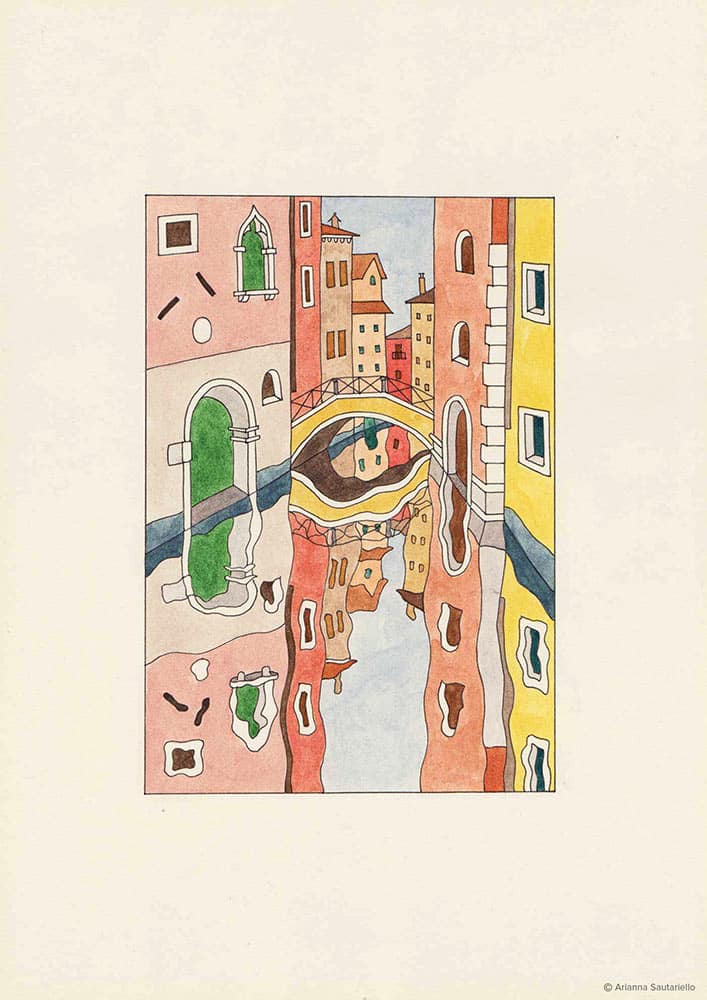
Ponte degli Scudi
Ponte degli Scudi is a bridge in the Castello district of Venice. Castello is the largest of the six districts of Venice.
If there is a district of Venice that can be described as truly “characteristic,” it is certainly Castello, with its canals, churches, and small gardens dating back to the 13th century. Here you can see clothes hanging out to dry between one window and another—this is the city you’ve always dreamed of!
Ponte degli Scudi is in the heart of Castello, near San Francesco della Vigna, just a short walk from the Arsenale.
Reproduction printed on 260 gsm Modigliani ivory hammered paper.
Paper size: 13.54 × 9.65 inches
Image size: 8.31 × 5.79 inches
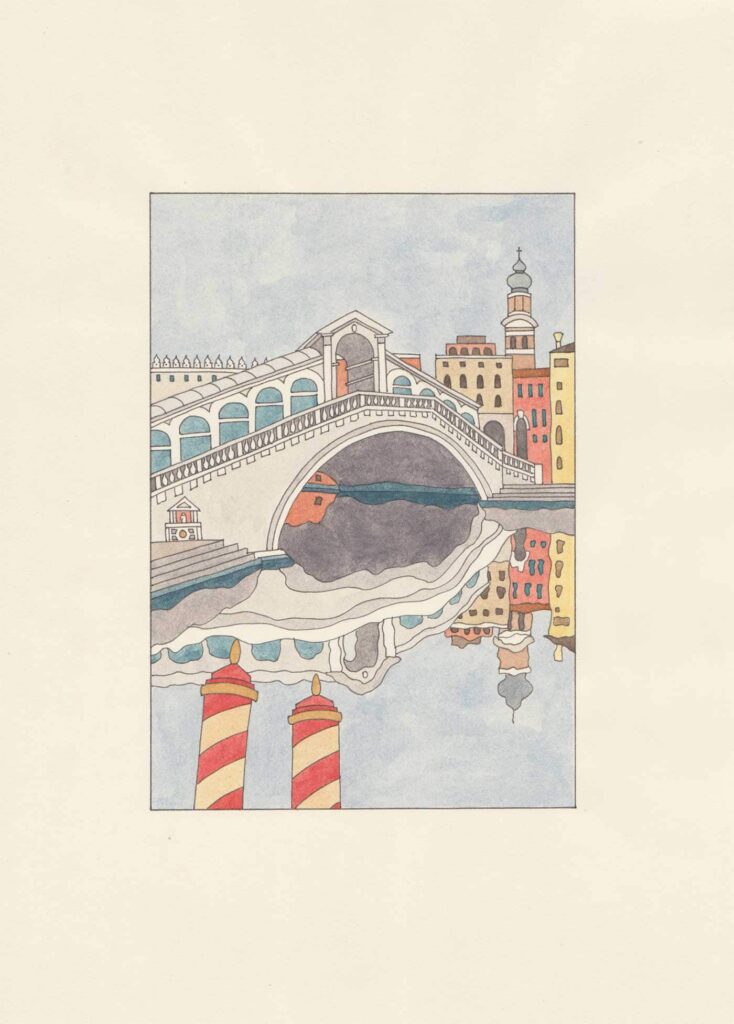
Rialto Bridge
The Rialto Bridge is one of the four bridges that span the Grand Canal in Venice. It is the oldest bridge on the canal and once marked the boundary between the San Marco and San Polo districts. It is also one of the most famous bridges in the world, as it is a symbol of Venice.
The first bridge over the Grand Canal was a pontoon bridge built in 1181. It was replaced in 1255 by a wooden bridge. During the first half of the 15th century, two rows of shops were built along the sides of the bridge. In 1444, it collapsed under the weight of a crowd watching a boat procession, and it collapsed again in 1524. The idea of rebuilding the bridge in stone was first proposed in 1503, and the current single-span stone bridge, designed by Antonio da Ponte, was finally completed in 1591.
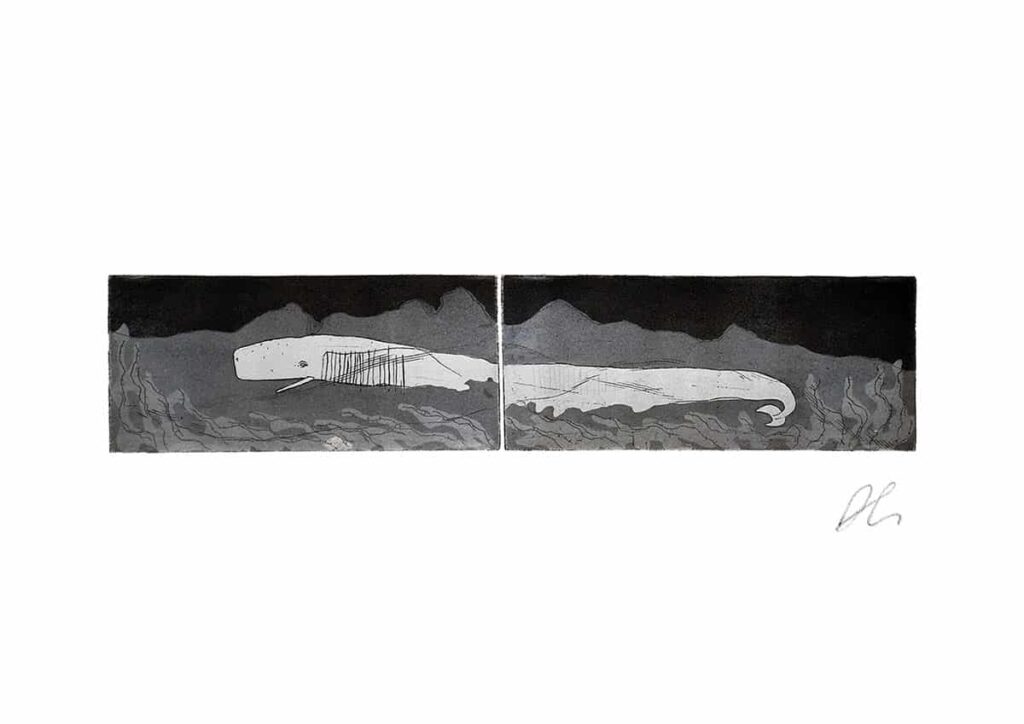
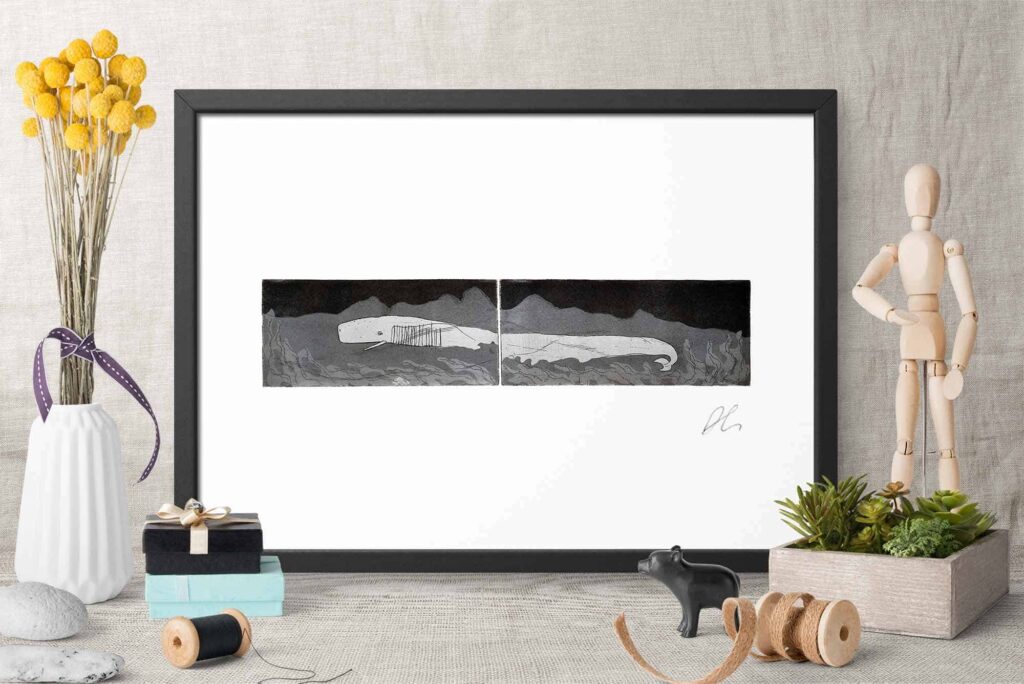
Whale
Whale is a reproduction of an original intaglio print I created during a personal study of marine biology.
The print is part of a series of four works included in my artist’s book Aqua.
The original print was made using etching and aquatint techniques.