

No products in the cart.
Linocuts
Linocuts created by hand-carving linoleum plates and printed manually. The artisanal process enhances the mark and the material, giving life to essential images that are always slightly different from one another.
Marks carved and printed by hand, one by one.
Showing 1–12 of 13 results
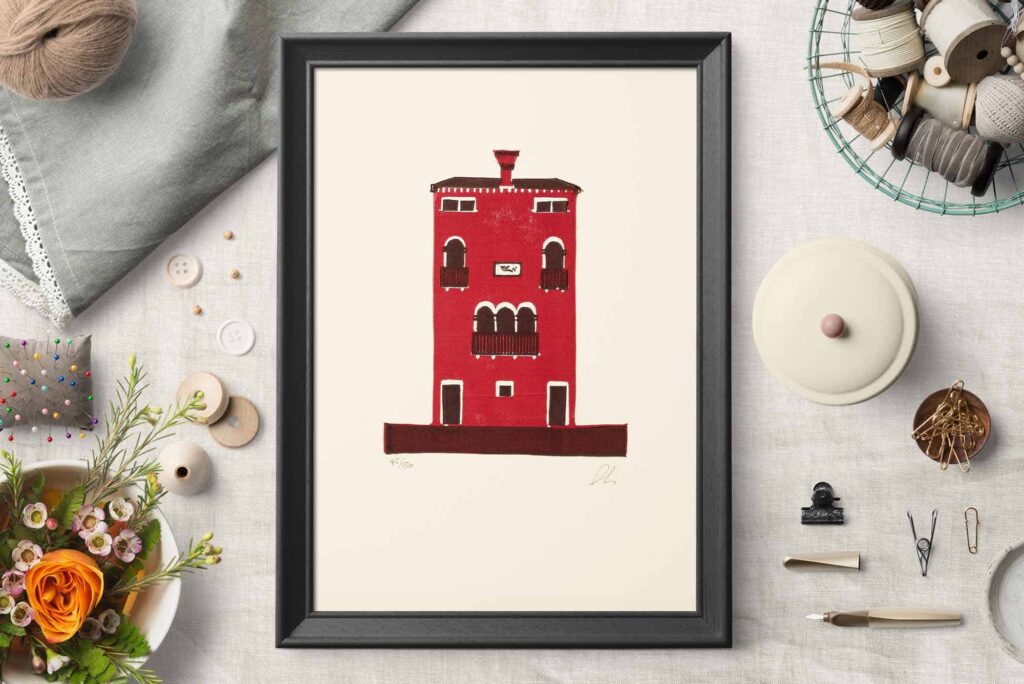
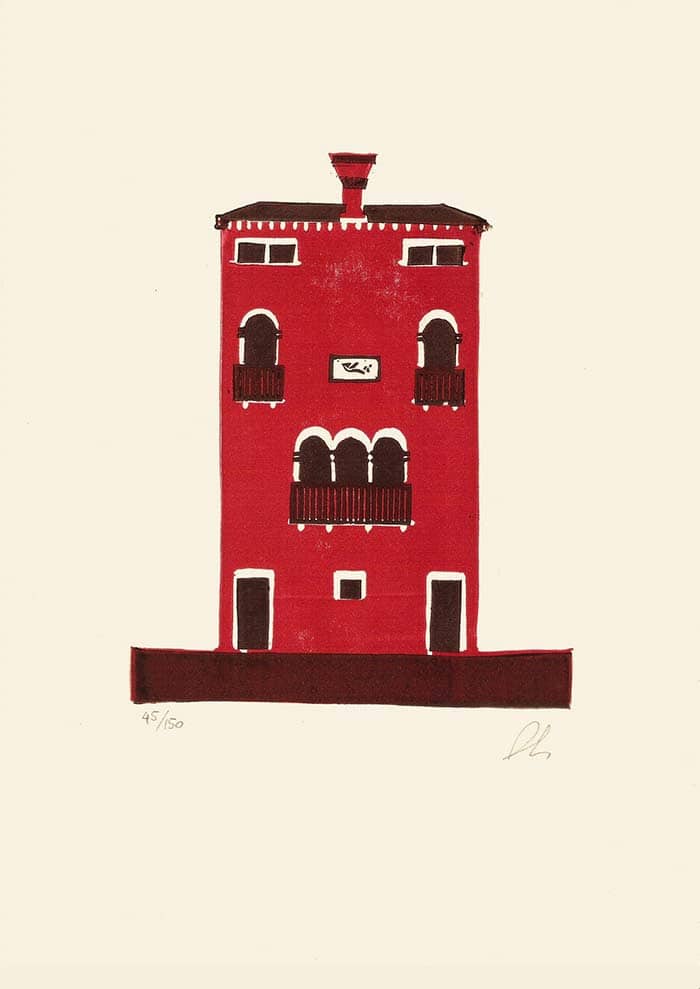
Calle dei Furlani Palace
Palace in Calle dei Furlani, Venice (San Giorgio degli Schiavoni)
A characteristic 16th-century Venetian house with windows placed symmetrically on either side of the three-light window on the first floor. The original interior layout has been preserved. There are two staircases: one for the first floor and another for the two upper floors, which form a single apartment.
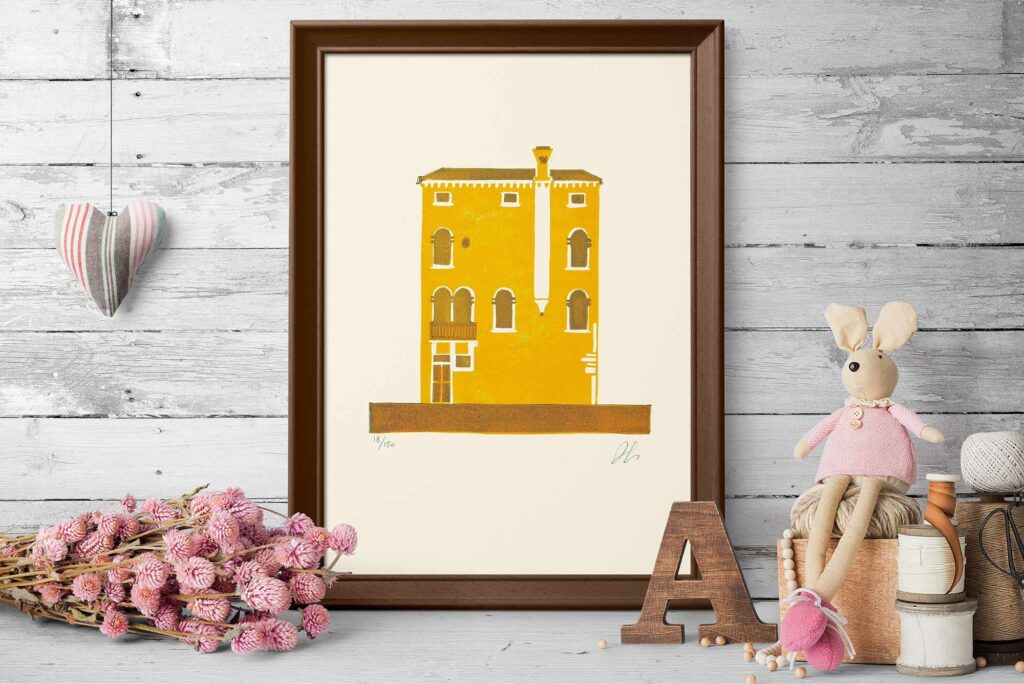
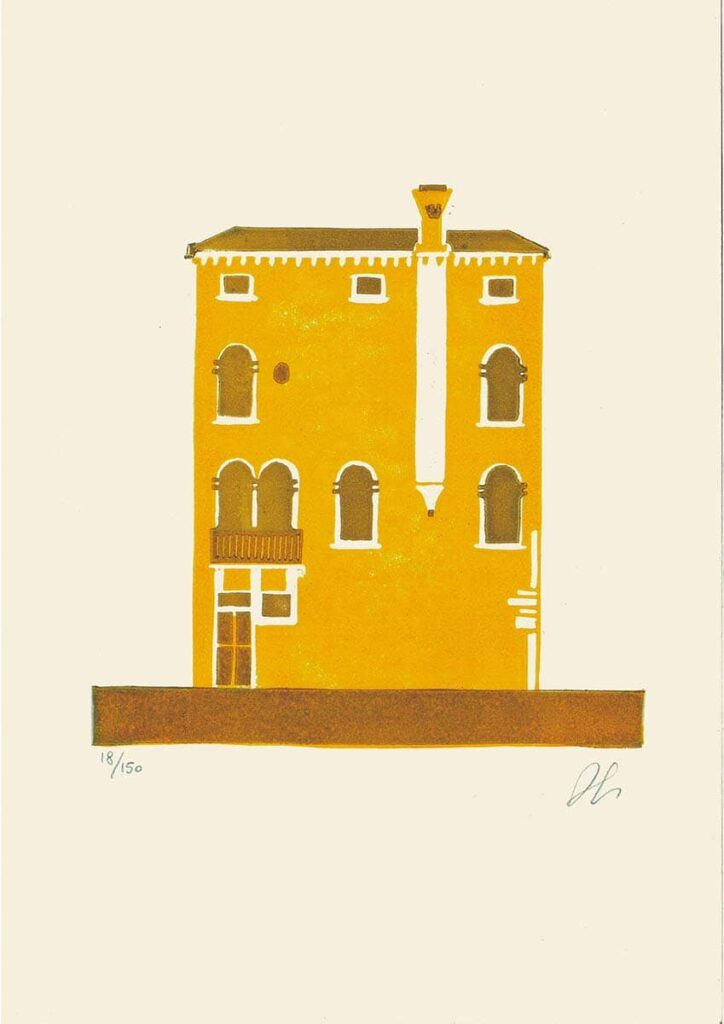
Fondamenta Ca’ Balà
A 16th-century house with a large hall on the first floor that served both as a living room and a passageway onto which the other rooms open. The windows along the edges of the walls are balanced by the vertical line of the chimney. The house was once frescoed, and some traces are still visible today.
“Fondamenta” means “foundation” in Italian, and describes the pedestrian embankment along a canal. It was (and still is today) a very busy area for loading and unloading boats, much like a dock.
This Fondamenta is very close to the Church of Santa Maria della Salute, one of the most famous churches in Venice.
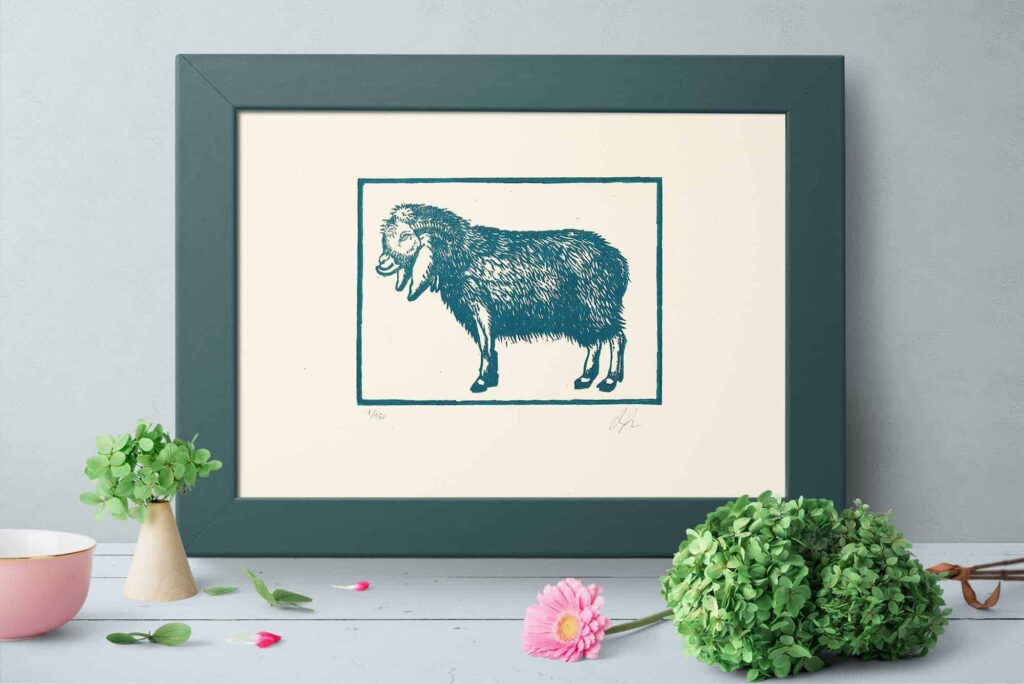
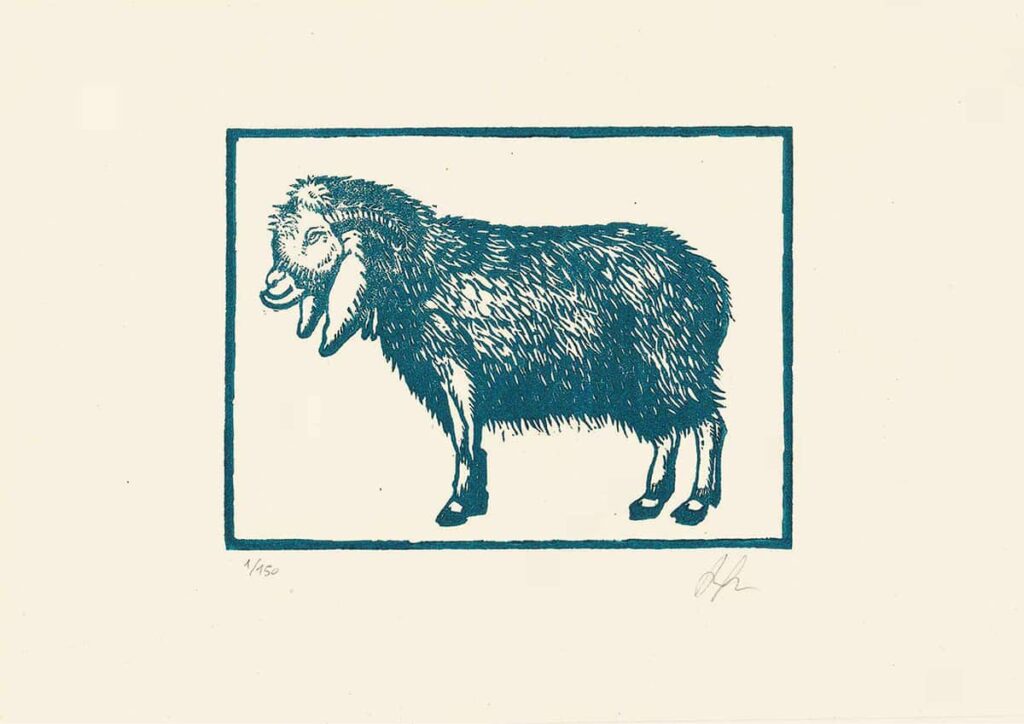
Goat
The goat is taken from a woodcut illustration from Historiae animalium by Conrad Gesner, an encyclopedic work — “a Renaissance inventory of zoology” — published in Zurich between 1551 and 1558, which sought to build a connection between ancient knowledge of the animal world and modern science.
Linocut print made with a vertical press on 200 gsm Favini Rismacqua ivory paper using intaglio ink.
Paper size: 11.69 × 8.27 inches (A4)
Image size: 4.72 × 6.30 inches
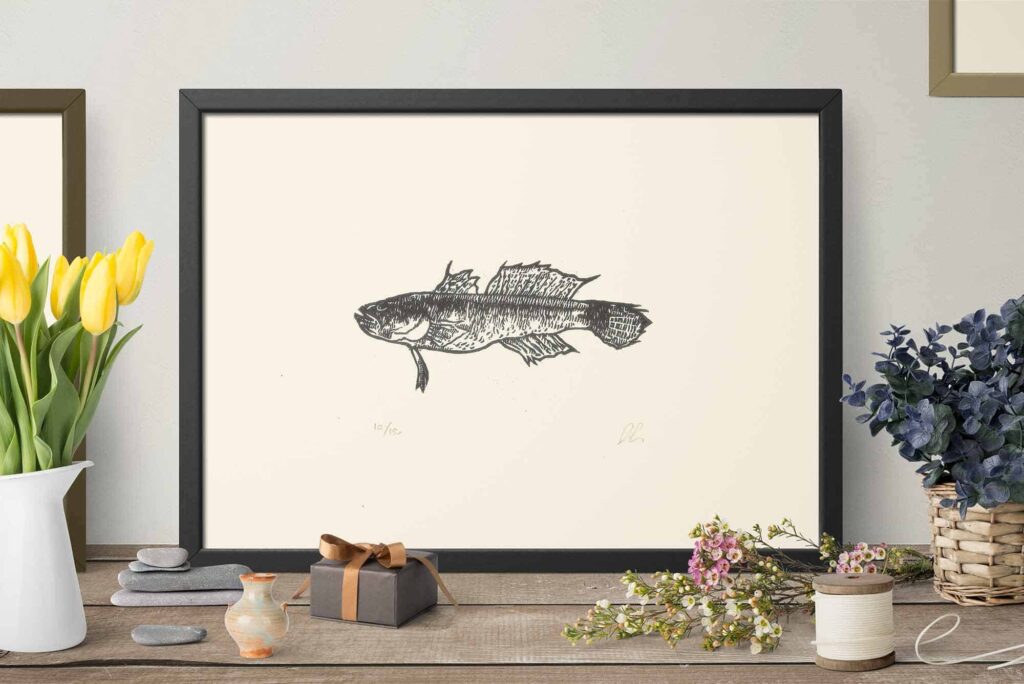
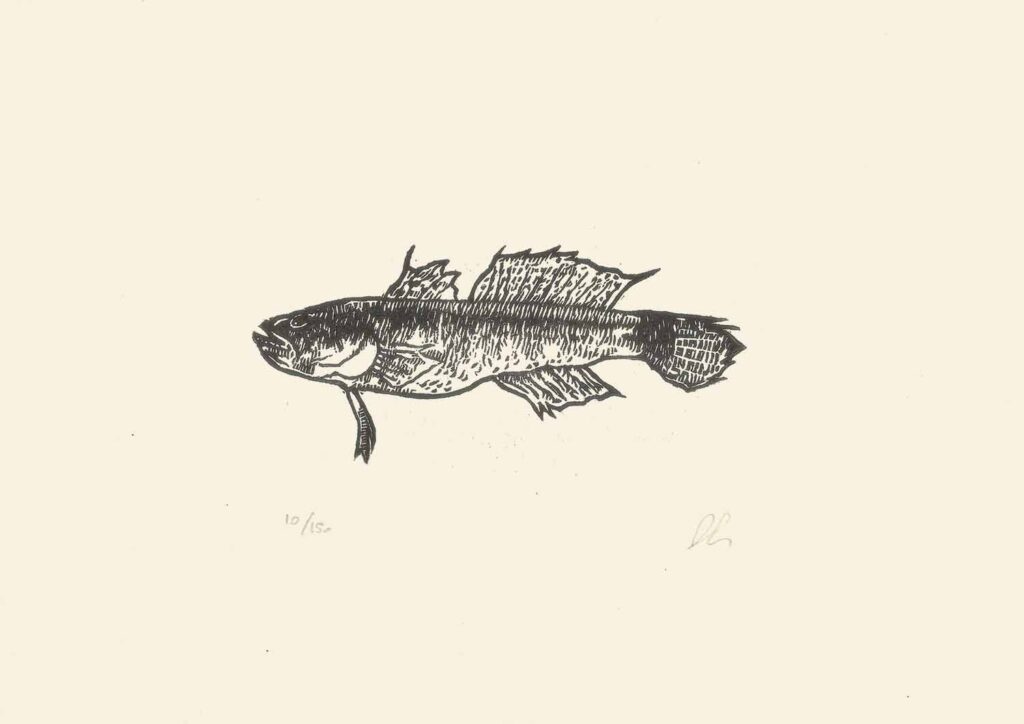
Goby fish
The goby (called gò in Venetian dialect) is a type of fish that lives mainly in lagoon areas or where the seabed is very muddy: in the past it was used as a trade commodity, while today it appears in some Venetian recipes, particularly in risotto di gò.
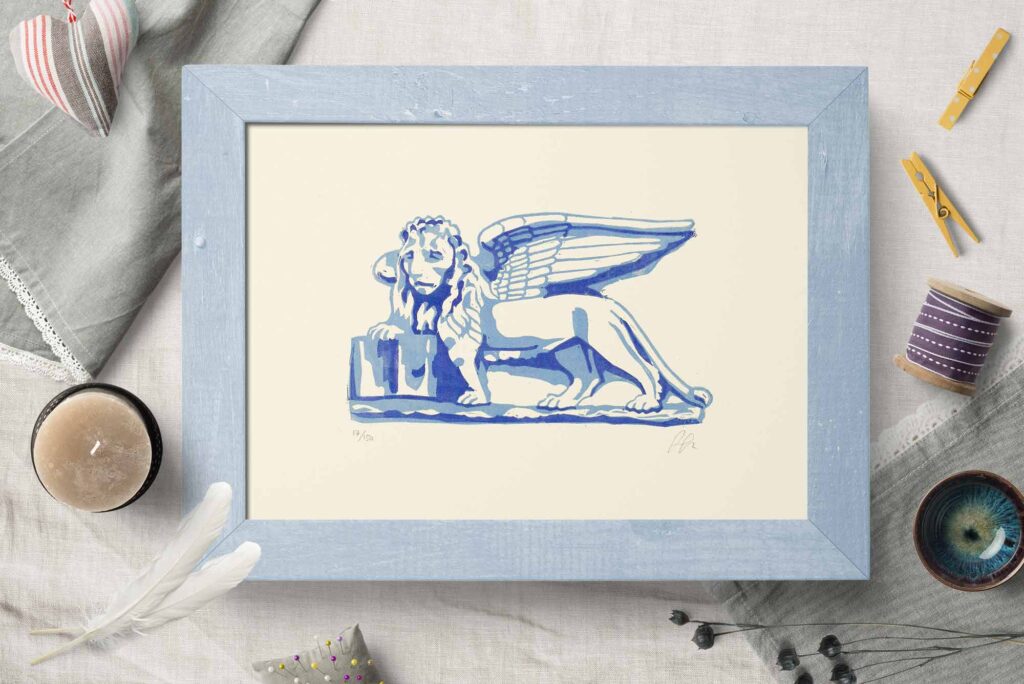
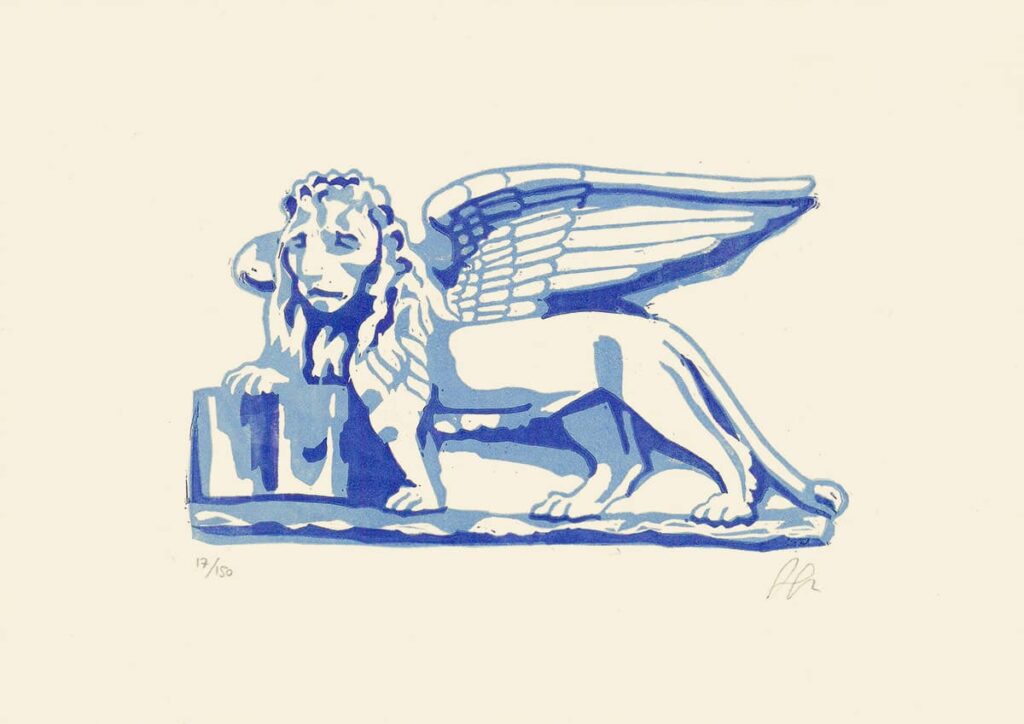
Lion of Saint Mark
The Lion of Saint Mark, representing the Evangelist Saint Mark depicted as a winged lion, is the symbol of the city of Venice and formerly of the Republic of Venice. It also appears both on merchant ships and on the naval military flags of the Italian Republic.
Saint Mark, represented as a lion, is a typical Christian iconography derived from the prophetic visions contained in Revelation 4:7. The lion is one of the four living creatures described in the book.
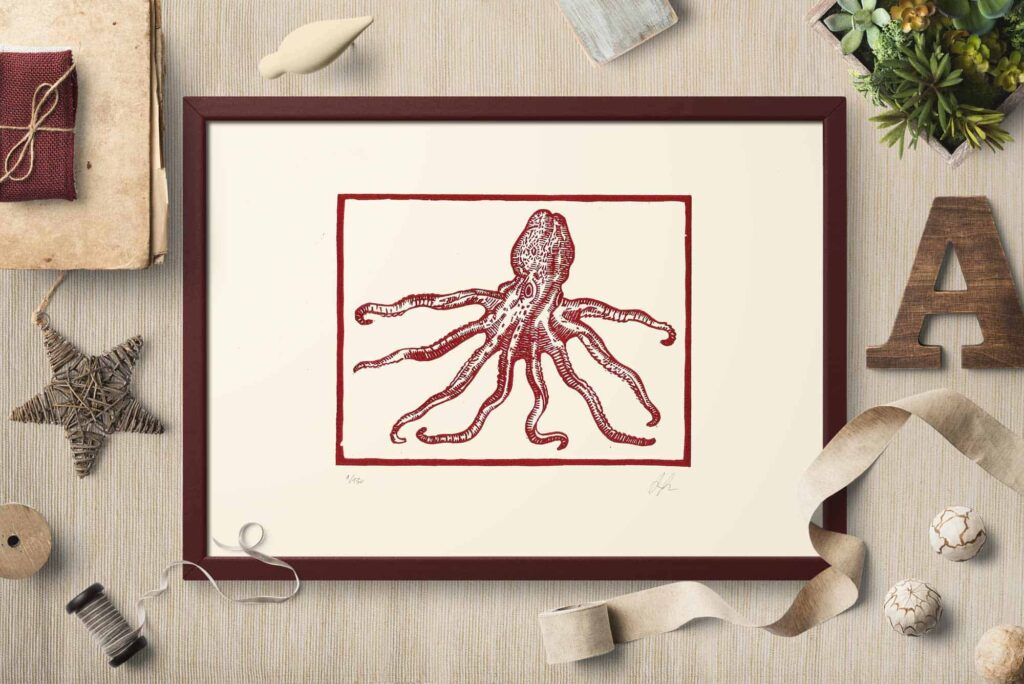
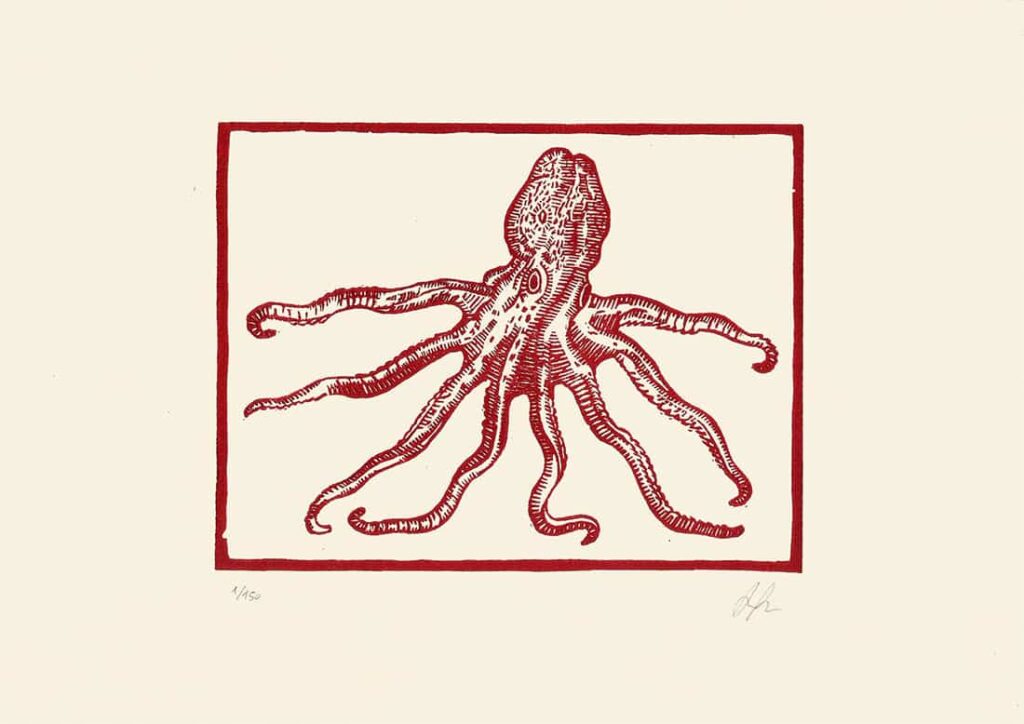
Octopus
The octopus is taken from a woodcut illustration from Historiae animalium by Conrad Gesner, an encyclopedic work — “a Renaissance inventory of zoology” — published in Zurich between 1551 and 1558, which sought to build a connection between ancient knowledge of the animal world and modern science.
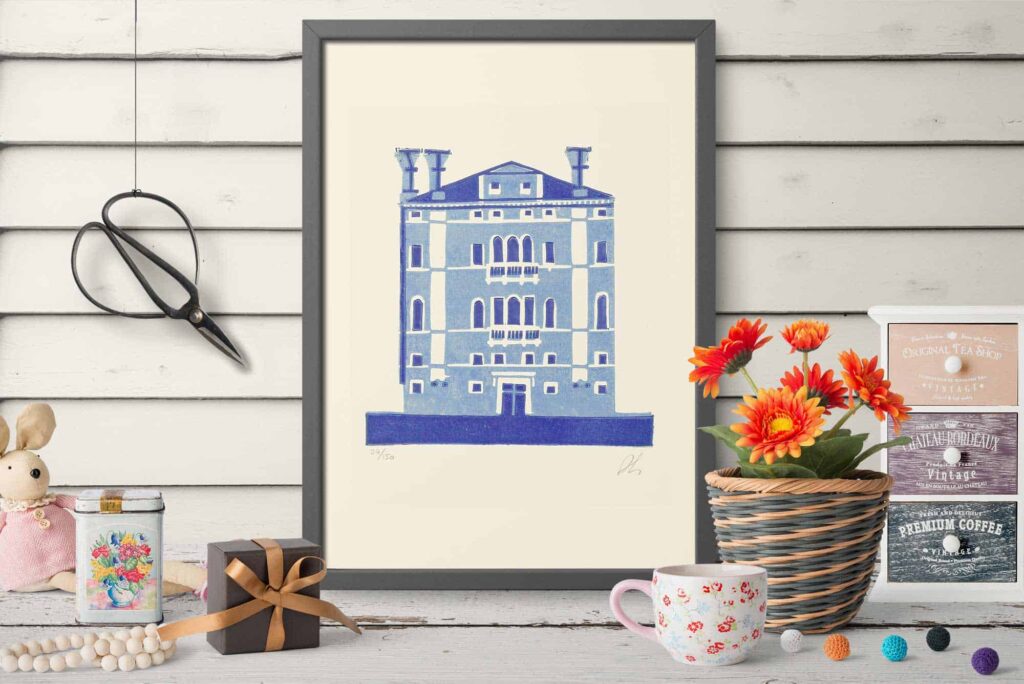
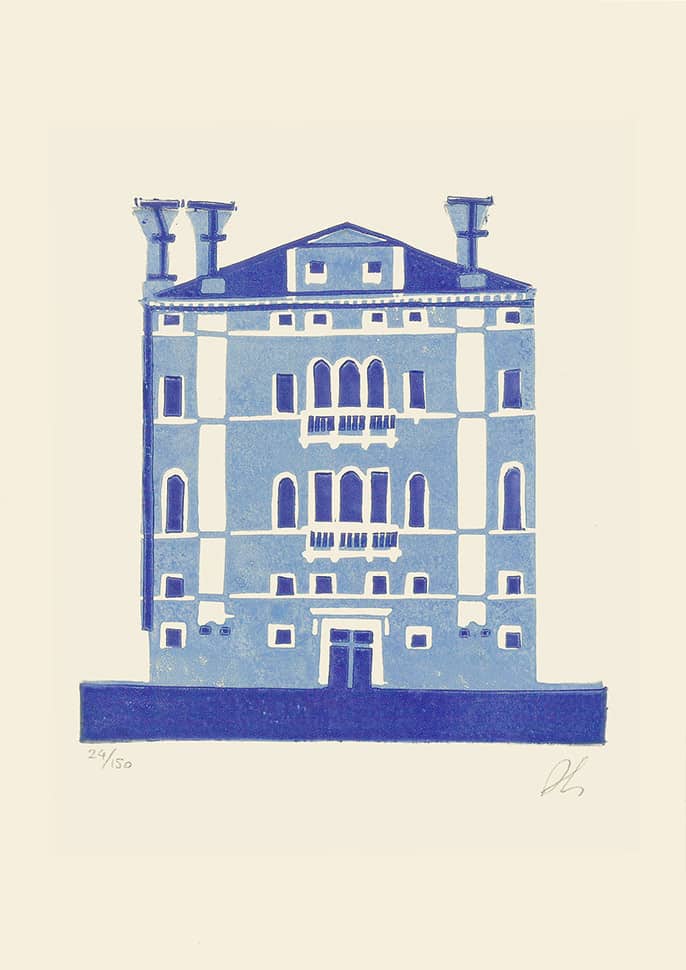
Palazzetto Dandolo
Palazzetto Dandolo on Fondamenta Dandolo (Campo Santi Giovanni e Paolo)
A small, well-preserved 17th-century palace, both in terms of its façade and interior. The two chimneys are part of the symmetrical perspective typical of minor Venetian architecture. This building appears in Bernardo Bellotto’s painting The Rio dei Mendicanti.
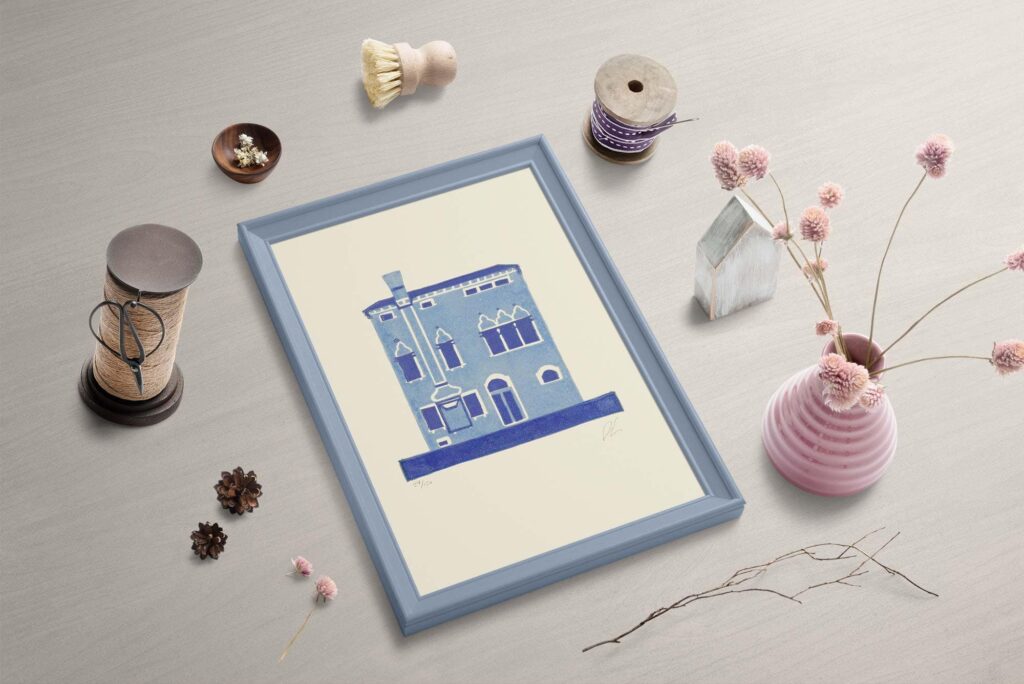
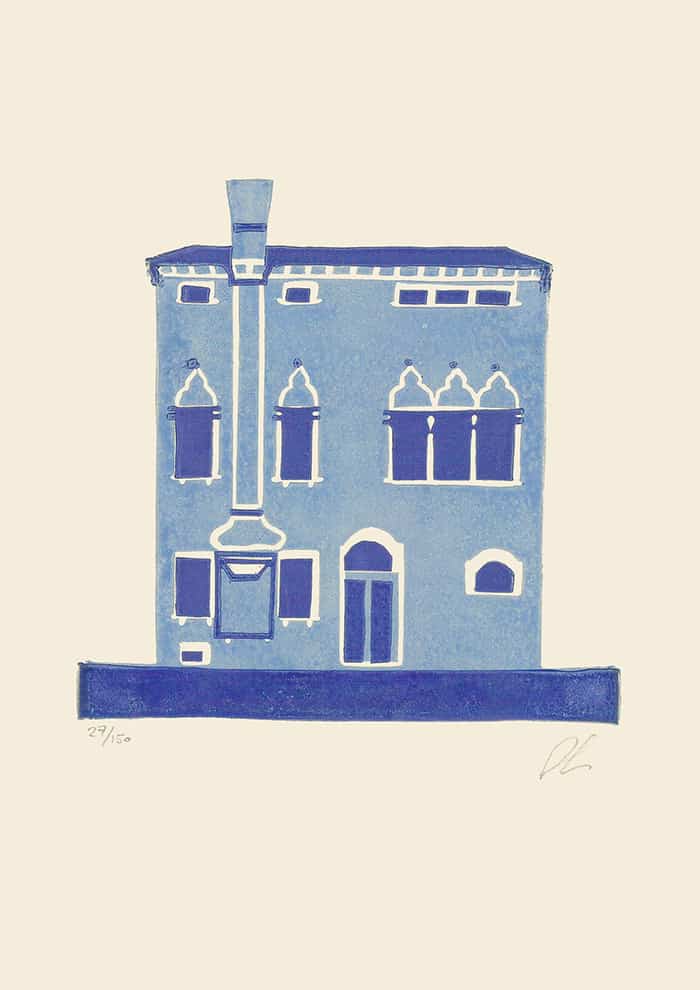
Piscina Venier Palace
Palace in Piscina Venier (Sant’Agnese), in the Dorsoduro district, Venice
A small 15th-century palace, typical of Venetian architecture of the period: the spacing between the windows is irregular, and the ground-floor windows are independent from those on the upper floors; the entrance and the ground-floor windows are arranged around a large and elegant chimney.
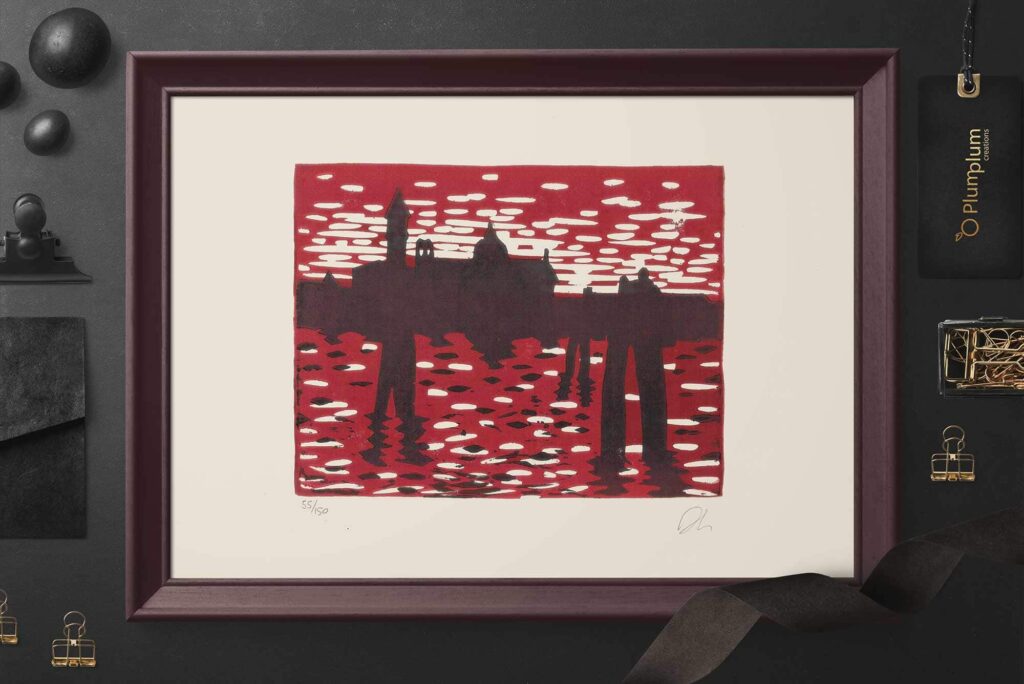
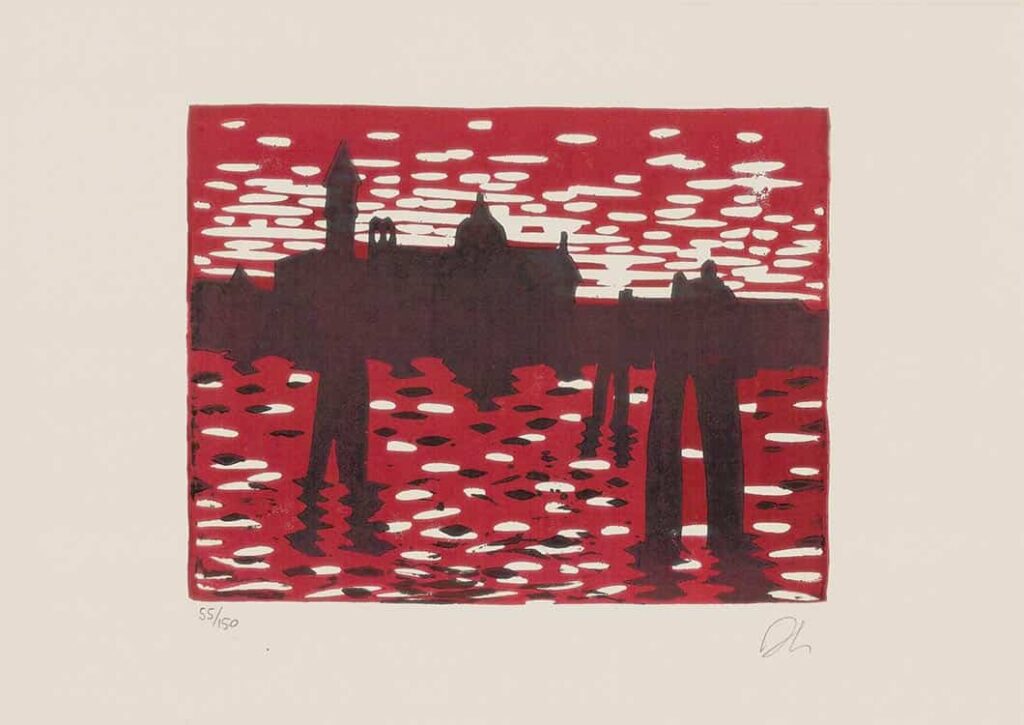
Redentore Skyline
The Church of the Redentore is a 16th-century church designed by the Italian architect Andrea Palladio, located on the island of Giudecca, directly facing the Zattere and the Giudecca Canal, and it was built as a votive church to thank God for delivering the city from a severe plague epidemic.
“Redentore Skyline” is a linocut print made with a vertical press on 200 gsm Favini Rismacqua ivory paper using intaglio ink.
Paper size: 11.69 × 8.27 inches (A4)
Image size: 7.32 × 5.71 inches
SOLD WITHOUT FRAME
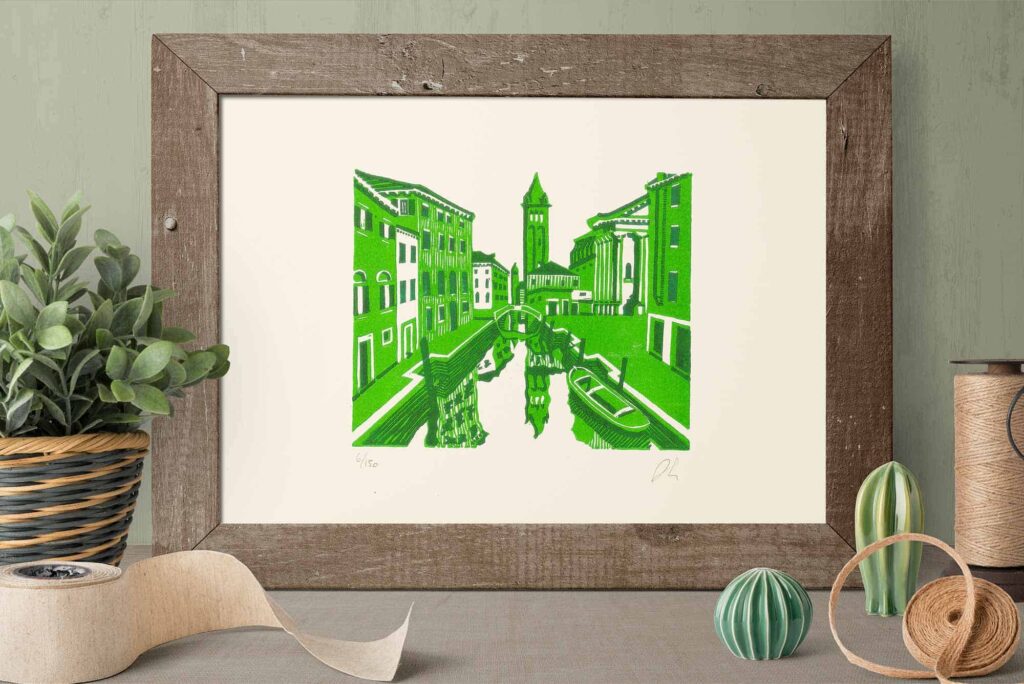
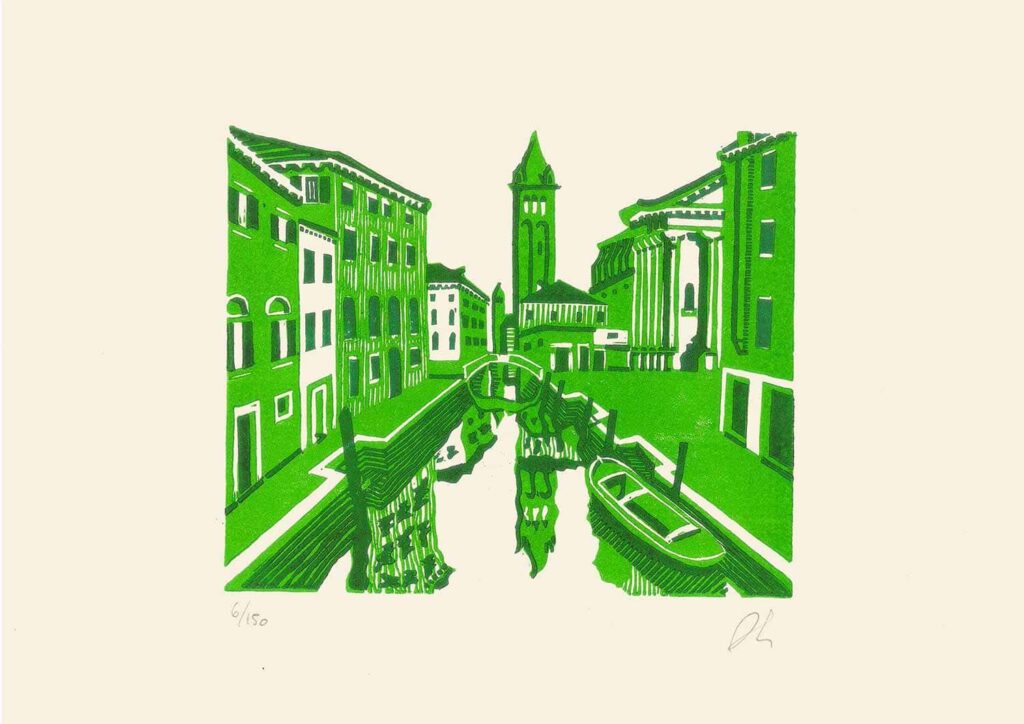
Rio di San Barnaba
The Rio di San Barnaba is located in the Dorsoduro district and takes its name from the Church and Campo San Barnaba overlooking the canal.
The print shows the stretch of canal from Ponte dei Pugni toward the Grand Canal: on the right, one can glimpse Campo San Barnaba facing the canal and which — as a small curiosity — was the setting for several famous films, including Indiana Jones and the Last Crusade starring Harrison Ford and Summertime with Katharine Hepburn (a film that shows a beautiful Venice in 1955).
Another typical feature of the Rio di San Barnaba is the presence of a beautiful barge (visible on the right in the print) that sells fruit and vegetables during the day.
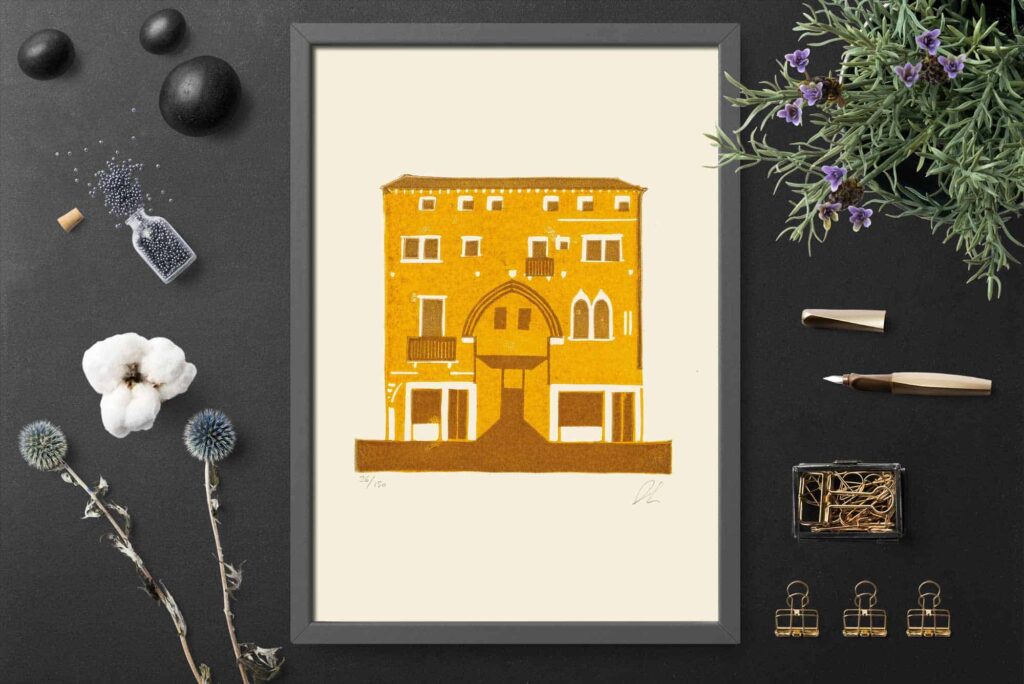
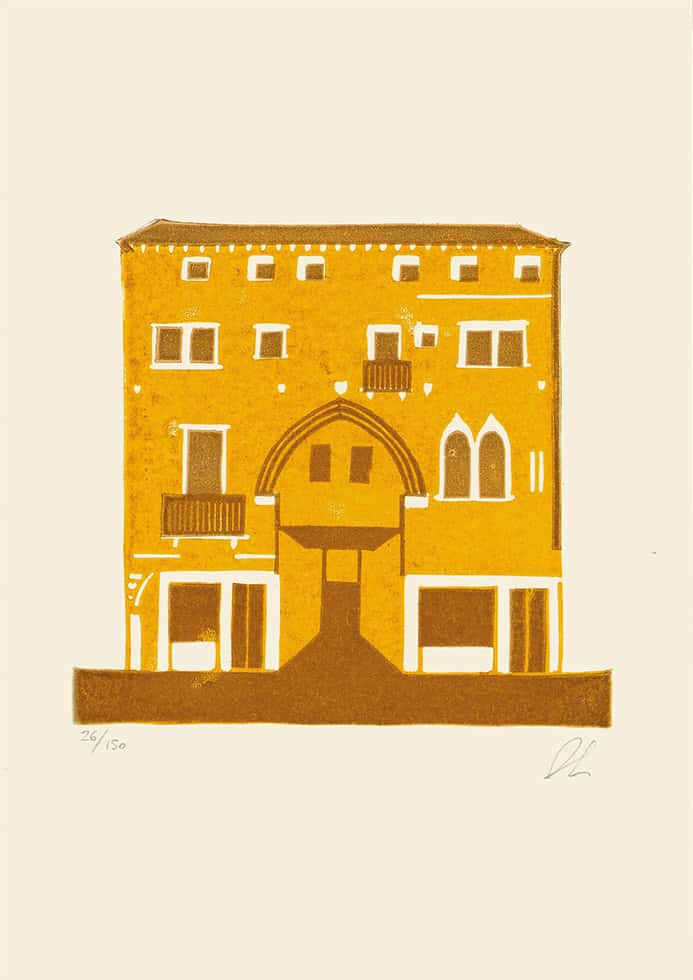
Salizada San Lio Palace
A small 13th-century palace located on Salizada San Lio.
Salizada means “paved,” and these streets were among the most important in Venice — so when only a few Venetian streets were paved with bricks, these were the first to be paved with the more expensive stone paving that can now be seen almost everywhere.
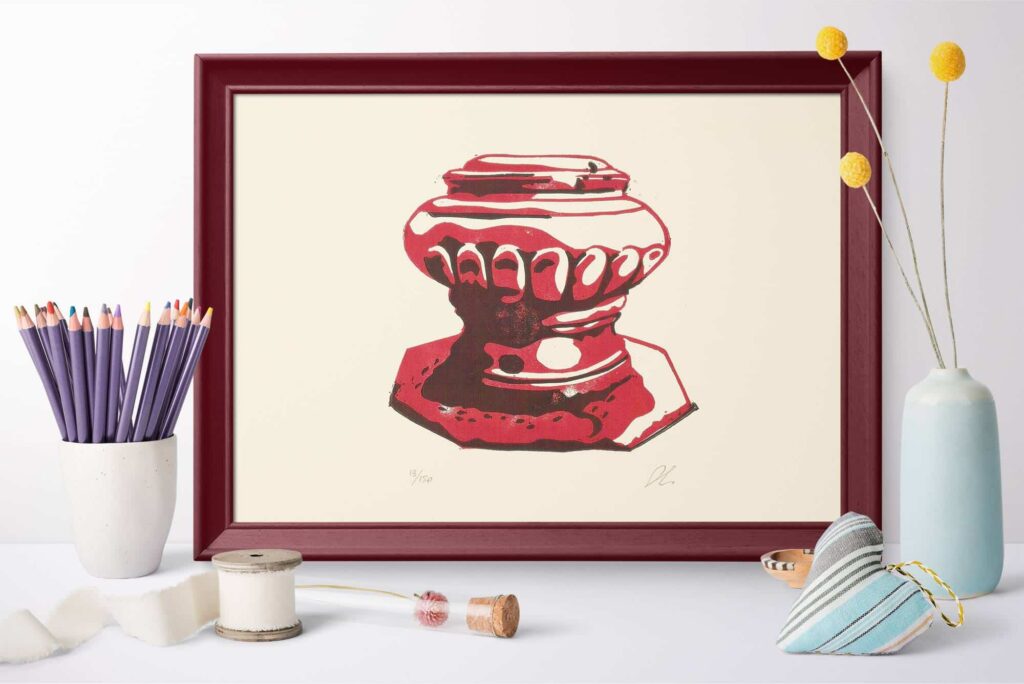
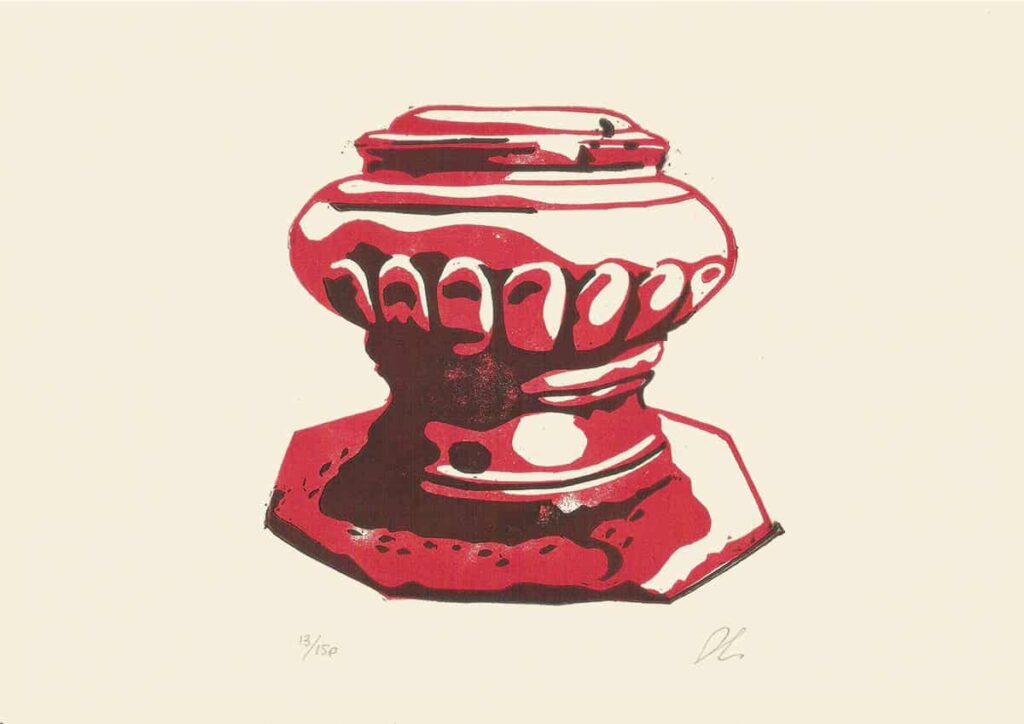
Venetian wellhead
The Venetian well is an architectural structure that was used in the city of Venice in past centuries for the supply of drinking water.
Today, the more than 600 surviving Venetian wells constitute an ornamental yet essential element of Venetian urban design, contributing fundamentally to its uniqueness and character.
The term “vera da pozzo” has been in use since the 11th century. Being located at the center of many Venetian squares, they were often places of socialization and interaction among Venetians. The typical well is adorned with inscriptions and sculptures of saints or family coats of arms.