

No products in the cart.
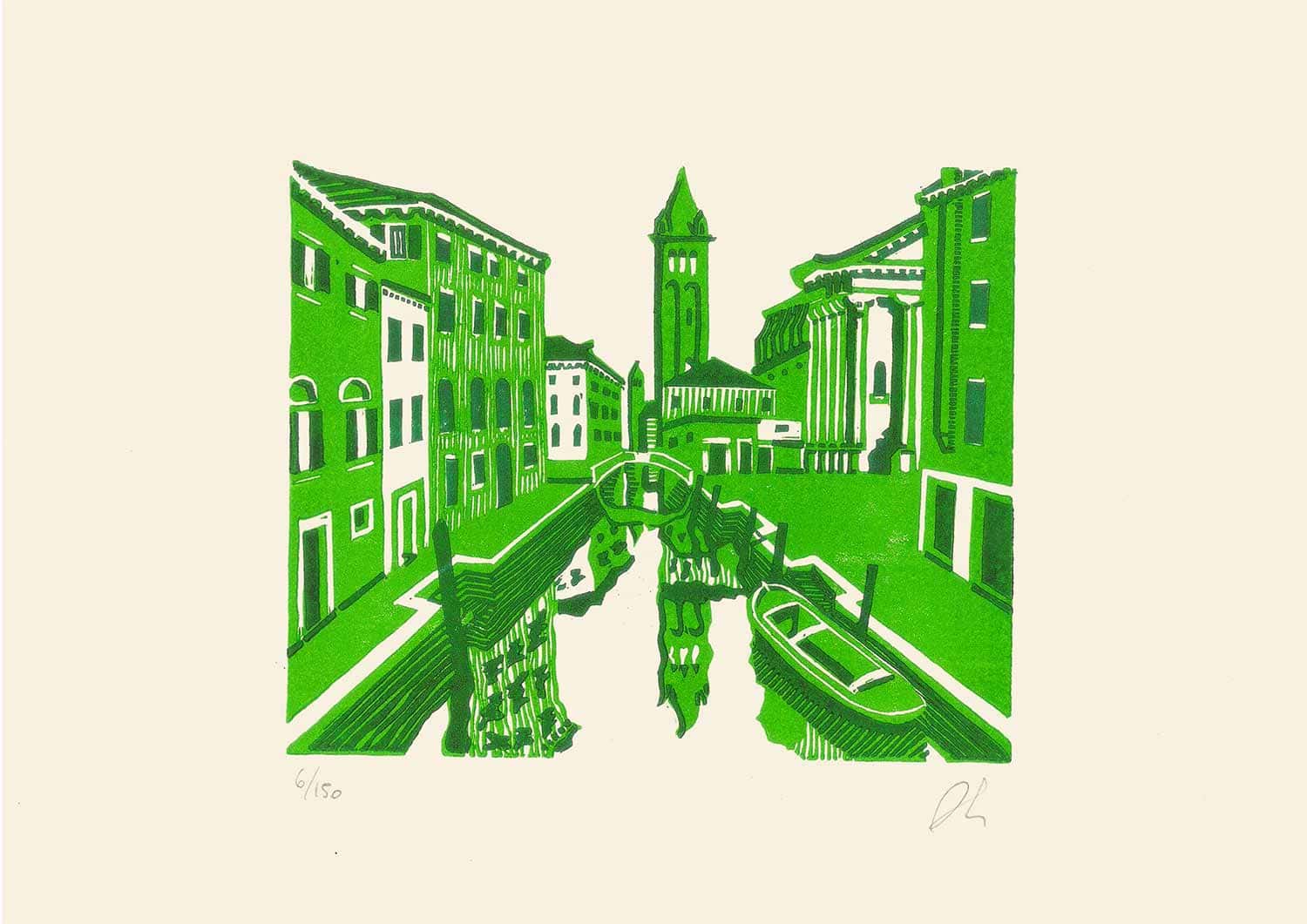
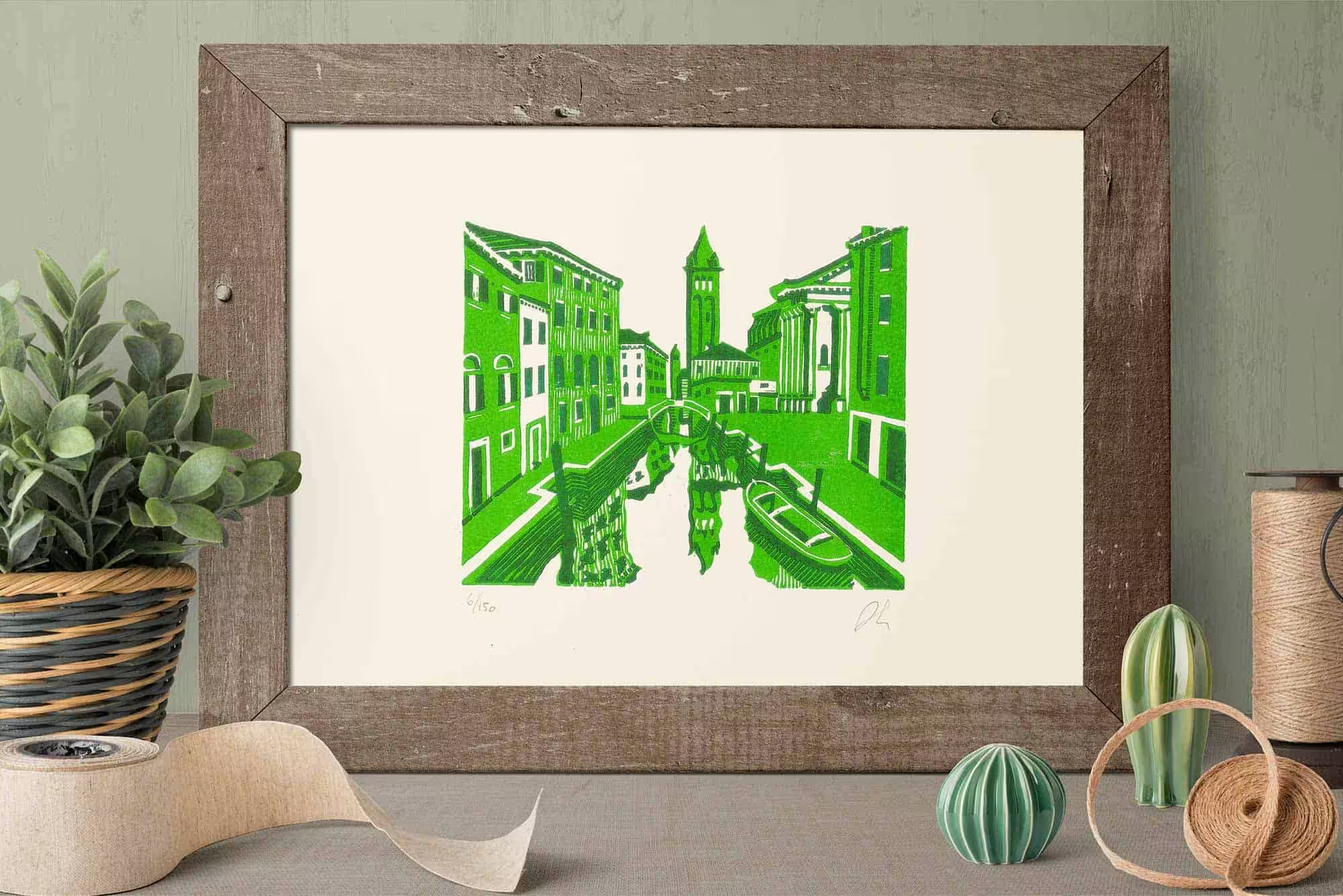
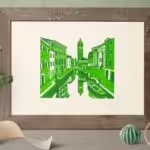
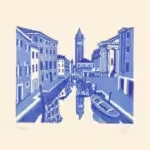
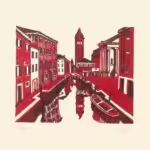
Rio di San Barnaba
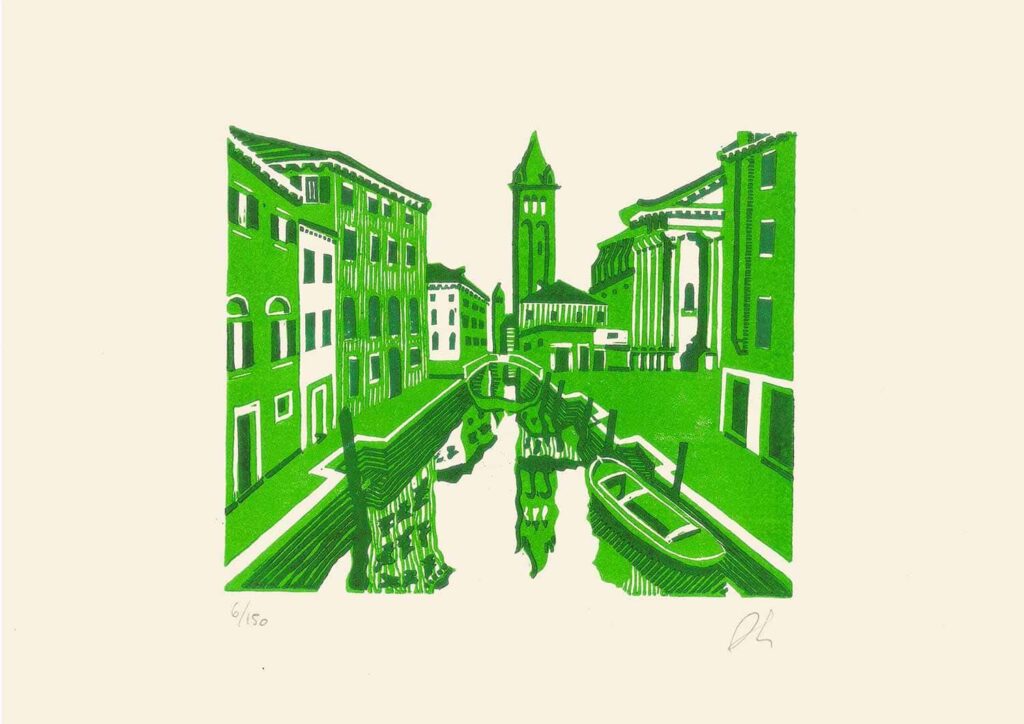
The Rio di San Barnaba is located in the Dorsoduro district and takes its name from the Church and Campo San Barnaba overlooking the canal.
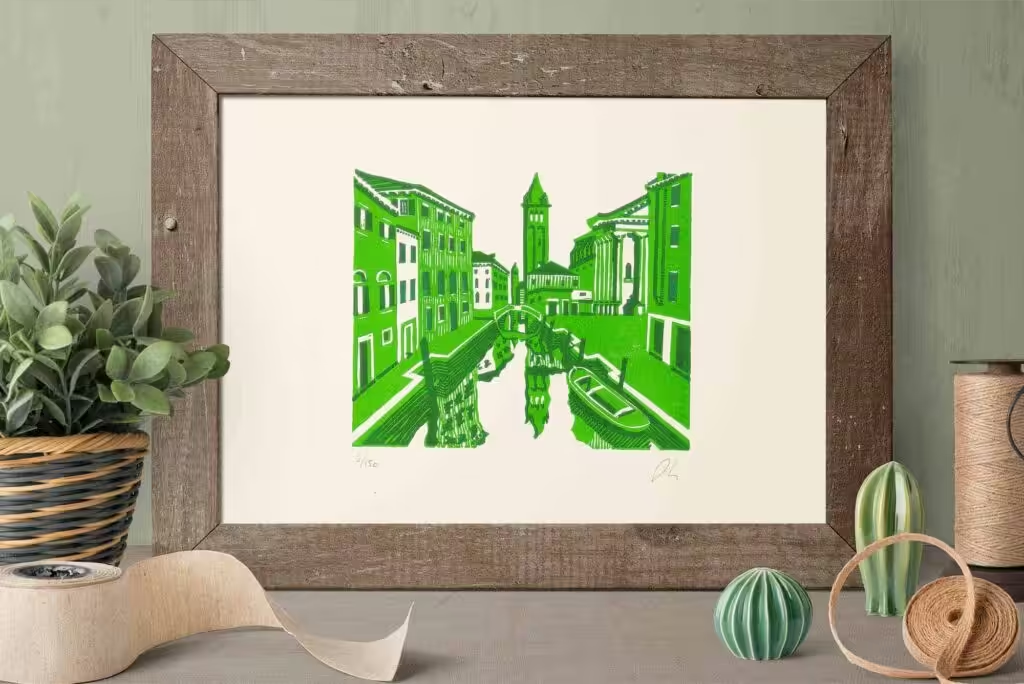
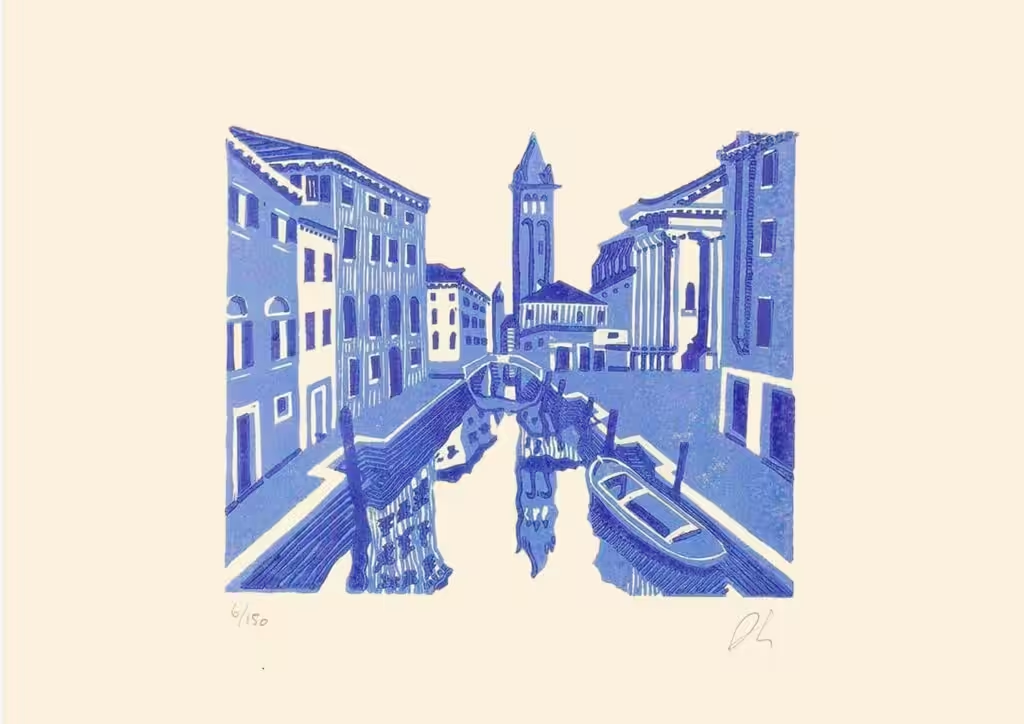
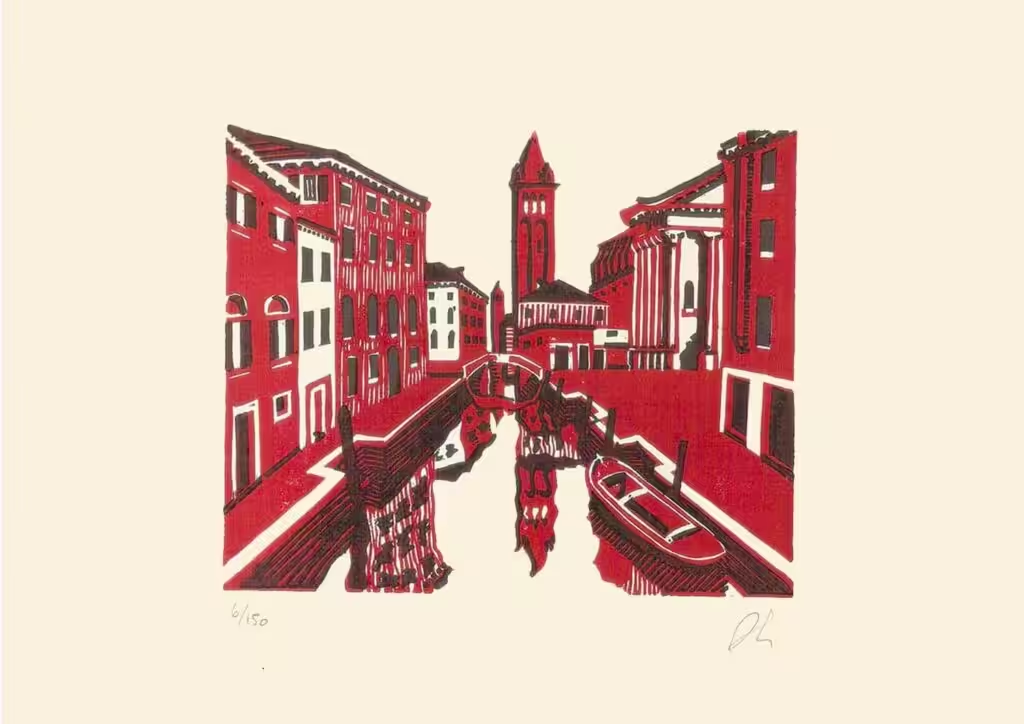
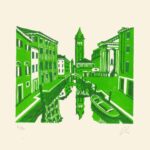
The print shows the stretch of canal from Ponte dei Pugni toward the Grand Canal: on the right, one can glimpse Campo San Barnaba facing the canal and which — as a small curiosity — was the setting for several famous films, including Indiana Jones and the Last Crusade starring Harrison Ford and Summertime with Katharine Hepburn (a film that shows a beautiful Venice in 1955).
Another typical feature of the Rio di San Barnaba is the presence of a beautiful barge (visible on the right in the print) that sells fruit and vegetables during the day.
€ 55,00
Rio di San Barnaba
€ 55,00
Linocut print made with a vertical press on 200 gsm Favini Rismacqua ivory paper using intaglio ink.
Paper size: 11.69 × 8.27 inches (A4)
Image size (W × H): 6.50 × 5.31 inches
SOLD UNFRAMED
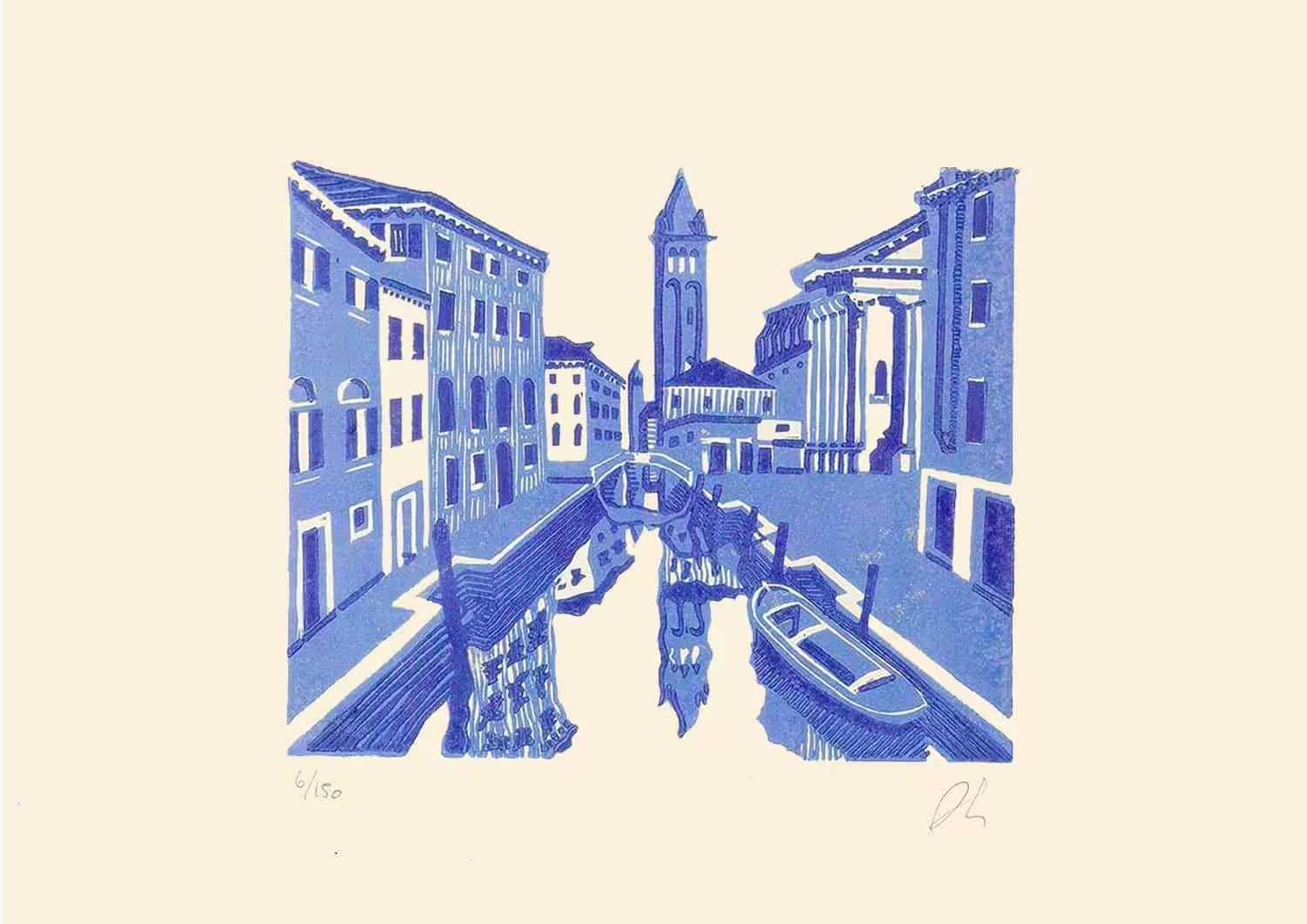
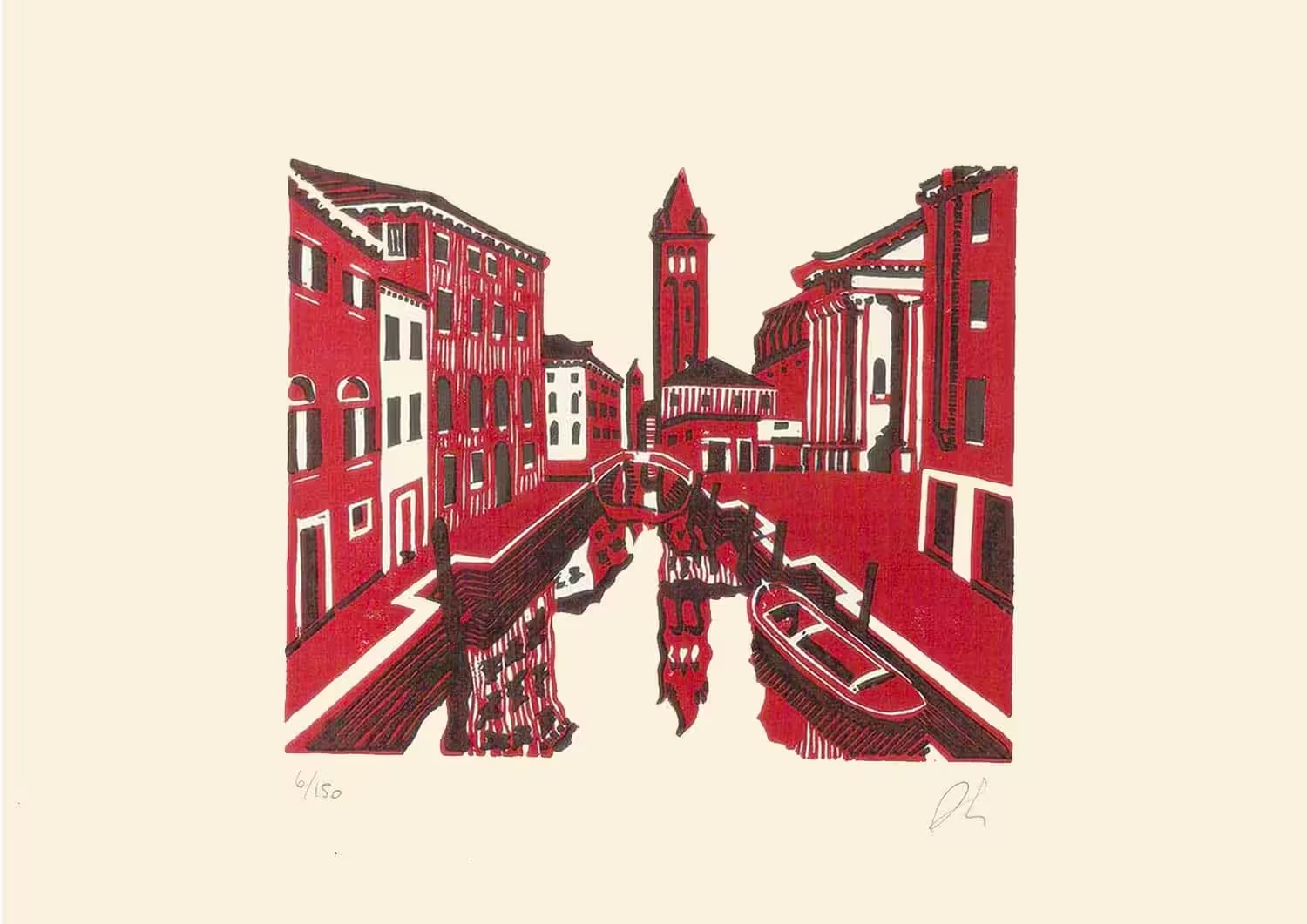
| Print color | Blue, Green, Red |
|---|
Useful information
How much does shipping cost?
Shipping costs are:
24 EUR to Oceania and Australia
19 EUR to USA, South America, Asia and Africa
16 EUR within Europe (Italy excluded)
12 EUR within Italy
For orders over 150 EUR, shipping may be free.
How soon will my order be shipped?
I ship orders within 7 working days of order confirmation. Large orders or custom-made pieces may take longer to prepare. In these cases, I’ll let you know the expected shipping date.
How long does delivery take?
Within Italy, delivery usually takes 5–6 working days from shipment.
Within the EU: 7–9 working days.
Outside the EU: 10 to 15 working days.
How is the item shipped?
All items are shipped with great care via Poste Italiane.
Artworks are protected with tissue paper, rigid cardboard and a padded envelope to arrive in perfect condition.
What if my item arrives damaged?
If your package arrives damaged, please contact me as soon as possible at info@plumplumcreations.com and we will find a solution together.
Can I return an item?
Yes, you can exercise your right of withdrawal within 14 days of receiving the item.
Contact me and I will explain how to proceed. Return shipping costs are the responsibility of the customer.
Need specific information? Contact me.
You may also like…
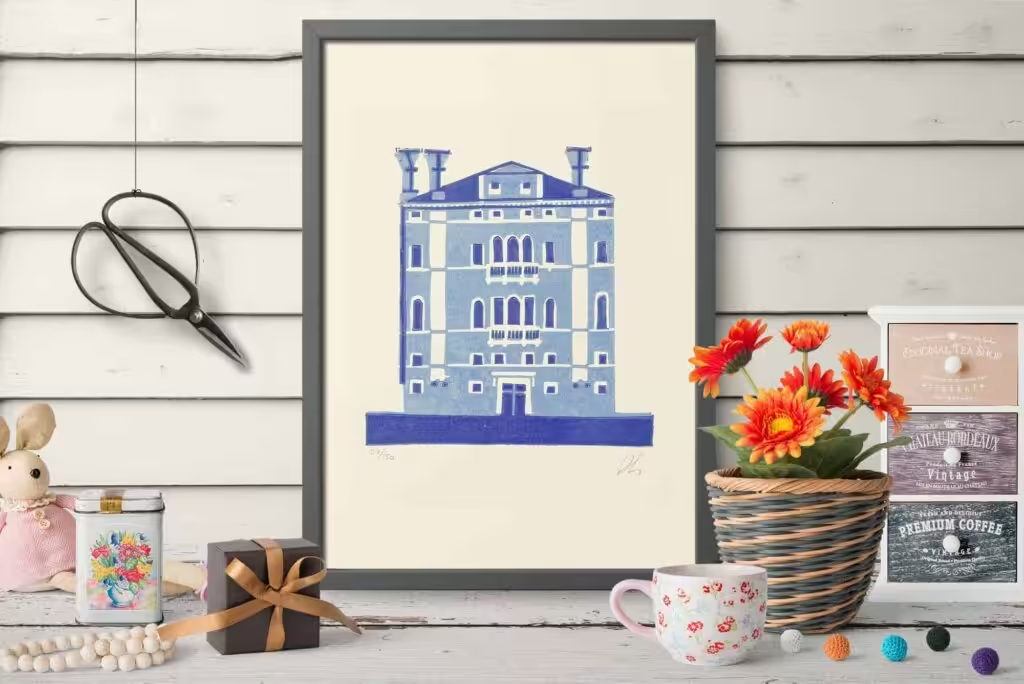
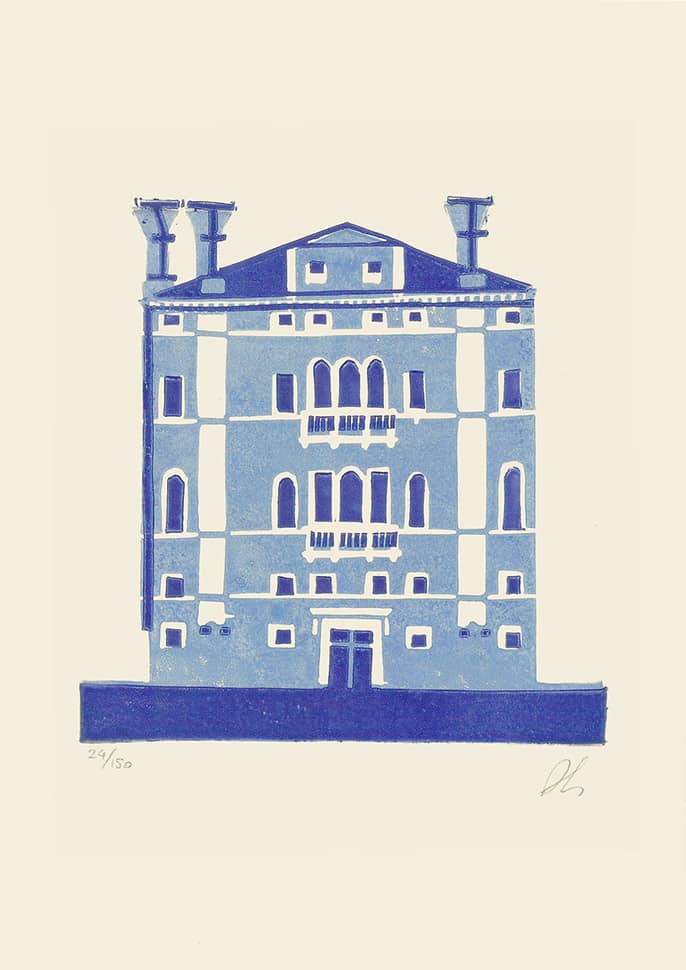
Palazzetto Dandolo
Palazzetto Dandolo on Fondamenta Dandolo (Campo Santi Giovanni e Paolo)
A small, well-preserved 17th-century palace, both in terms of its façade and interior. The two chimneys are part of the symmetrical perspective typical of minor Venetian architecture. This building appears in Bernardo Bellotto’s painting The Rio dei Mendicanti.
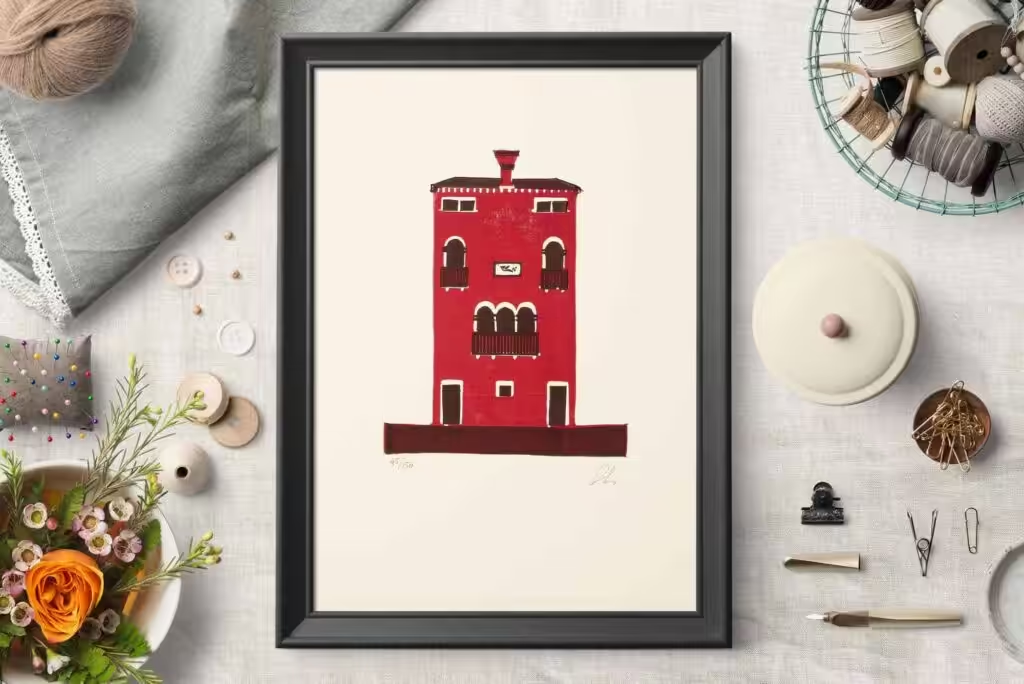
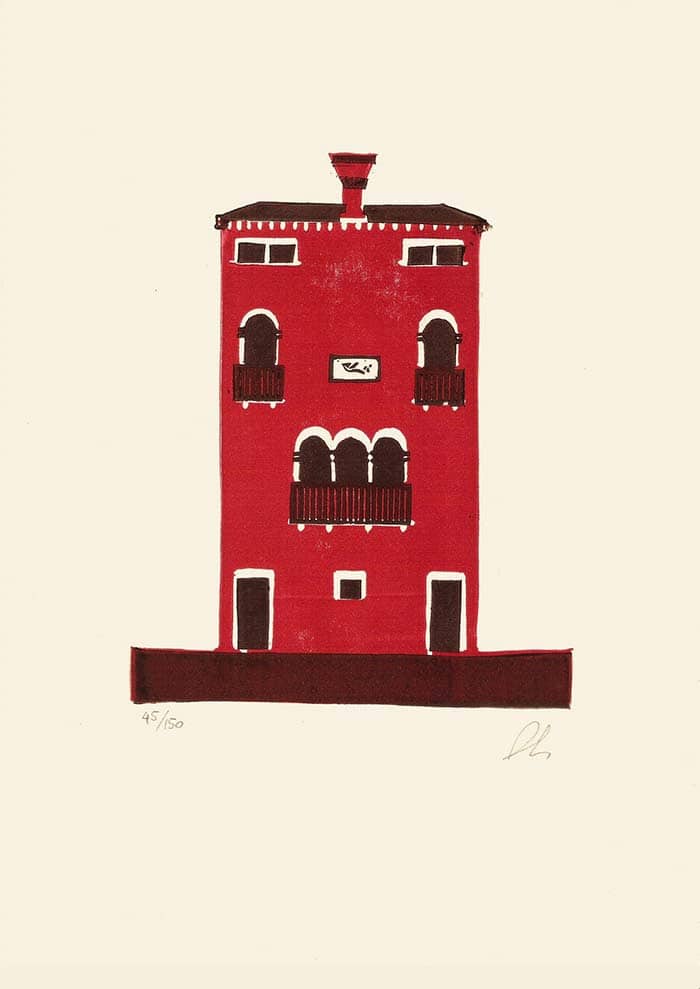
Calle dei Furlani Palace
Palace in Calle dei Furlani, Venice (San Giorgio degli Schiavoni)
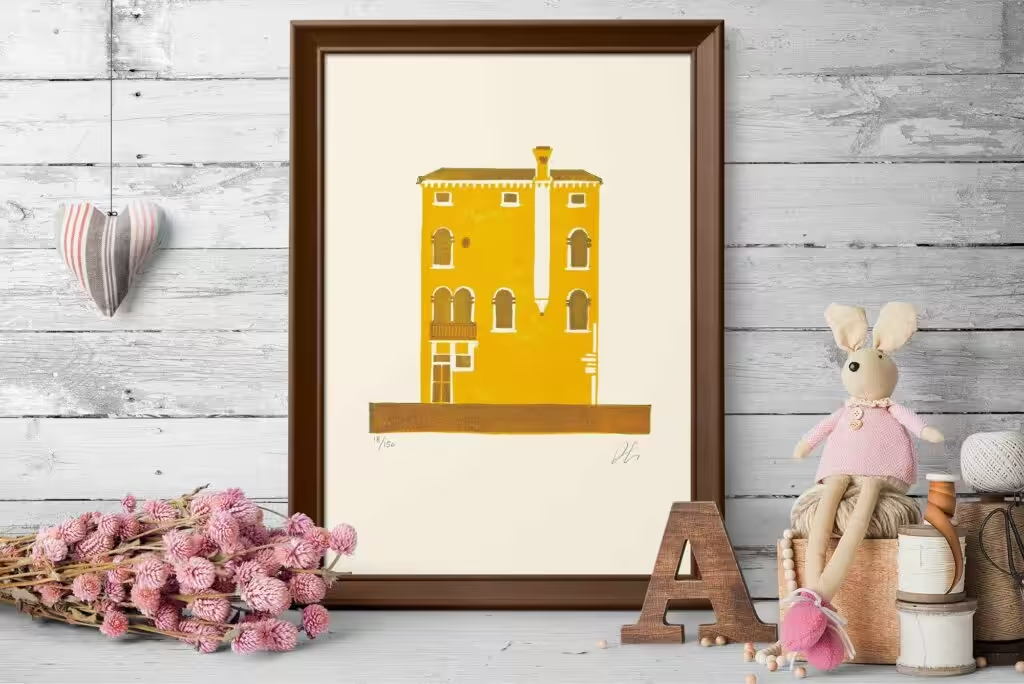
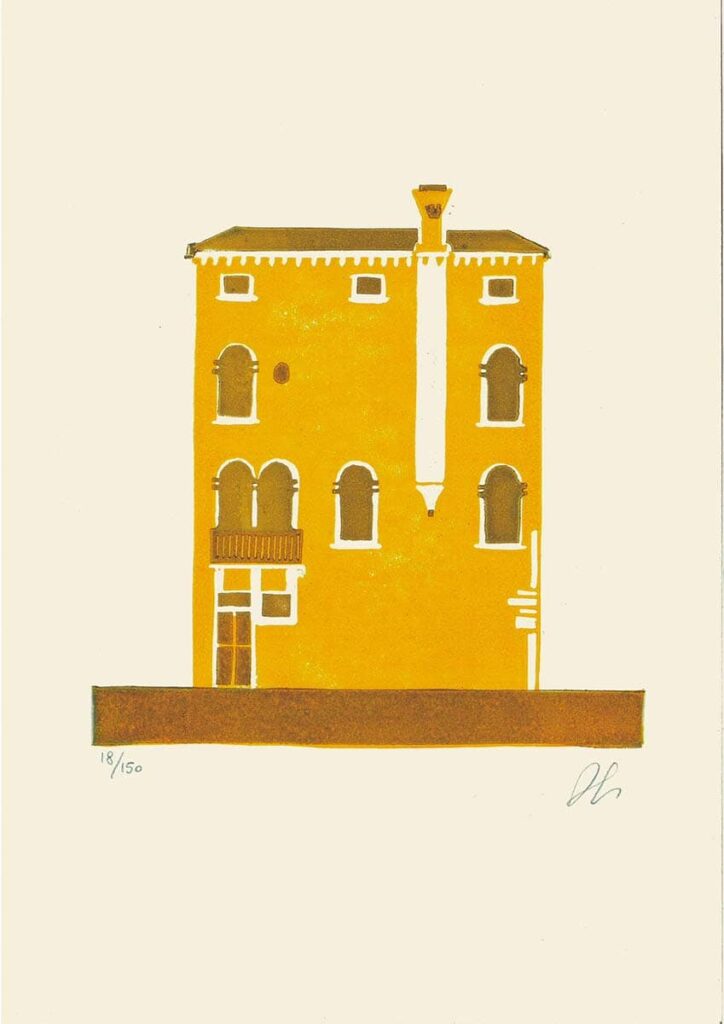
A characteristic 16th-century Venetian house with windows placed symmetrically on either side of the three-light window on the first floor. The original interior layout has been preserved. There are two staircases: one for the first floor and another for the two upper floors, which form a single apartment.
Fondamenta Ca’ Balà
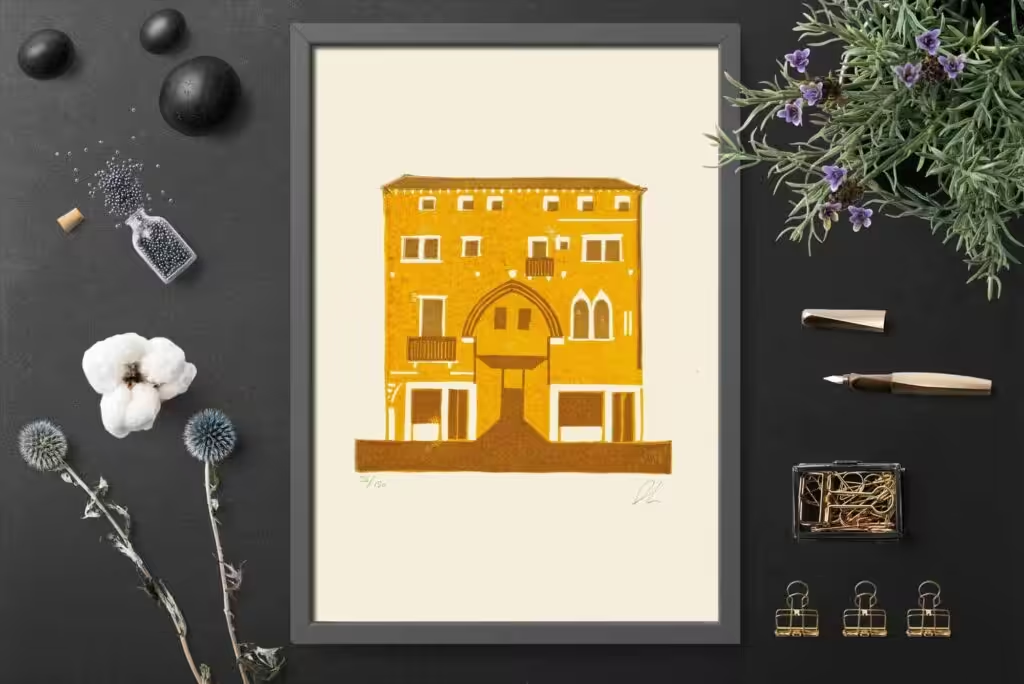
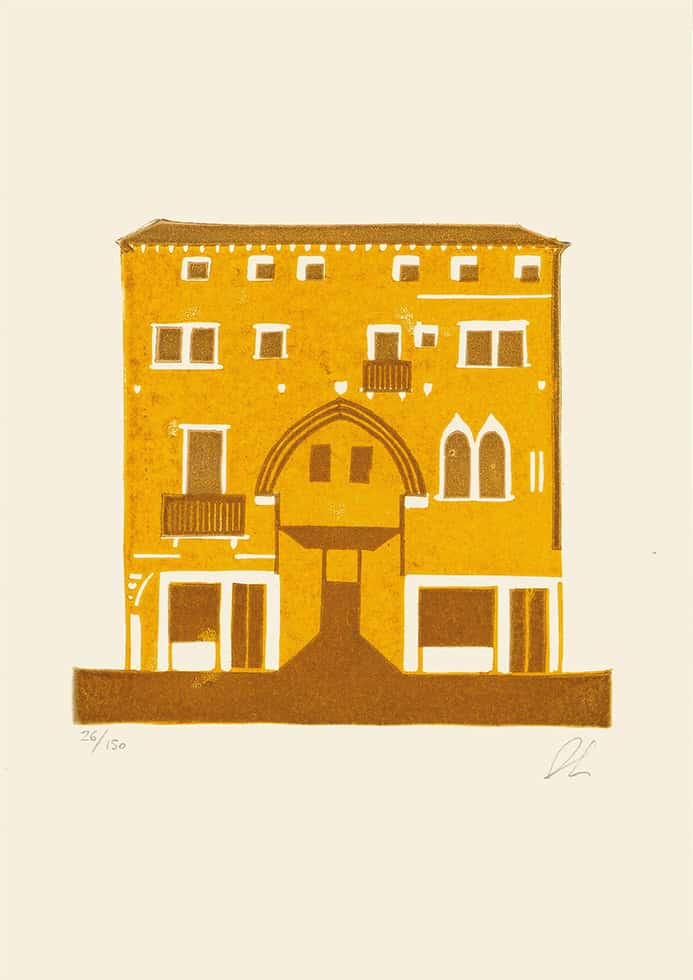
A 16th-century house with a large hall on the first floor that served both as a living room and a passageway onto which the other rooms open. The windows along the edges of the walls are balanced by the vertical line of the chimney. The house was once frescoed, and some traces are still visible today.
“Fondamenta” means “foundation” in Italian, and describes the pedestrian embankment along a canal. It was (and still is today) a very busy area for loading and unloading boats, much like a dock.
This Fondamenta is very close to the Church of Santa Maria della Salute, one of the most famous churches in Venice.
Salizada San Lio Palace
A small 13th-century palace located on Salizada San Lio.
Salizada means “paved,” and these streets were among the most important in Venice — so when only a few Venetian streets were paved with bricks, these were the first to be paved with the more expensive stone paving that can now be seen almost everywhere.
Related Products
Bookmark 10
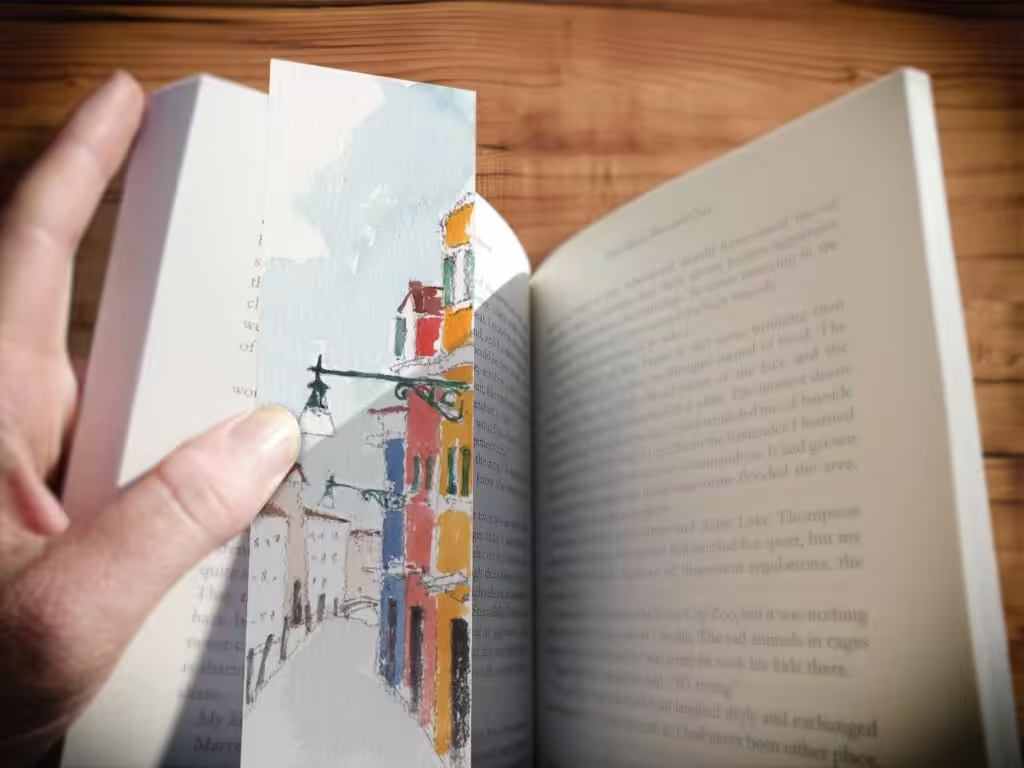
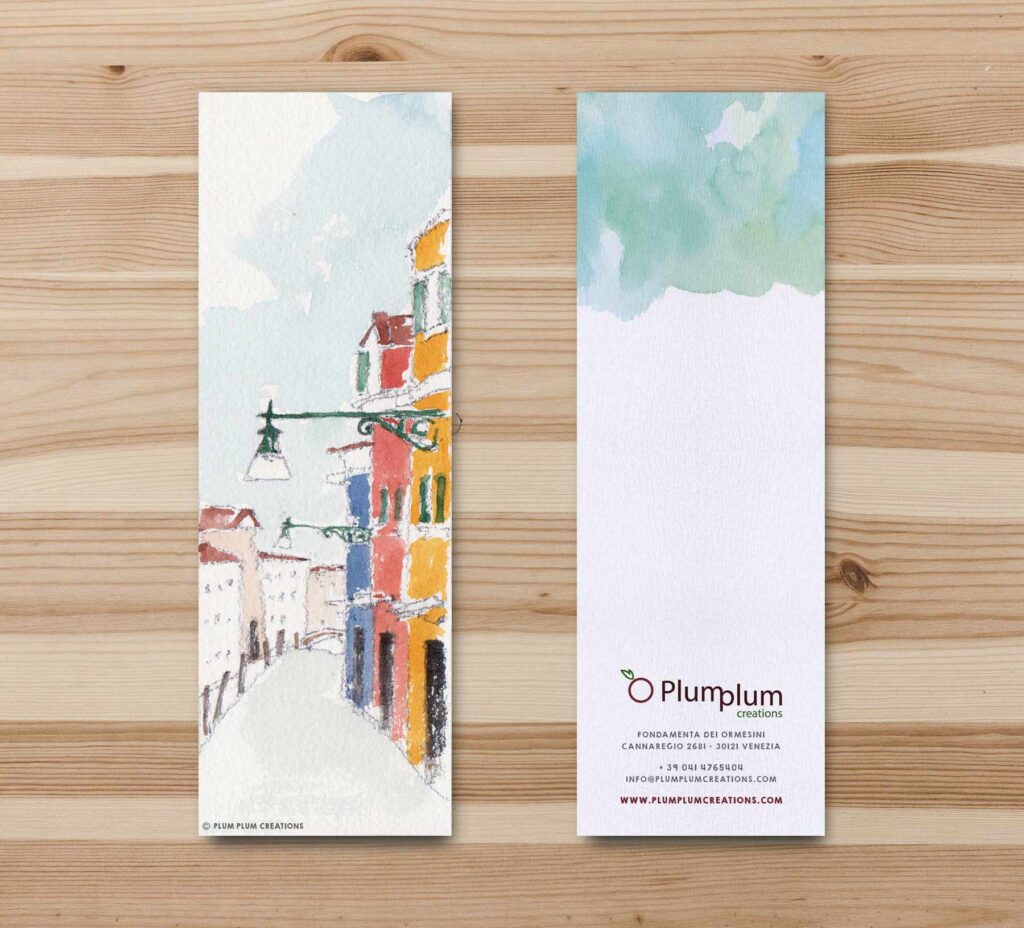
One of my original watercolors turned into a bookmark.
Printed on 300 gsm hammered paper.
Size: 2.3 × 7 inches.
Foscarini Giovanelli Palace – Reproduction
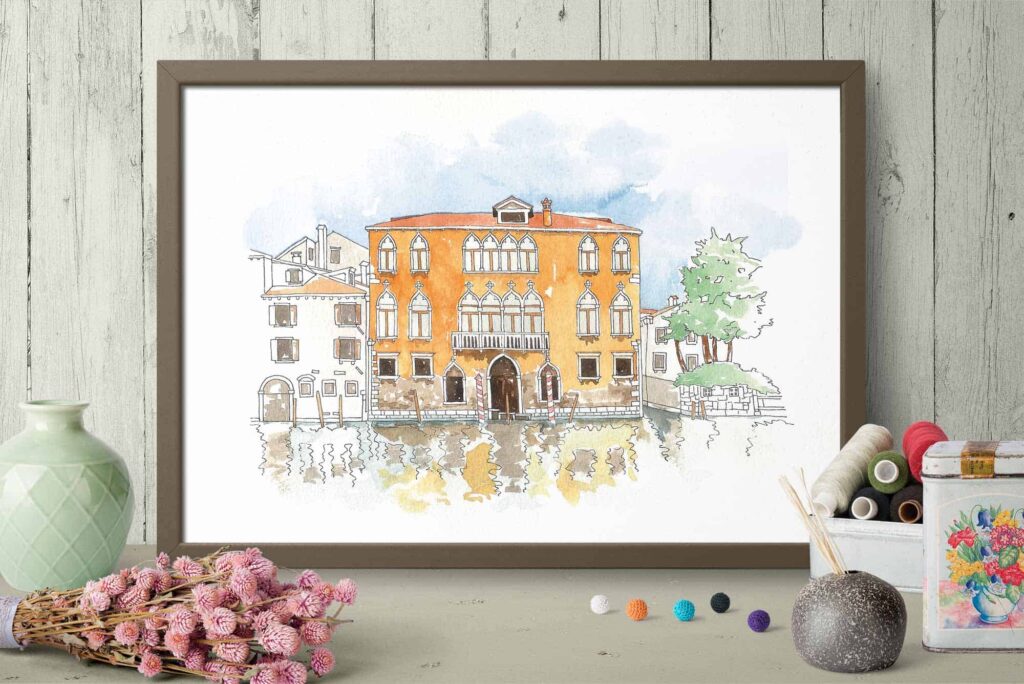
Palazzo Giovanelli (also known as Palazzo Foscarini Giovanelli) is a palace in Venice, located in the Santa Croce district, overlooking the right side of the Grand Canal and the Rio di San Giovanni Decollato, just before the Fondaco dei Turchi.
Reproduction printed on 260 gsm Modigliani ivory hammered paper.
Paper size: 13.7 × 9.8 inches.
SOLD WITHOUT FRAME.
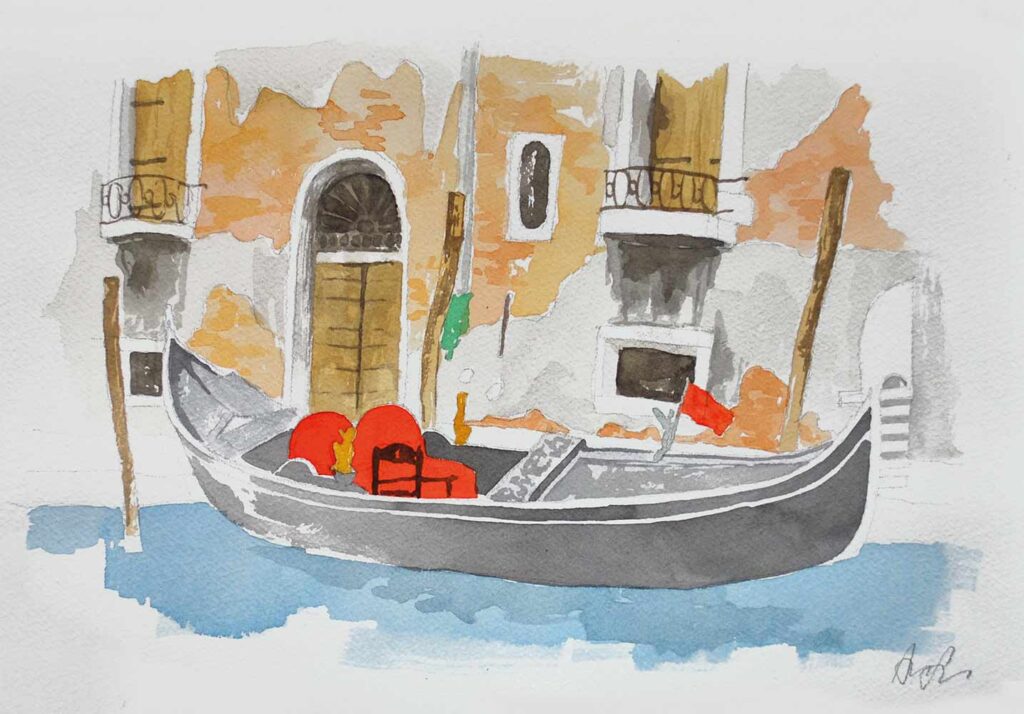
“Gondola” Postcard
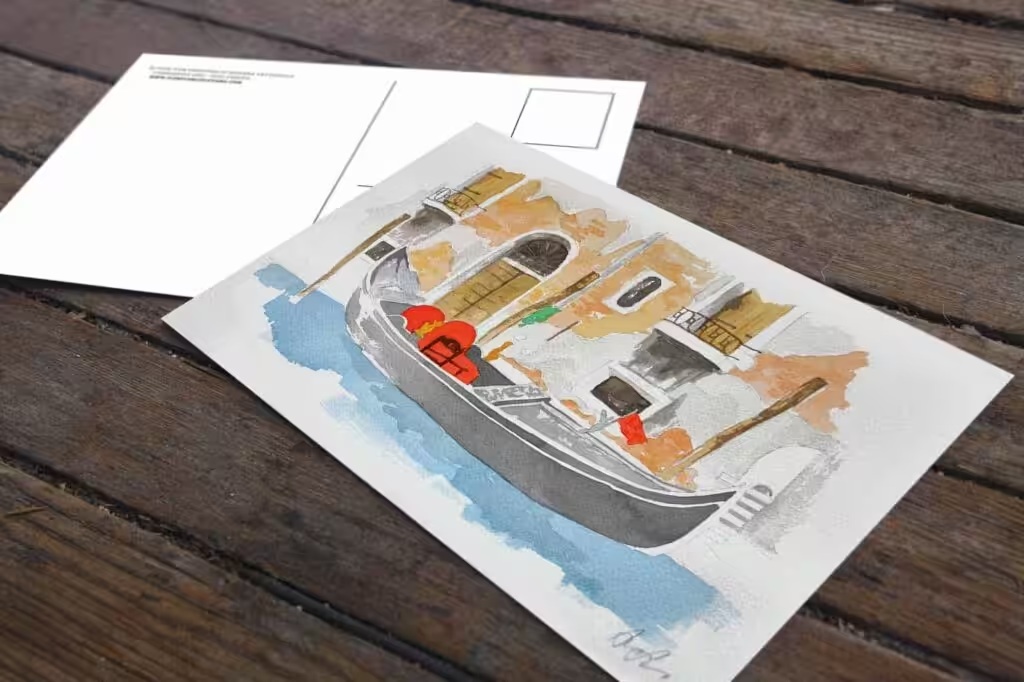
The gondola is a traditional boat of the Venetian lagoon. Thanks to its maneuverability and speed, it was—until the advent of motorized boats—the most suitable vessel for transporting people in a city like Venice, where waterways have always been the primary means of transportation.
The gondola is made up of 280 different parts, crafted from eight types of wood. Its construction usually takes more than a year.
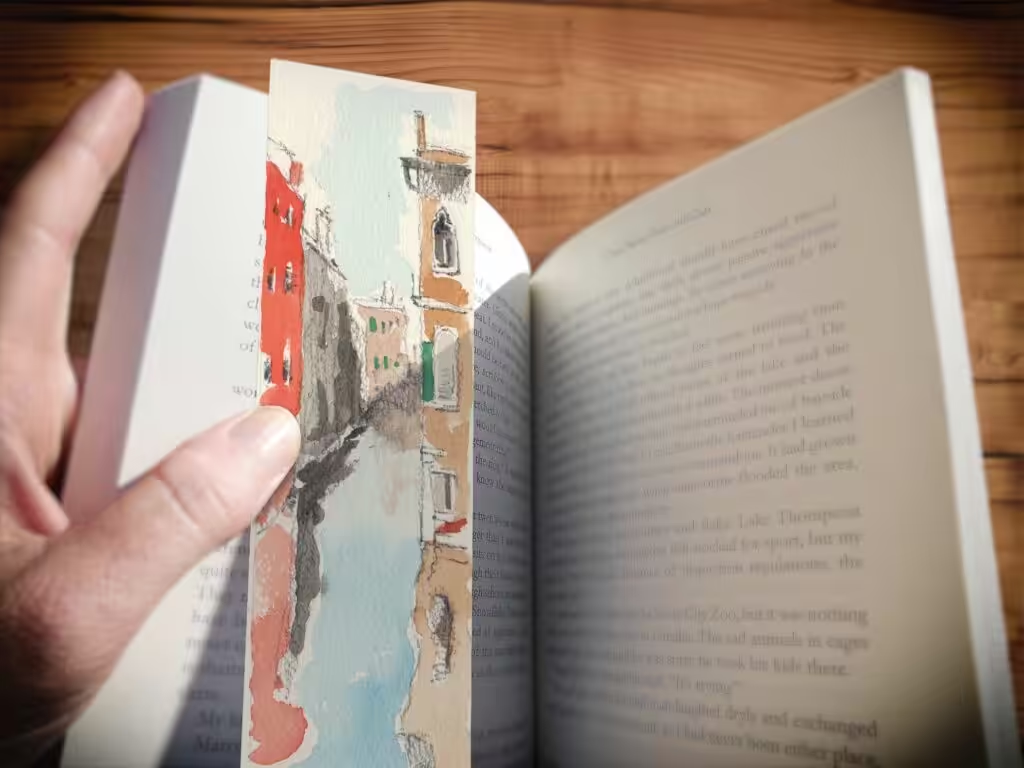
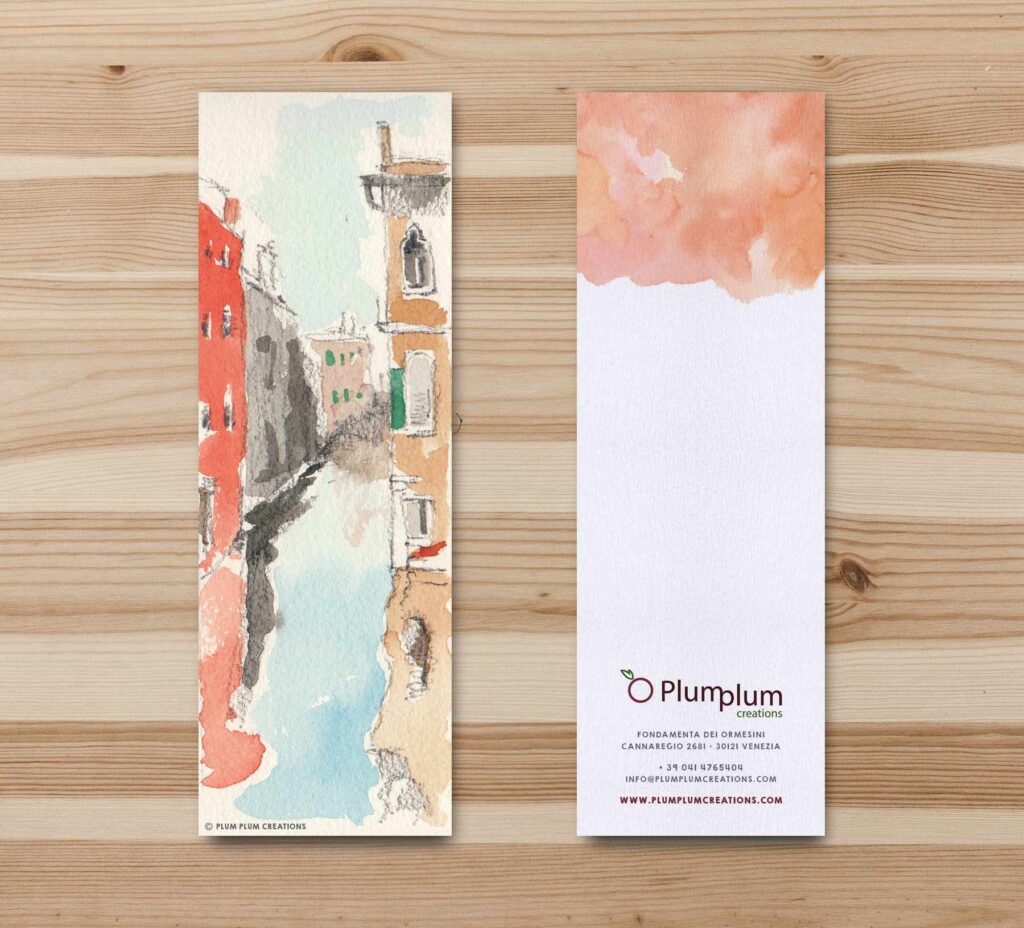
Bookmark 03
One of my original watercolors turned into a bookmark.
Printed on 300 gsm hammered paper.
Size: 2.3 × 7 inches.
Sold Out
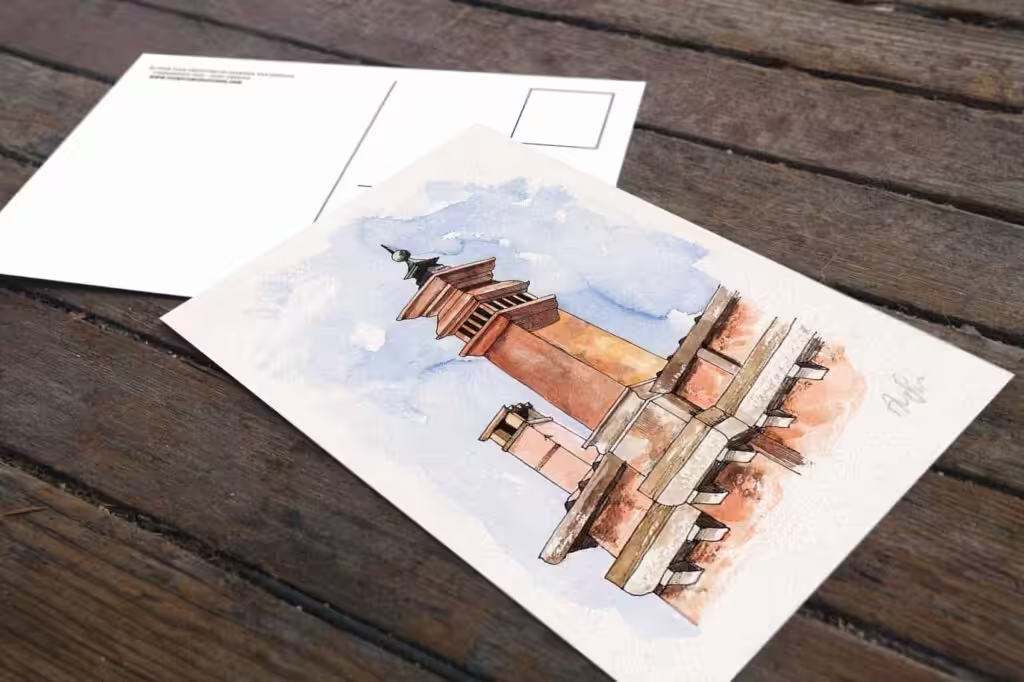
“Venetian Chimney 01” Postcard
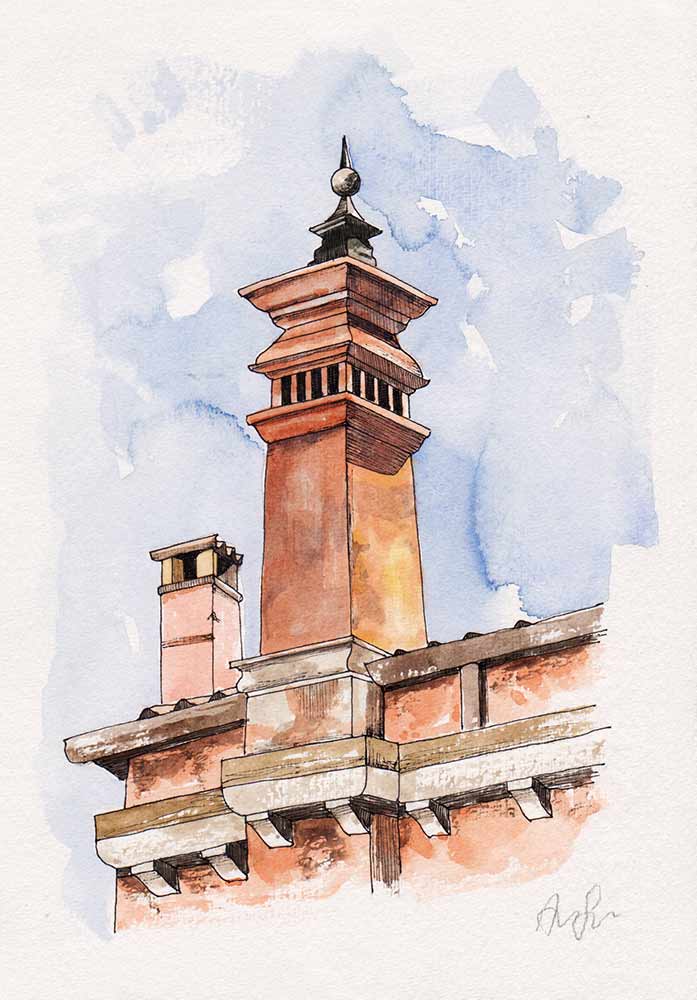
Postcard of a chimney in San Giobbe, in the Venetian district of Cannaregio.
Postcard printed on 300 gsm paper.
Size: 4.5 × 6.5 inches
Postcard “Bovolo Staircase”
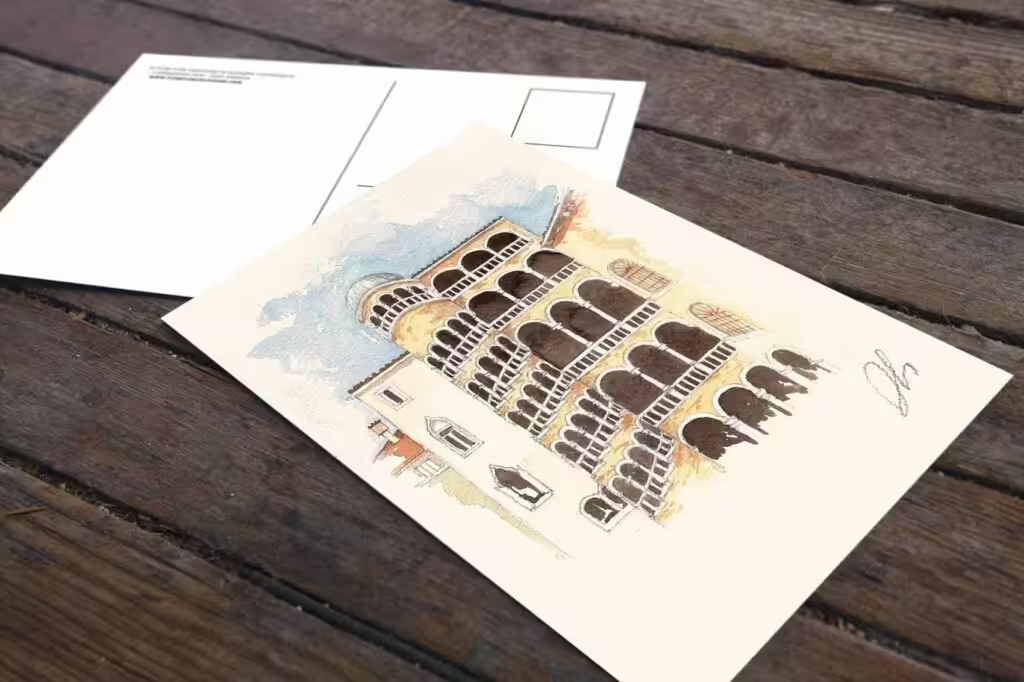
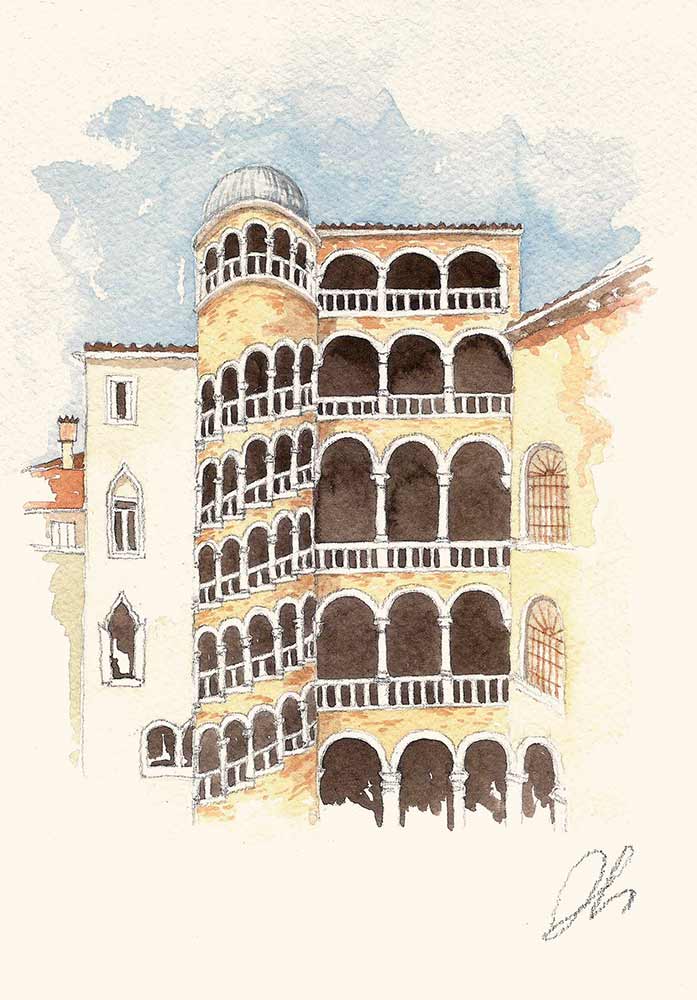
Scala Contarini del Bovolo Postcard
Postcard printed on 300 gsm paper.
Size: 4.5 × 6.5 inches
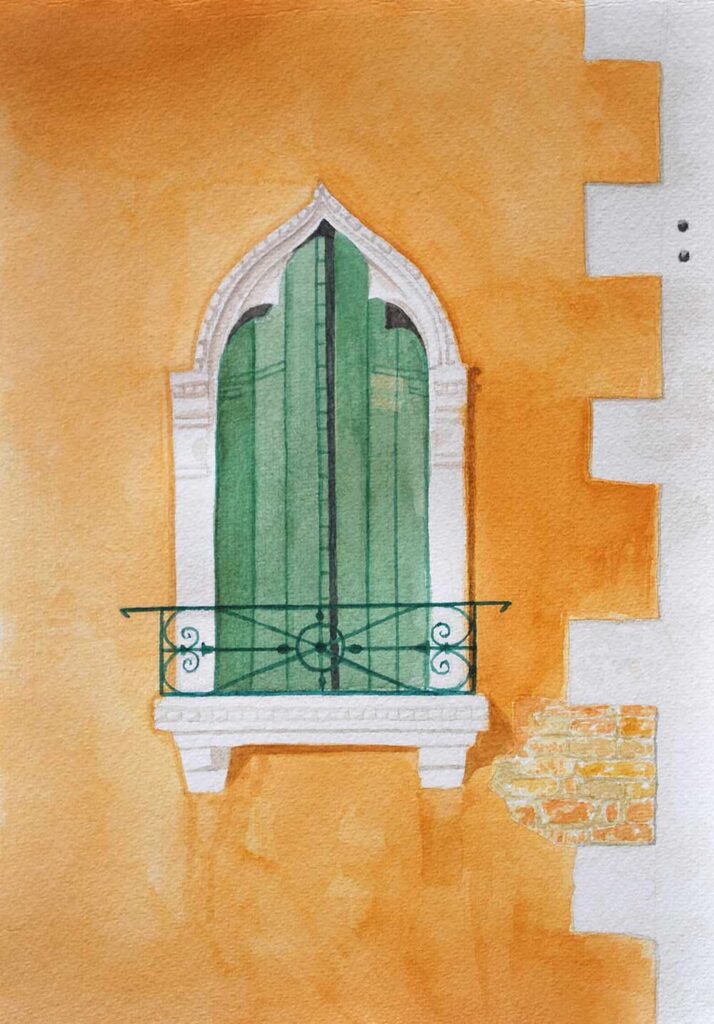
“Window” Postcard
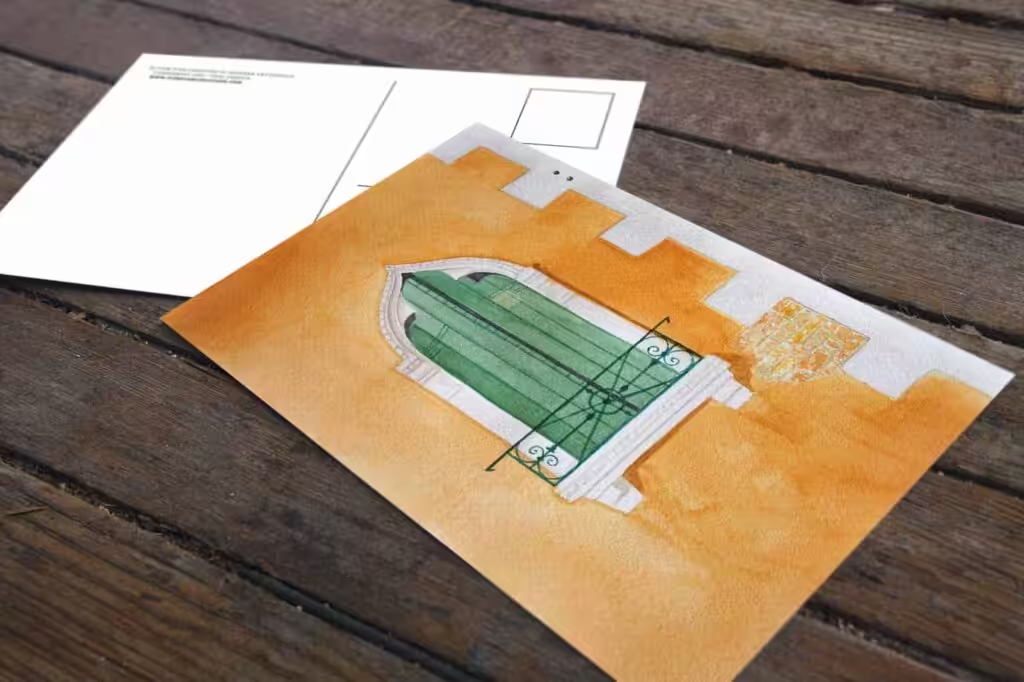
Postcard of a Venetian window, based on one of my original watercolors.
Postcard printed on 300 gsm paper.
Size: 4.5 × 6.5 inches
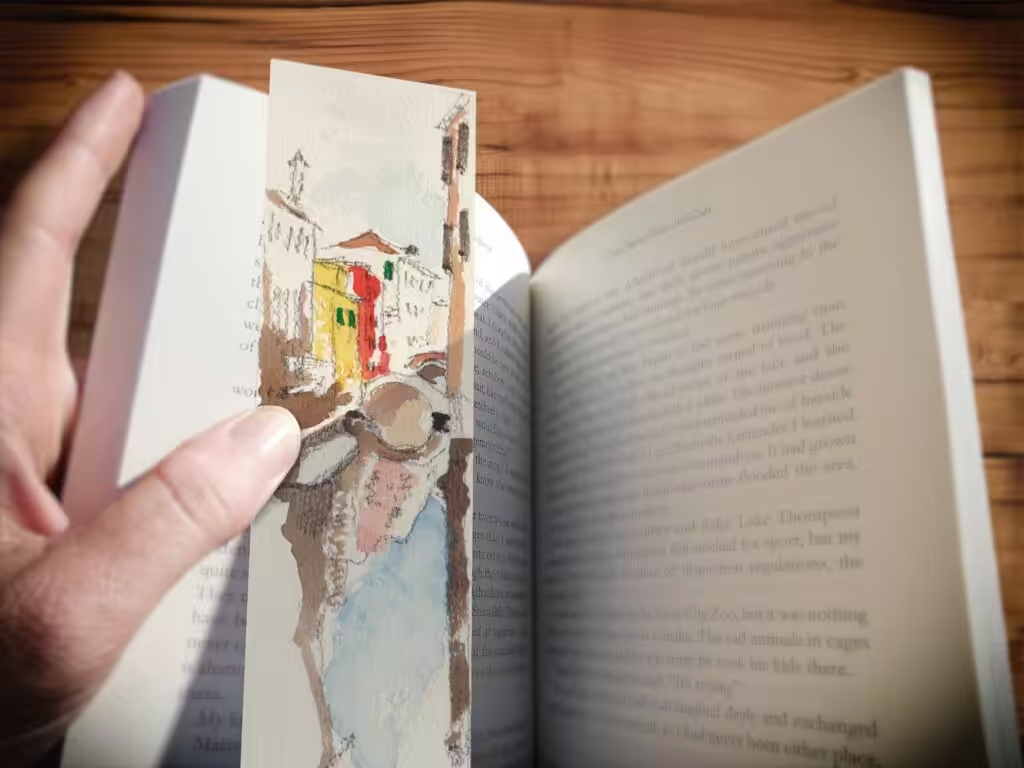
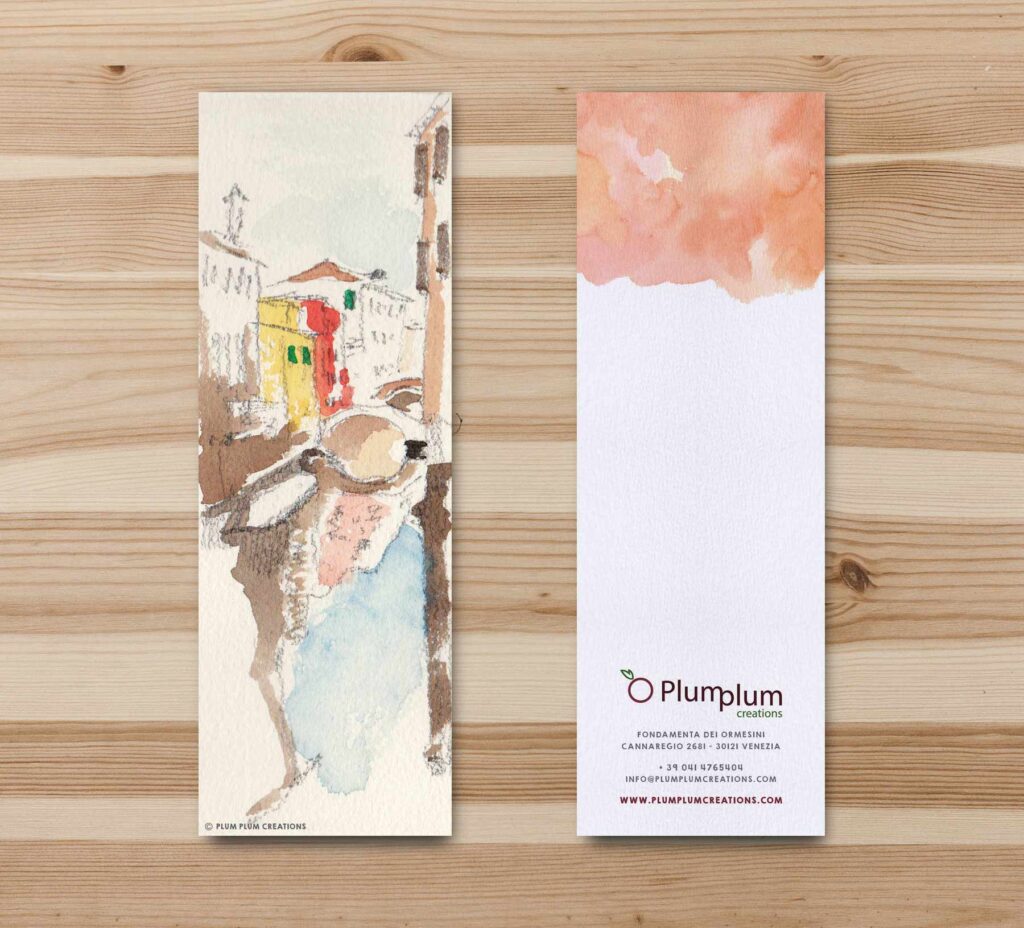
Bookmark 02
One of my original watercolors turned into a bookmark.
Printed on 300 gsm hammered paper.
Size: 2.3 × 7 inches.
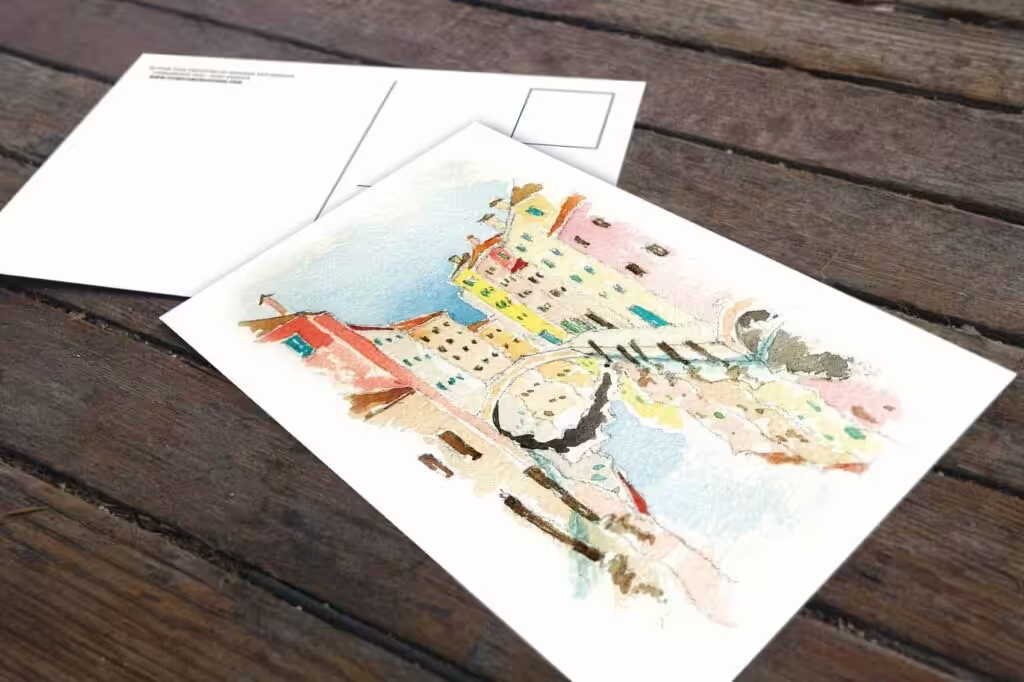
Postcard of a Canal in Castello district
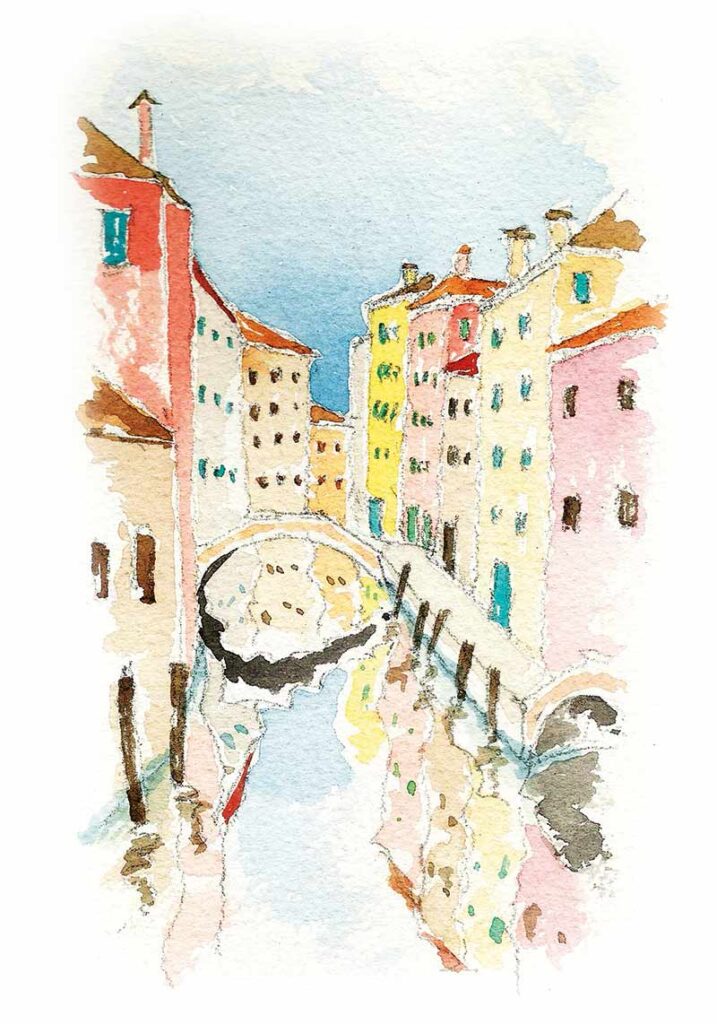
Postcard depicting a typical Venetian view, with a bridge crossing a canal. Specifically, it shows a canal in the Castello district.
Postcard printed on 300 gsm paper.
Size: 4.5 × 6.5 inches
Bookmark 04
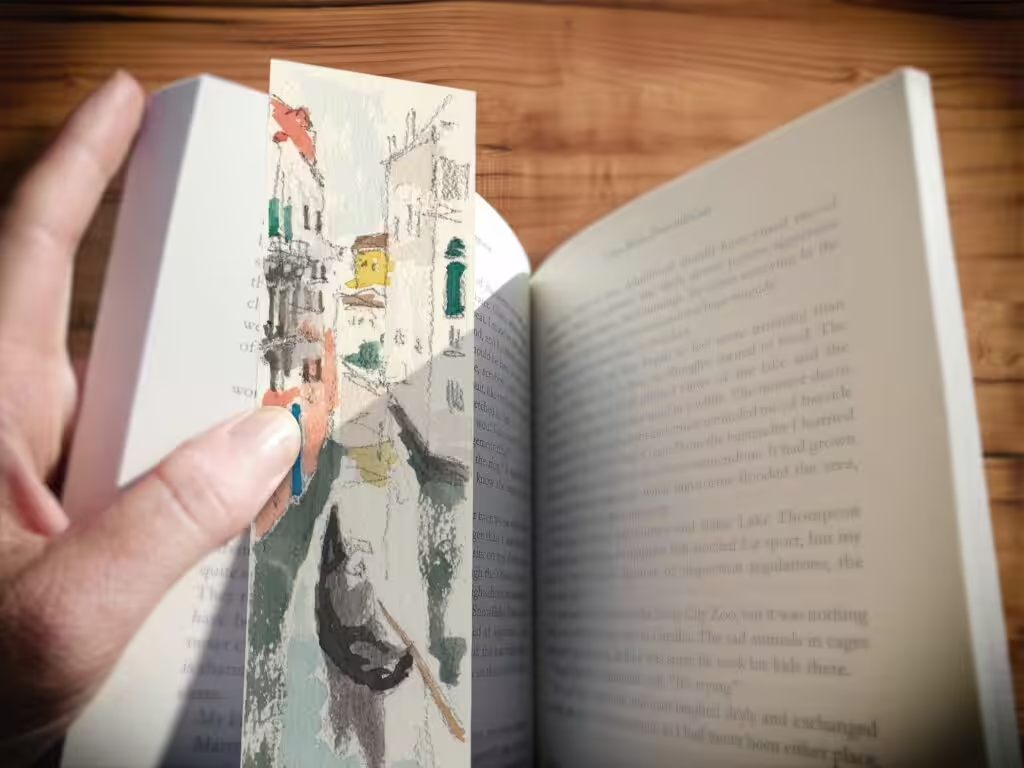
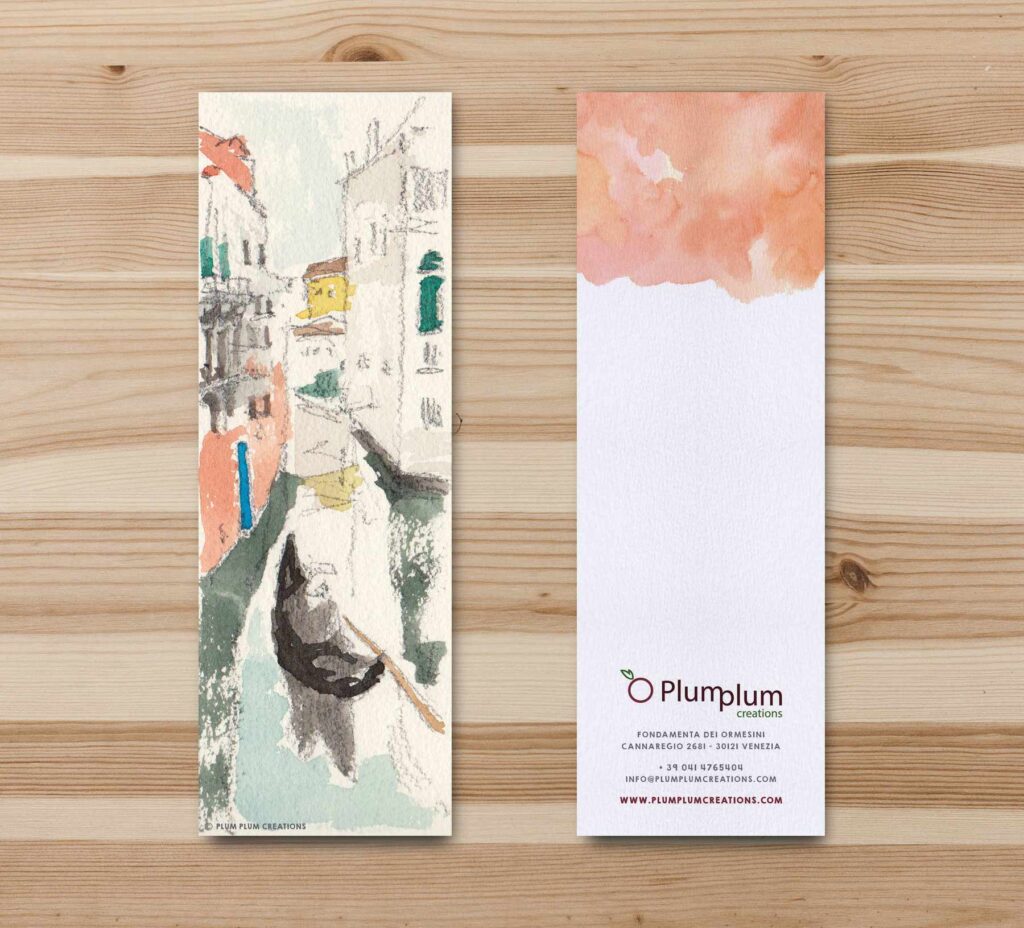
One of my original watercolors turned into a bookmark.
Printed on 300 gsm hammered paper.
Size: 2.3 × 7 inches.
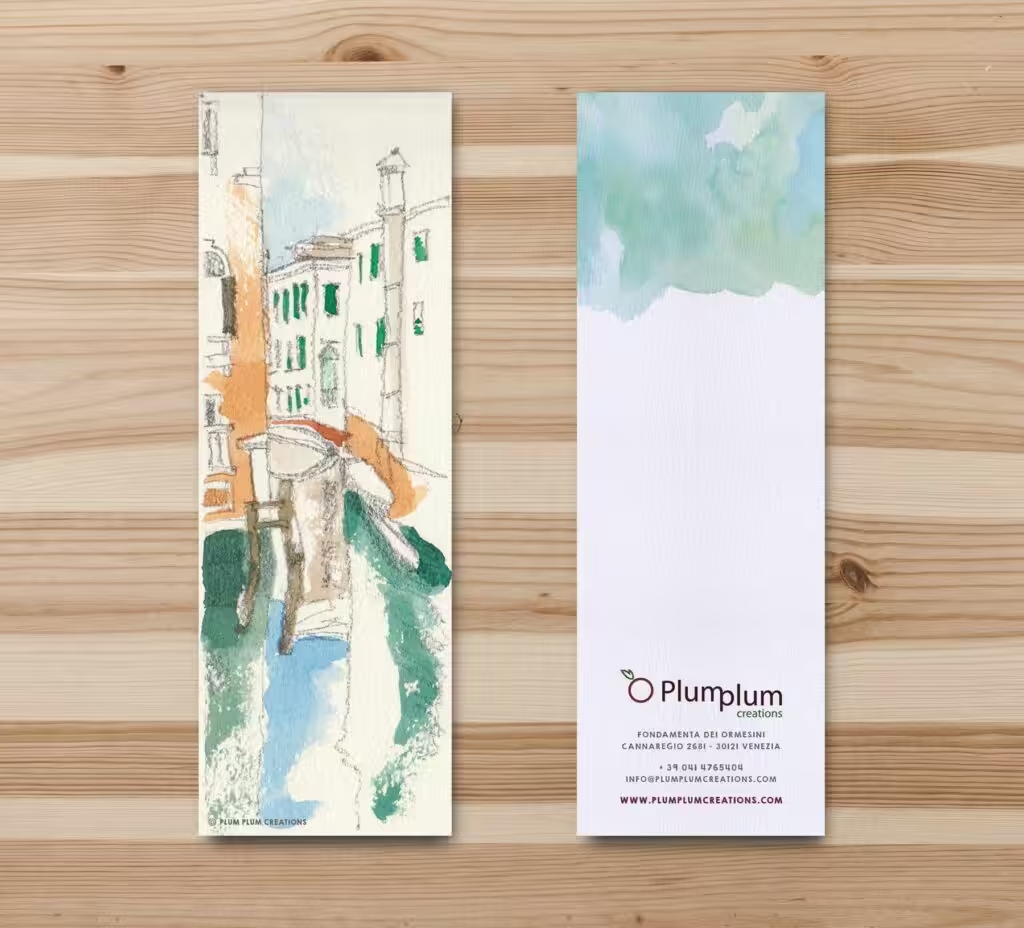
Bookmark 01
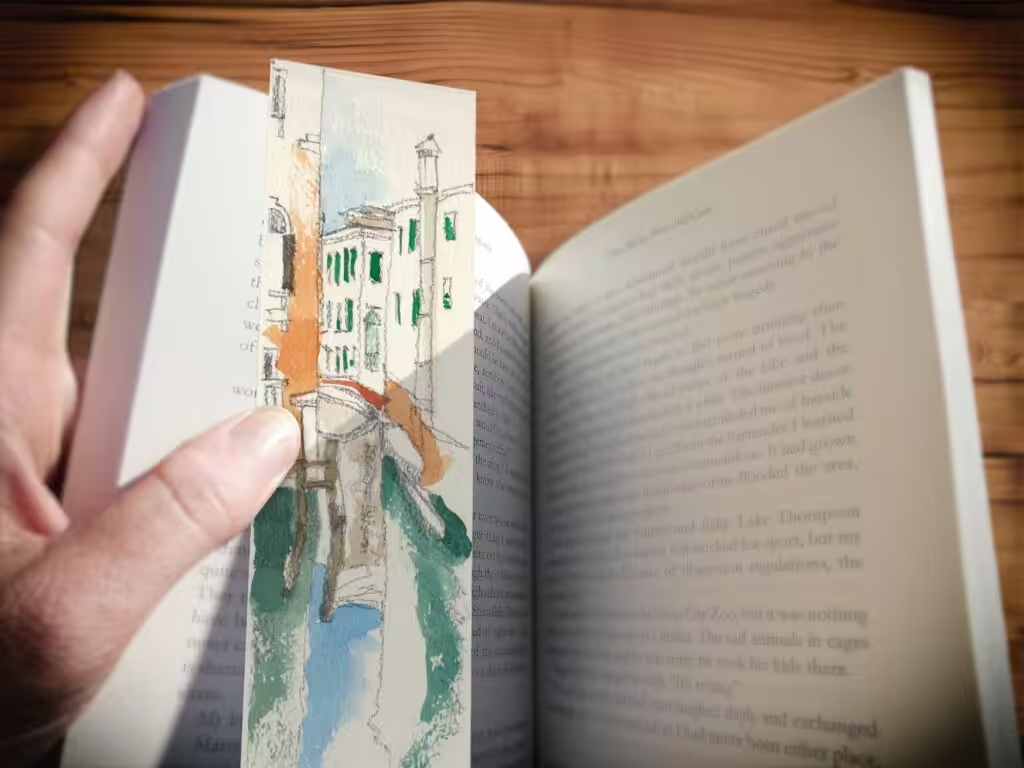
An original watercolor of mine turned into a bookmark!
Printed on 300 gsm hammered paper.
Size: 2.3 × 7 inches.
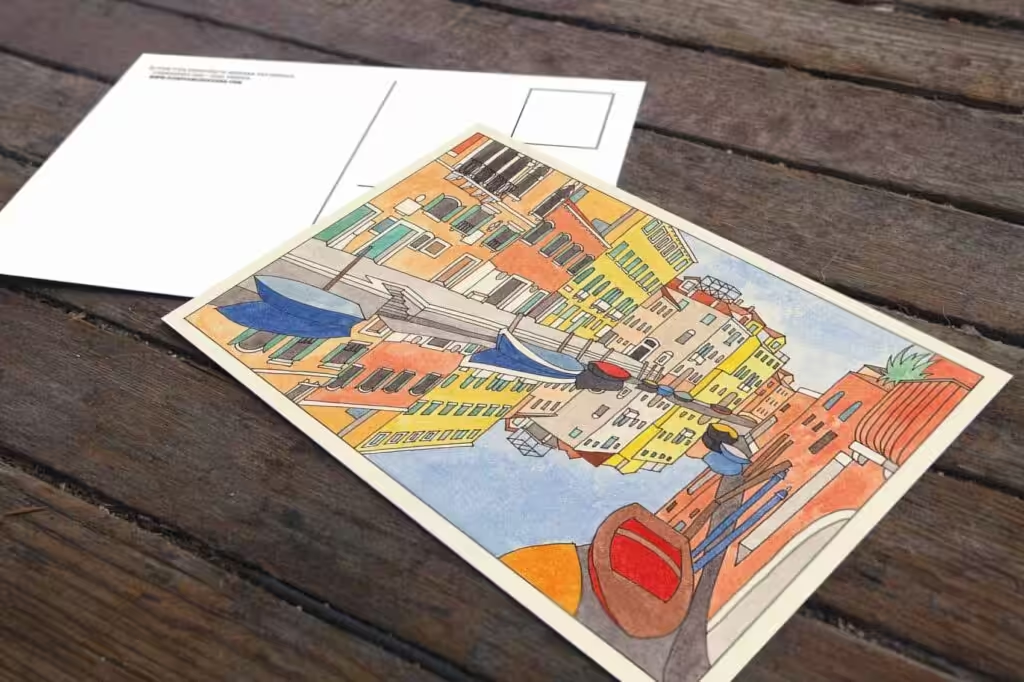
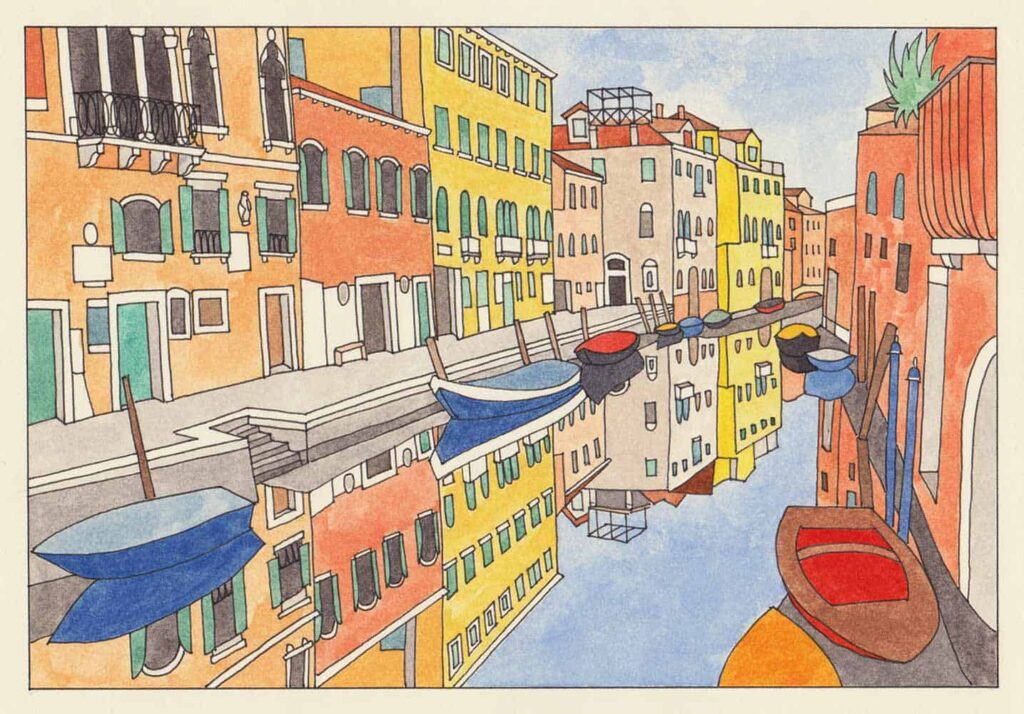
“Fondamenta dei Mori” Postcard
Along the route leading to Madonna dell’Orto lies the Fondamenta dei Mori, with the square of the same name, which takes its name from the three 13th-century statues of Moors wearing turbans set against the buildings of the campo. A fourth Moor, known as “Sior Antonio Rioba,” with an iron nose, stands at the foot of the bridge and, like Rome’s Pasquino, served as a voice for Venetian satire against the Republic.
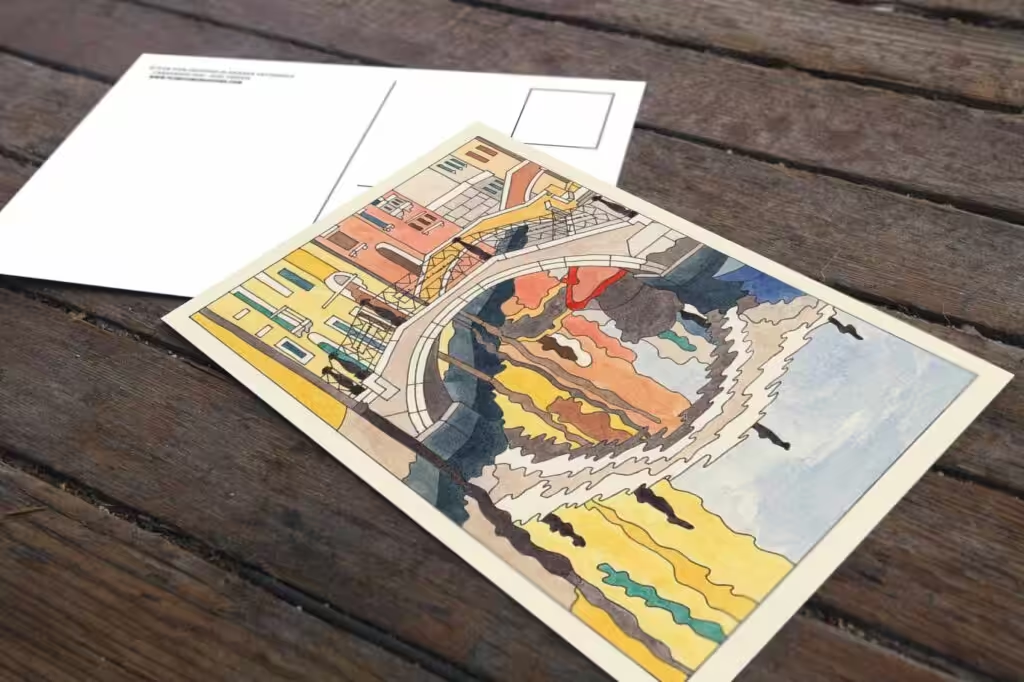
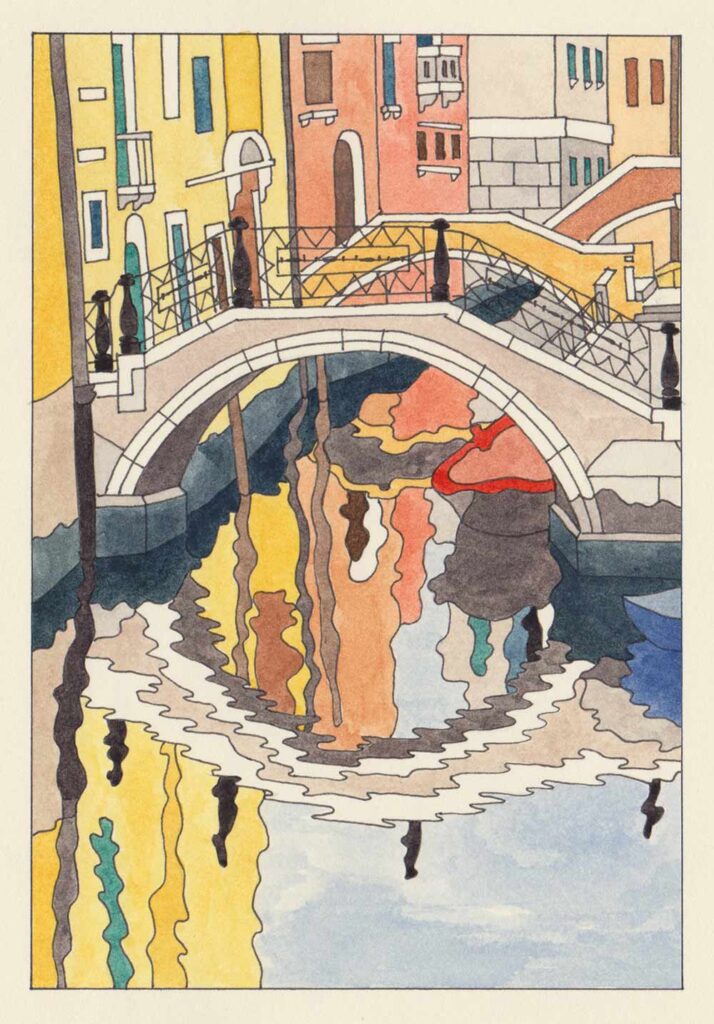
“Canal crossed by three bridges” Postcard
Canal crossed by three bridges – Postcard
A typical Venetian scene: a canal crossed by three bridges.
Postcard printed on 300 gsm paper.
Size: 4.5 × 6.5 inches
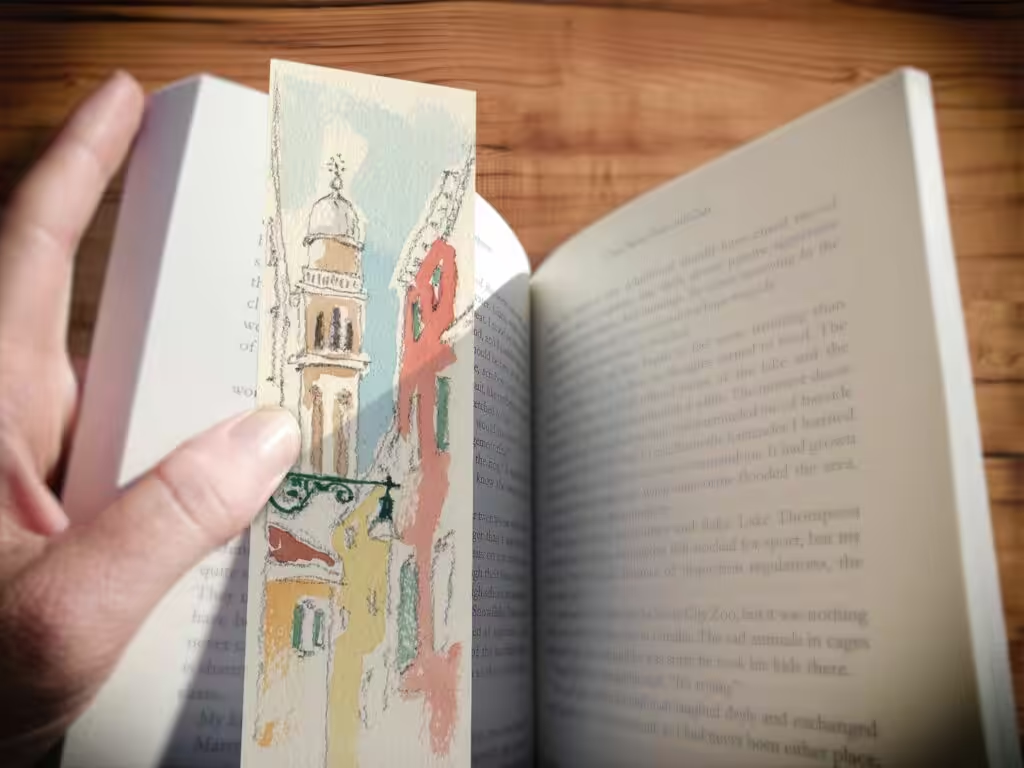
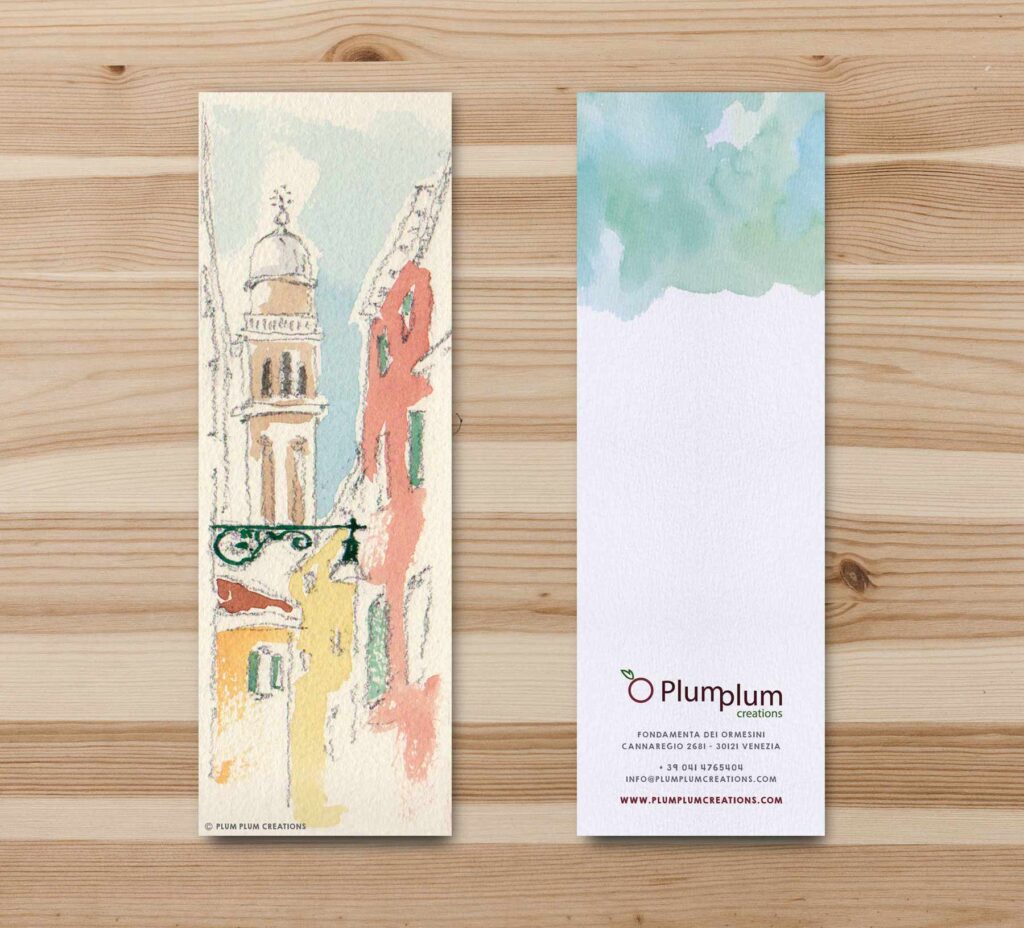
Bookmark 07
One of my original watercolors turned into a bookmark.
Printed on 300 gsm hammered paper.
Size: 2.3 × 7 inches.
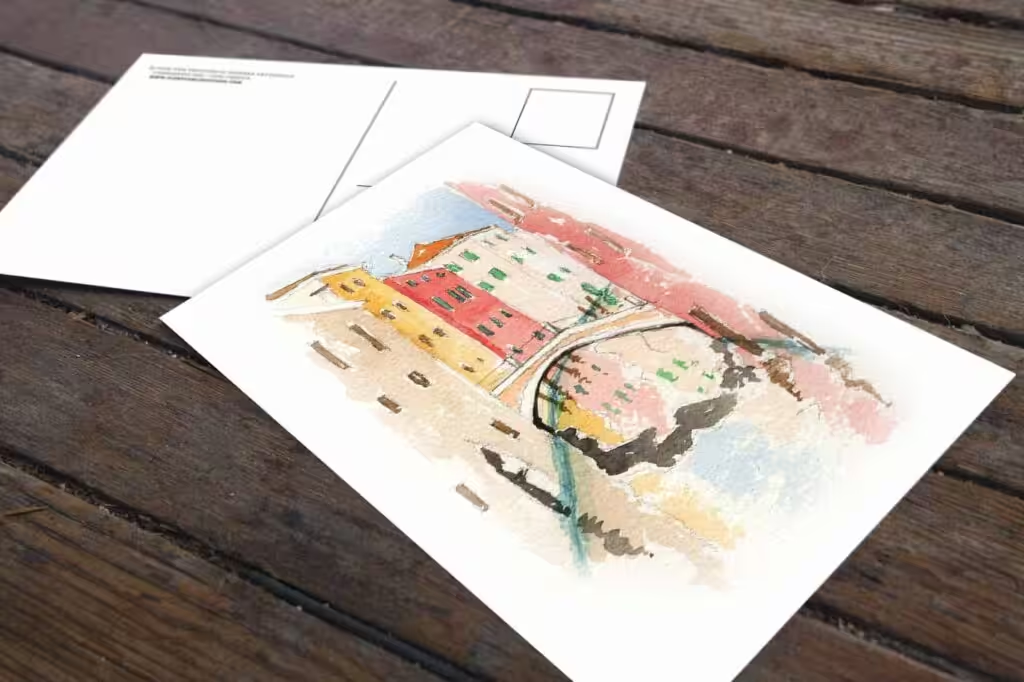
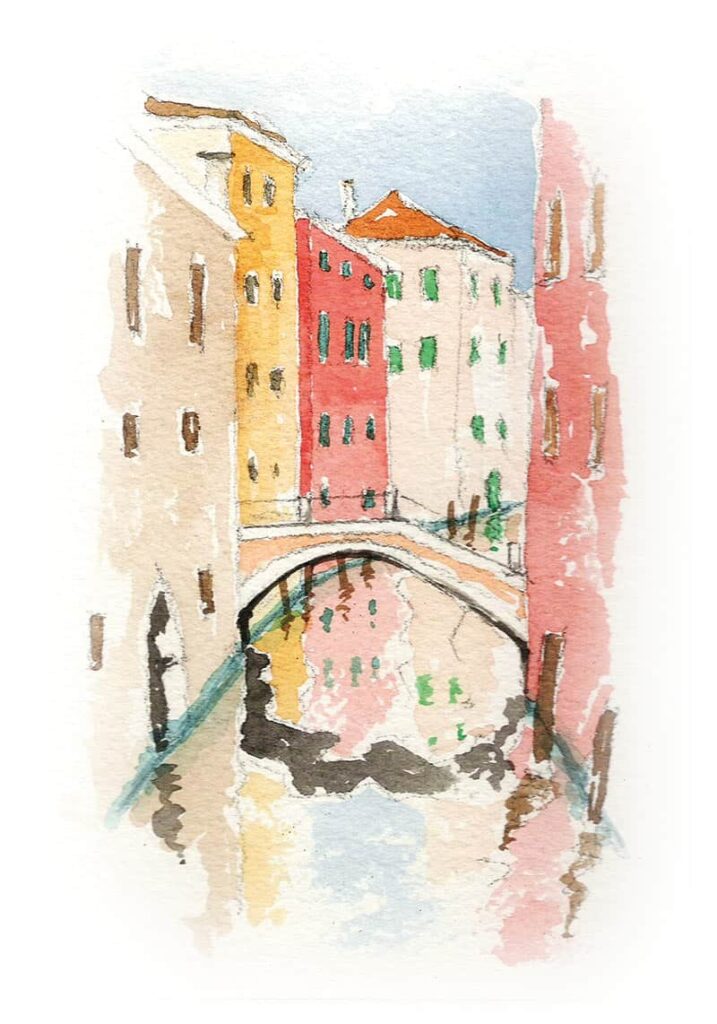
Bridge and Canal Postcard
Postcard depicting a typical Venetian view, with a bridge crossing a canal.
Postcard printed on 300 gsm paper.
Size: 4.5 × 6.5 inches
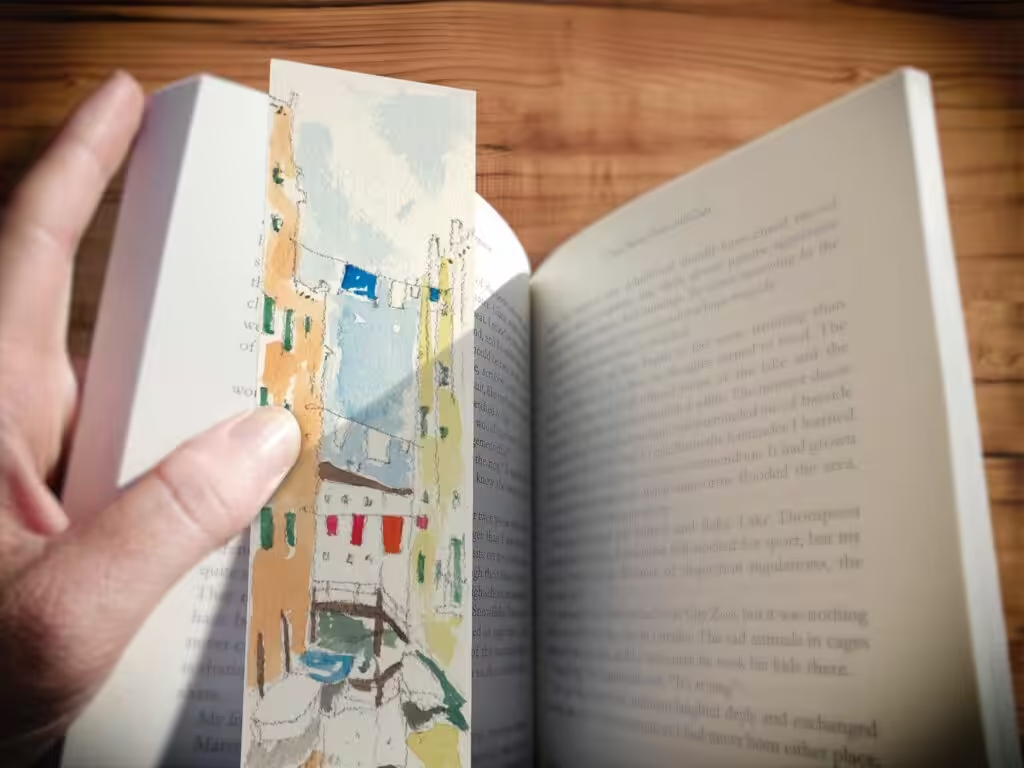
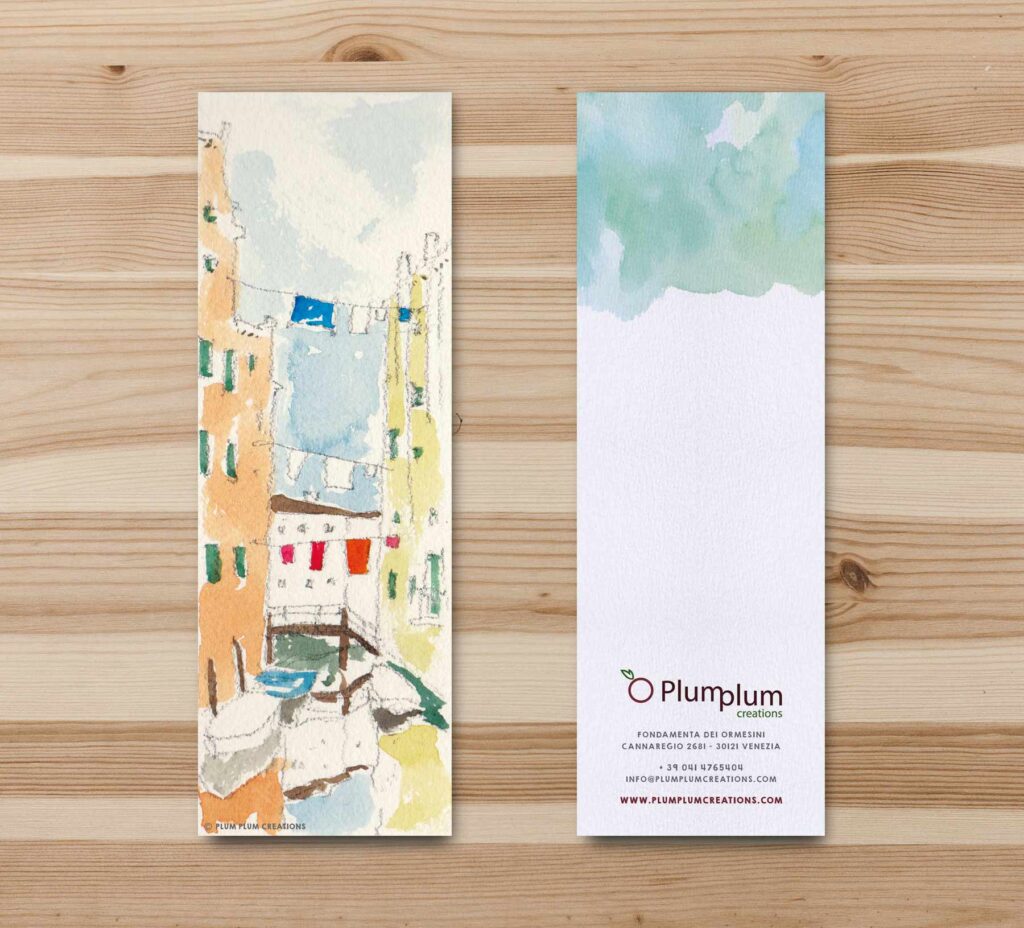
Bookmark 08
One of my original watercolors turned into a bookmark.
Printed on 300 gsm hammered paper.
Size: 2.3 × 7 inches.
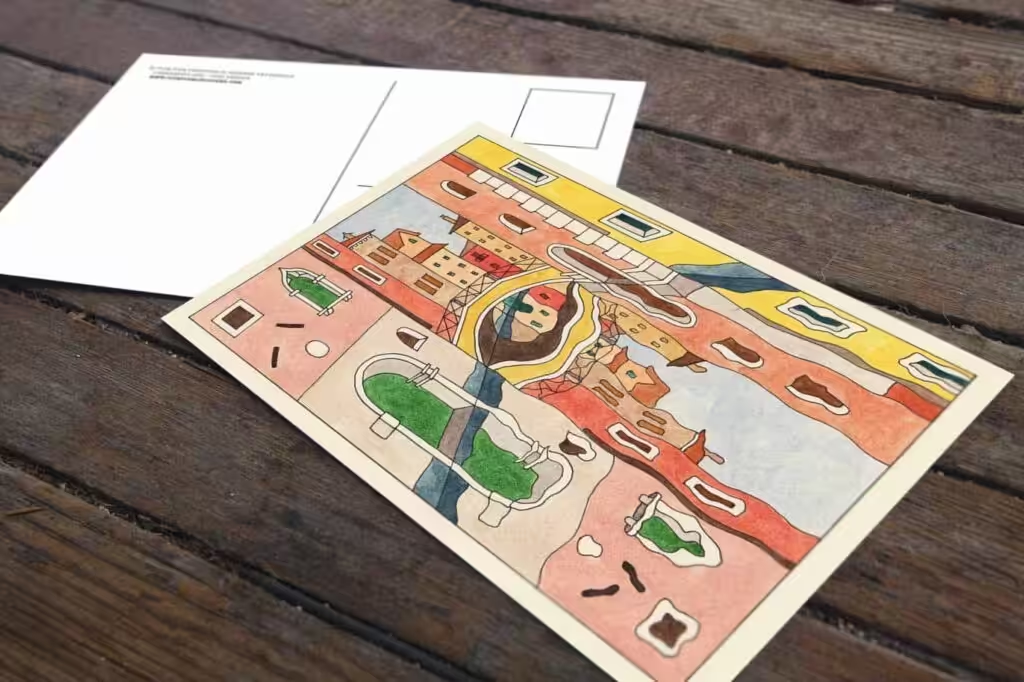
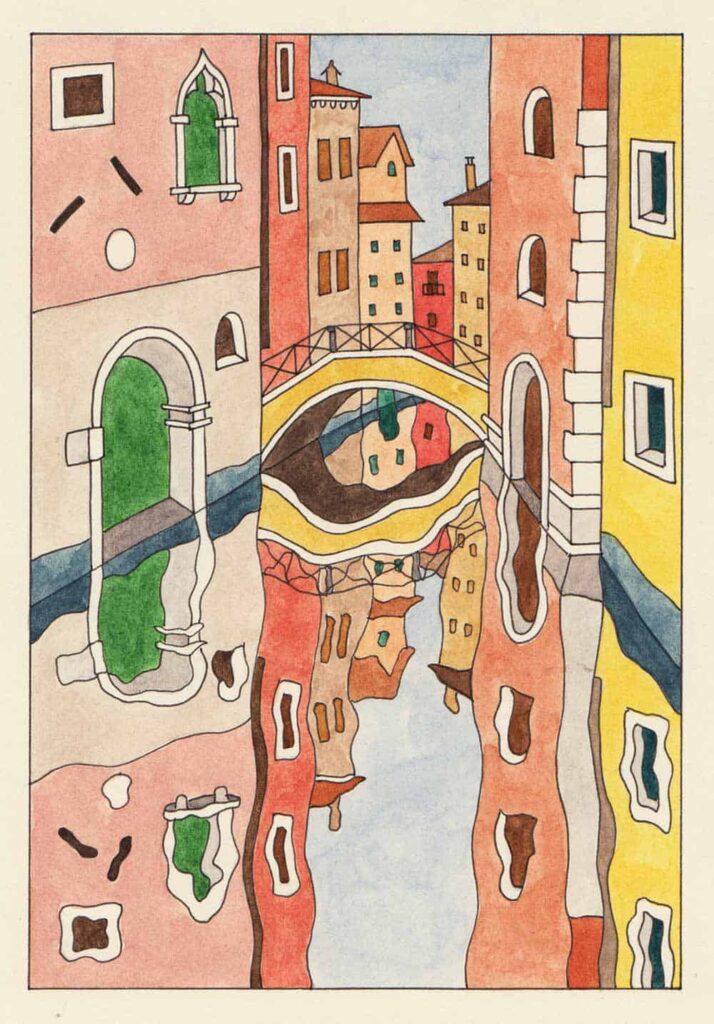
“Ponte degli Scudi” Postcard
Ponte degli Scudi is a bridge in the Castello district of Venice. Castello is the largest of the six districts of Venice.
If there is a district of Venice that can be described as truly “characteristic,” it is certainly Castello, with its canals, churches, and small gardens dating back to the 13th century. Here you can see clothes hanging out to dry between one window and another—this is the city you’ve always dreamed of!
Ponte degli Scudi is in the heart of Castello, near San Francesco della Vigna, just a short walk from the Arsenale.
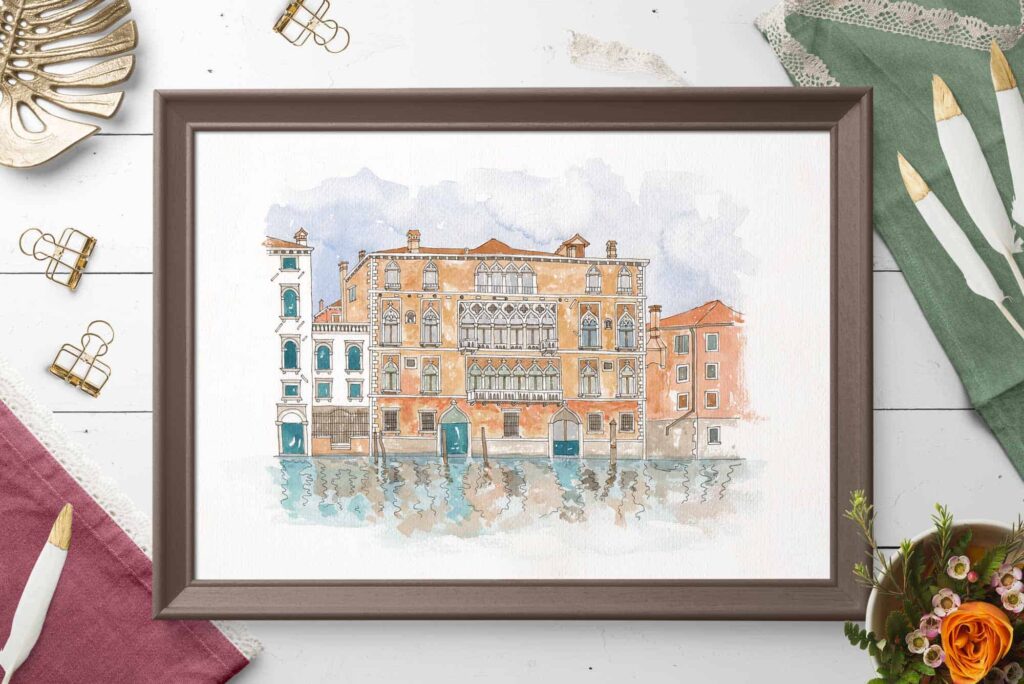
Bernardo Palace – Reproduction
Palazzo Bernardo, also known as Palazzo Giustiniani Bernardo, is a Venetian palace located in the San Polo district, not far from Campo San Polo, overlooking the Grand Canal.
The building was likely completed in 1442, when the Republic of Venice hosted the Duke of Milan, Francesco Sforza, and his wife Bianca Visconti there.
Reproduction printed on 260 gsm Modigliani ivory hammered paper.
Paper size: 13.78 × 9.84 inches.
SOLD WITHOUT FRAME.
recent view product
“Canal crossed by three bridges” Postcard
Canal crossed by three bridges – Postcard
A typical Venetian scene: a canal crossed by three bridges.
Postcard printed on 300 gsm paper.
Size: 4.5 × 6.5 inches
Sold Out
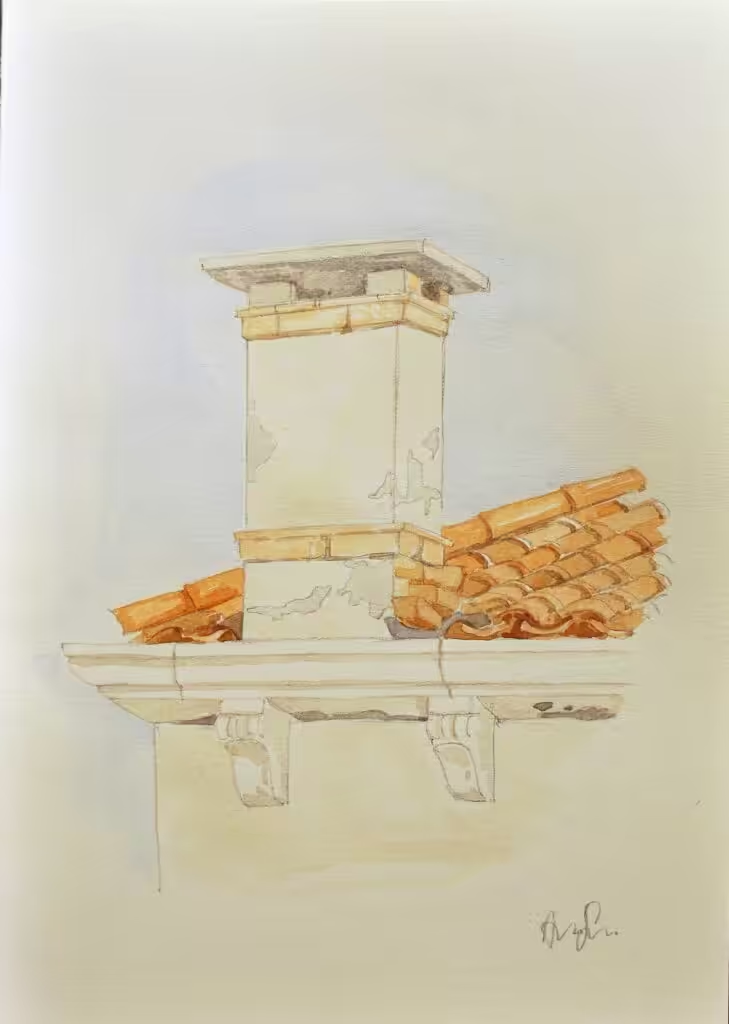
Venetian chimney 04
Original watercolor of a venetian chimney (Venetian chimney #06) made on ivory Favini card acid-free 200 gr Paper size: 5.8 […]
Canal crossed by three bridges
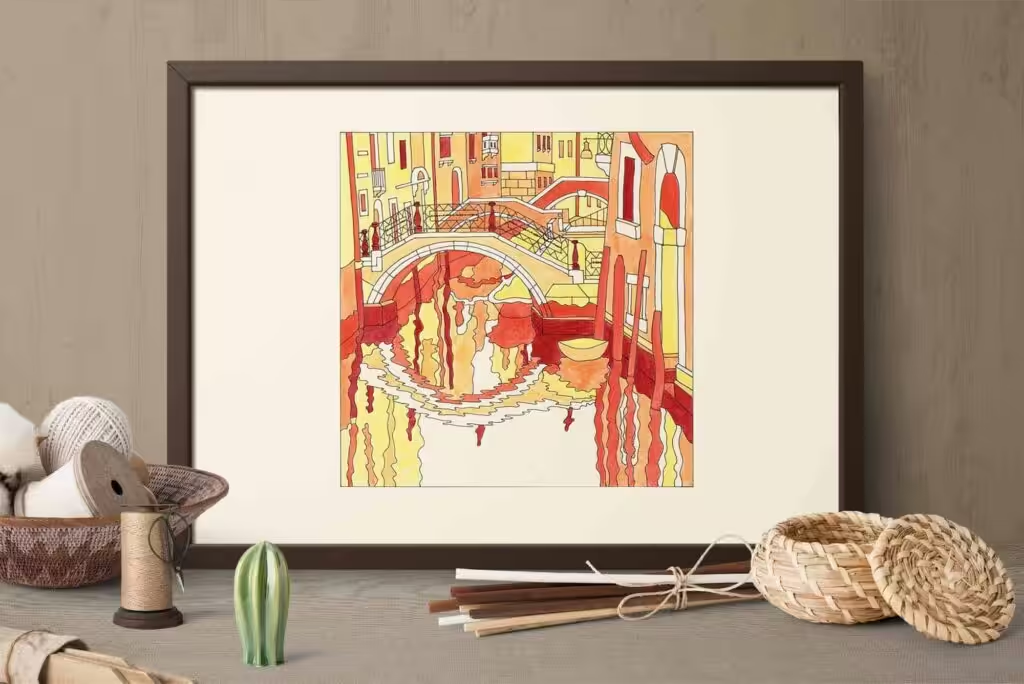
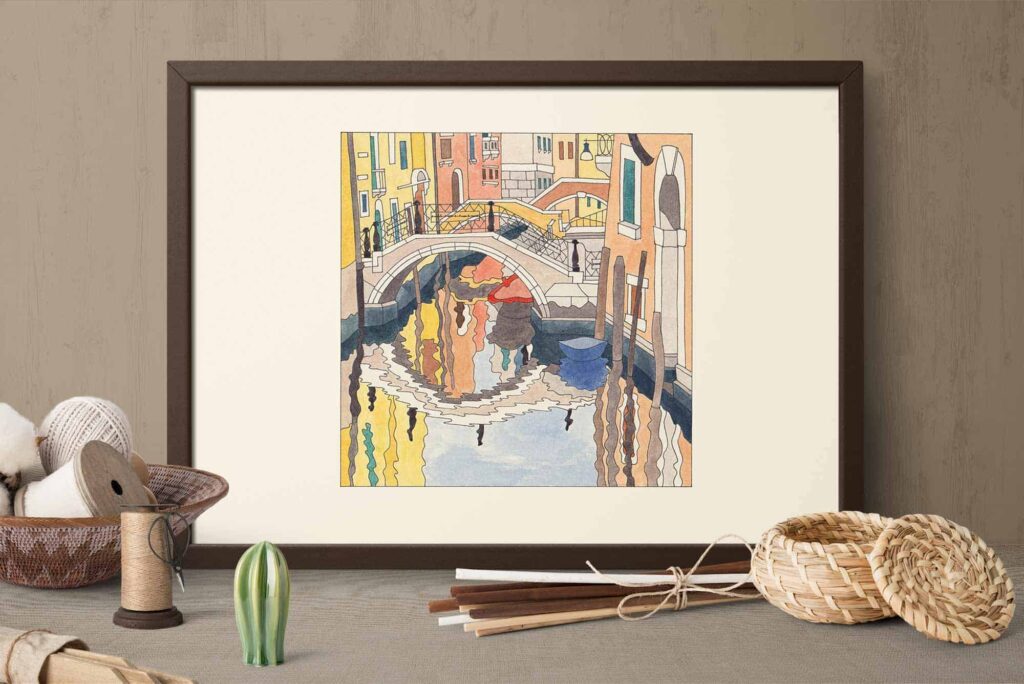
A typical Venetian landscape: a canal crossed by three bridges.
Reproduction printed on 260 gsm Modigliani ivory hammered paper.
Paper size: 13.50 × 9.69 inches
Image size: 7.60 × 7.64 inches
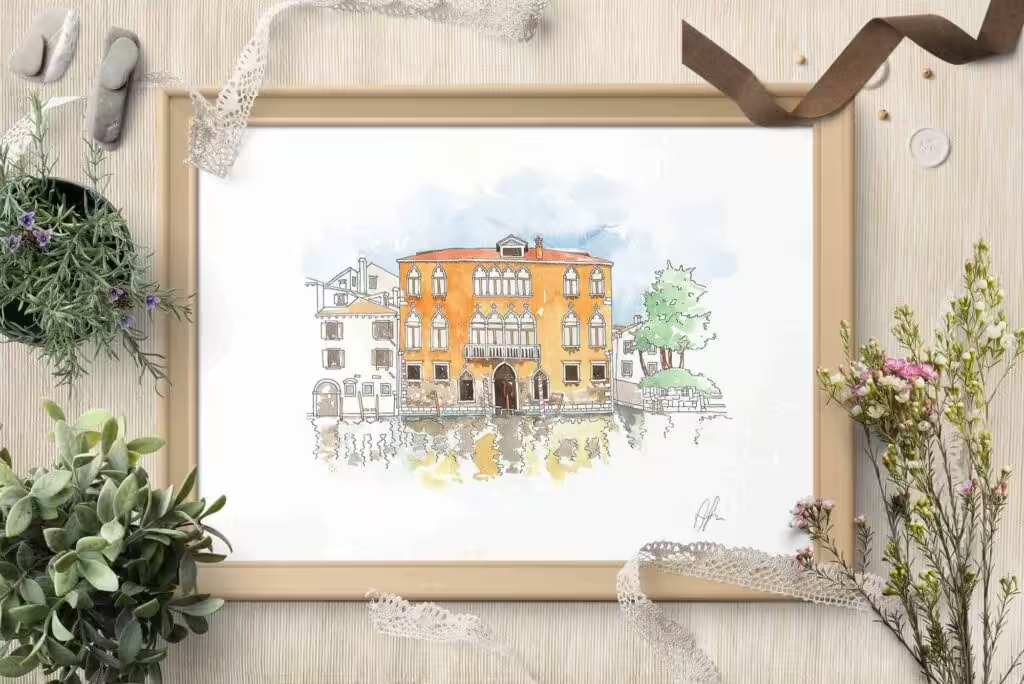
Window of Palazzo Contarini Fasan
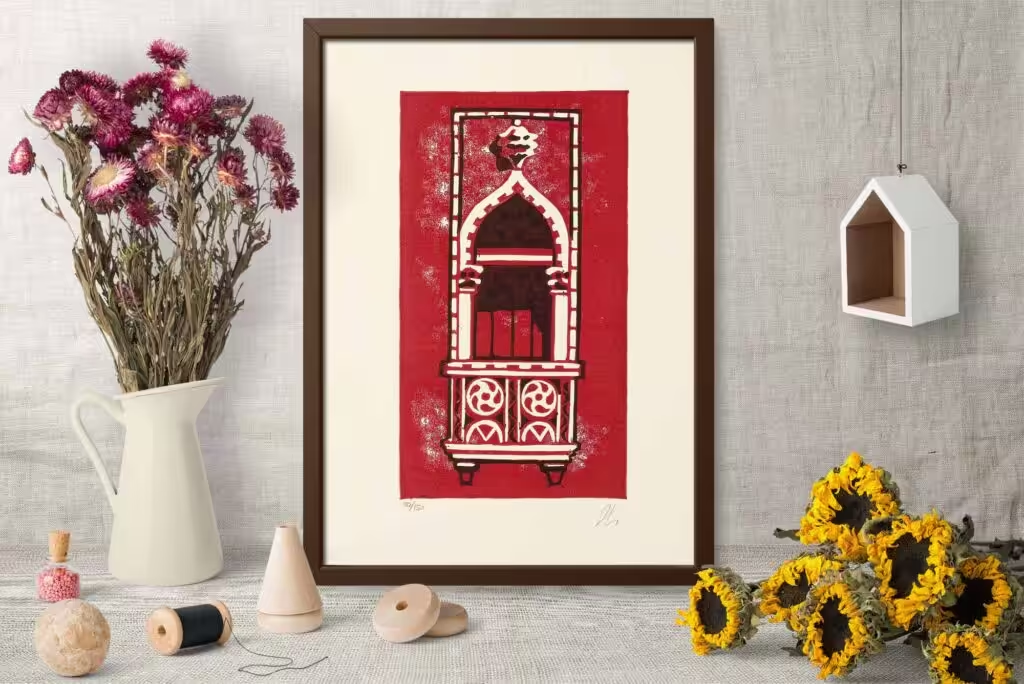
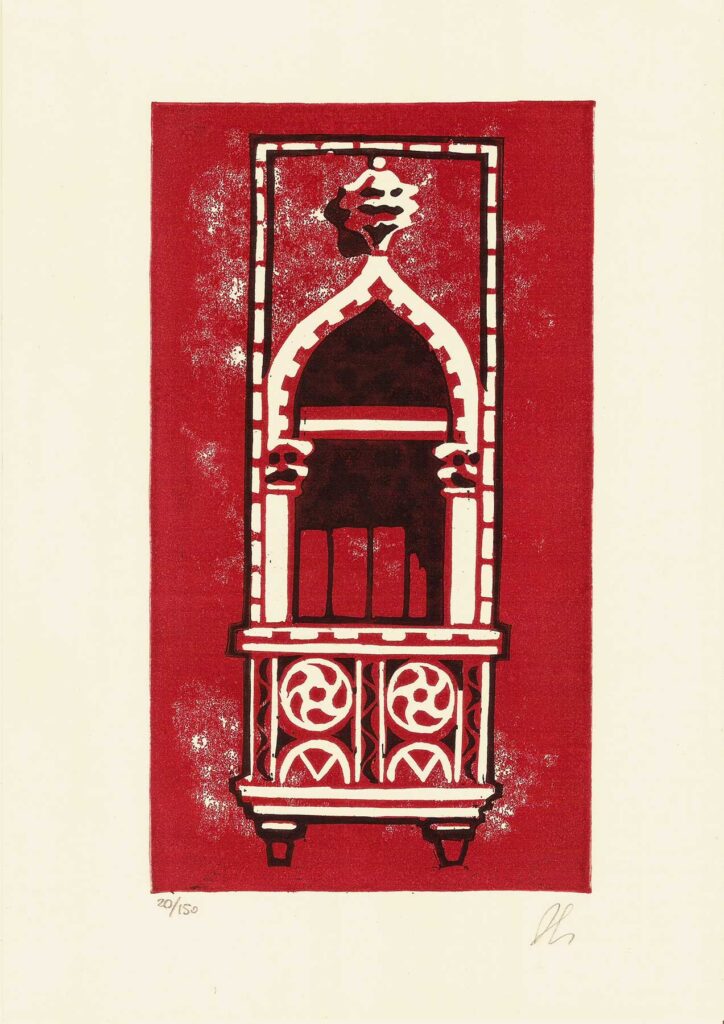
Palazzo Contarini Fasan, known as Desdemona’s House, is a Venetian palace located in the San Marco district overlooking the Grand Canal.
Palazzo Contarini is a distinctive 15th-century building owned by the Contarini family. A legend says that it was traditionally considered the home of Desdemona, the Shakespearean character from Othello.
The palace is small in size and features a vertically developed façade.
Sold Out
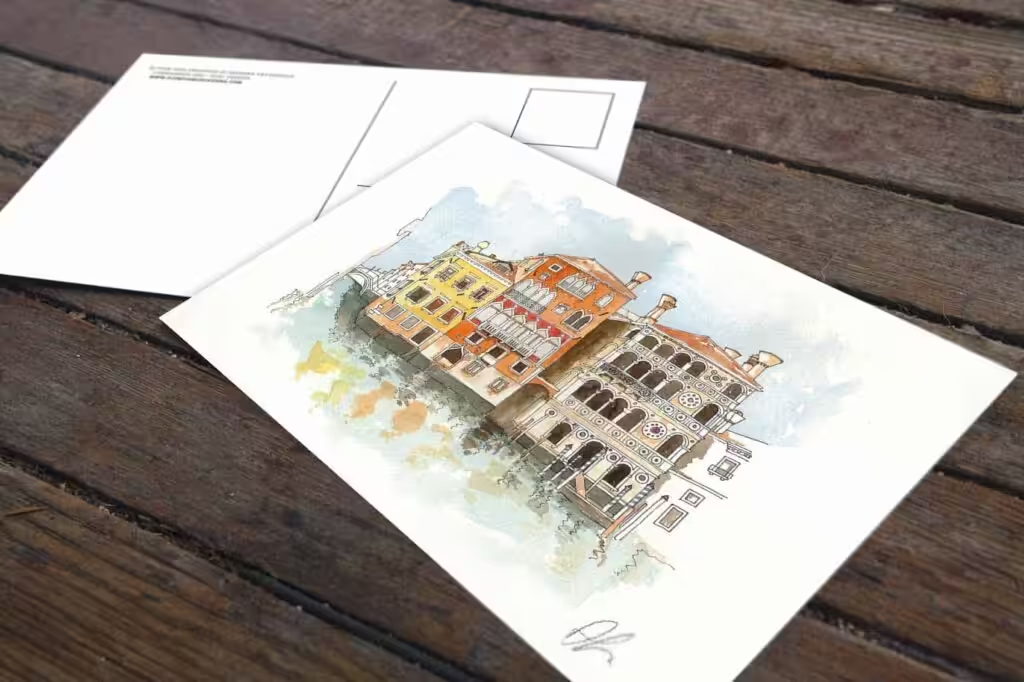
Foscarini Giovanelli Palace
Giovanelli Palace (also known as “Foscarini Giovanelli Palace”) is a palace in Venice, located in Santa Croce district, facing the […]