

No products in the cart.
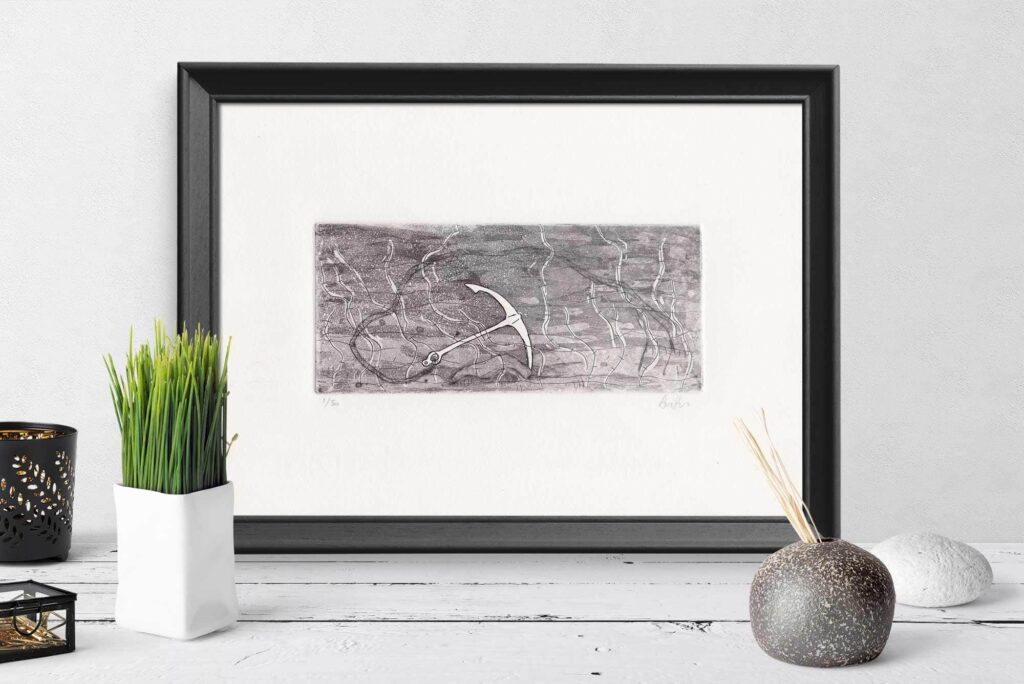
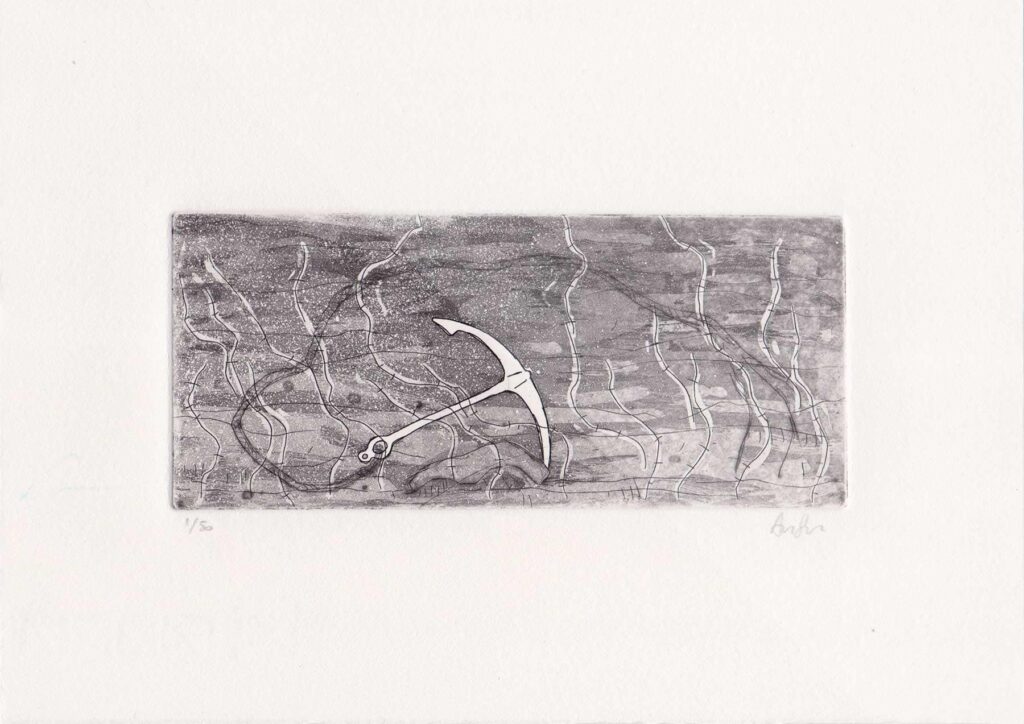
Anchor
Anchor is an original intaglio print I created during a personal study of the aquatic world.
The etching Anchor is part of a series of four works that make up the artist’s book Aqua.
The print combines etching and aquatint techniques, with additional drypoint work.
Printed with intaglio ink on Rosaspina paper.
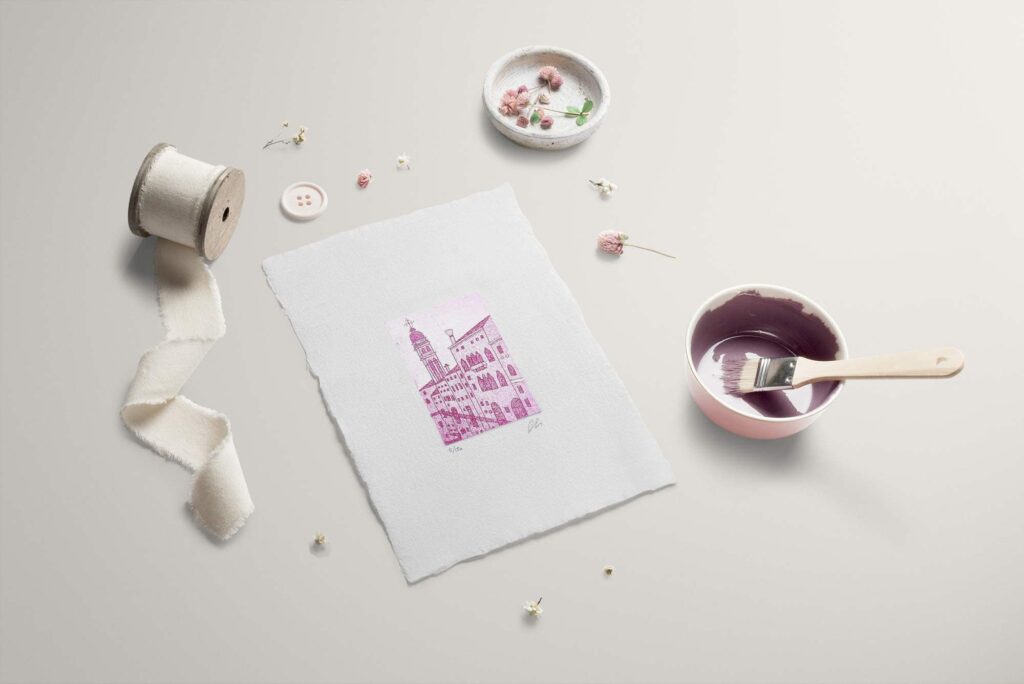
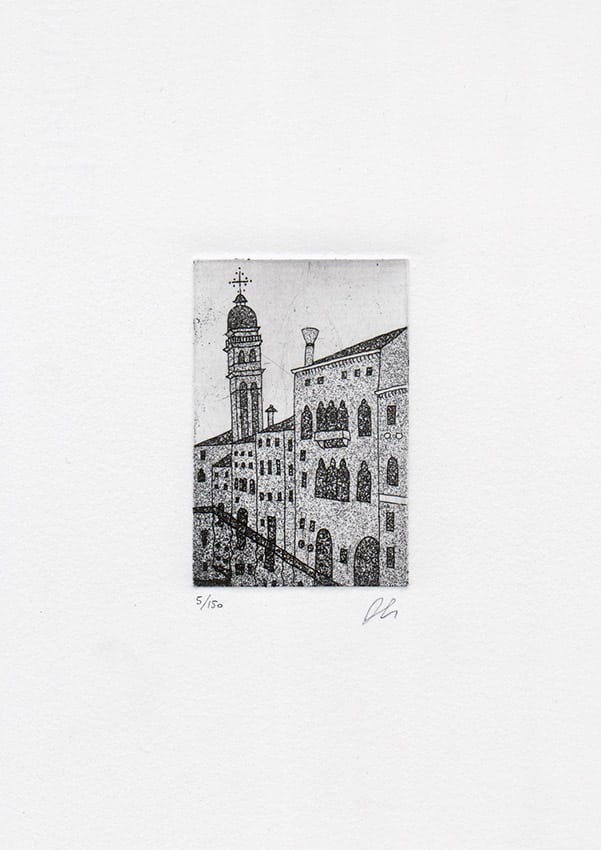
Bell Tower of San Giorgio dei Greci
This intaglio print depicts the bell tower of San Giorgio dei Greci in Venice.
The church was the center of the Scuola dei Grei, the Greek Brotherhood in Venice. The bell tower was built in 1592.
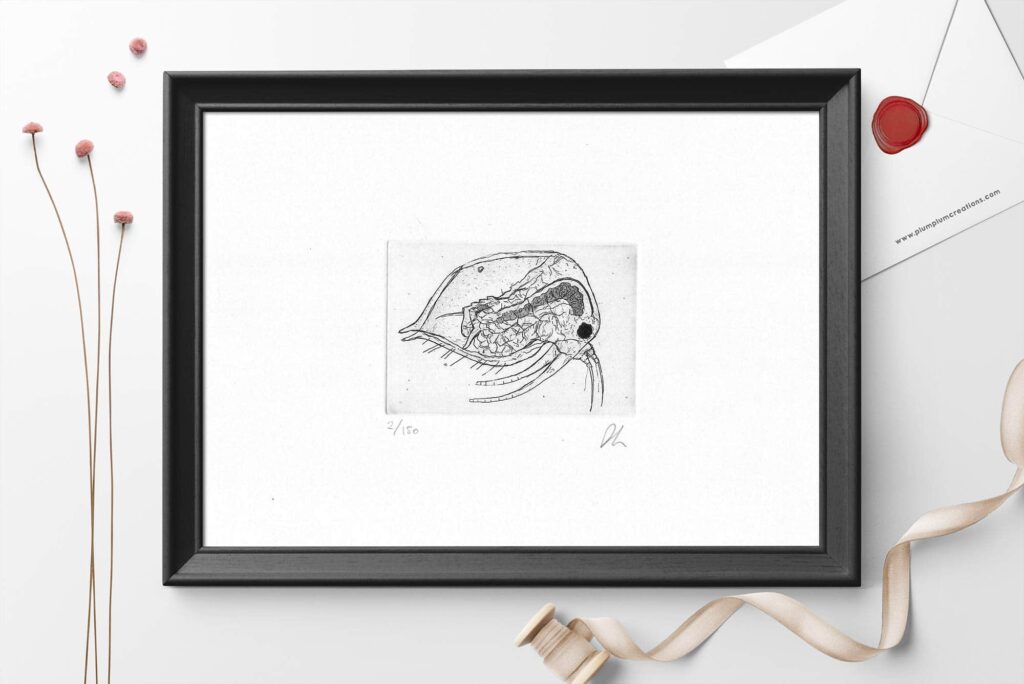
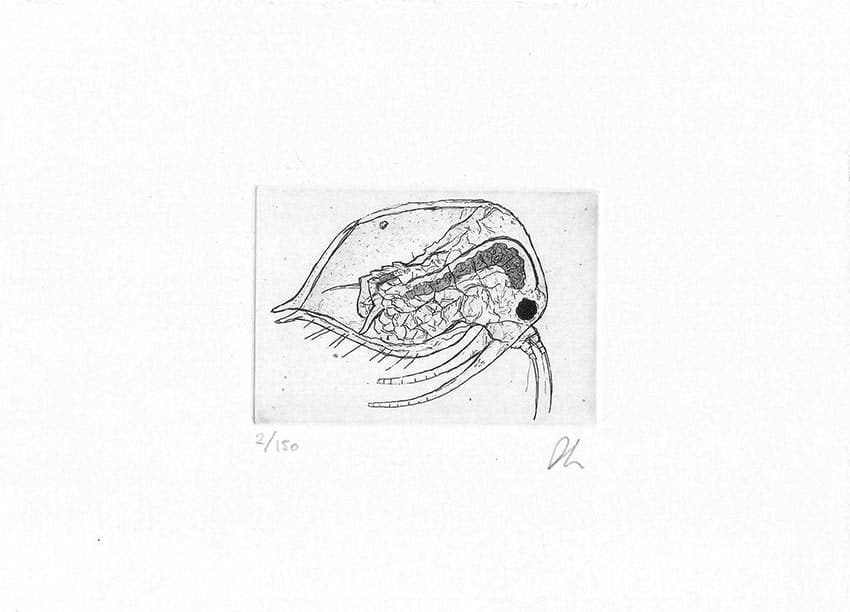
Bosmina 1
Bosmina 1 is an original intaglio print on a zinc plate, created as part of my personal study of microorganisms in the aquatic world.
The subject depicts a typical freshwater microorganism, Bosmina, commonly found in both small and large lakes. Its distinctive transparent body reveals the interior in a fascinating interplay of translucency.
The zinc plate was worked using a two-bite etching technique and subsequently finished with a three-bite aquatint process.
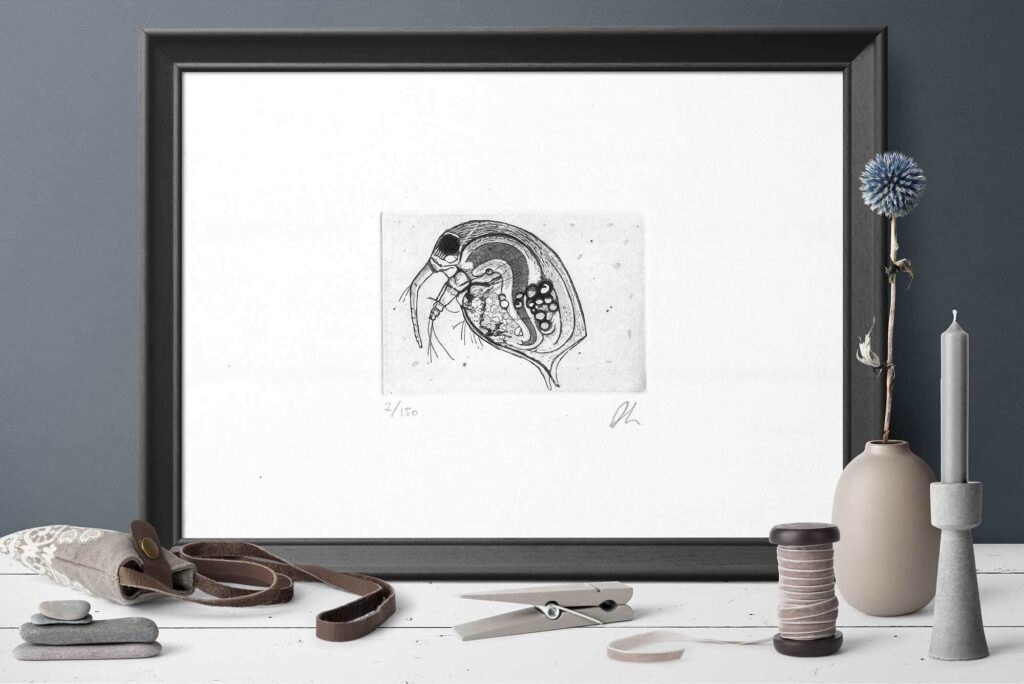
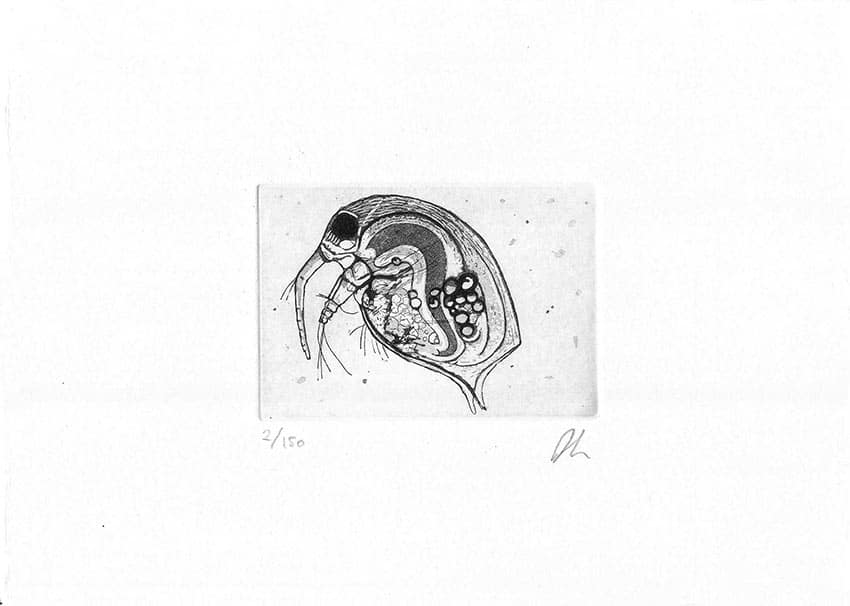
Bosmina 2
Bosmina 2 is an intaglio print on a zinc plate made by me during my personal study of microorganisms in the aquatic world.
The subject depicts a typical freshwater microorganism, the bosmina, which can be found abundantly in both small and large lakes, and whose distinctive transparent body allows the interior to be seen in a fascinating interplay of translucency.
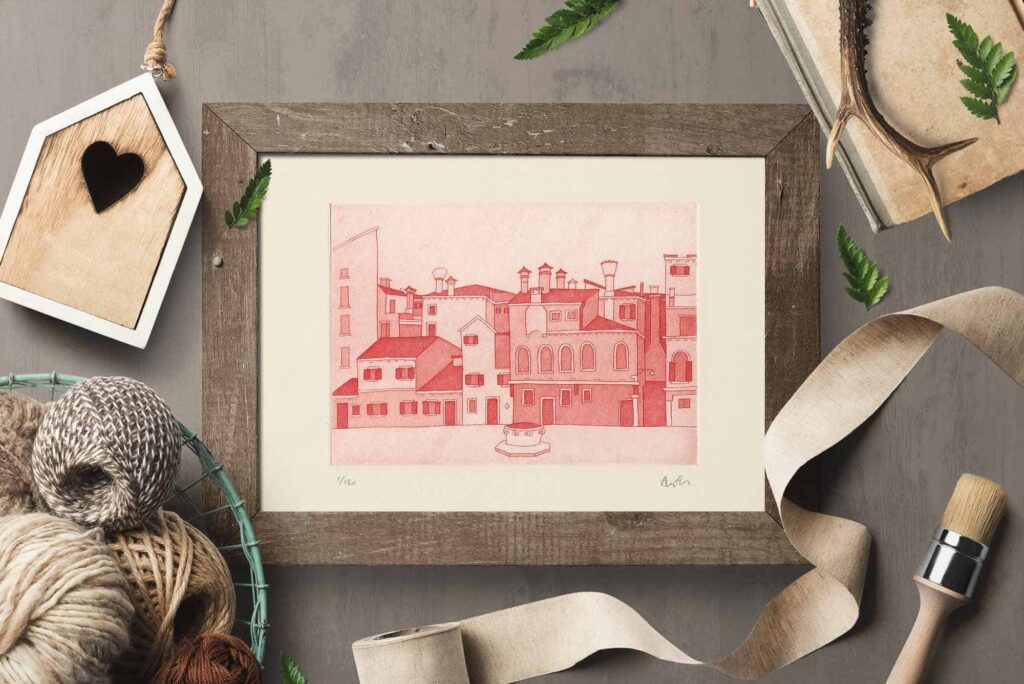
Campo della Maddalena
Campo della Maddalena, certainly one of the most characteristic squares in Venice, features sixteenth-century buildings with picturesque chimneys and a sixteenth-century wellhead. It is one of the most characteristic places in the Cannaregio district, right next to the busy Strada Nuova.
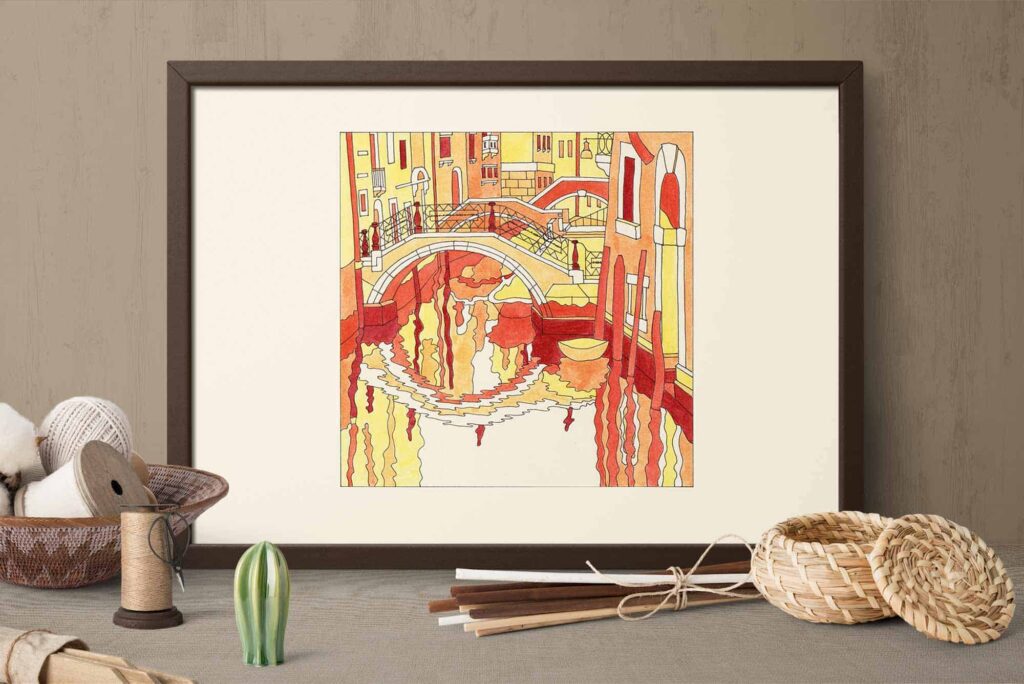
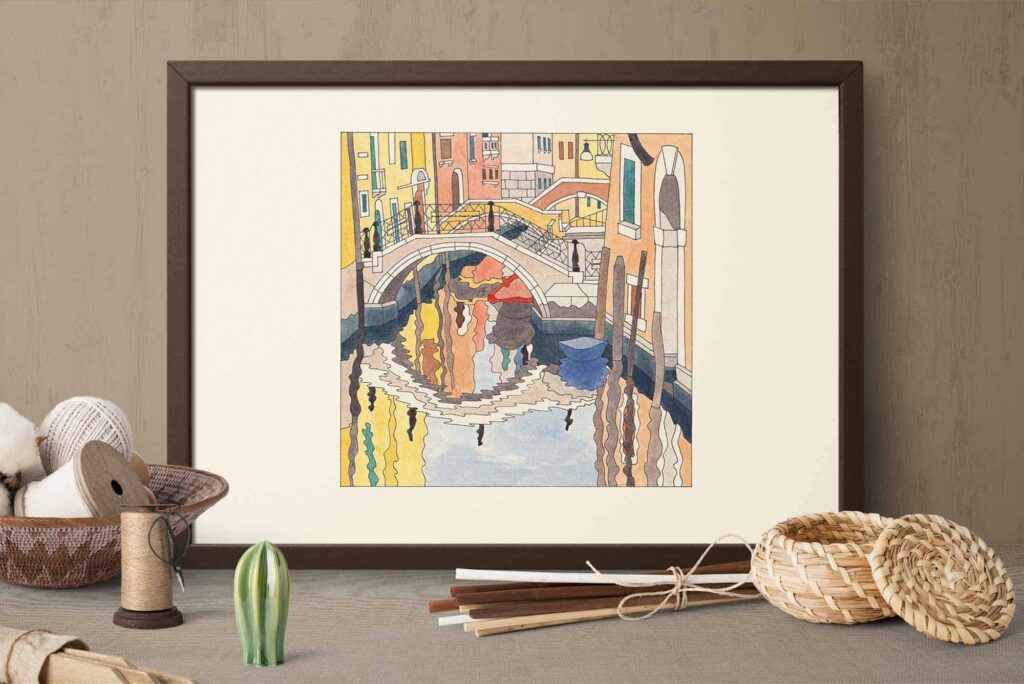
Canal crossed by three bridges
A typical Venetian landscape: a canal crossed by three bridges.
Reproduction printed on 260 gsm Modigliani ivory hammered paper.
Paper size: 13.50 × 9.69 inches
Image size: 7.60 × 7.64 inches
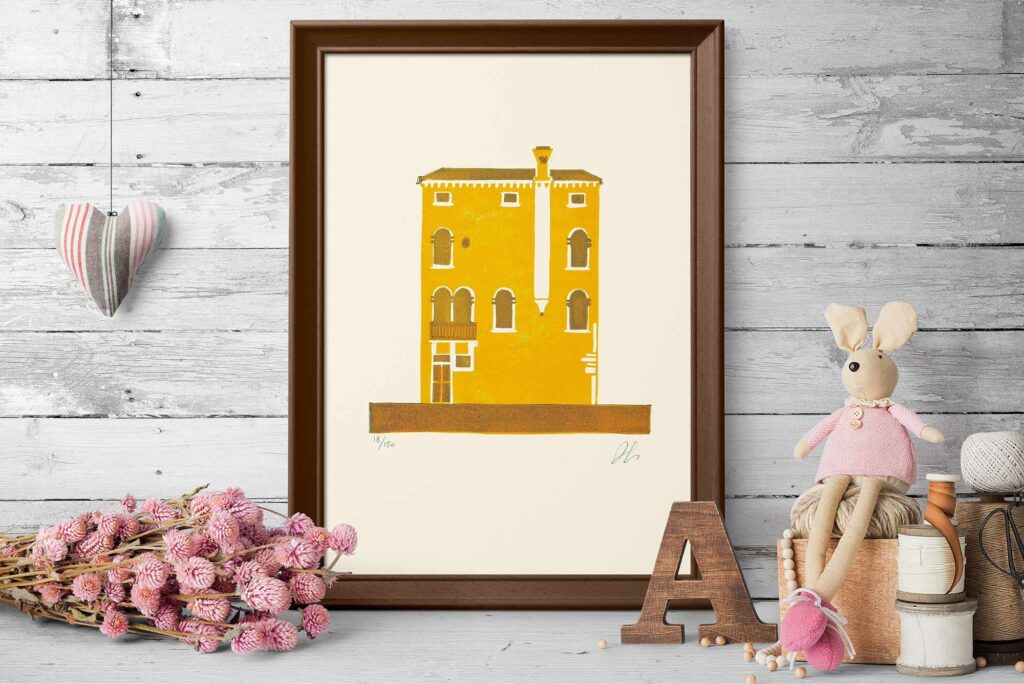
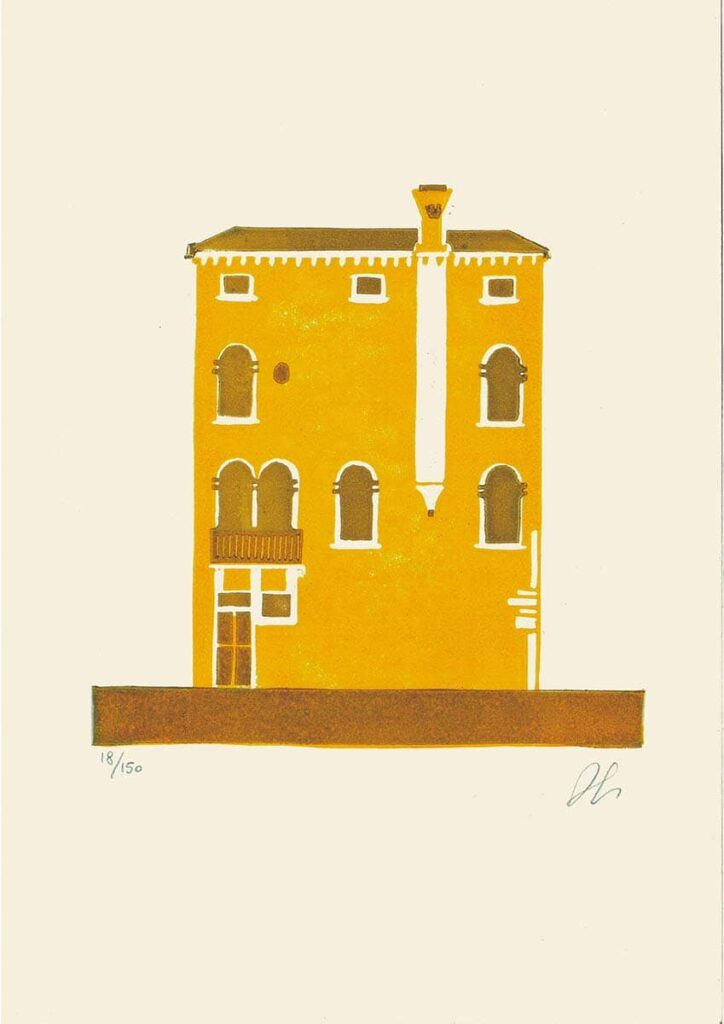
Fondamenta Ca’ Balà
A 16th-century house with a large hall on the first floor that served both as a living room and a passageway onto which the other rooms open. The windows along the edges of the walls are balanced by the vertical line of the chimney. The house was once frescoed, and some traces are still visible today.
“Fondamenta” means “foundation” in Italian, and describes the pedestrian embankment along a canal. It was (and still is today) a very busy area for loading and unloading boats, much like a dock.
This Fondamenta is very close to the Church of Santa Maria della Salute, one of the most famous churches in Venice.
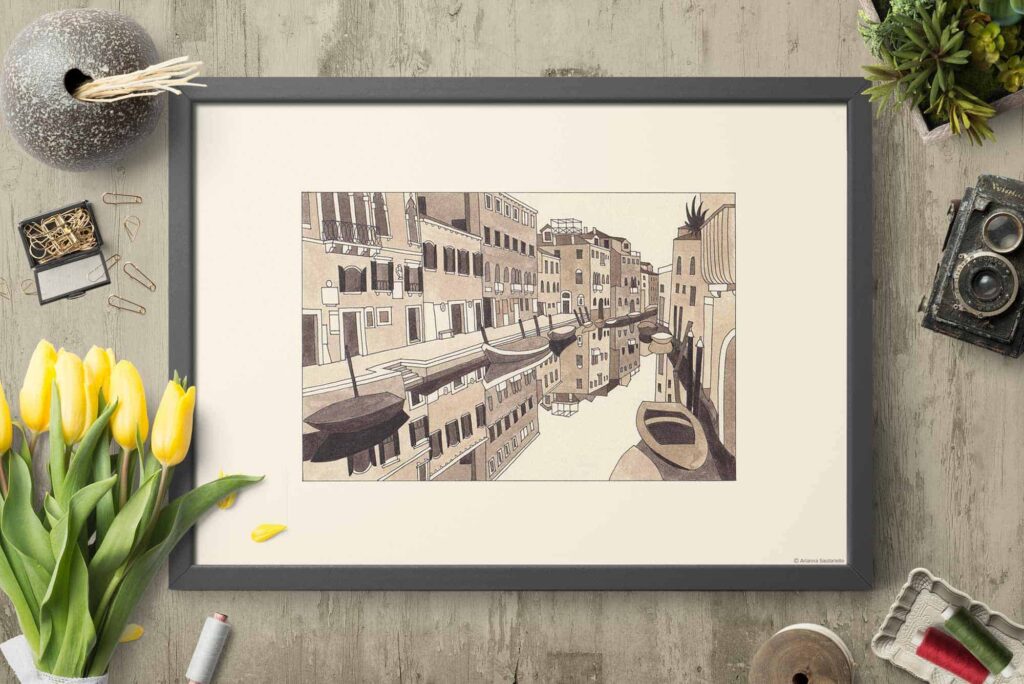
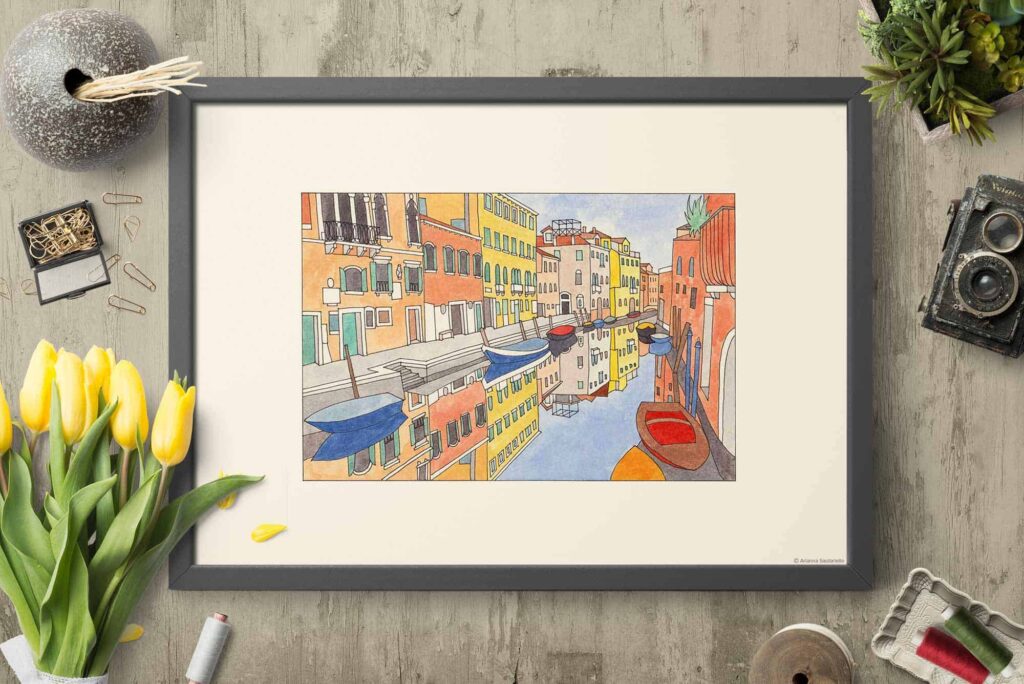
Fondamenta dei Mori
Along the route leading to Madonna dell’Orto lies the Fondamenta dei Mori, with the square of the same name, which takes its name from the three 13th-century statues of Moors wearing turbans set against the buildings of the campo. A fourth Moor, known as “Sior Antonio Rioba,” with an iron nose, stands at the foot of the bridge and, like Rome’s Pasquino, served as a voice for Venetian satire against the Republic.
Reproduction printed on 260 gsm Modigliani ivory hammered paper.
Paper size: 13.50 × 9.57 inches
Image size: 9.33 × 6.18 inches
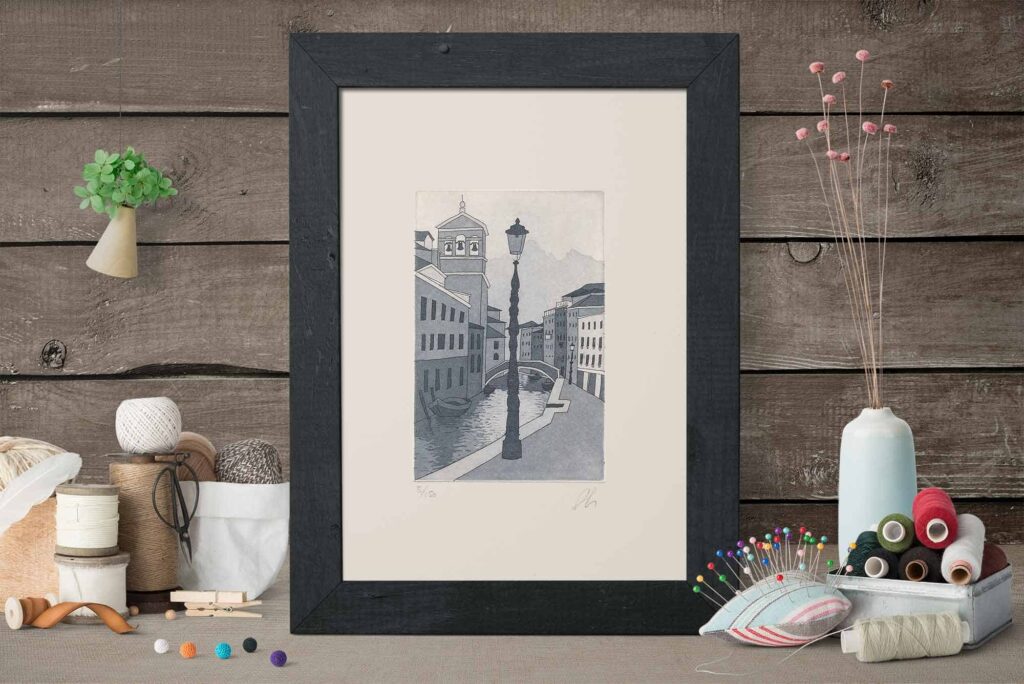
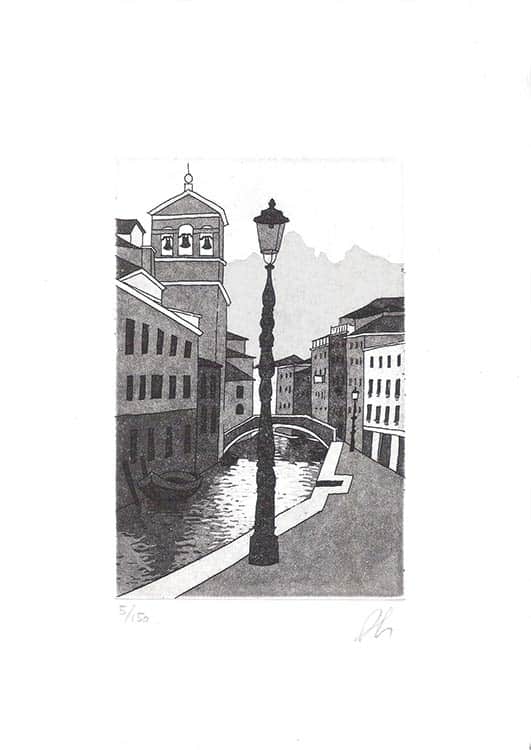
Fondamenta della Misericordia
Fondamenta della Misericordia is a Venetian waterfront street in the Cannaregio district, near the Scuola Grande della Misericordia. It runs parallel to the Rio de la Misericordia, one of the main canals of Cannaregio.
In Venice, the term “fondamenta” refers to a street that runs along a canal.
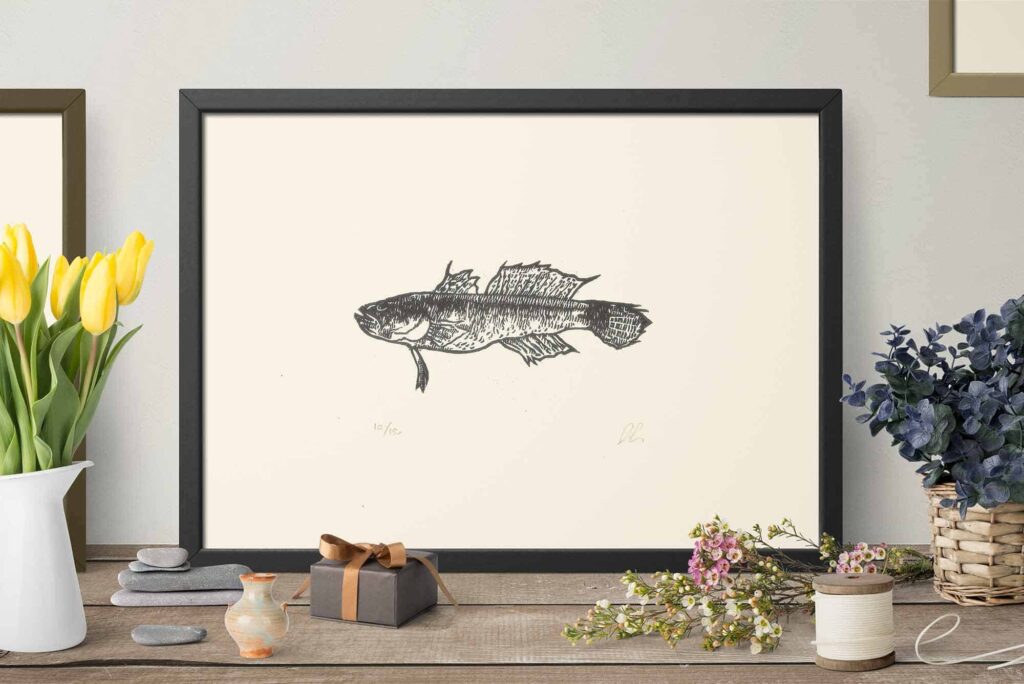
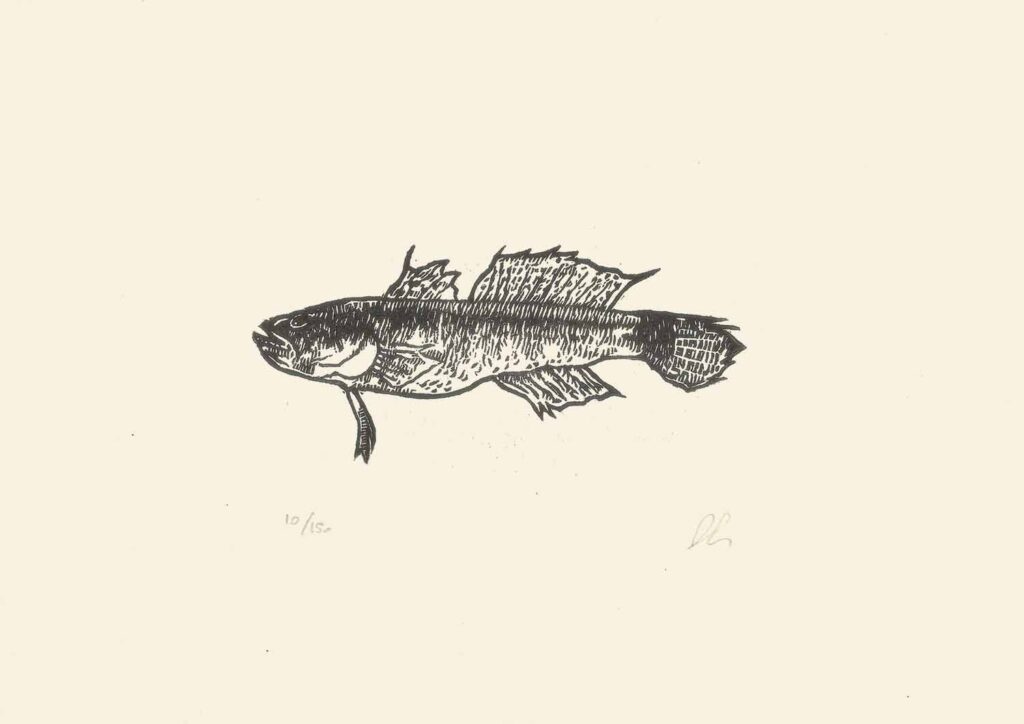
Goby fish
The goby (called gò in Venetian dialect) is a type of fish that lives mainly in lagoon areas or where the seabed is very muddy: in the past it was used as a trade commodity, while today it appears in some Venetian recipes, particularly in risotto di gò.
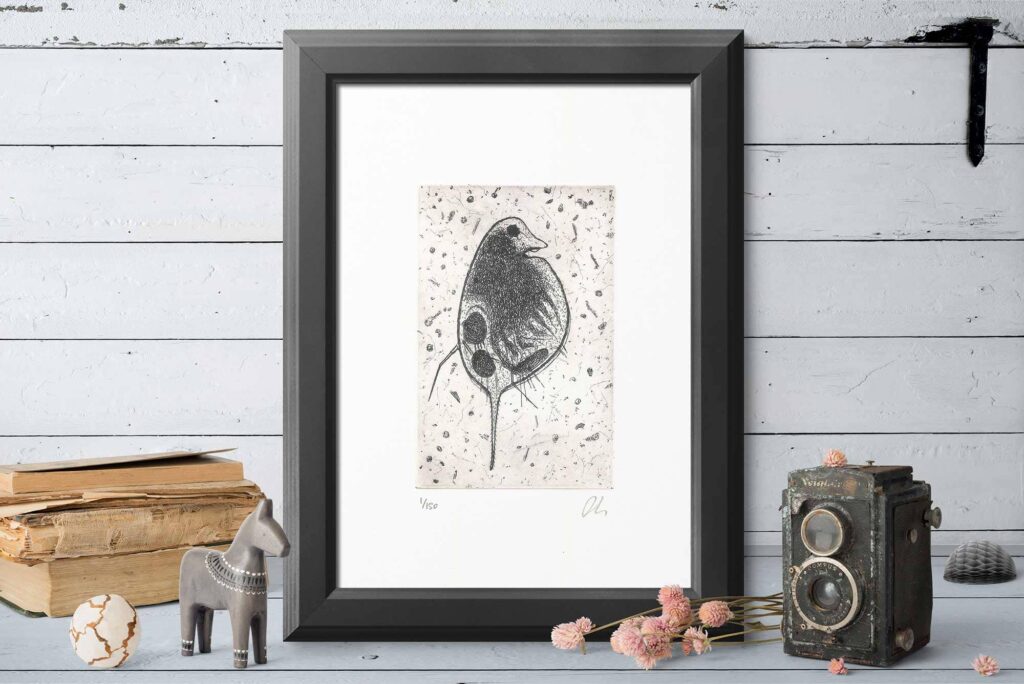
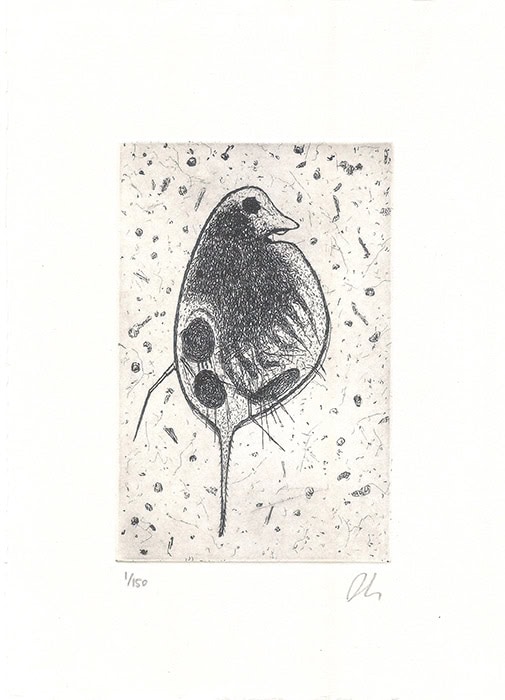
Microorganism 3
Microorganisms 3 is an intaglio print made by me during a personal study on microorganisms in the aquatic world.
Daphnia longispina is a planktonic crustacean belonging to the genus Daphnia (family “Daphniidae”), and is a freshwater cladoceran water flea.
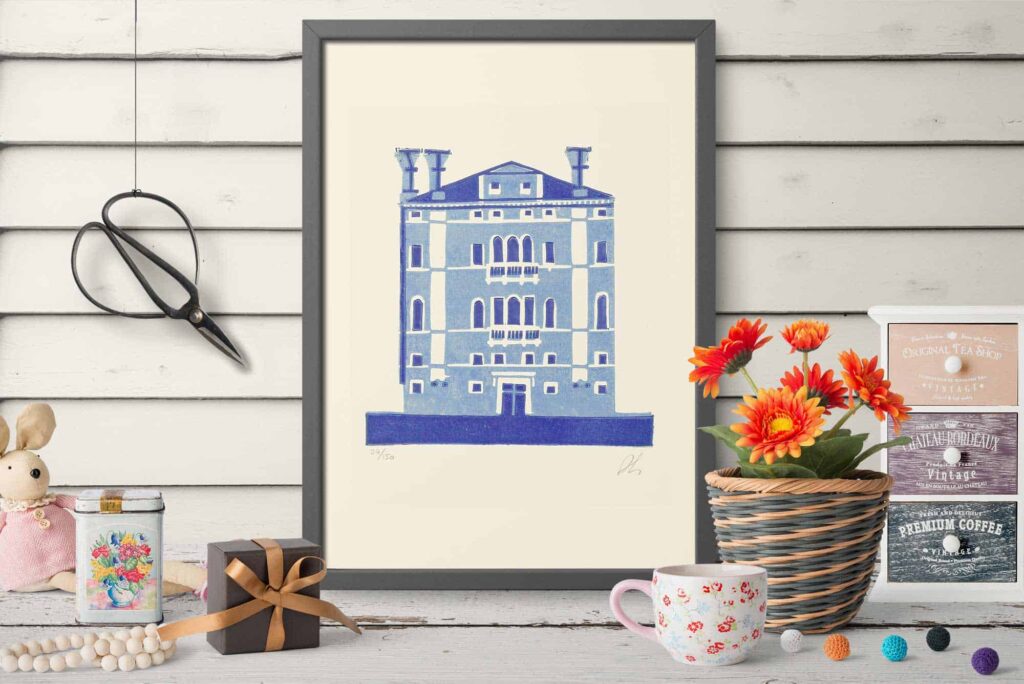
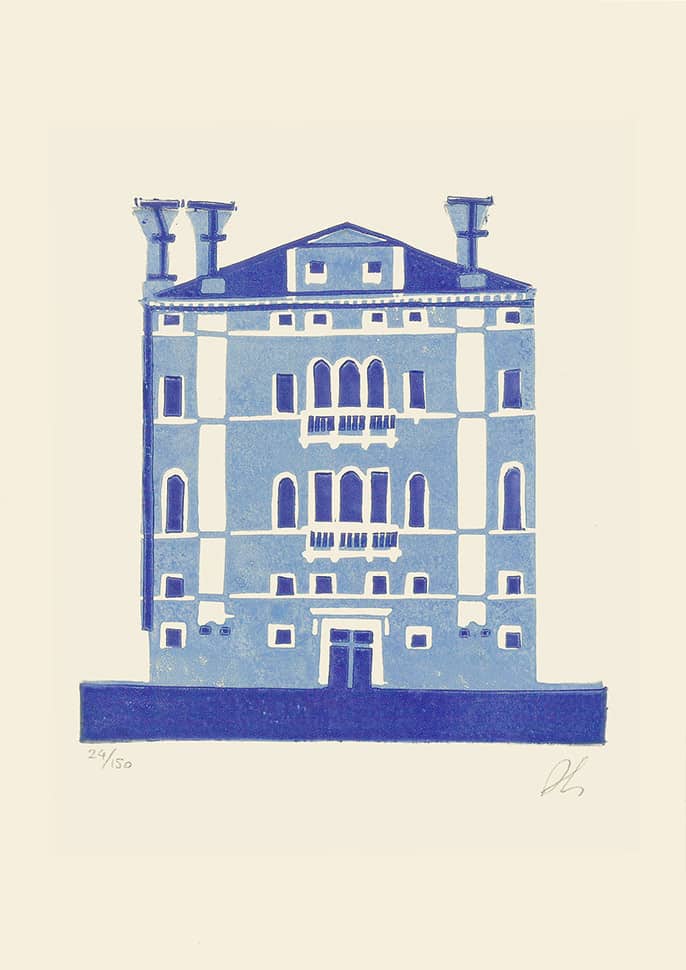
Palazzetto Dandolo
Palazzetto Dandolo on Fondamenta Dandolo (Campo Santi Giovanni e Paolo)
A small, well-preserved 17th-century palace, both in terms of its façade and interior. The two chimneys are part of the symmetrical perspective typical of minor Venetian architecture. This building appears in Bernardo Bellotto’s painting The Rio dei Mendicanti.