

No products in the cart.
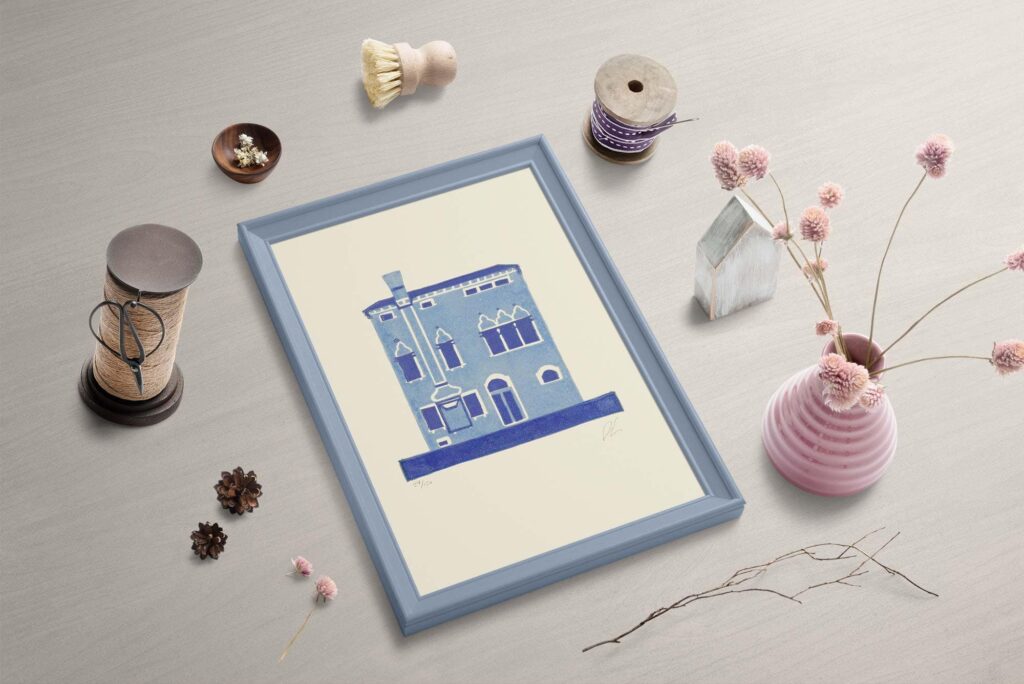
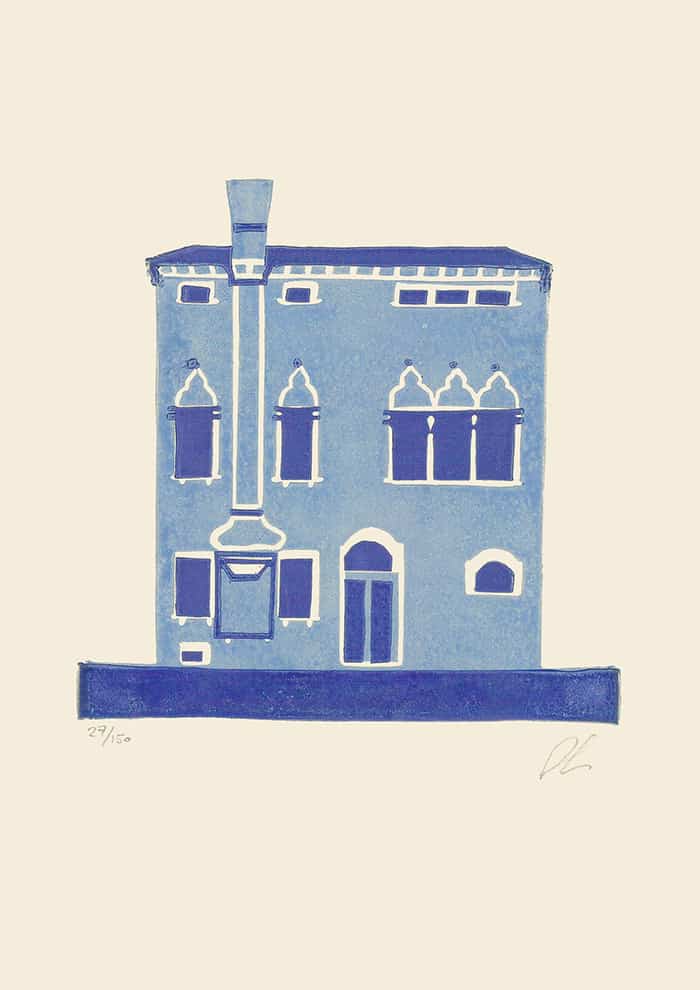
Piscina Venier Palace
Palace in Piscina Venier (Sant’Agnese), in the Dorsoduro district, Venice
A small 15th-century palace, typical of Venetian architecture of the period: the spacing between the windows is irregular, and the ground-floor windows are independent from those on the upper floors; the entrance and the ground-floor windows are arranged around a large and elegant chimney.
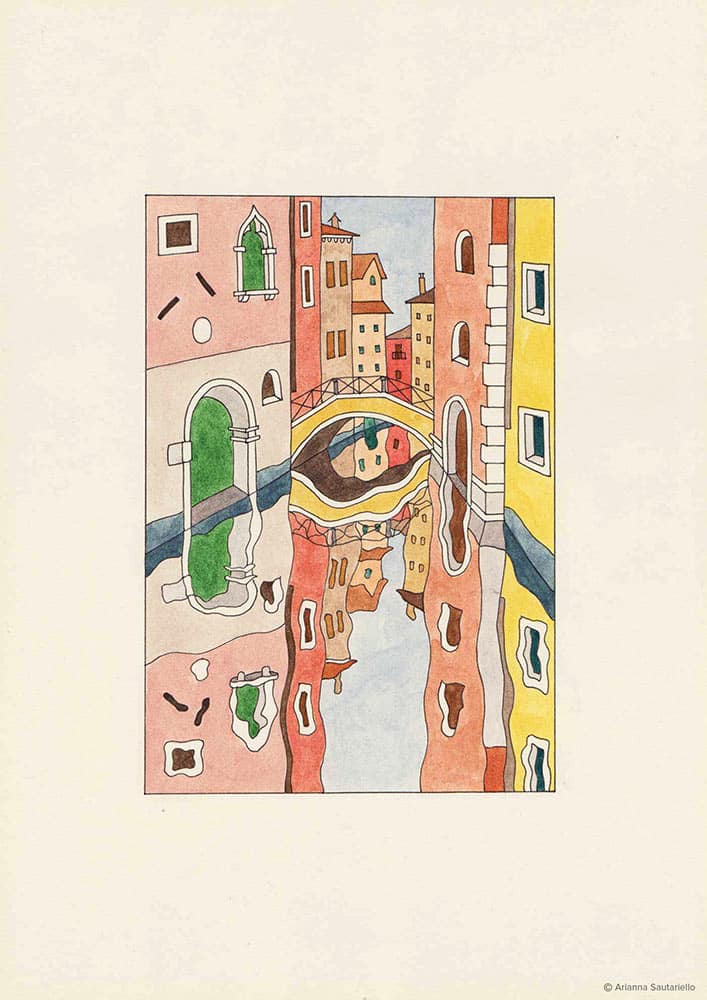
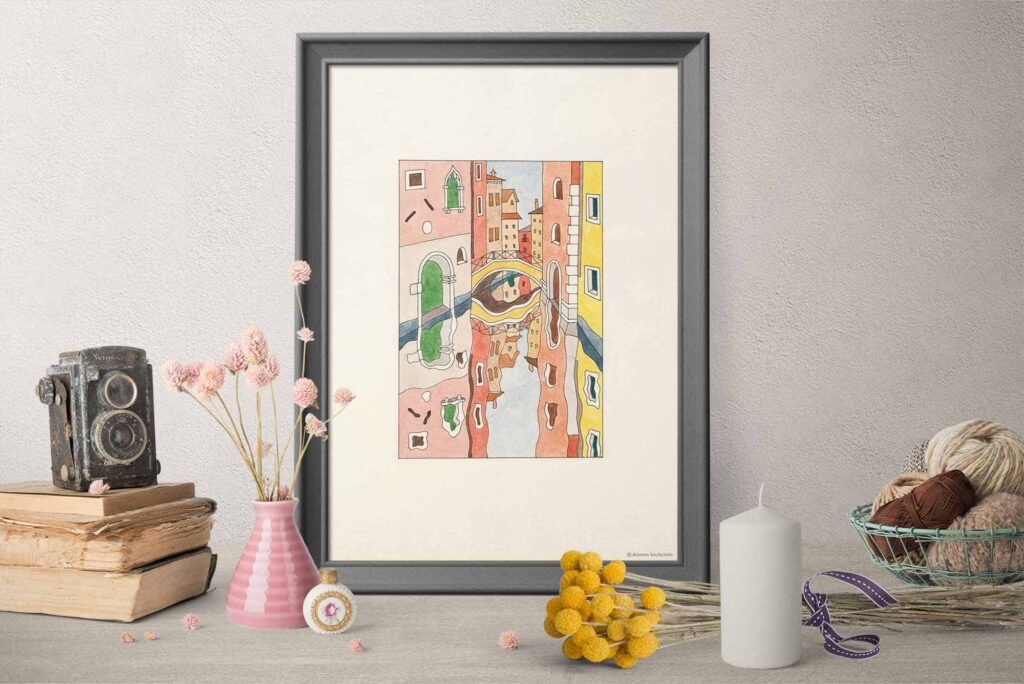
Ponte degli Scudi
Ponte degli Scudi is a bridge in the Castello district of Venice. Castello is the largest of the six districts of Venice.
If there is a district of Venice that can be described as truly “characteristic,” it is certainly Castello, with its canals, churches, and small gardens dating back to the 13th century. Here you can see clothes hanging out to dry between one window and another—this is the city you’ve always dreamed of!
Ponte degli Scudi is in the heart of Castello, near San Francesco della Vigna, just a short walk from the Arsenale.
Reproduction printed on 260 gsm Modigliani ivory hammered paper.
Paper size: 13.54 × 9.65 inches
Image size: 8.31 × 5.79 inches
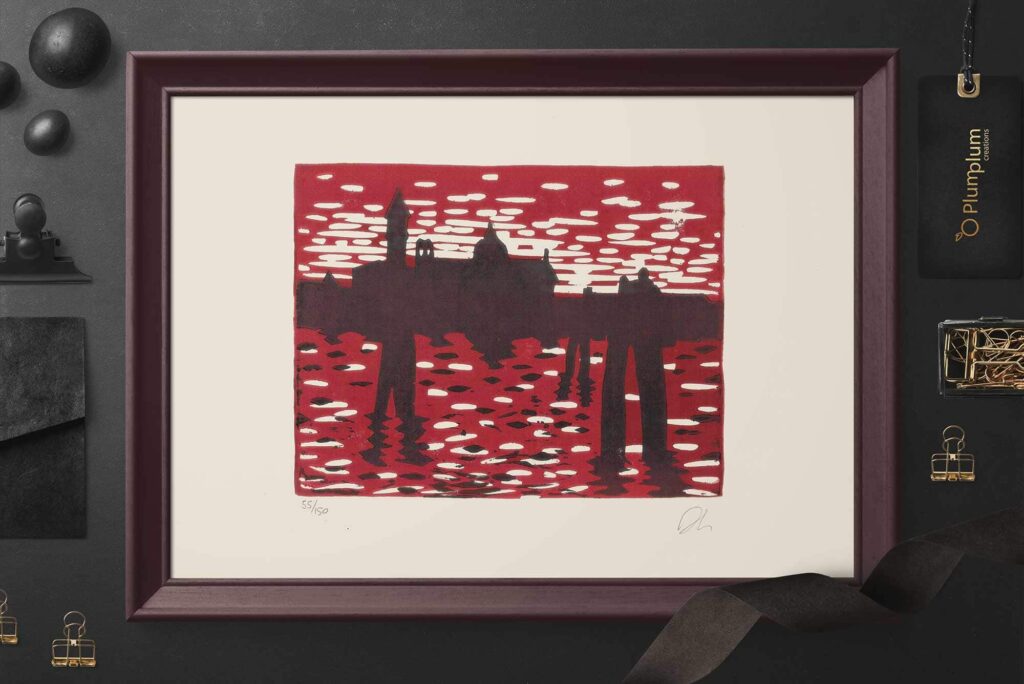
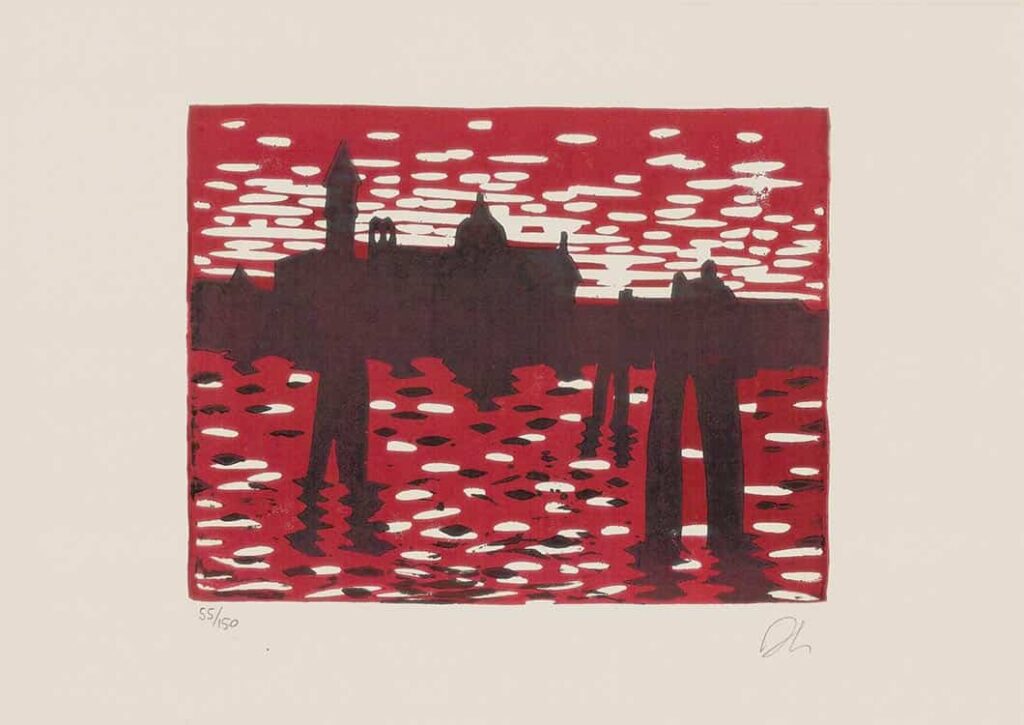
Redentore Skyline
The Church of the Redentore is a 16th-century church designed by the Italian architect Andrea Palladio, located on the island of Giudecca, directly facing the Zattere and the Giudecca Canal, and it was built as a votive church to thank God for delivering the city from a severe plague epidemic.
“Redentore Skyline” is a linocut print made with a vertical press on 200 gsm Favini Rismacqua ivory paper using intaglio ink.
Paper size: 11.69 × 8.27 inches (A4)
Image size: 7.32 × 5.71 inches
SOLD WITHOUT FRAME
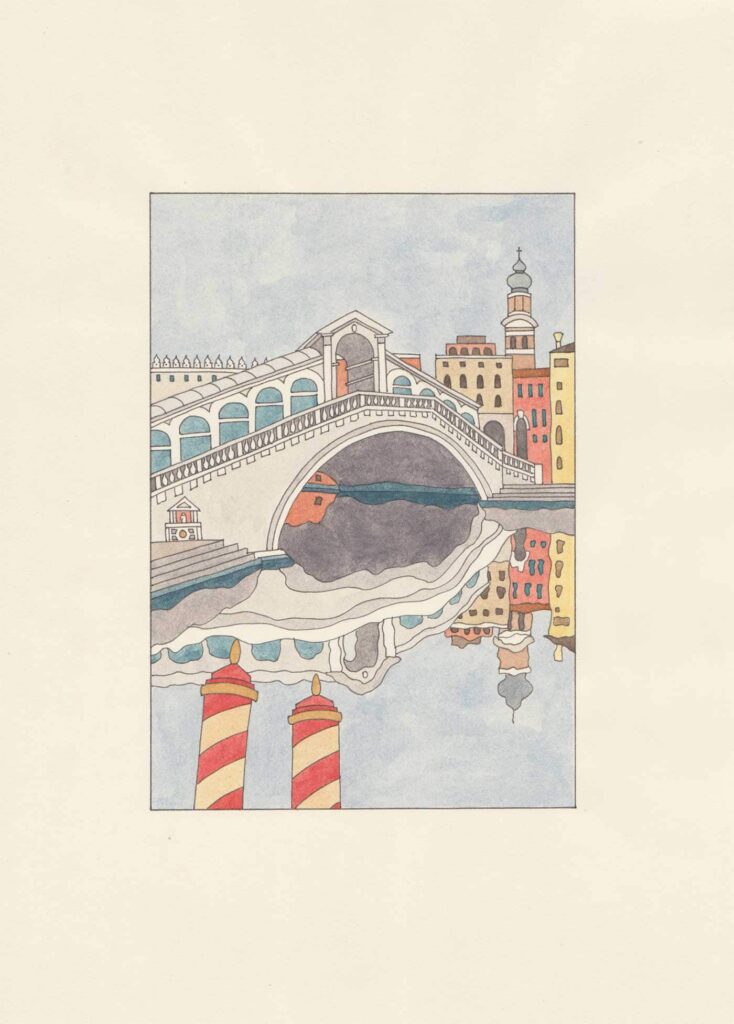
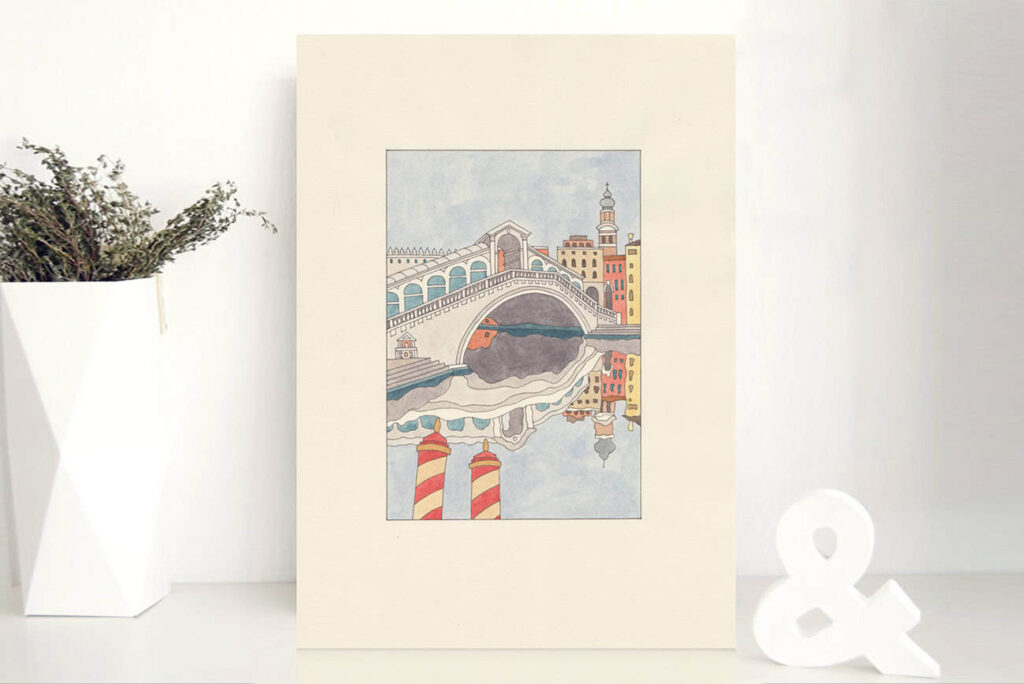
Rialto Bridge
The Rialto Bridge is one of the four bridges that span the Grand Canal in Venice. It is the oldest bridge on the canal and once marked the boundary between the San Marco and San Polo districts. It is also one of the most famous bridges in the world, as it is a symbol of Venice.
The first bridge over the Grand Canal was a pontoon bridge built in 1181. It was replaced in 1255 by a wooden bridge. During the first half of the 15th century, two rows of shops were built along the sides of the bridge. In 1444, it collapsed under the weight of a crowd watching a boat procession, and it collapsed again in 1524. The idea of rebuilding the bridge in stone was first proposed in 1503, and the current single-span stone bridge, designed by Antonio da Ponte, was finally completed in 1591.
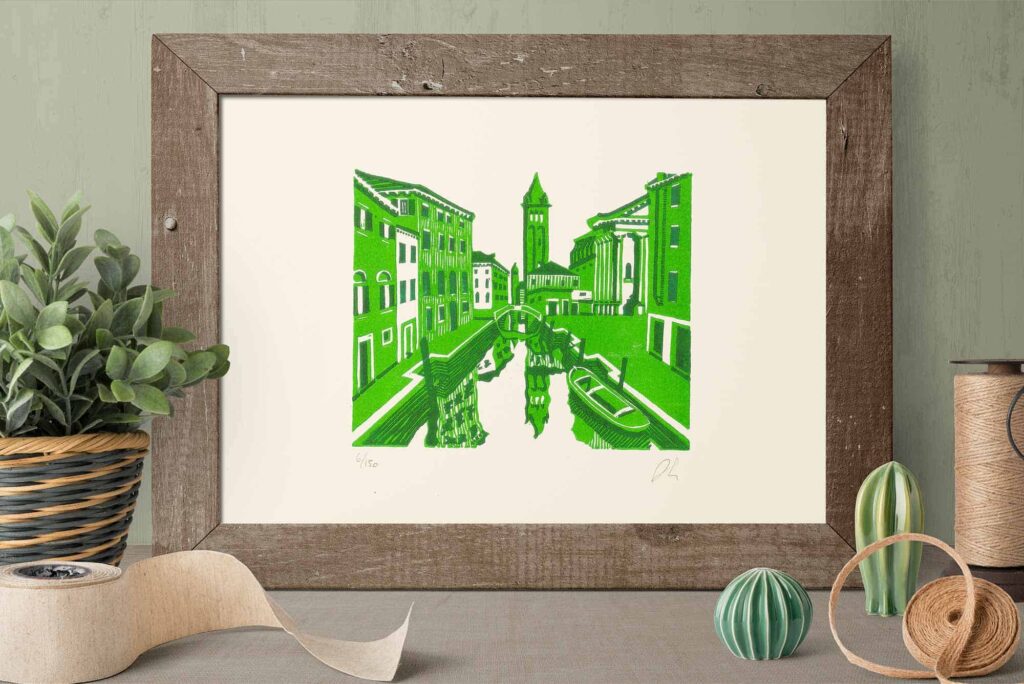
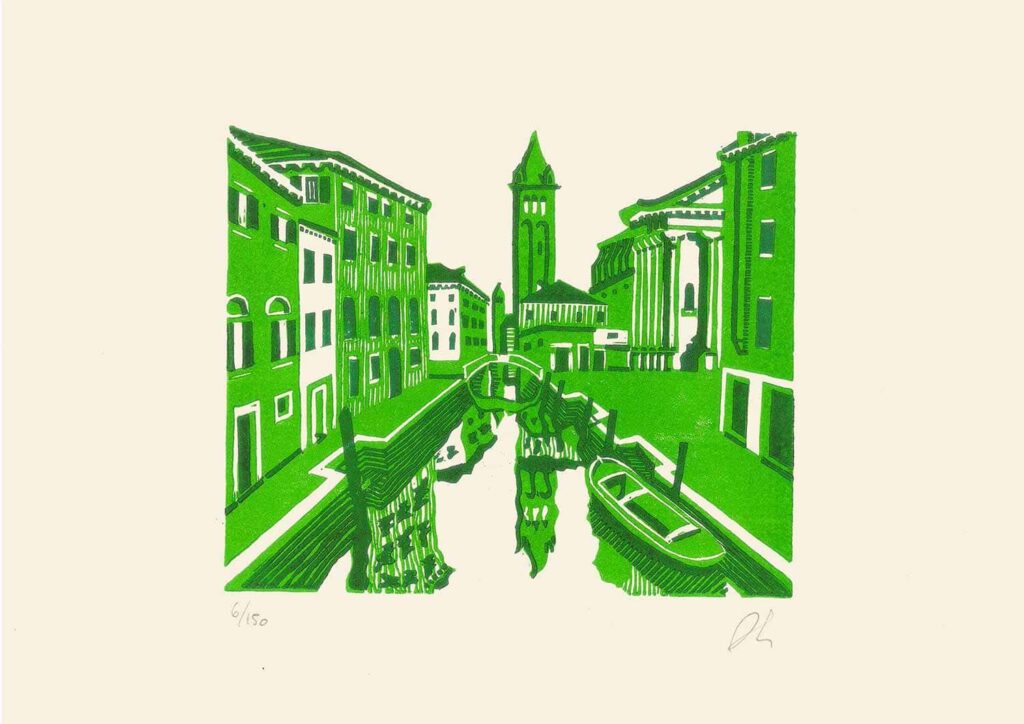
Rio di San Barnaba
The Rio di San Barnaba is located in the Dorsoduro district and takes its name from the Church and Campo San Barnaba overlooking the canal.
The print shows the stretch of canal from Ponte dei Pugni toward the Grand Canal: on the right, one can glimpse Campo San Barnaba facing the canal and which — as a small curiosity — was the setting for several famous films, including Indiana Jones and the Last Crusade starring Harrison Ford and Summertime with Katharine Hepburn (a film that shows a beautiful Venice in 1955).
Another typical feature of the Rio di San Barnaba is the presence of a beautiful barge (visible on the right in the print) that sells fruit and vegetables during the day.
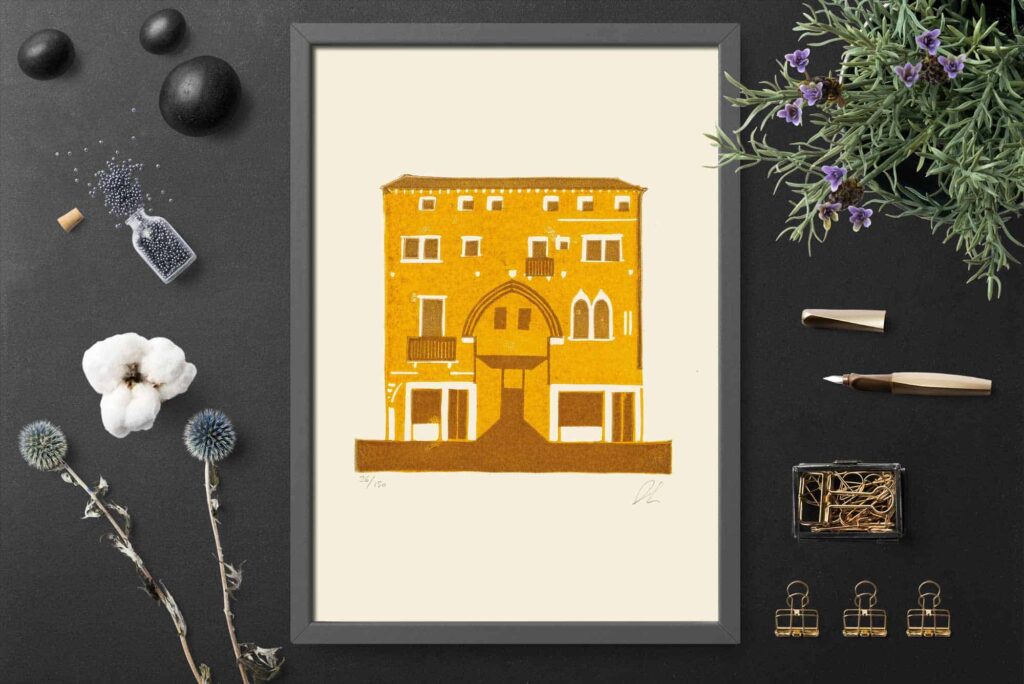
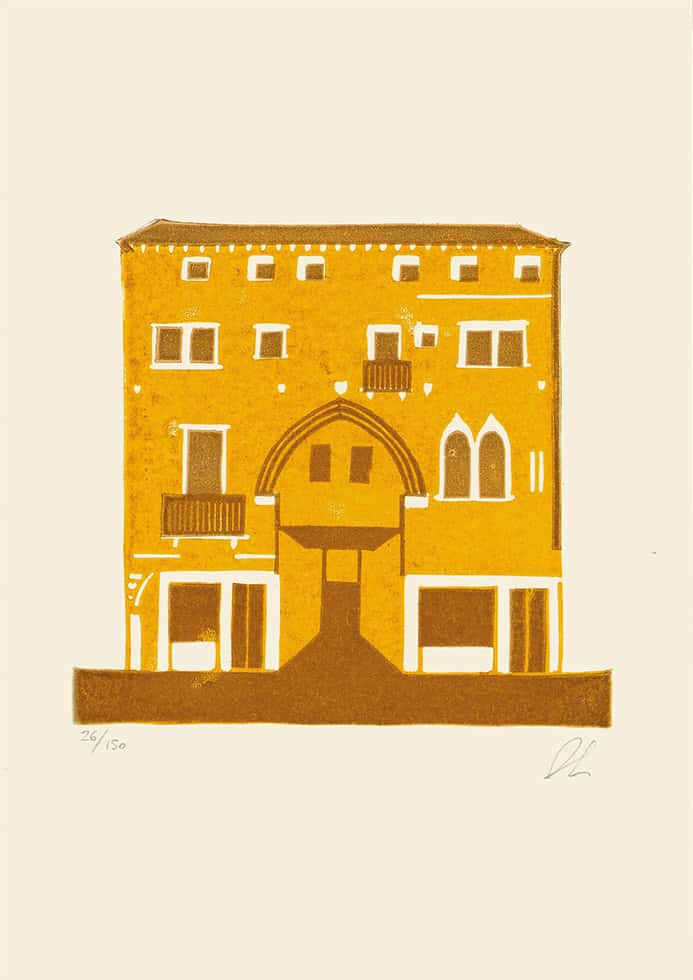
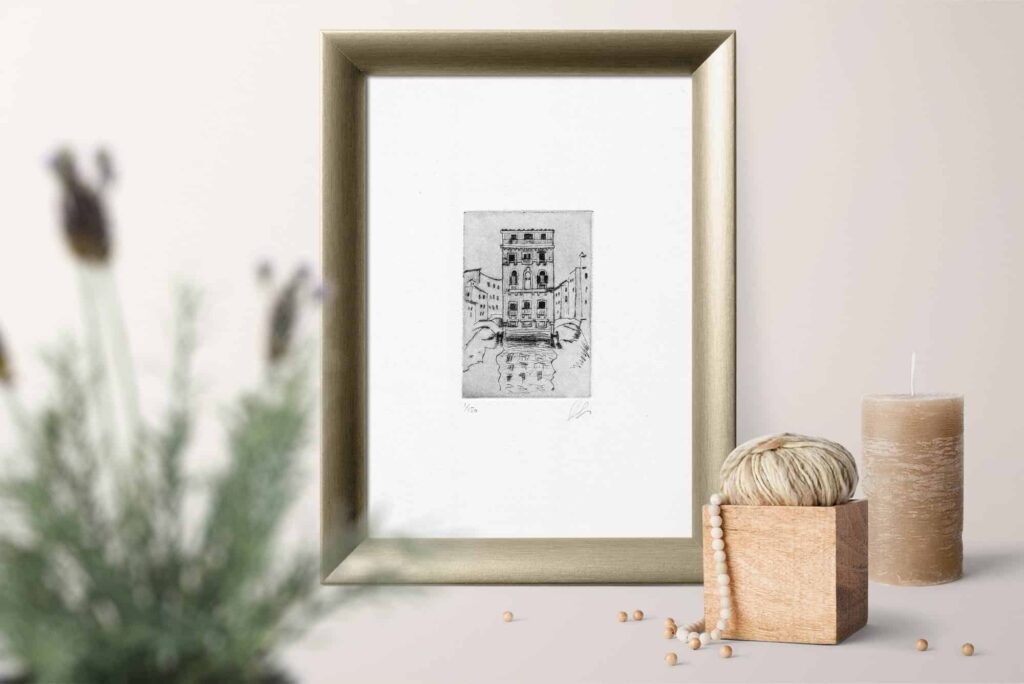
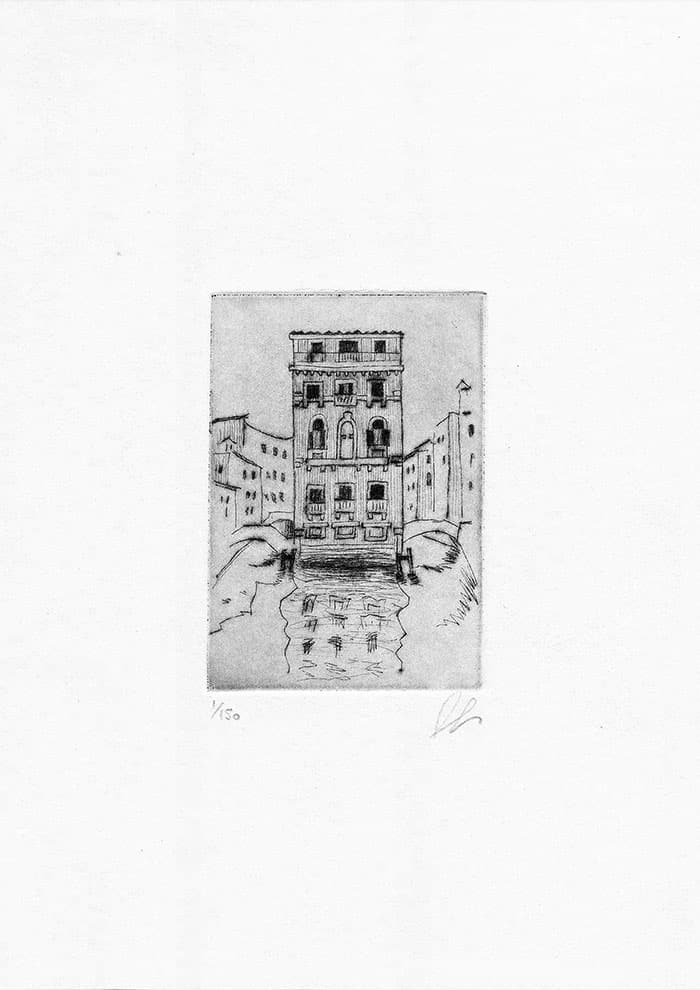
Salizada San Lio Palace
A small 13th-century palace located on Salizada San Lio.
Salizada means “paved,” and these streets were among the most important in Venice — so when only a few Venetian streets were paved with bricks, these were the first to be paved with the more expensive stone paving that can now be seen almost everywhere.
Sold Out
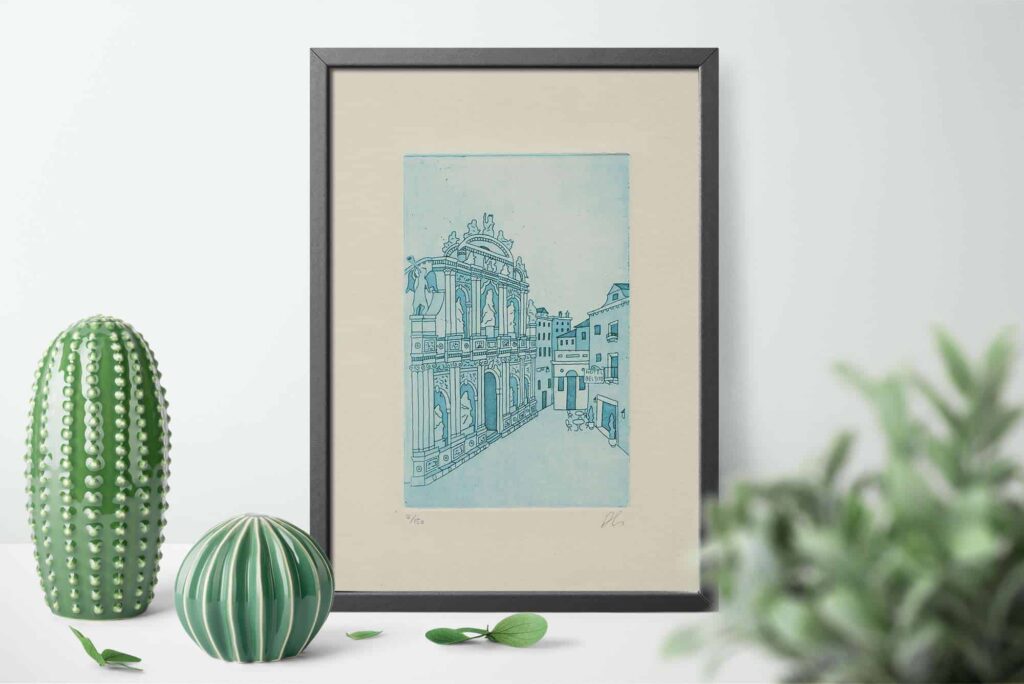
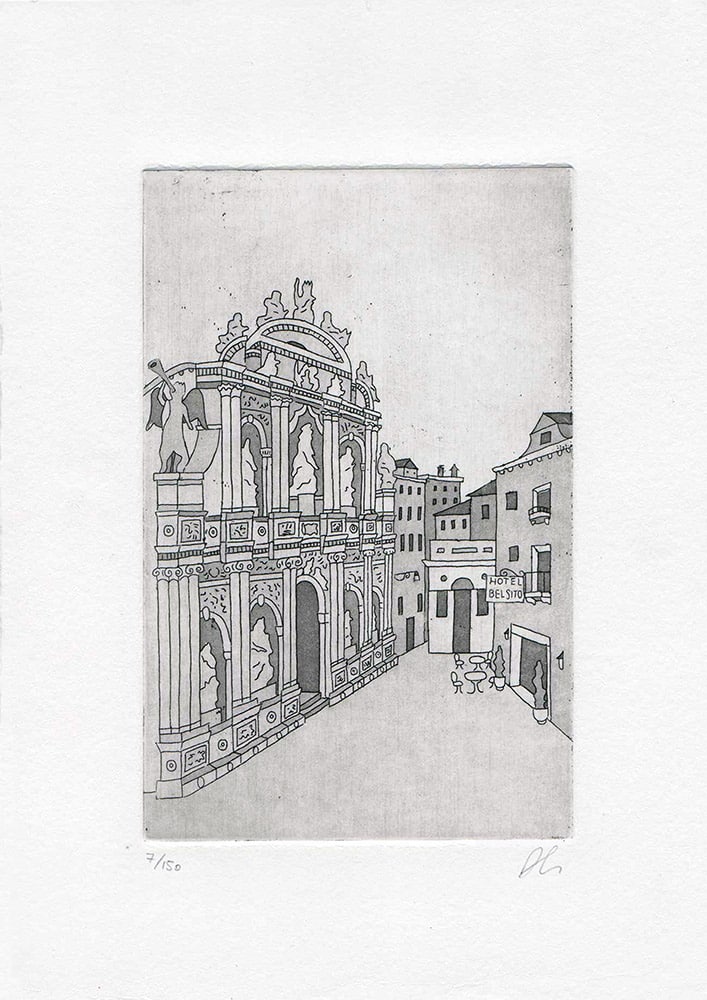
Santa Maria del Giglio
Santa Maria del Giglio is a church in Venice.
The church is more commonly known as the Church of Santa Maria Zobenigo, after the Jubanico family who founded it in the 9th century. The building is located in Campo Santa Maria Zobenigo, west of St. Mark’s Square. It was rebuilt by Giuseppe Sardi for Admiral Antonio Barbaro between 1678 and 1681 and has one of the finest Venetian Baroque façades in all of Venice.
Sold Out
Venetian house in the Castello district
This drypoint print depicts a Venetian house located in the Castello district, near San Giovanni e Paolo and Santa Maria Formosa.
This house is one of the few in the city surrounded on three sides by three different canals: the Rio di Santa Marina, the Rio di San Giovanni Laterano, and the Rio Tetta. This feature makes the house one of the most curious and photographed in Venice.
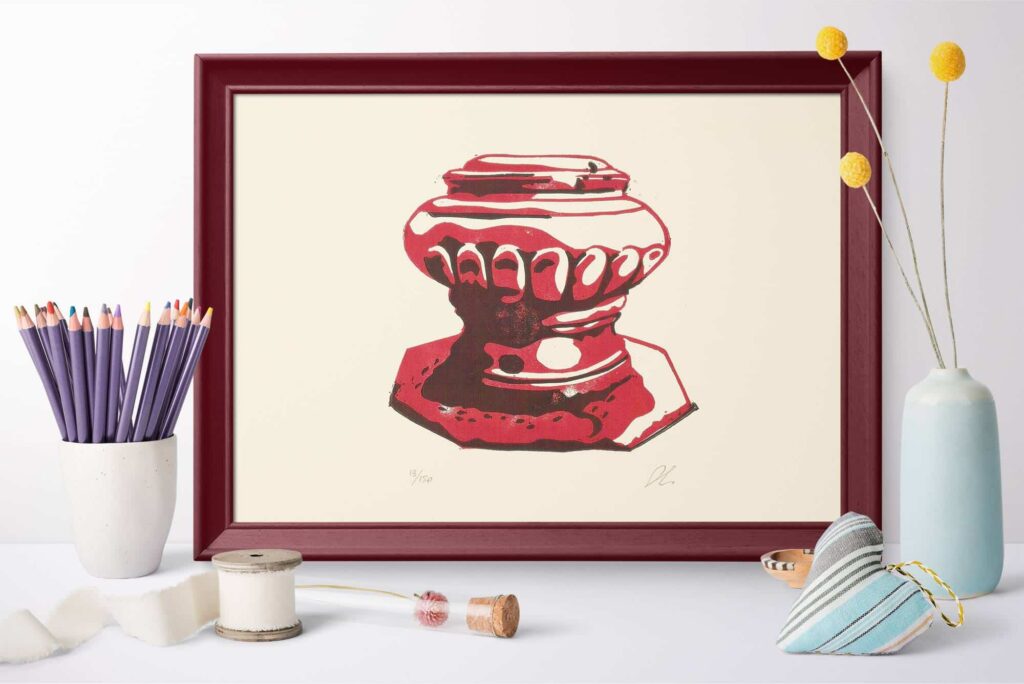
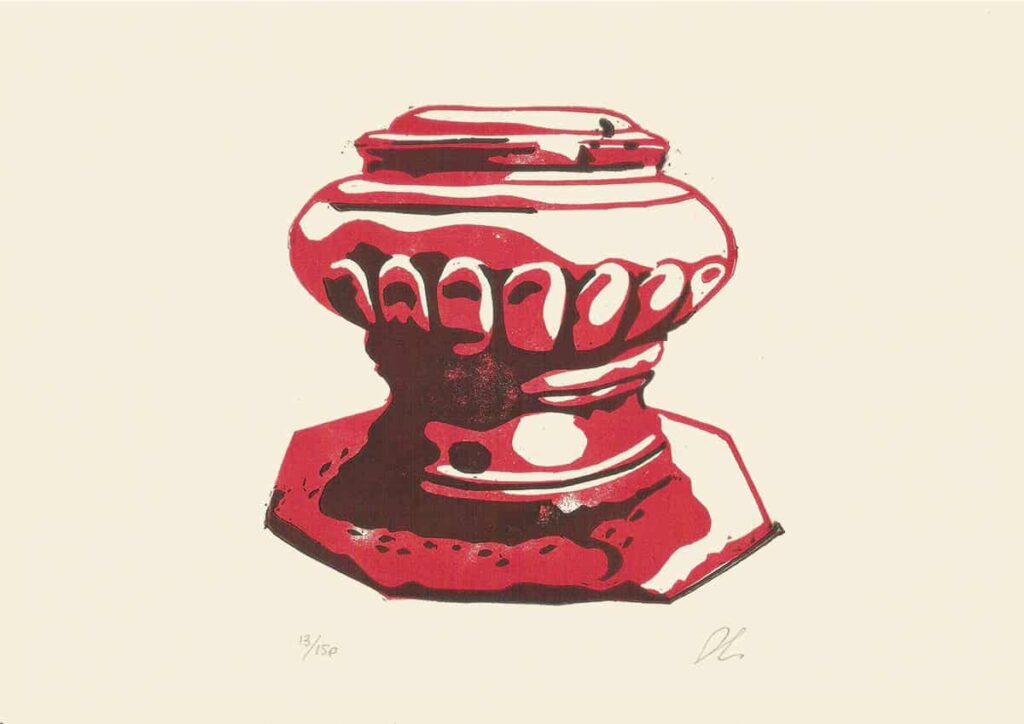
Venetian wellhead
The Venetian well is an architectural structure that was used in the city of Venice in past centuries for the supply of drinking water.
Today, the more than 600 surviving Venetian wells constitute an ornamental yet essential element of Venetian urban design, contributing fundamentally to its uniqueness and character.
The term “vera da pozzo” has been in use since the 11th century. Being located at the center of many Venetian squares, they were often places of socialization and interaction among Venetians. The typical well is adorned with inscriptions and sculptures of saints or family coats of arms.