

No products in the cart.
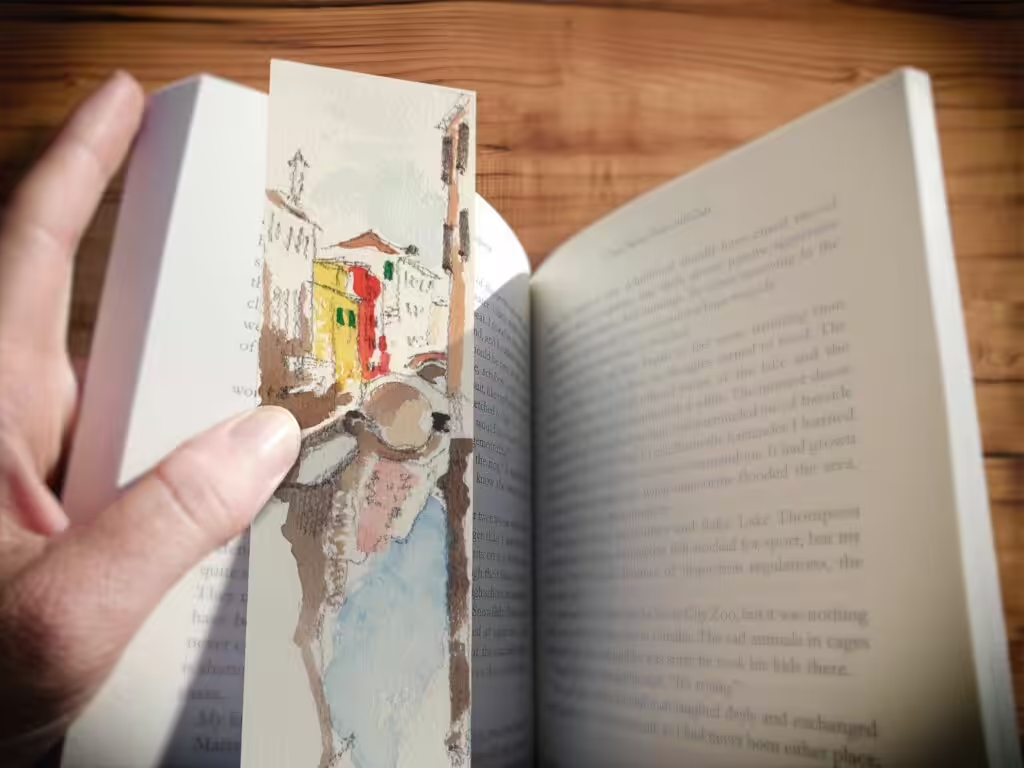
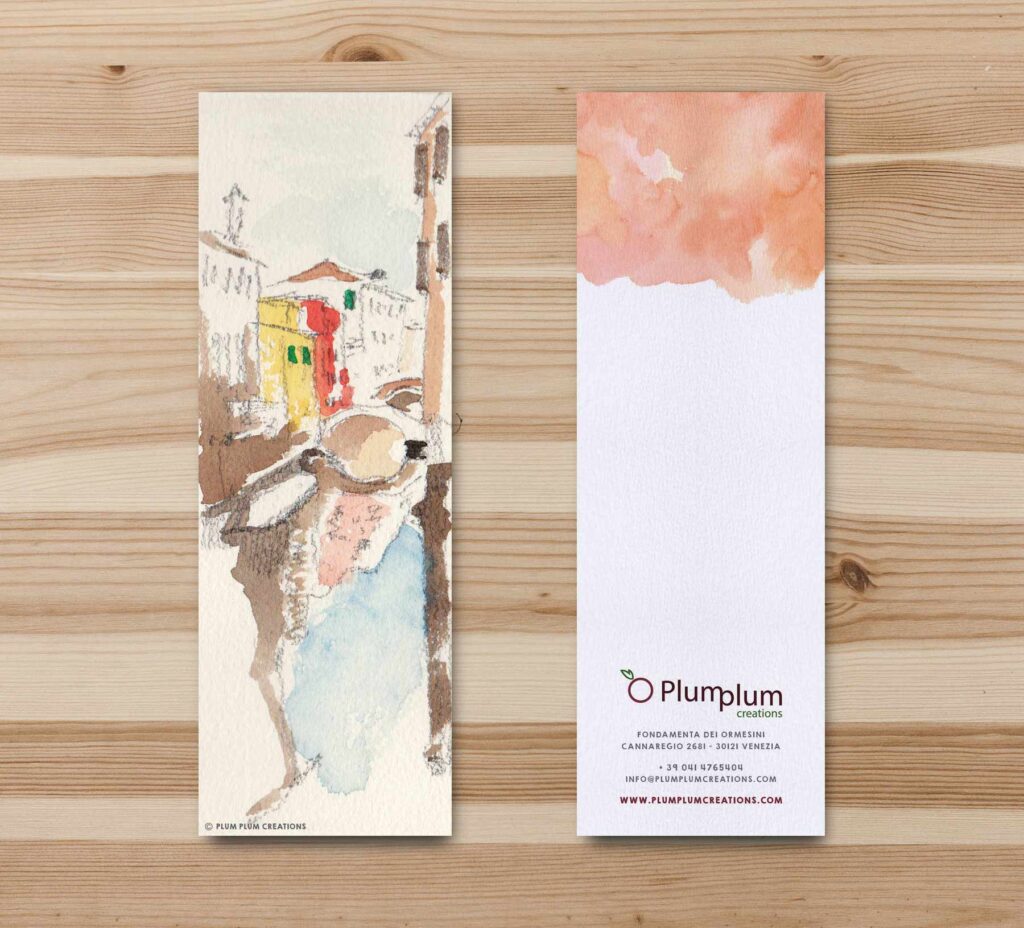
Bookmark 07
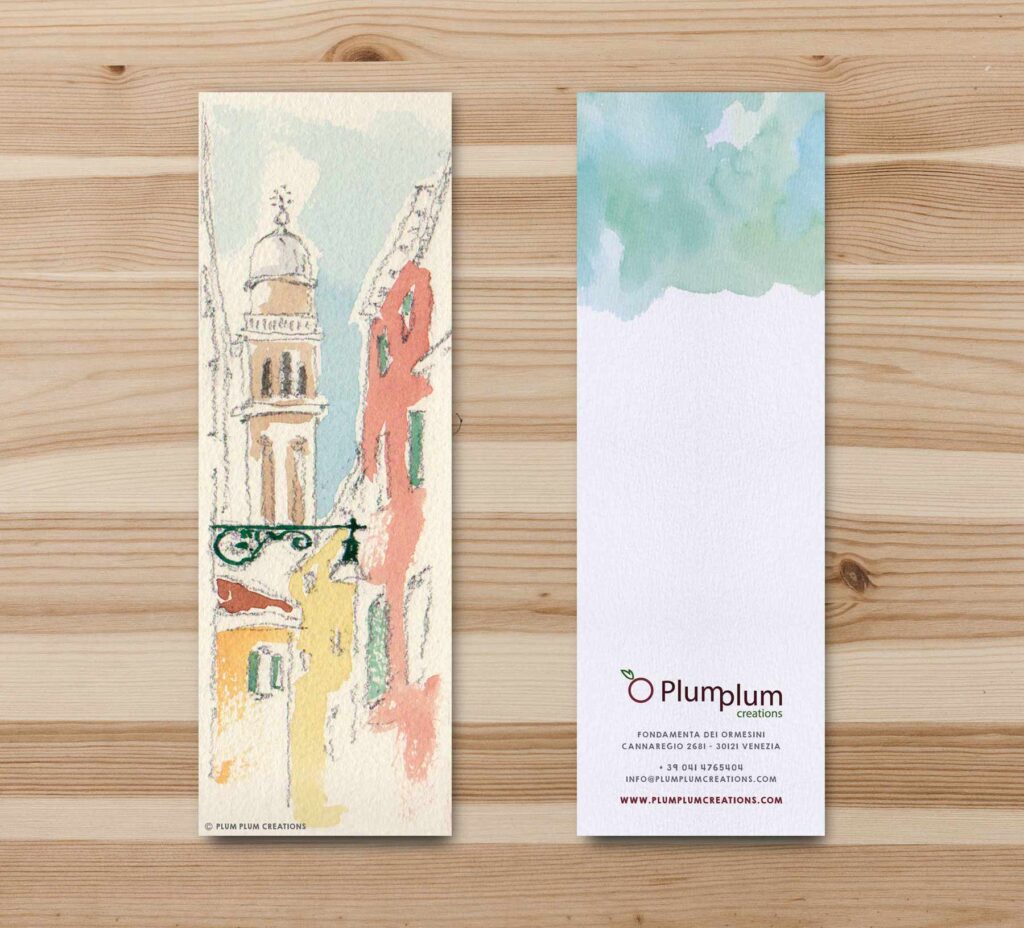
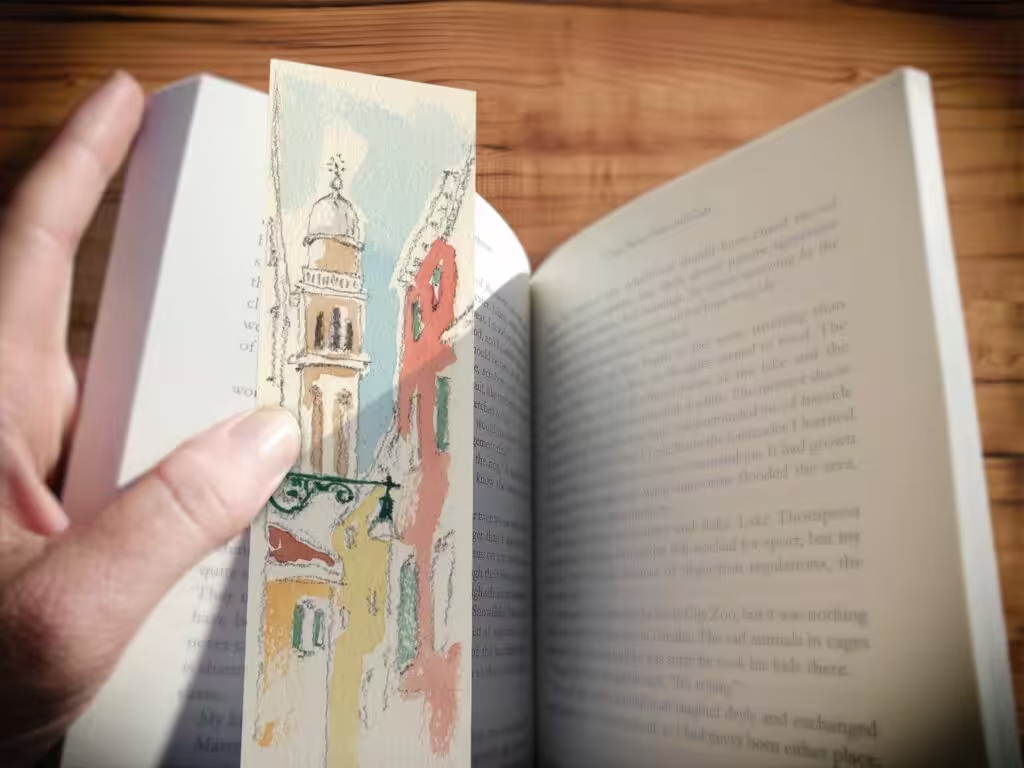
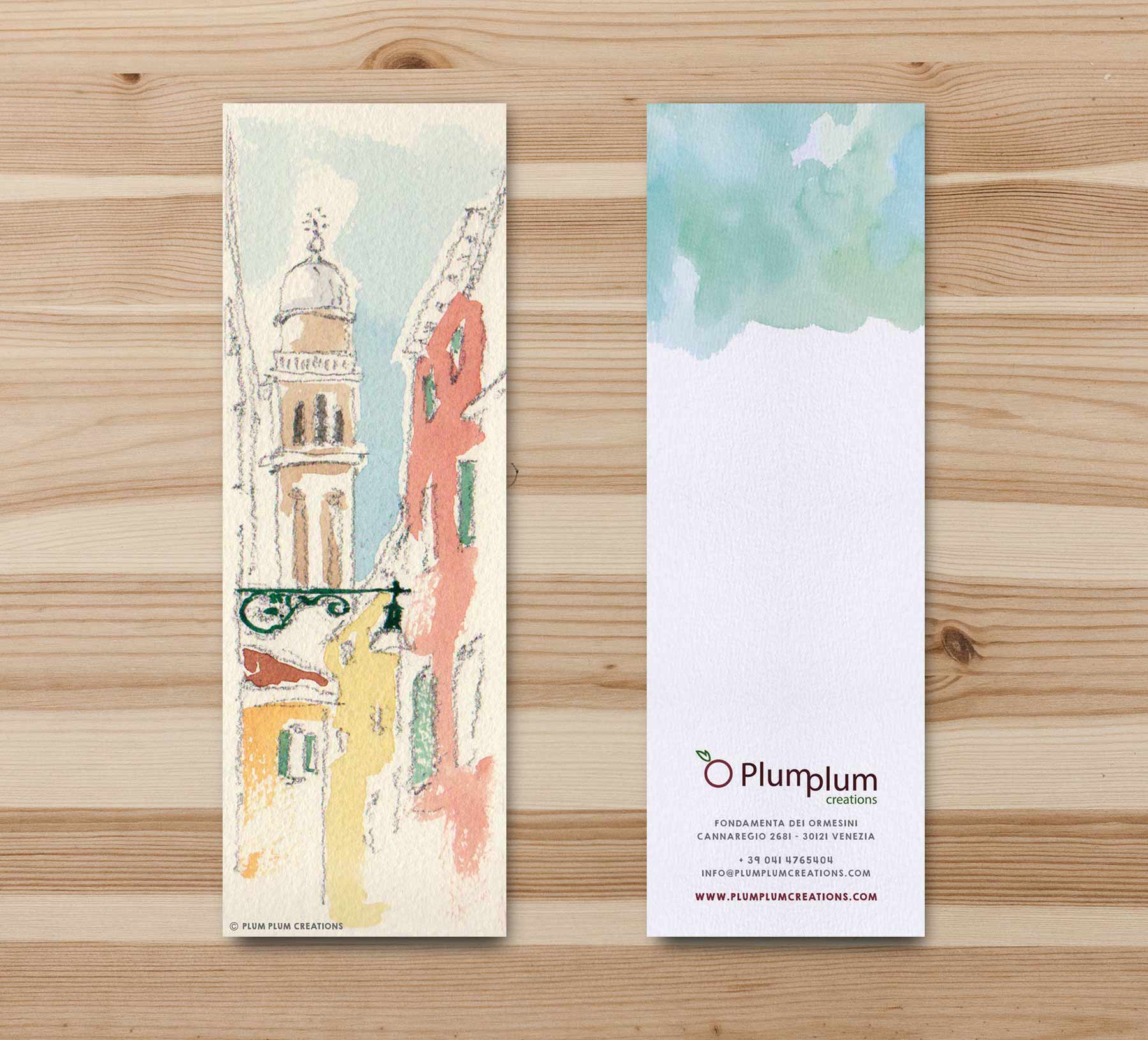
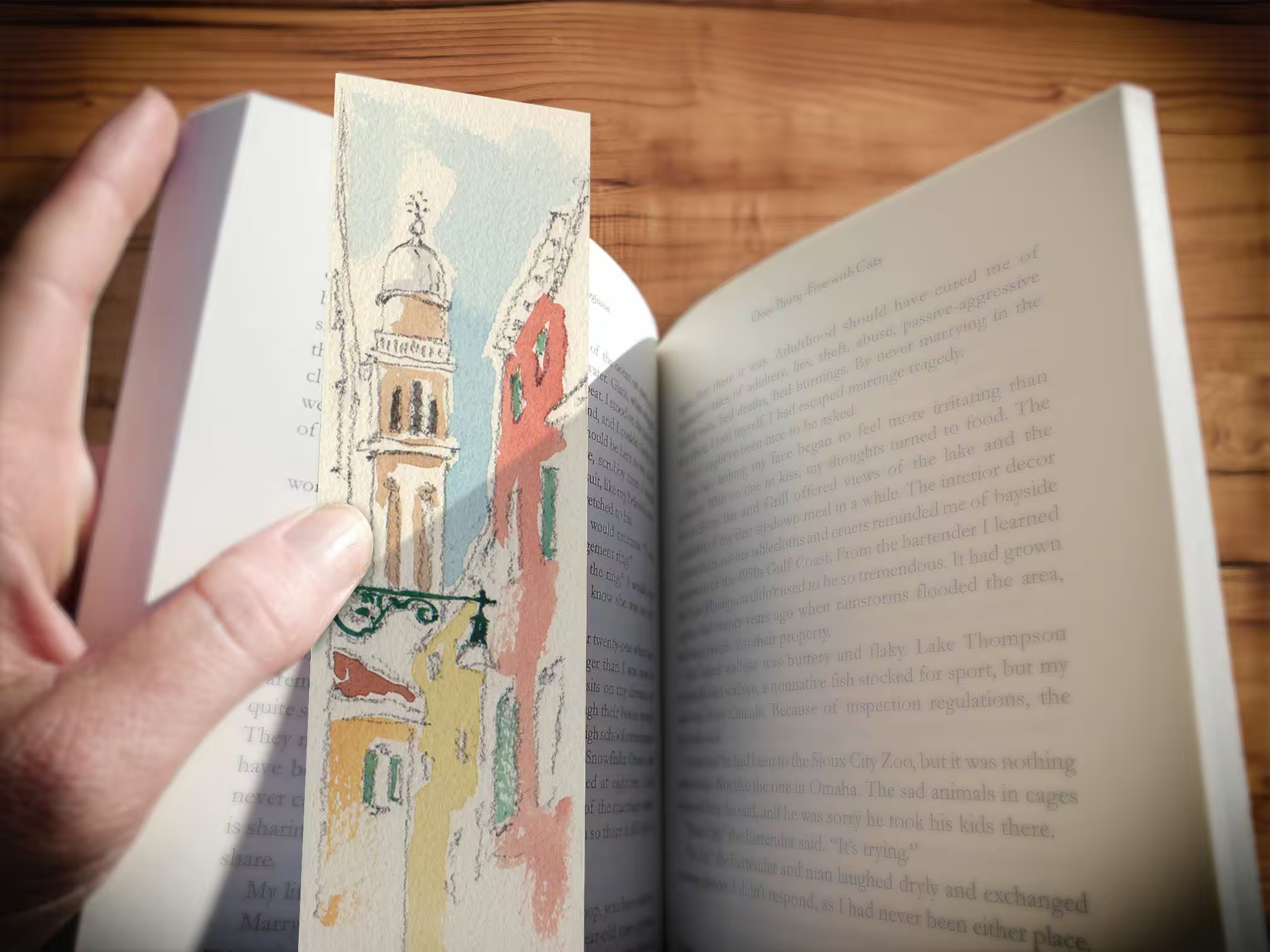
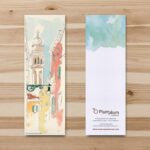
One of my original watercolors turned into a bookmark.
Printed on 300 gsm hammered paper.
Size: 2.3 × 7 inches.
€ 4,00
Bookmark 07
€ 4,00
Useful information
How much does shipping cost?
Shipping costs are:
24 EUR to Oceania and Australia
19 EUR to USA, South America, Asia and Africa
16 EUR within Europe (Italy excluded)
12 EUR within Italy
For orders over 150 EUR, shipping may be free.
How soon will my order be shipped?
I ship orders within 7 working days of order confirmation. Large orders or custom-made pieces may take longer to prepare. In these cases, I’ll let you know the expected shipping date.
How long does delivery take?
Within Italy, delivery usually takes 5–6 working days from shipment.
Within the EU: 7–9 working days.
Outside the EU: 10 to 15 working days.
How is the item shipped?
All items are shipped with great care via Poste Italiane.
Artworks are protected with tissue paper, rigid cardboard and a padded envelope to arrive in perfect condition.
What if my item arrives damaged?
If your package arrives damaged, please contact me as soon as possible at info@plumplumcreations.com and we will find a solution together.
Can I return an item?
Yes, you can exercise your right of withdrawal within 14 days of receiving the item.
Contact me and I will explain how to proceed. Return shipping costs are the responsibility of the customer.
Need specific information? Contact me.
Related Products
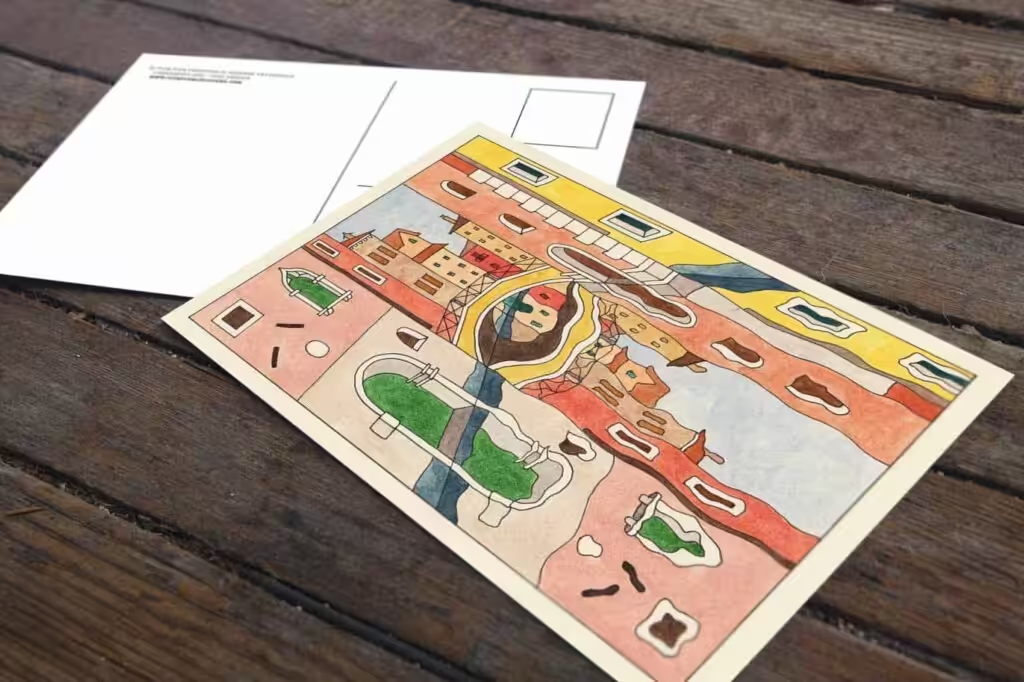
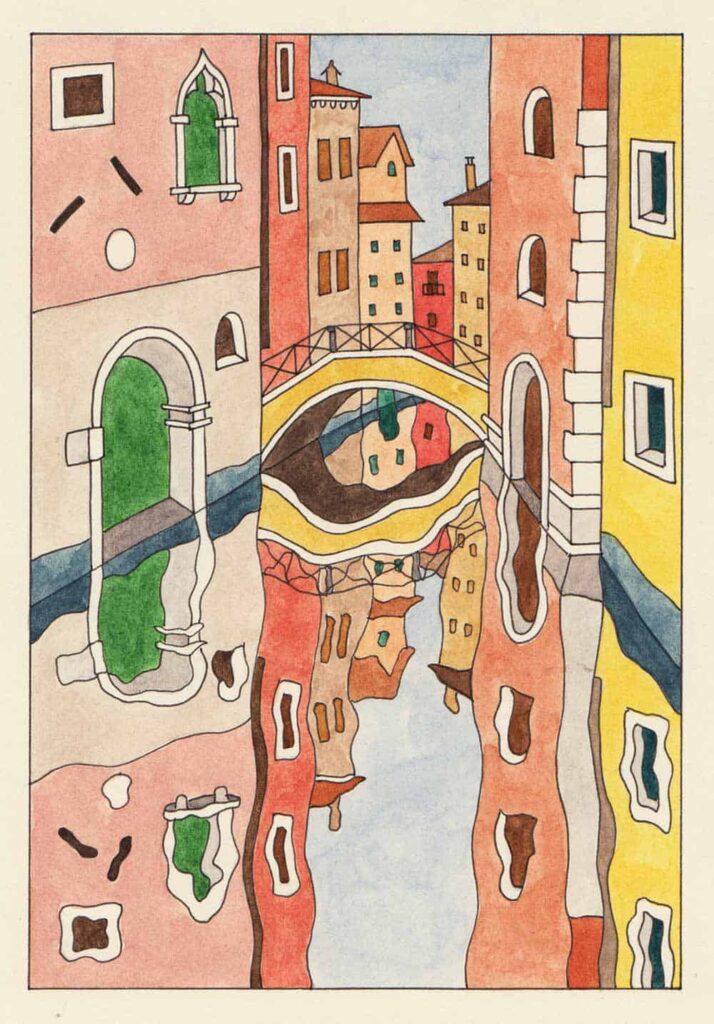
Bridge and Canal Postcard
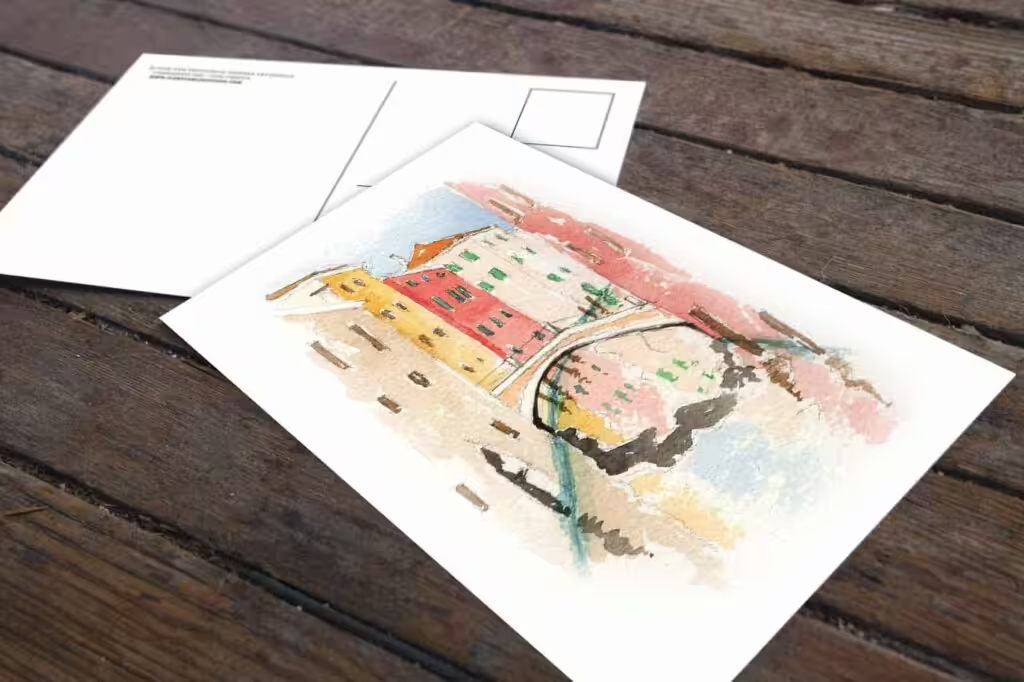
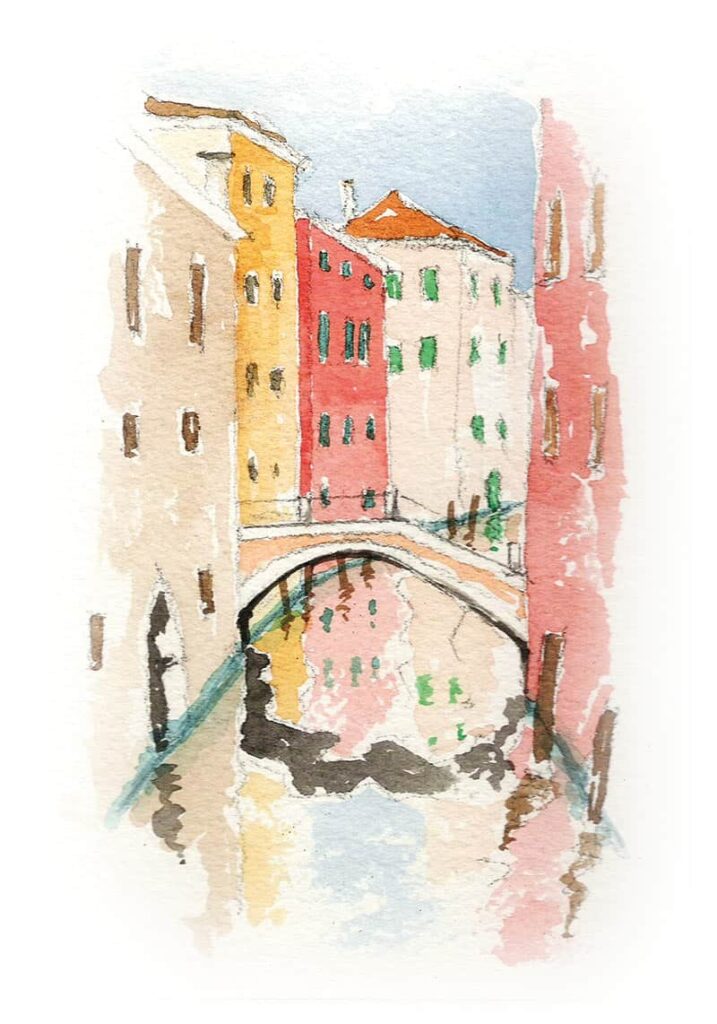
Postcard depicting a typical Venetian view, with a bridge crossing a canal.
Postcard printed on 300 gsm paper.
Size: 4.5 × 6.5 inches
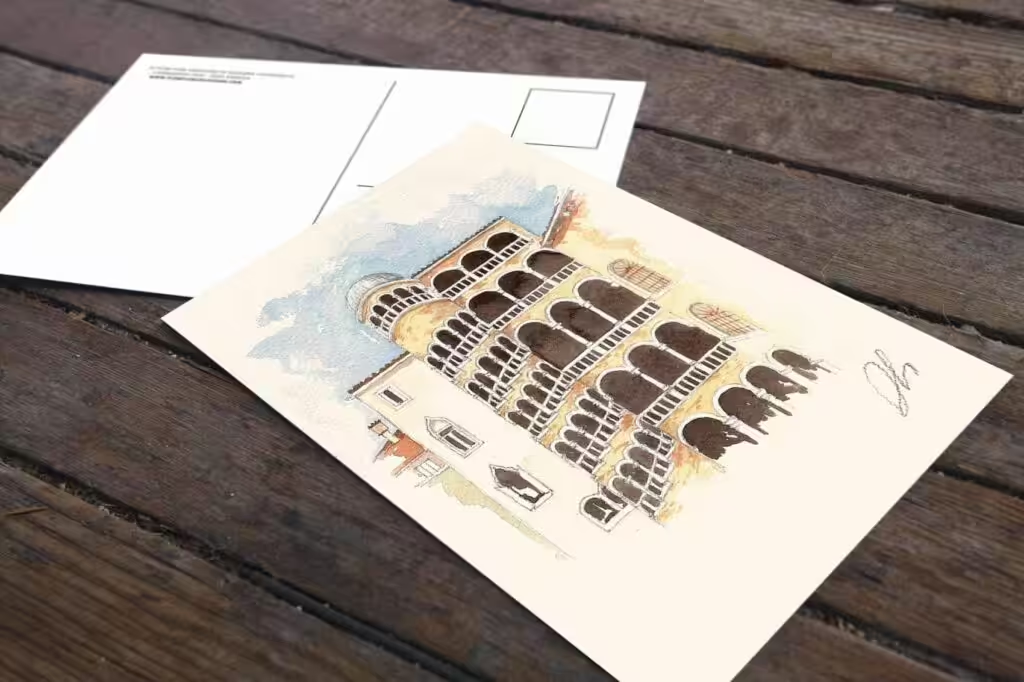
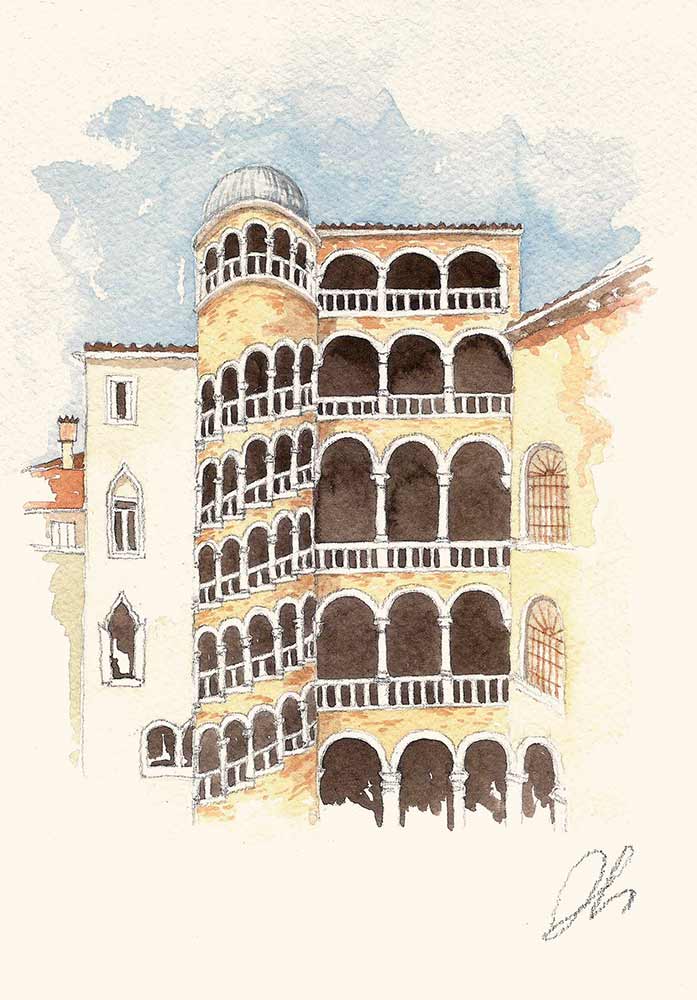
Postcard “Bovolo Staircase”
Scala Contarini del Bovolo Postcard
Postcard printed on 300 gsm paper.
Size: 4.5 × 6.5 inches
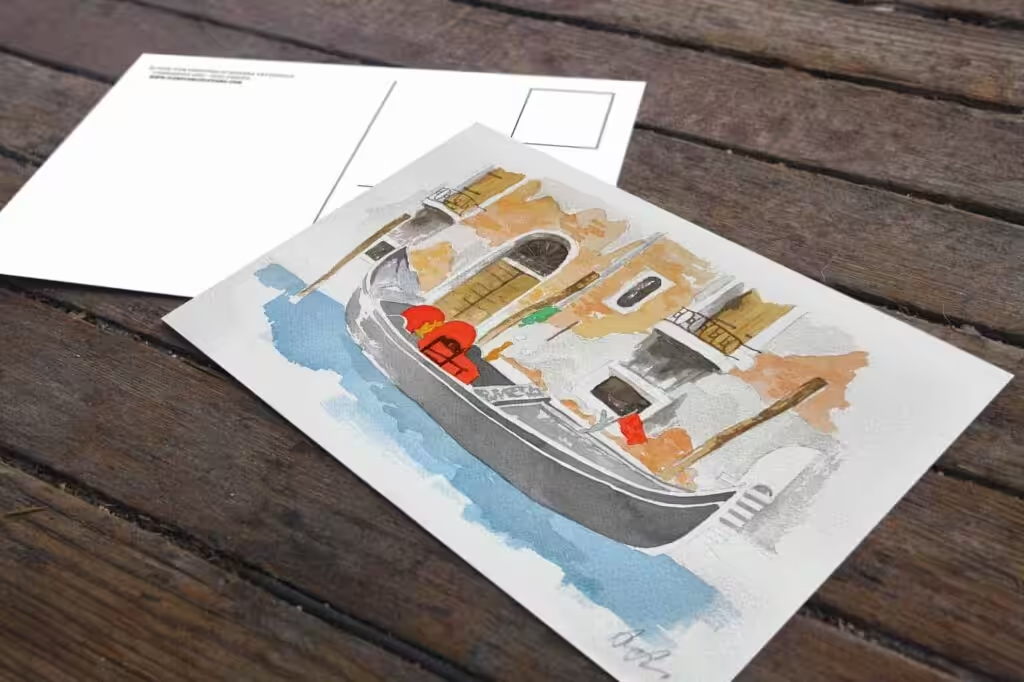
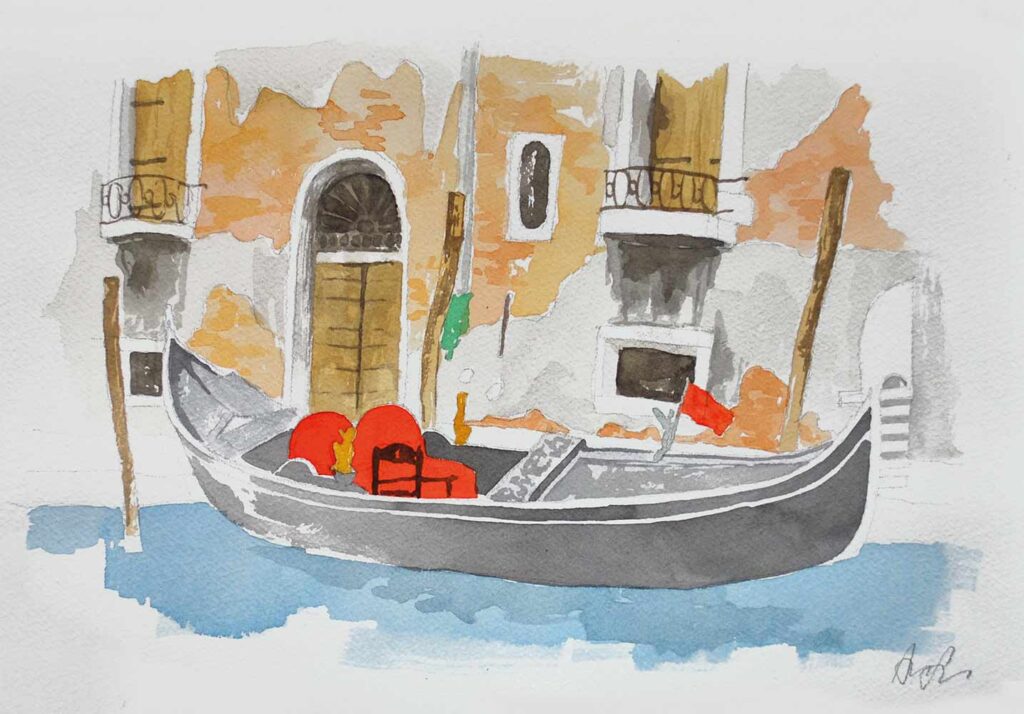
“Gondola” Postcard
The gondola is a traditional boat of the Venetian lagoon. Thanks to its maneuverability and speed, it was—until the advent of motorized boats—the most suitable vessel for transporting people in a city like Venice, where waterways have always been the primary means of transportation.
The gondola is made up of 280 different parts, crafted from eight types of wood. Its construction usually takes more than a year.
“Ponte degli Scudi” Postcard
Ponte degli Scudi is a bridge in the Castello district of Venice. Castello is the largest of the six districts of Venice.
If there is a district of Venice that can be described as truly “characteristic,” it is certainly Castello, with its canals, churches, and small gardens dating back to the 13th century. Here you can see clothes hanging out to dry between one window and another—this is the city you’ve always dreamed of!
Ponte degli Scudi is in the heart of Castello, near San Francesco della Vigna, just a short walk from the Arsenale.
Bookmark 02
One of my original watercolors turned into a bookmark.
Printed on 300 gsm hammered paper.
Size: 2.3 × 7 inches.
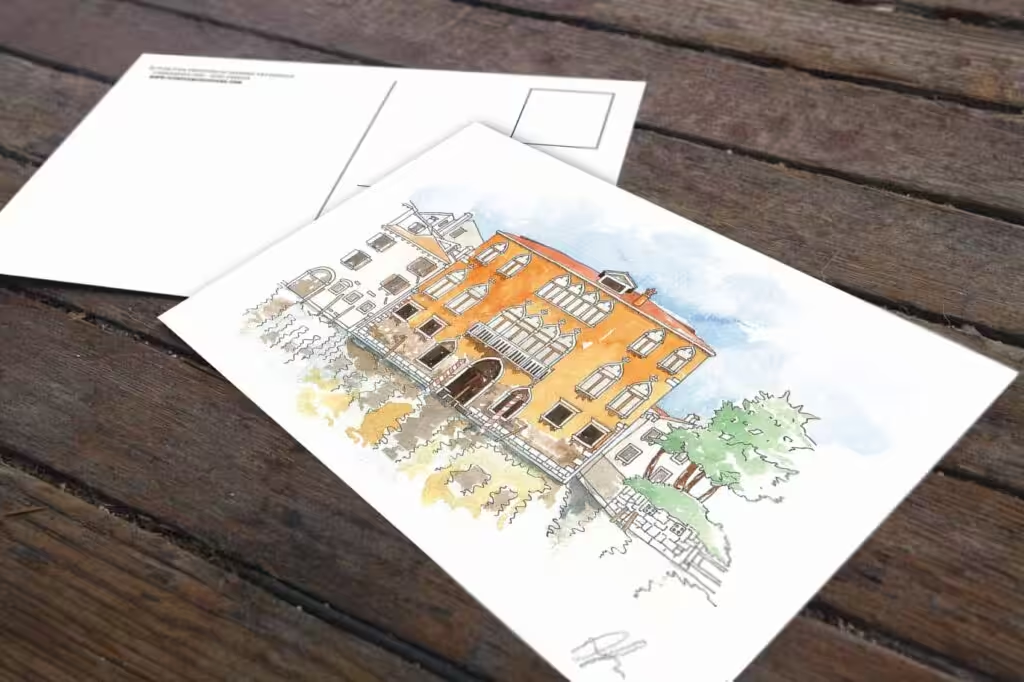
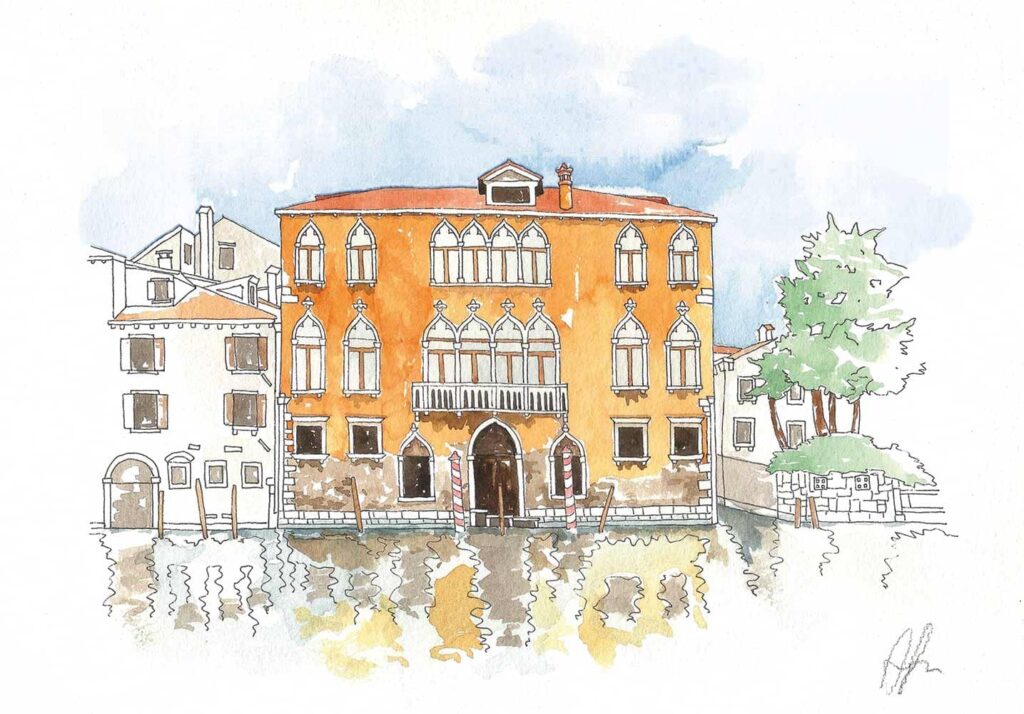
“Foscarini Giovanelli Palace” Postcard
Palazzo Giovanelli (also known as Palazzo Foscarini Giovanelli) is a palace in Venice, located in the Santa Croce district. It overlooks the right side of the Grand Canal and the Rio di San Giovanni Decollato, just before the Fondaco dei Turchi.
Postcard printed on 300 gsm paper.
Size: 6.5 × 4.5 inches
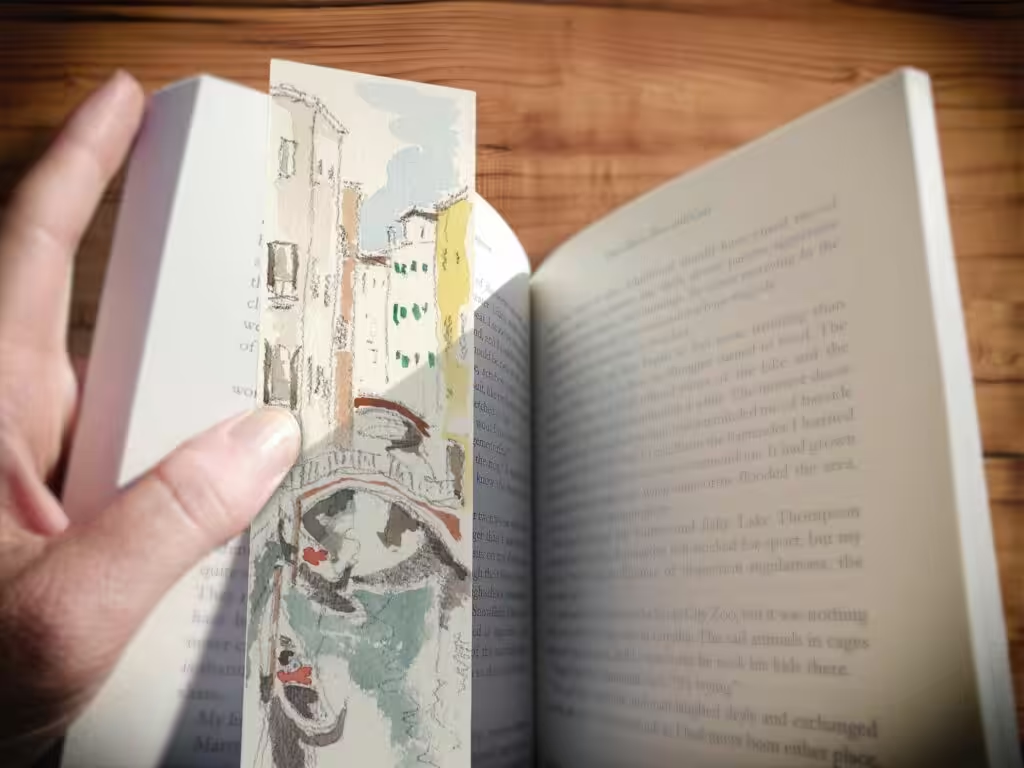
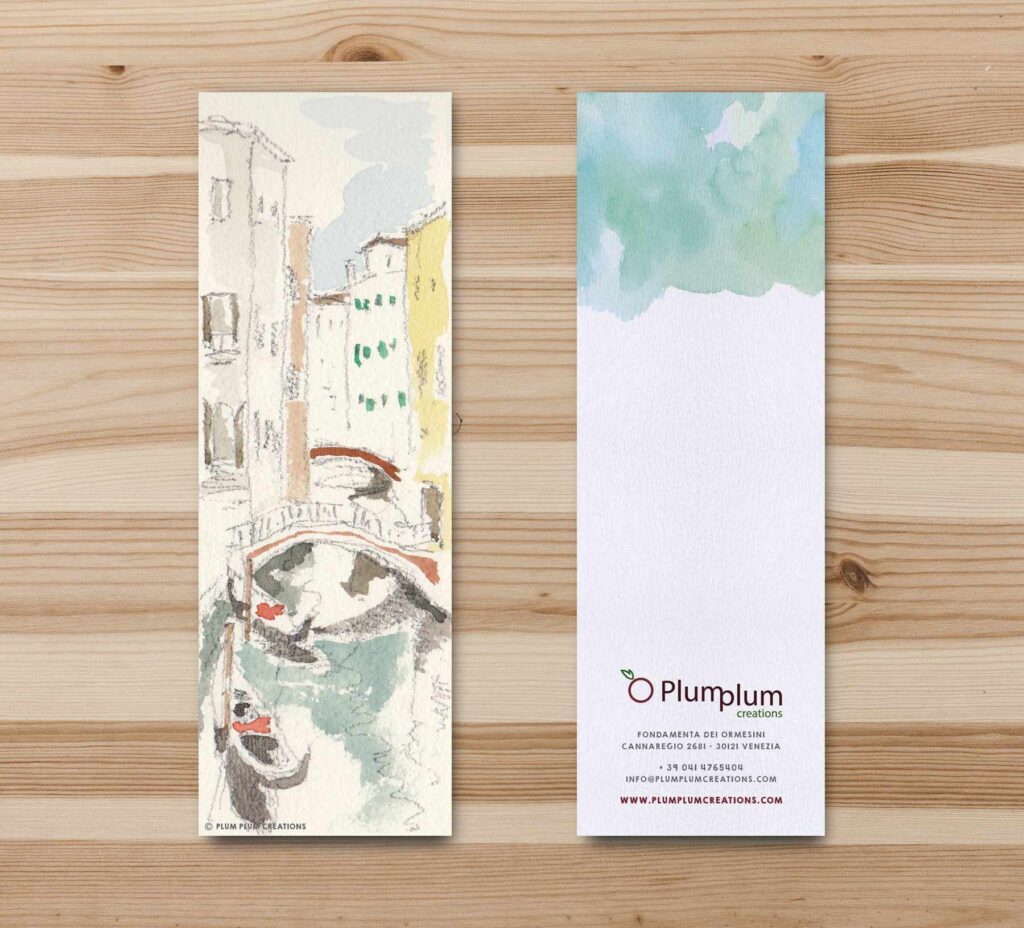
Bookmark 05
One of my original watercolors turned into a bookmark.
Printed on 300 gsm hammered paper.
Size: 2.3 × 7 inches.
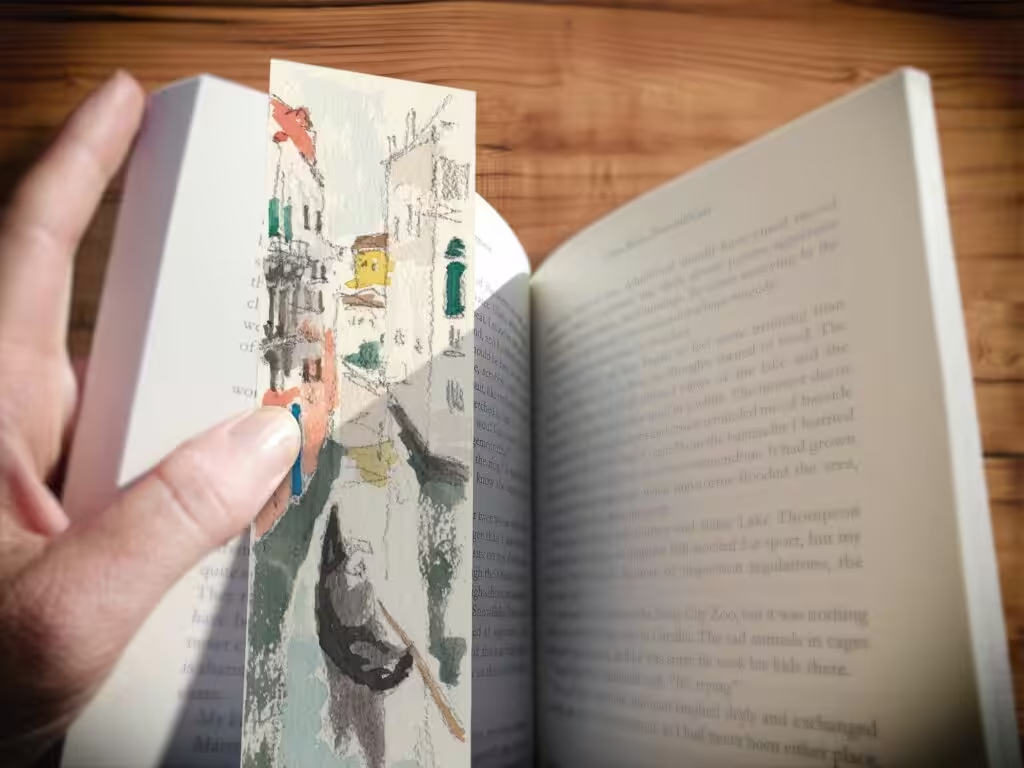
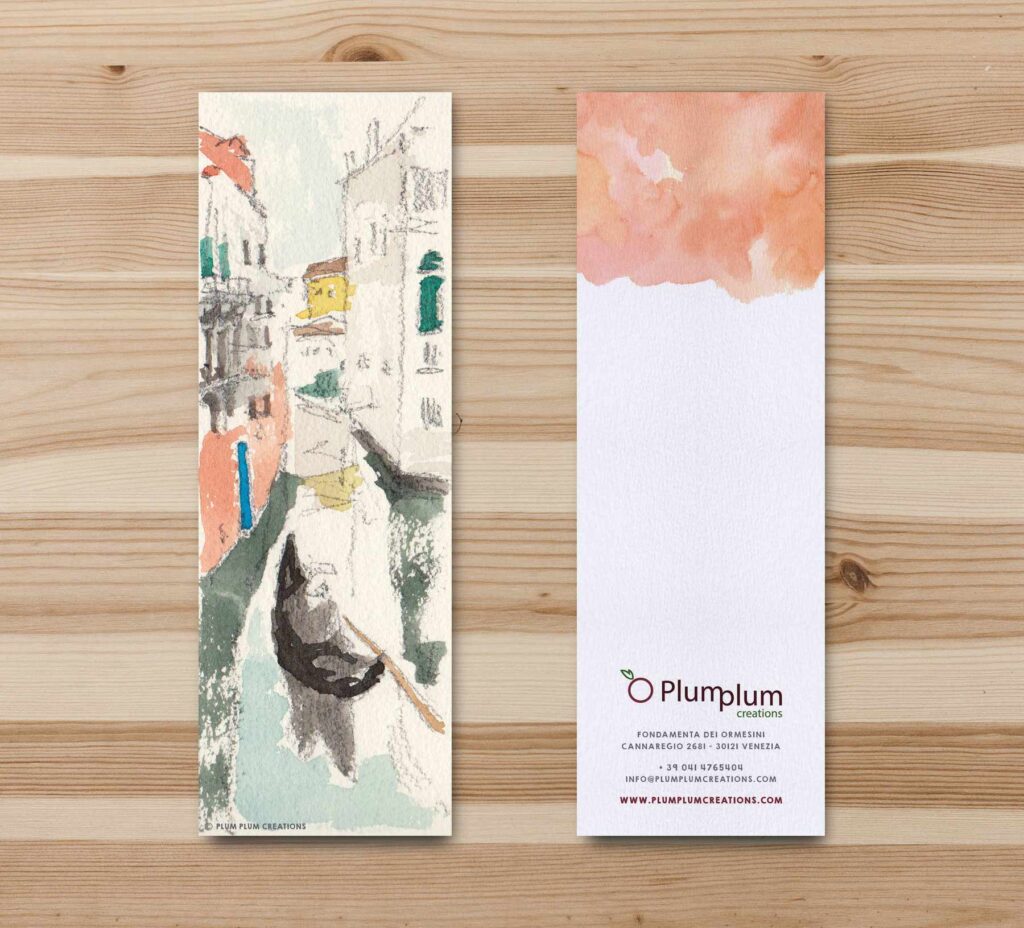
Bookmark 04
One of my original watercolors turned into a bookmark.
Printed on 300 gsm hammered paper.
Size: 2.3 × 7 inches.
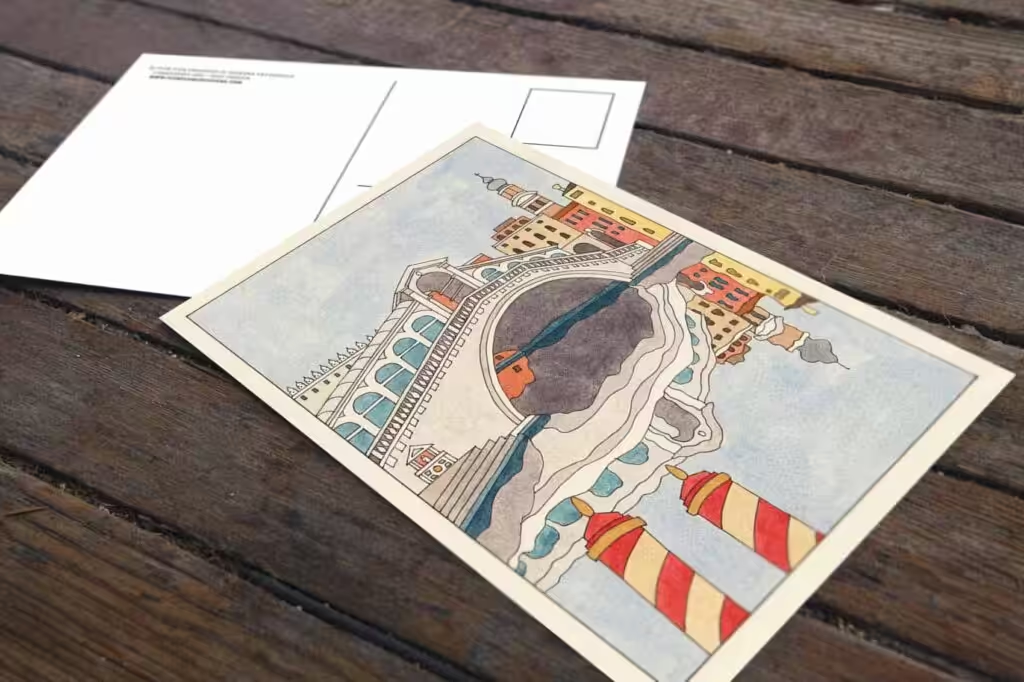
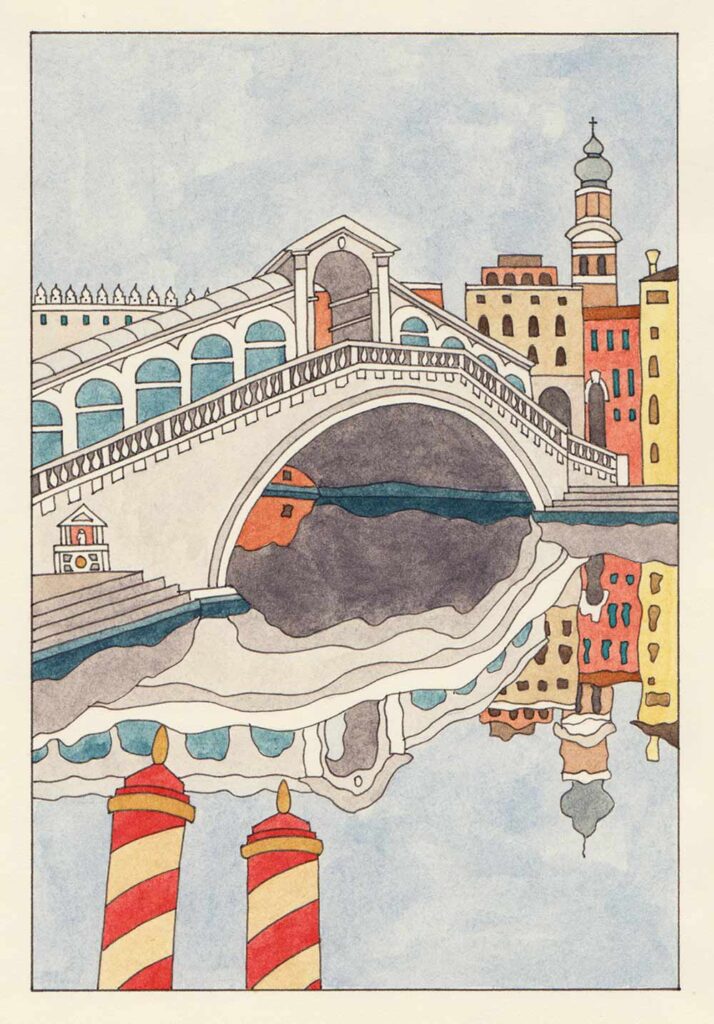
“Rialto Bridge” Postcard
The Rialto Bridge is one of the four bridges that span the Grand Canal in Venice. It is the oldest bridge on the canal and once marked the boundary between the San Marco and San Polo districts. It is also one of the most famous bridges in the world, as it is a symbol of Venice.
The first bridge over the Grand Canal was a pontoon bridge built in 1181. It was replaced in 1255 by a wooden bridge. During the first half of the 15th century, two rows of shops were built along the sides of the bridge. In 1444, it collapsed under the weight of a crowd watching a boat procession, and it collapsed again in 1524. The idea of rebuilding the bridge in stone was first proposed in 1503, and the current single-span stone bridge, designed by Antonio da Ponte, was finally completed in 1591.
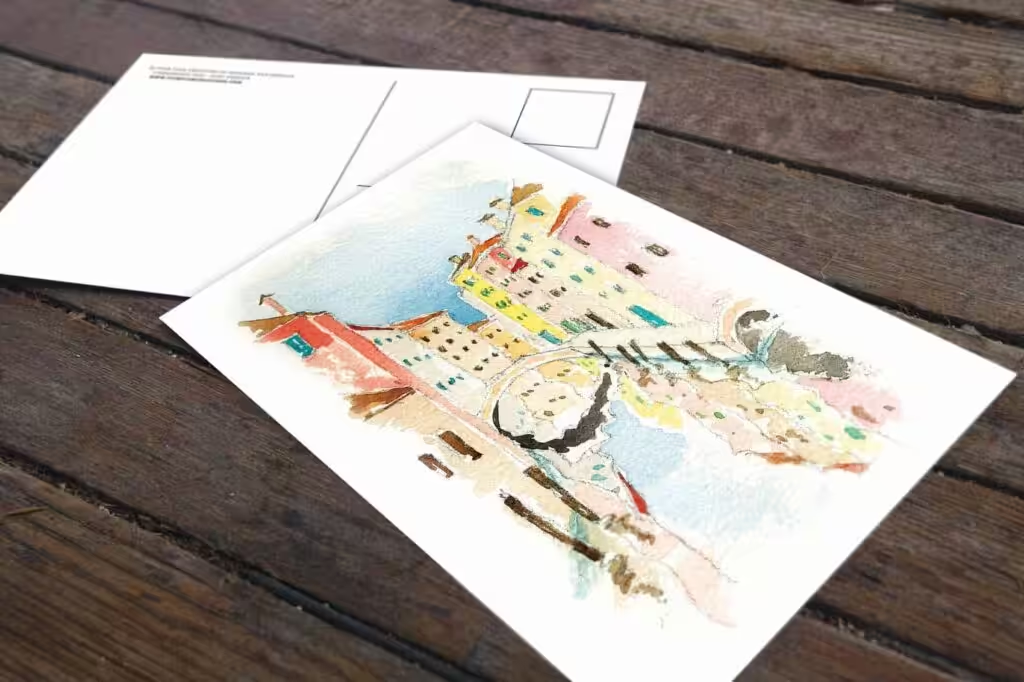
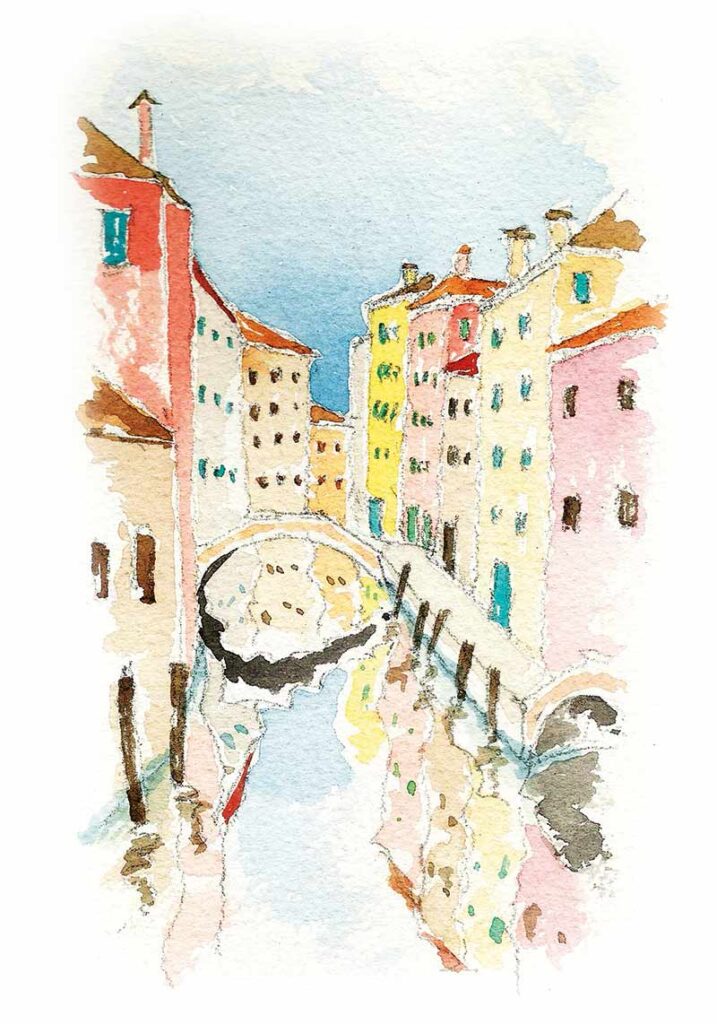
Postcard of a Canal in Castello district
Postcard depicting a typical Venetian view, with a bridge crossing a canal. Specifically, it shows a canal in the Castello district.
Postcard printed on 300 gsm paper.
Size: 4.5 × 6.5 inches
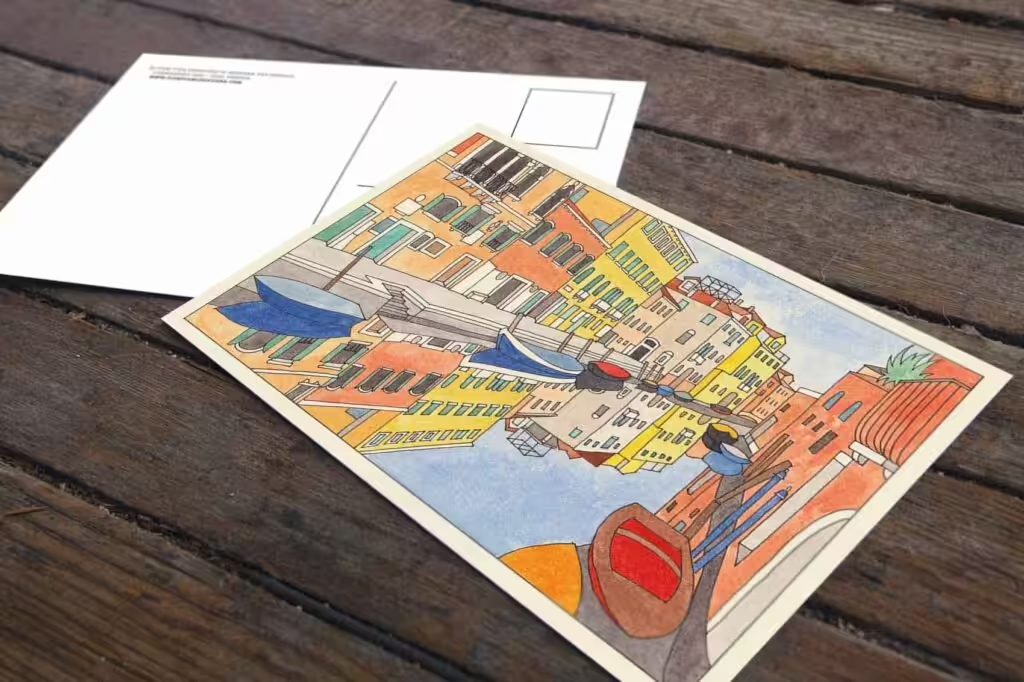
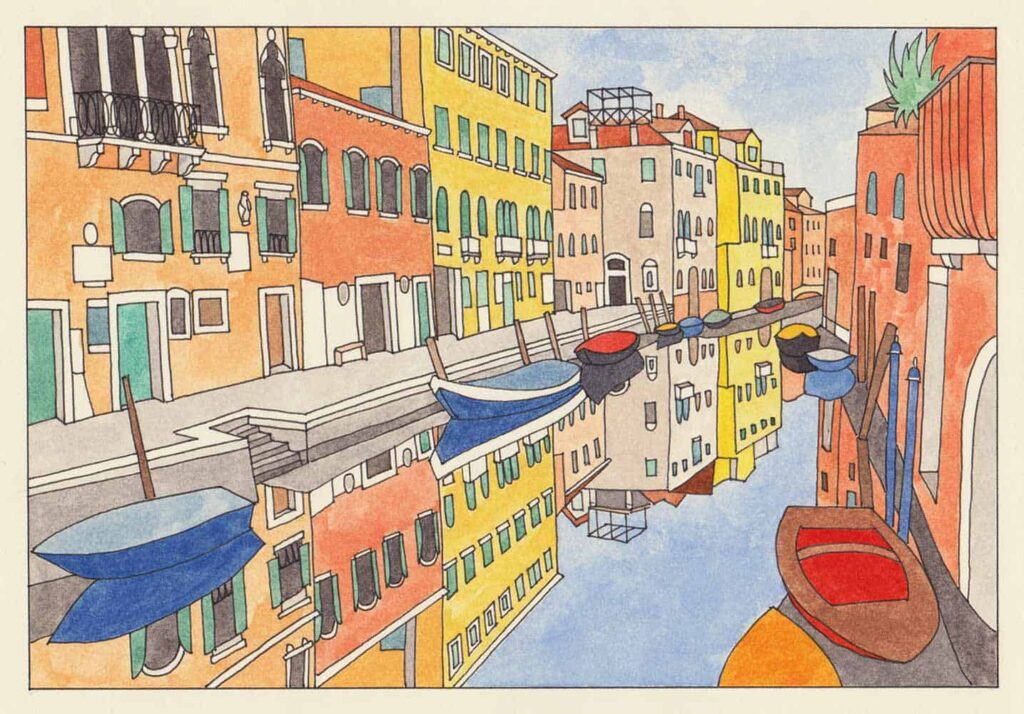
“Fondamenta dei Mori” Postcard
Along the route leading to Madonna dell’Orto lies the Fondamenta dei Mori, with the square of the same name, which takes its name from the three 13th-century statues of Moors wearing turbans set against the buildings of the campo. A fourth Moor, known as “Sior Antonio Rioba,” with an iron nose, stands at the foot of the bridge and, like Rome’s Pasquino, served as a voice for Venetian satire against the Republic.
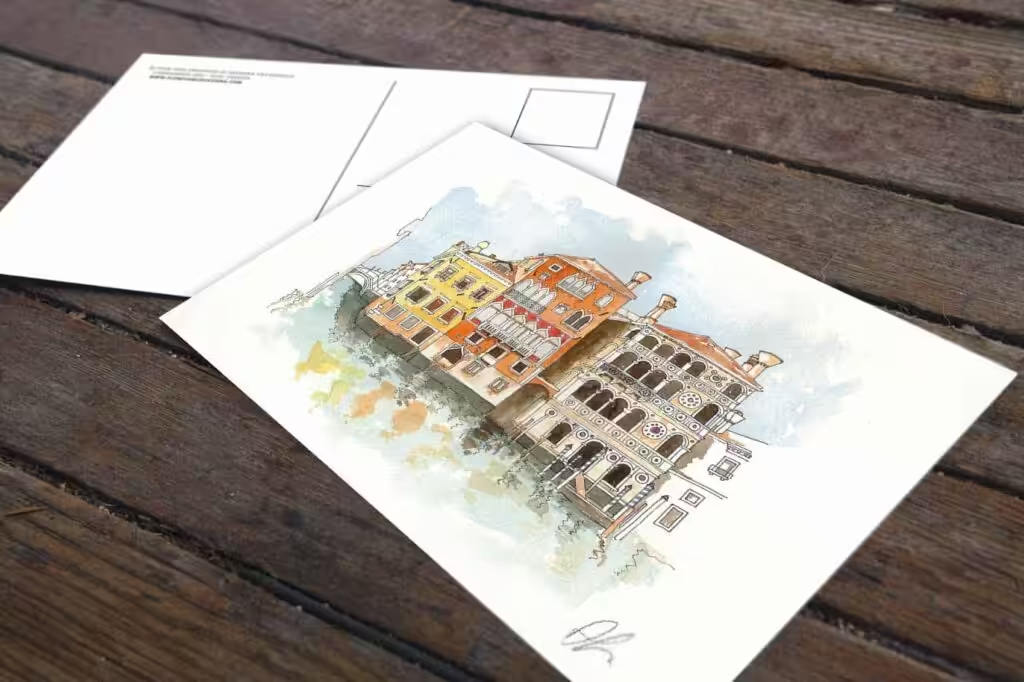
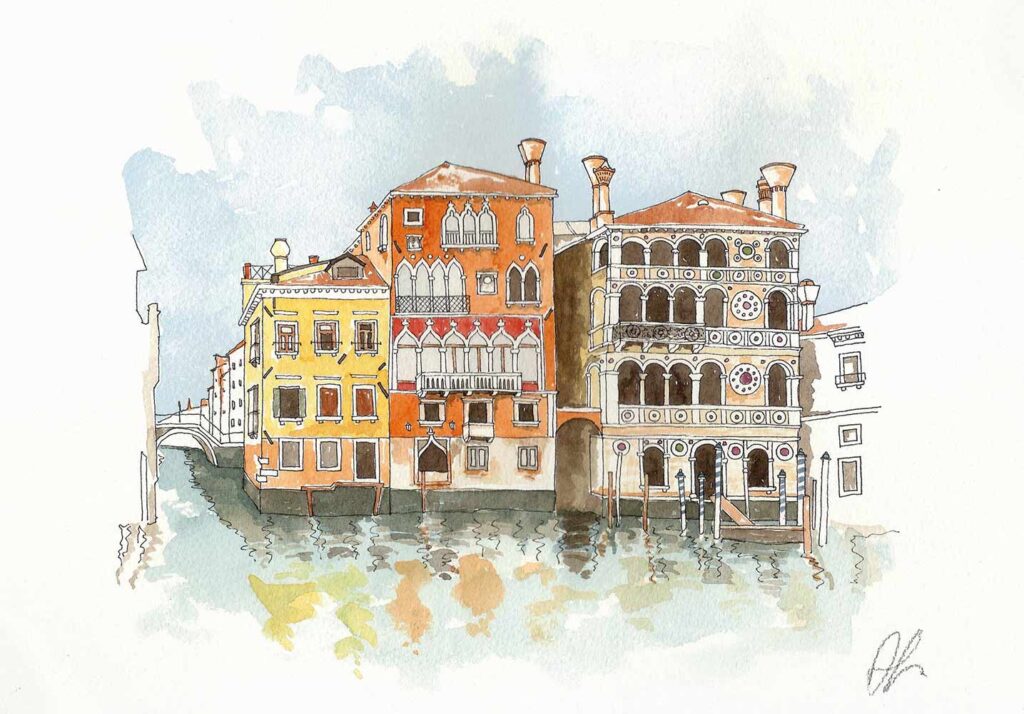
Postcard “Palaces facing the Grand Canal with Palazzo Dario”
This postcard depicts three of the most famous Venetian palaces overlooking the Grand Canal, in the Dorsoduro district.
The first building on the left is a house on the Rio della Fornace that, in the 18th century, was a very active brick factory, or kiln.
At the center stands Palazzo Barbaro Wolkoff. Originally built according to the Venetian-Byzantine architectural style, the building was later renovated with the addition of Gothic elements during the 15th century. In 1894, Eleonora Duse lived on the top floor of the palace.
The last palace on the right is Palazzo Dario (or Ca’ Dario). The building is famous for the alleged curse said to hang over it: according to legend, its owners are destined to go bankrupt or die a violent death. The palace was commissioned from the architect Pietro Lombardo in 1479 by Giovanni Dario as a wedding gift for his daughter Marietta. The architectural beauty of Ca’ Dario contrasts with its reputation as a cursed palace—a name earned through the tragic fate shared by many of its owners.
Bookmark 01
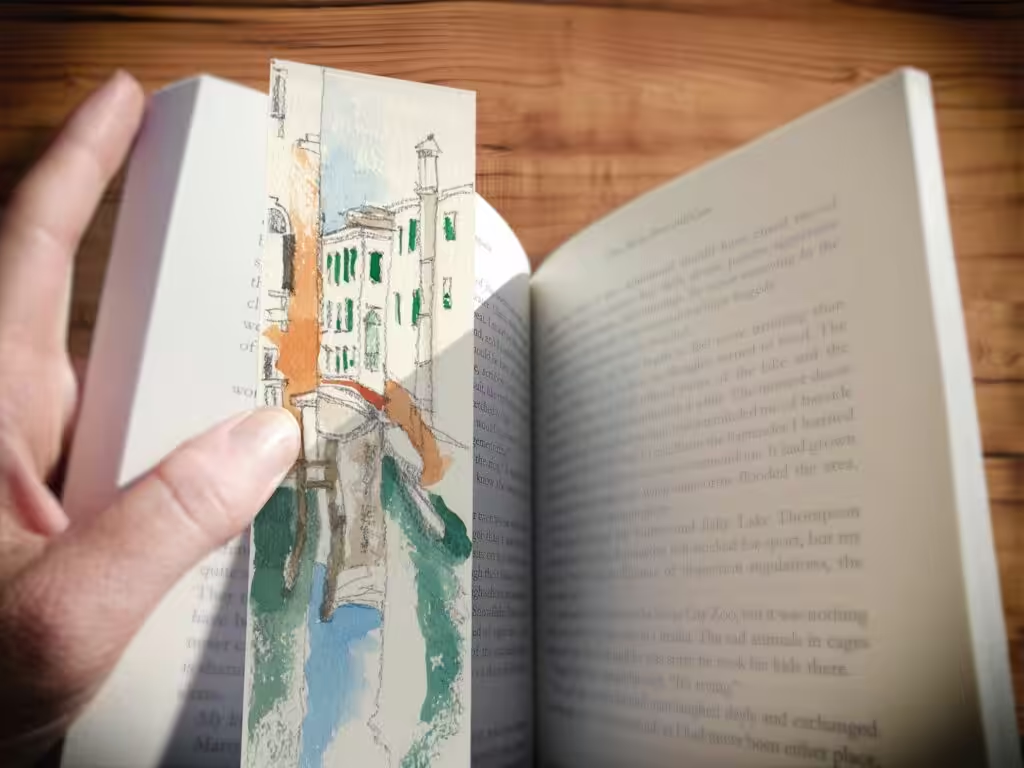
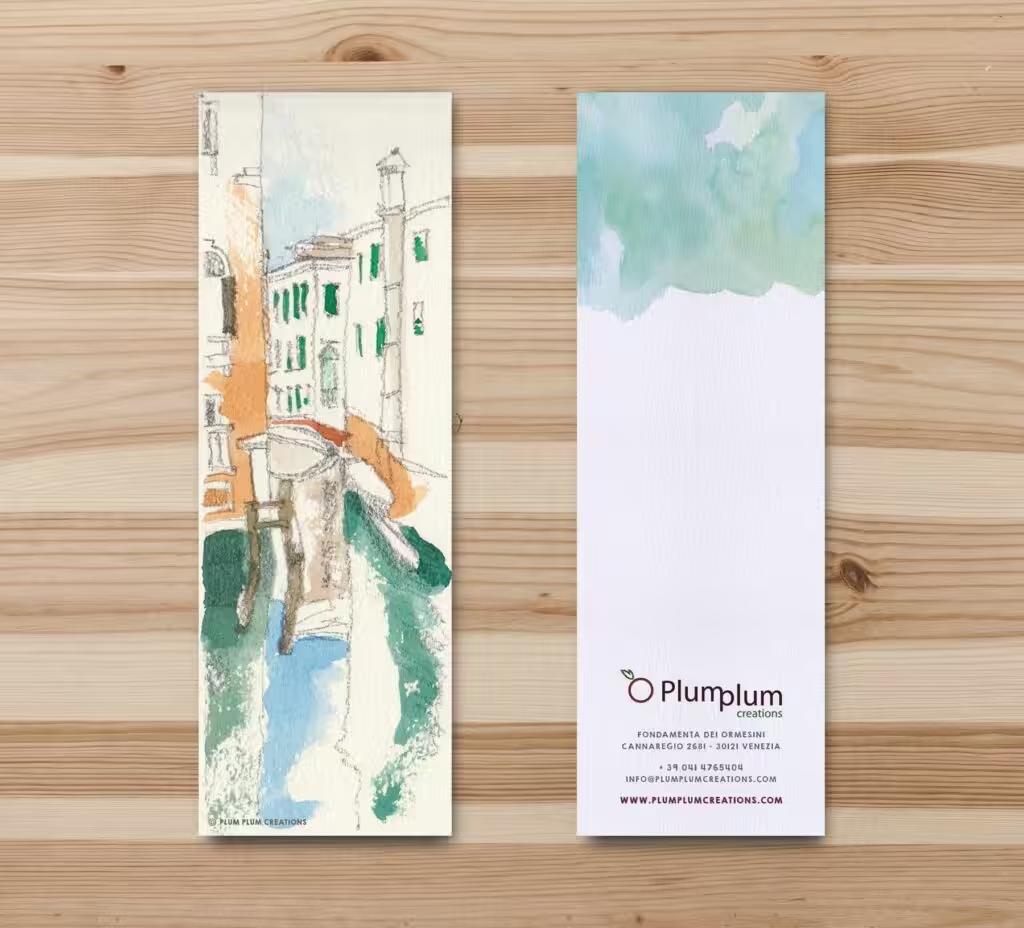
An original watercolor of mine turned into a bookmark!
Printed on 300 gsm hammered paper.
Size: 2.3 × 7 inches.
Sold Out
“Venetian Chimney 01” Postcard
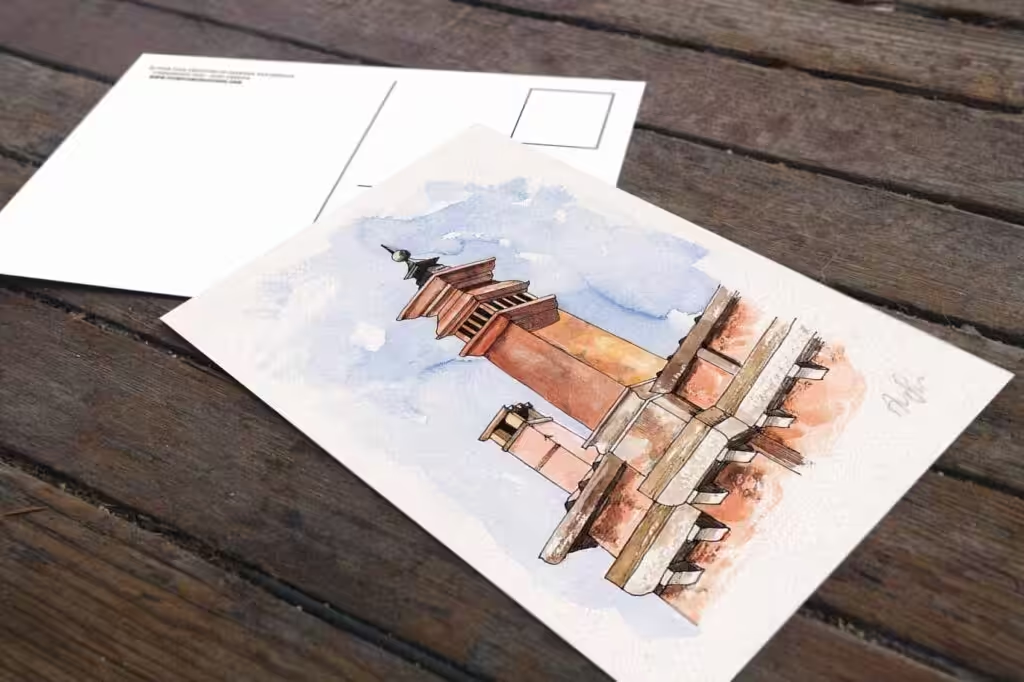
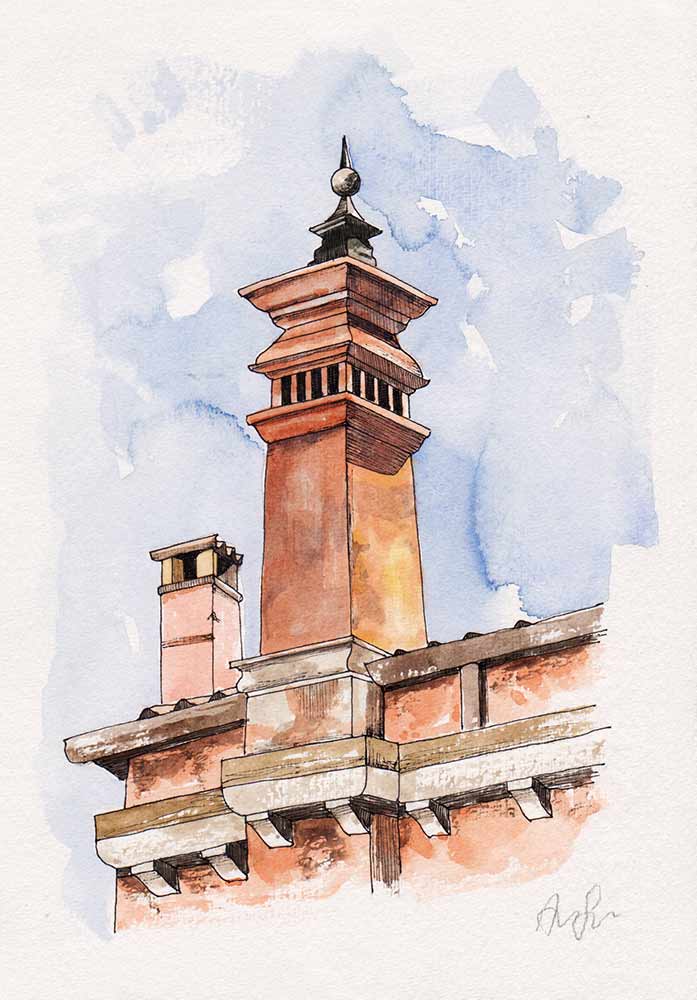
Postcard of a chimney in San Giobbe, in the Venetian district of Cannaregio.
Postcard printed on 300 gsm paper.
Size: 4.5 × 6.5 inches
Bookmark 03
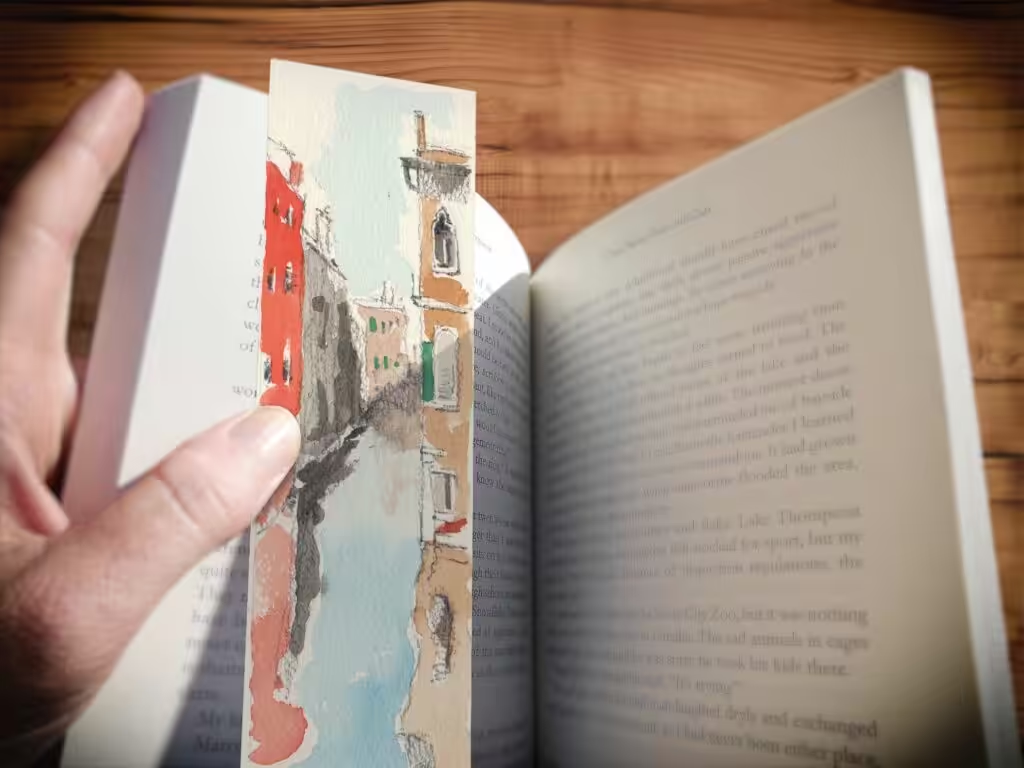
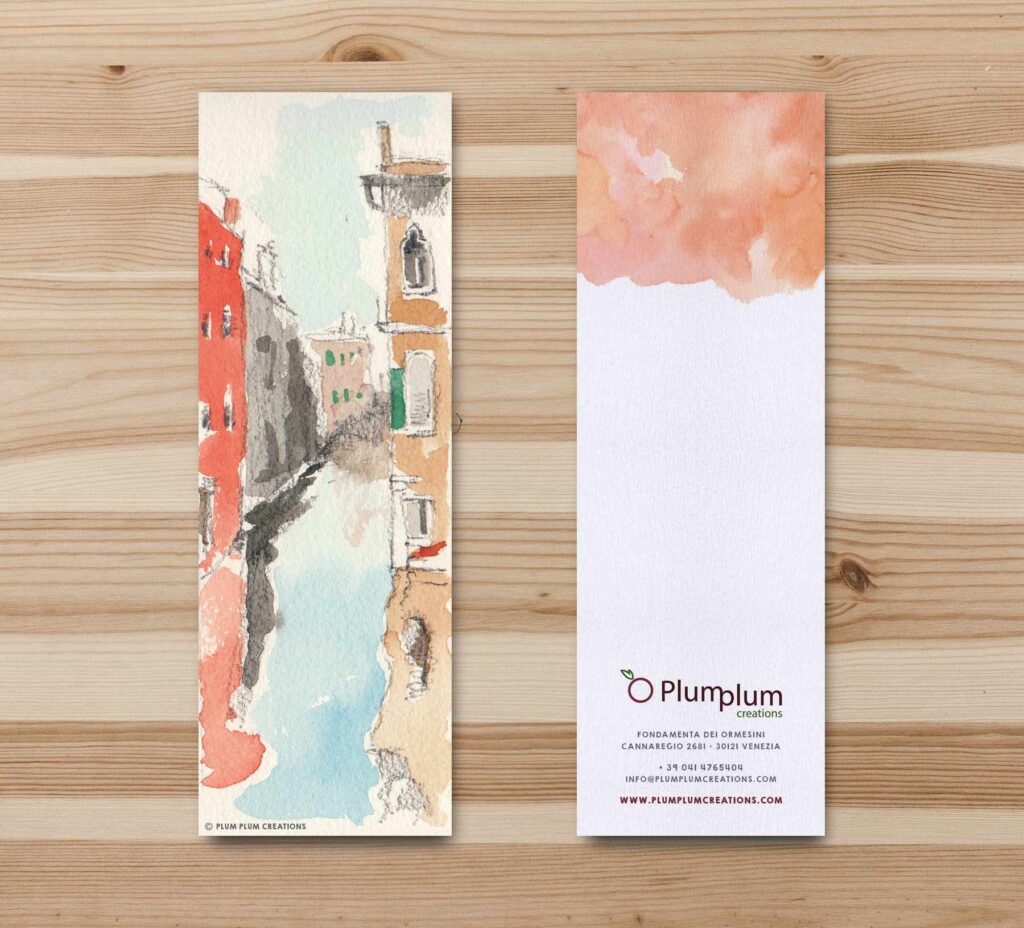
One of my original watercolors turned into a bookmark.
Printed on 300 gsm hammered paper.
Size: 2.3 × 7 inches.
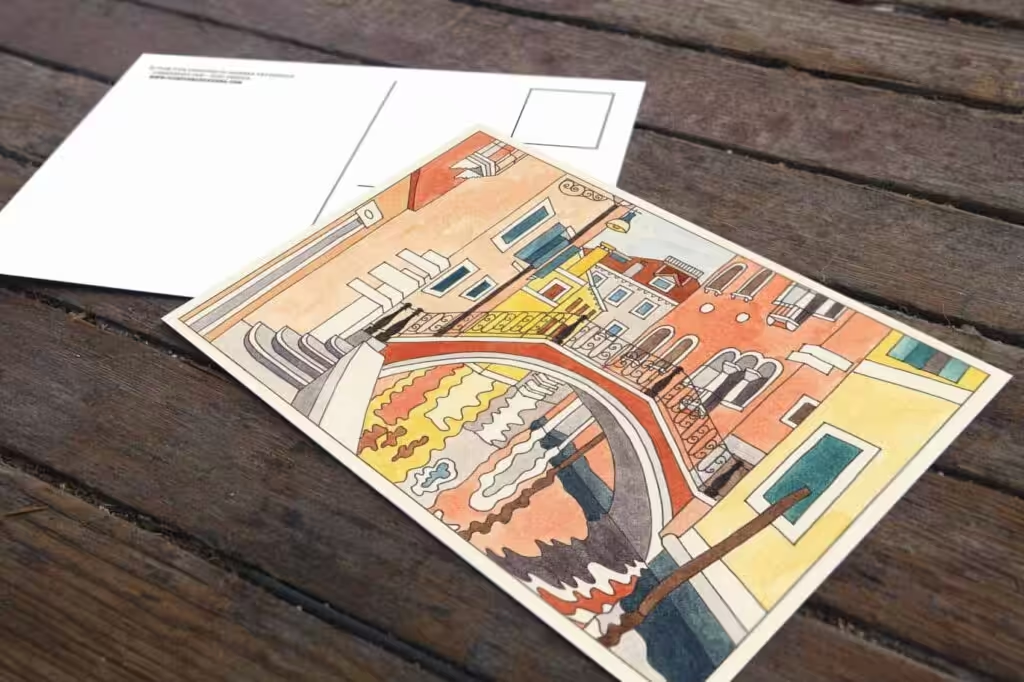
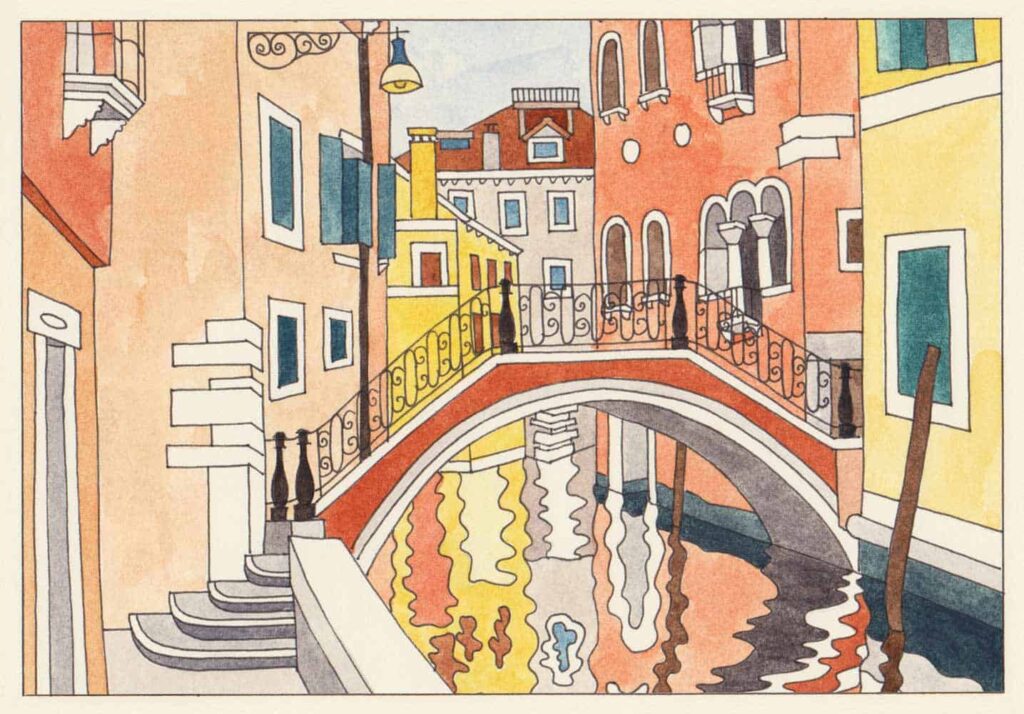
“Canal, bridge and fondamenta” Postcard
Drawing of a typical Venetian scene: a canal crossed by a bridge and its “fondamenta.”
In Venice, “fondamenta” refers to a street that runs along a canal.
Postcard printed on 300 gsm paper.
Size: 6.5 × 4.5 inches
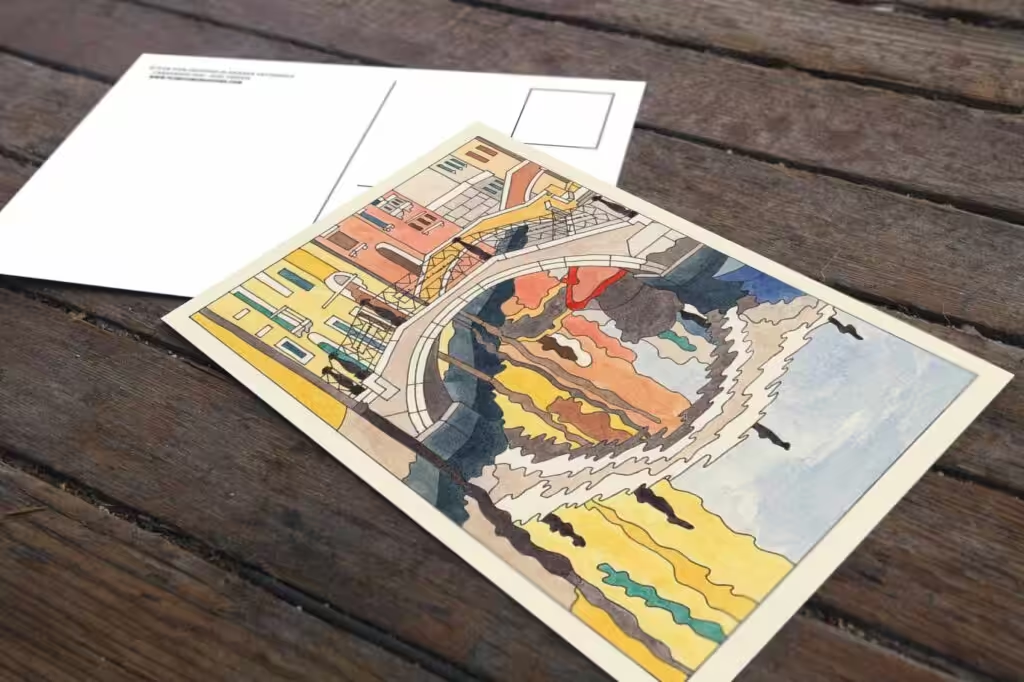
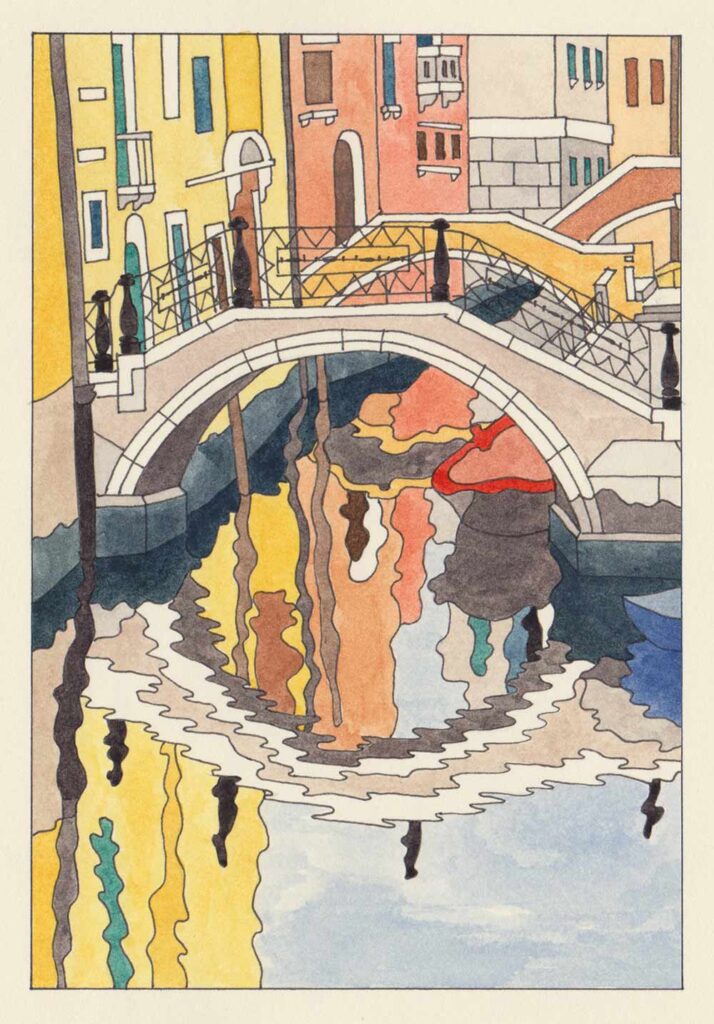
“Canal crossed by three bridges” Postcard
Canal crossed by three bridges – Postcard
A typical Venetian scene: a canal crossed by three bridges.
Postcard printed on 300 gsm paper.
Size: 4.5 × 6.5 inches
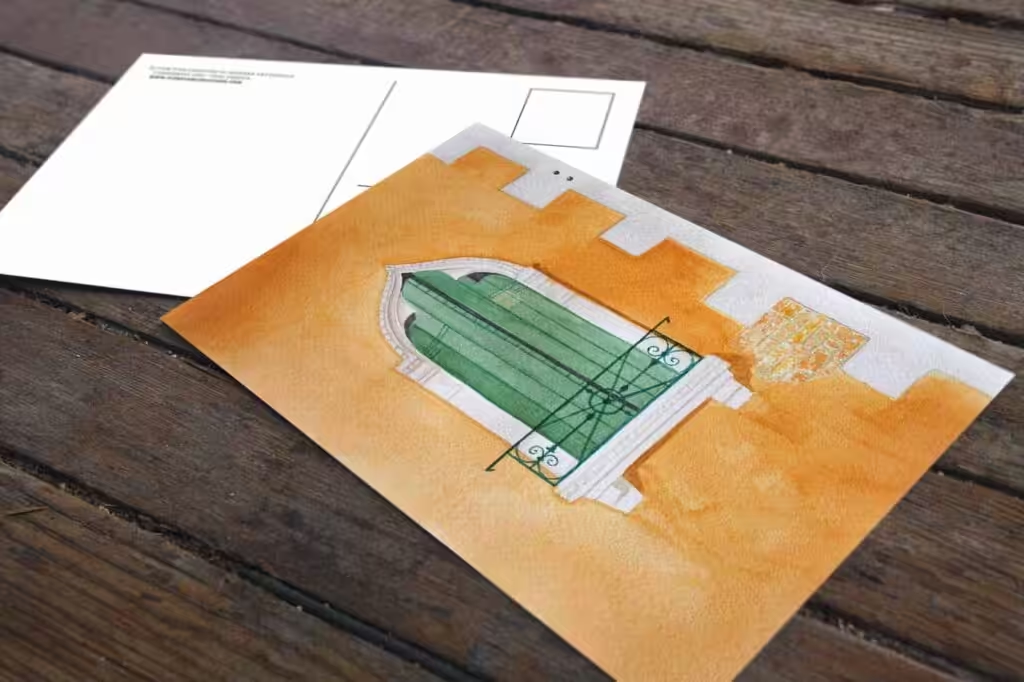
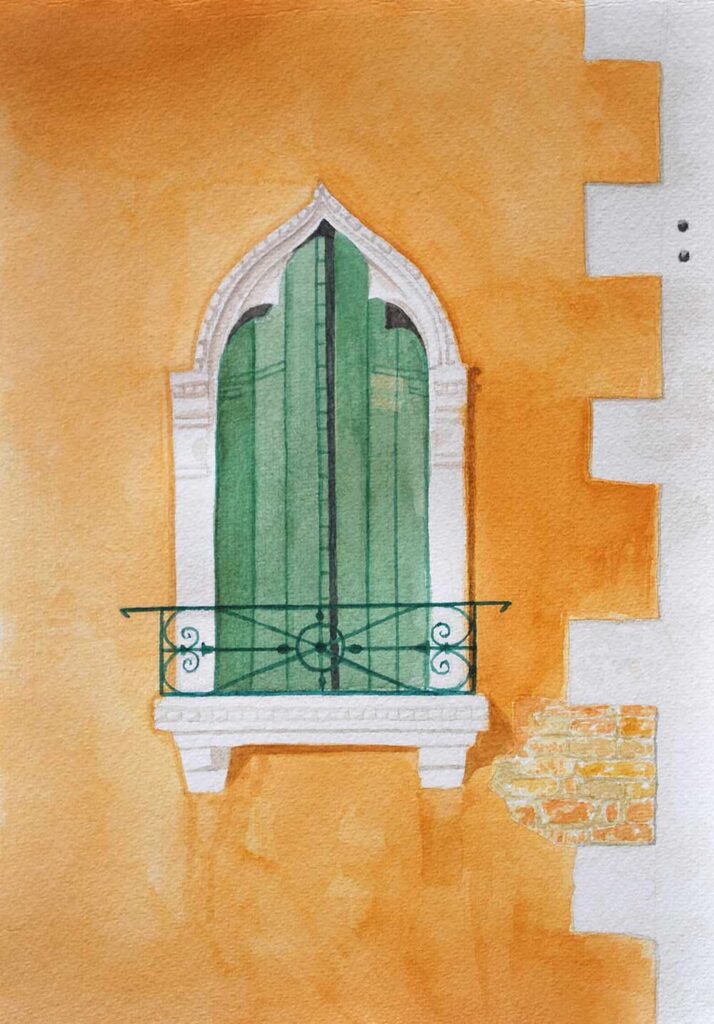
“Window” Postcard
Postcard of a Venetian window, based on one of my original watercolors.
Postcard printed on 300 gsm paper.
Size: 4.5 × 6.5 inches
recent view product
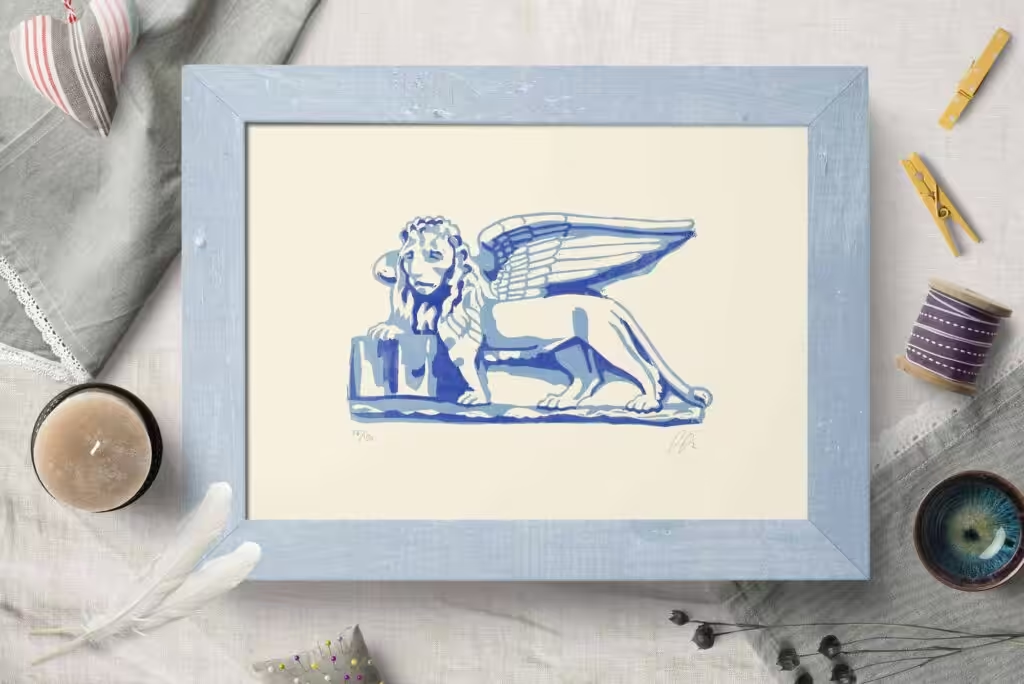
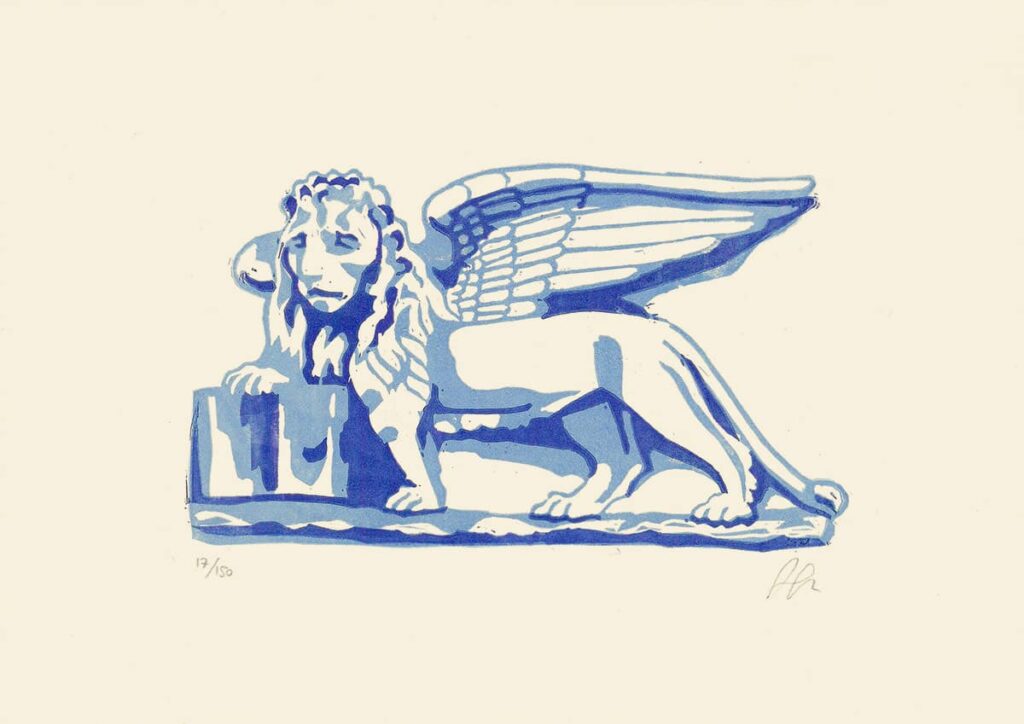
Lion of Saint Mark
The Lion of Saint Mark, representing the Evangelist Saint Mark depicted as a winged lion, is the symbol of the city of Venice and formerly of the Republic of Venice. It also appears both on merchant ships and on the naval military flags of the Italian Republic.
Saint Mark, represented as a lion, is a typical Christian iconography derived from the prophetic visions contained in Revelation 4:7. The lion is one of the four living creatures described in the book.
Sold Out
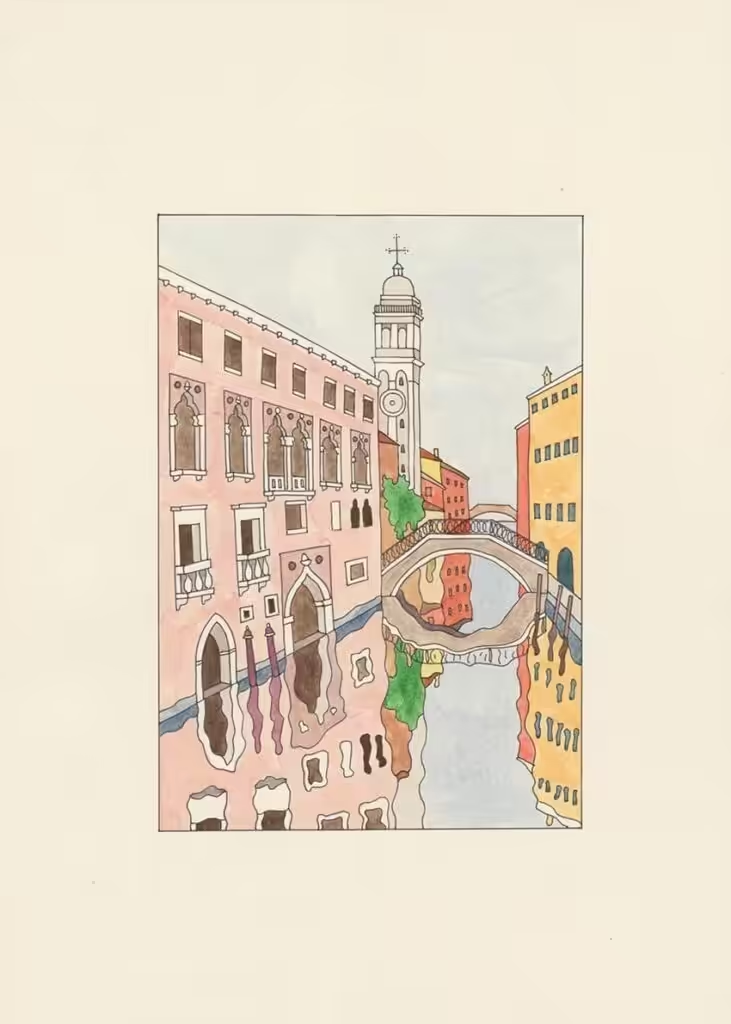
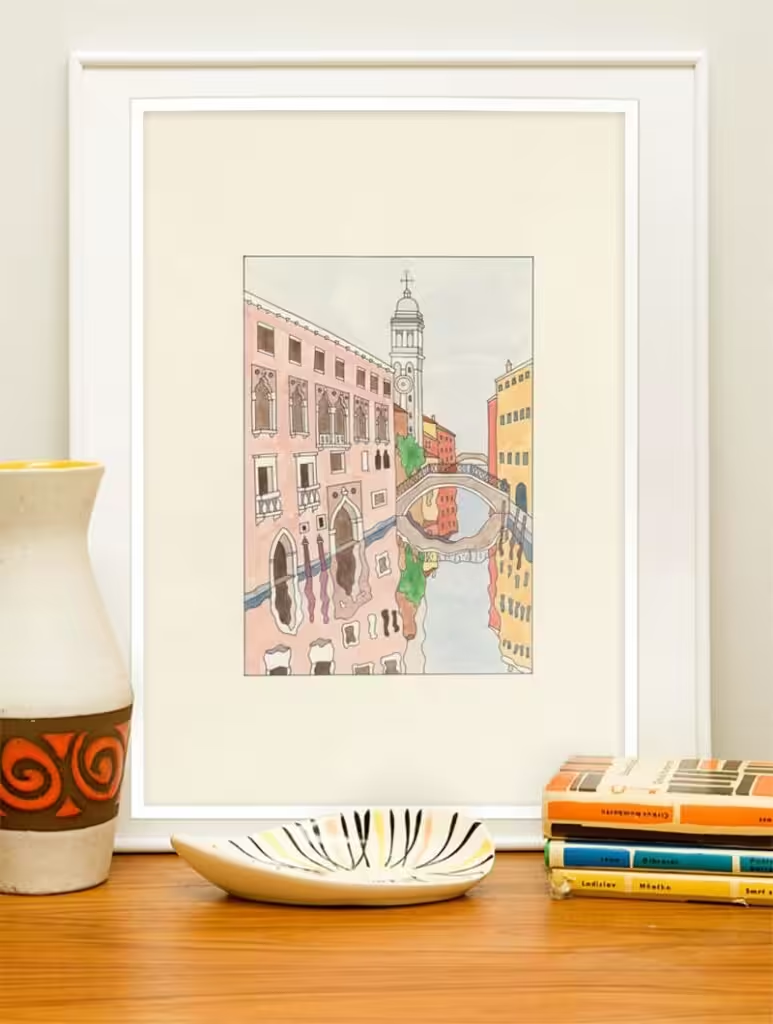
San Giorgio dei Greci watercolor
San Giorgio dei Greci watercolor is an original pen drawing colored with watercolor on Favini ivory paper acid-free 200 gr […]
“Ponte degli Scudi” Postcard
Ponte degli Scudi is a bridge in the Castello district of Venice. Castello is the largest of the six districts of Venice.
If there is a district of Venice that can be described as truly “characteristic,” it is certainly Castello, with its canals, churches, and small gardens dating back to the 13th century. Here you can see clothes hanging out to dry between one window and another—this is the city you’ve always dreamed of!
Ponte degli Scudi is in the heart of Castello, near San Francesco della Vigna, just a short walk from the Arsenale.
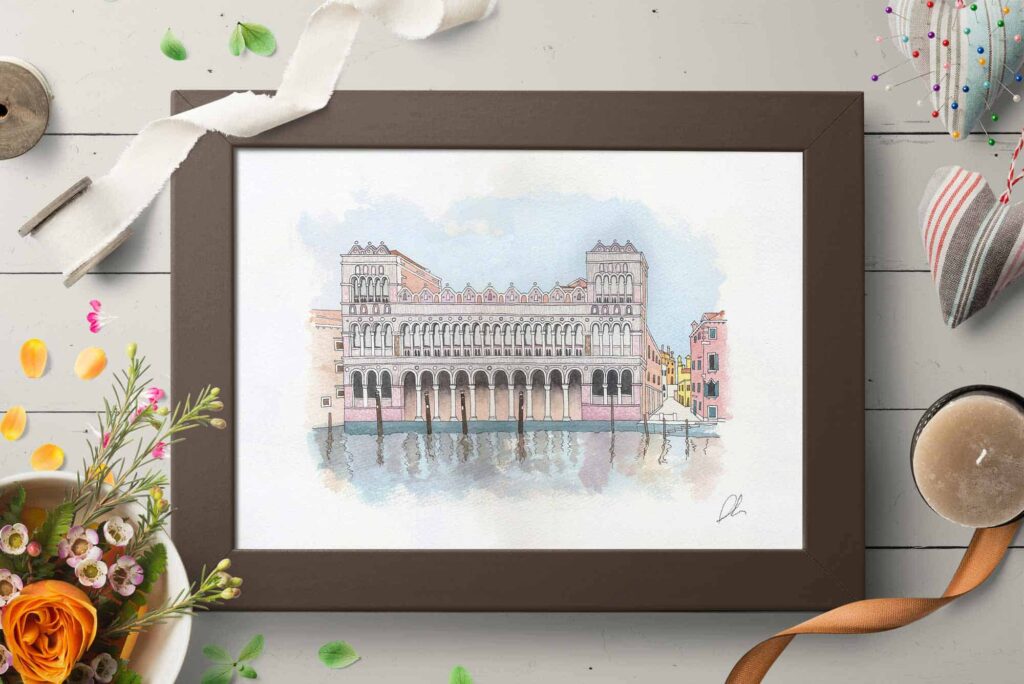
Fontego dei Turchi – Reproduction
The Fontego dei Turchi was built as a palace for the Pesaro family in the 13th century.
Its double Venetian-Byzantine style loggia reflects the purpose for which the building was created: a commercial warehouse for goods arriving from the East.
In 1381 the building was given to Nicolò d’Este, Lord of Ferrara, and later (in 1621) — after changing hands several times — it became the Fontego of the city’s Turkish merchants. From 1865 onward, it underwent extensive restoration work. It later housed the Correr Museum and, from 1923, the Natural History Museum.
(source MUVE)
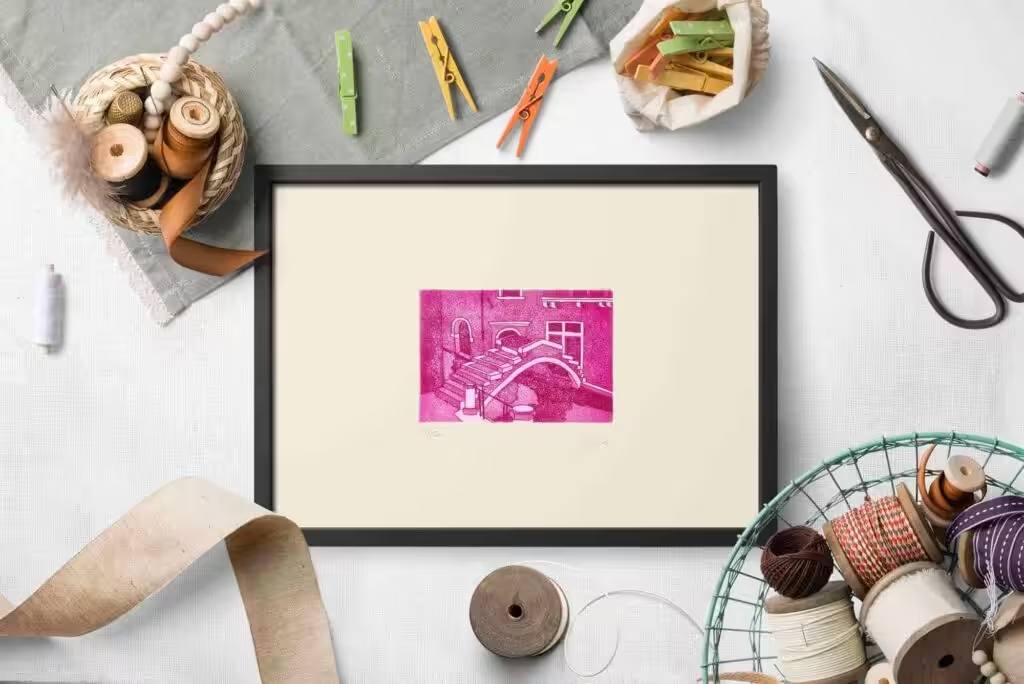
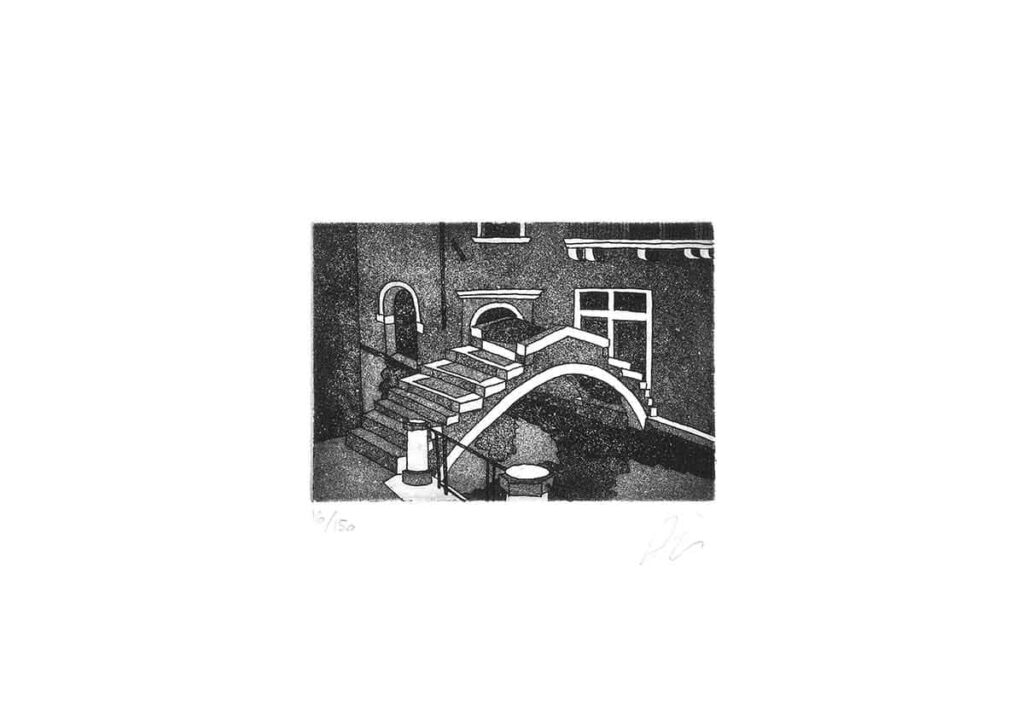
Ponte Chiodo (Nail Bridge)
Chiodo Bridge is located in Venice, in the Cannaregio district. It crosses the Rio di San Felice and has a feature that makes it unique in Venice: it has no parapets. In past centuries, and up until the nineteenth century, most bridges in Venice did not have parapets. It was therefore decided relatively recently to equip the existing bridges with parapets (called spallette in Venetian dialect) in order to improve pedestrian safety.
The name “Chiodo” comes from the family who lived in the palace overlooking the bridge — the Chiodo family, in fact.
Another bridge without parapets can still be found in Torcello: the Devil’s Bridge.