

No products in the cart.
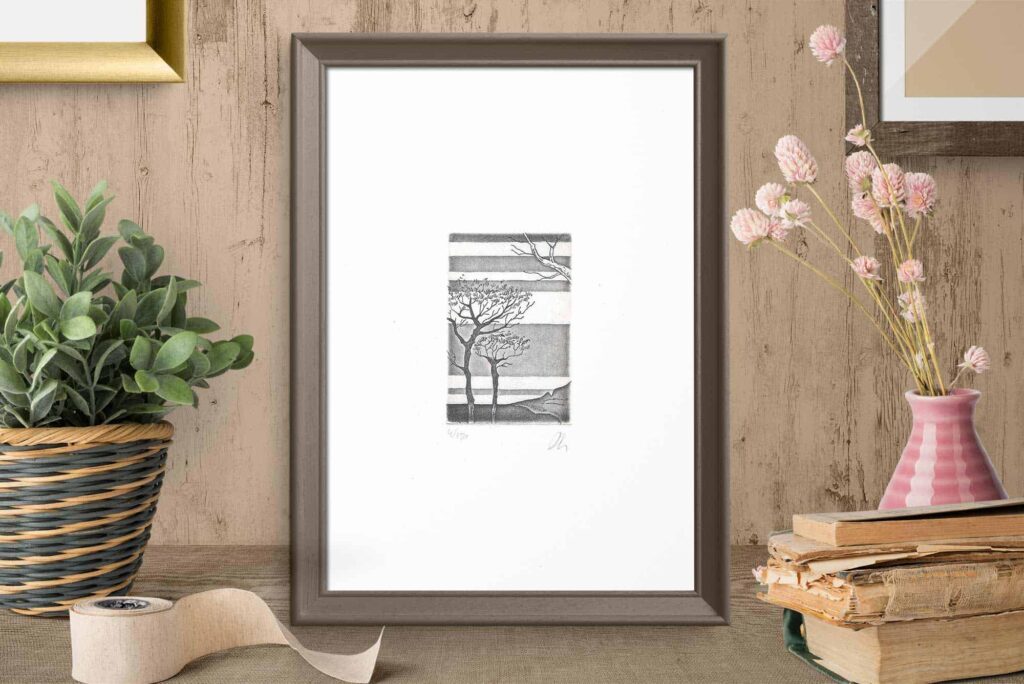
Maritime Pines
The maritime pine (Pinus pinaster) is an evergreen tree of the Pinaceae family that finds its ideal habitat near the coasts of the Mediterranean Sea.
“Maritime Pines” is an intaglio print on a copper plate, printed on 275 gsm Fabriano Rosaspina paper.
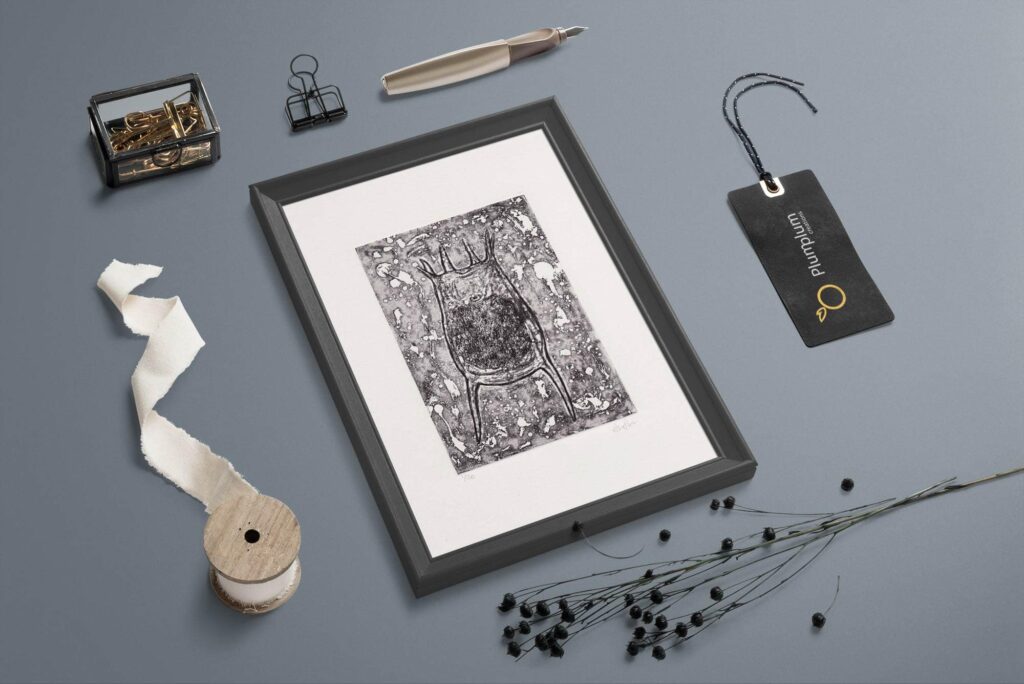
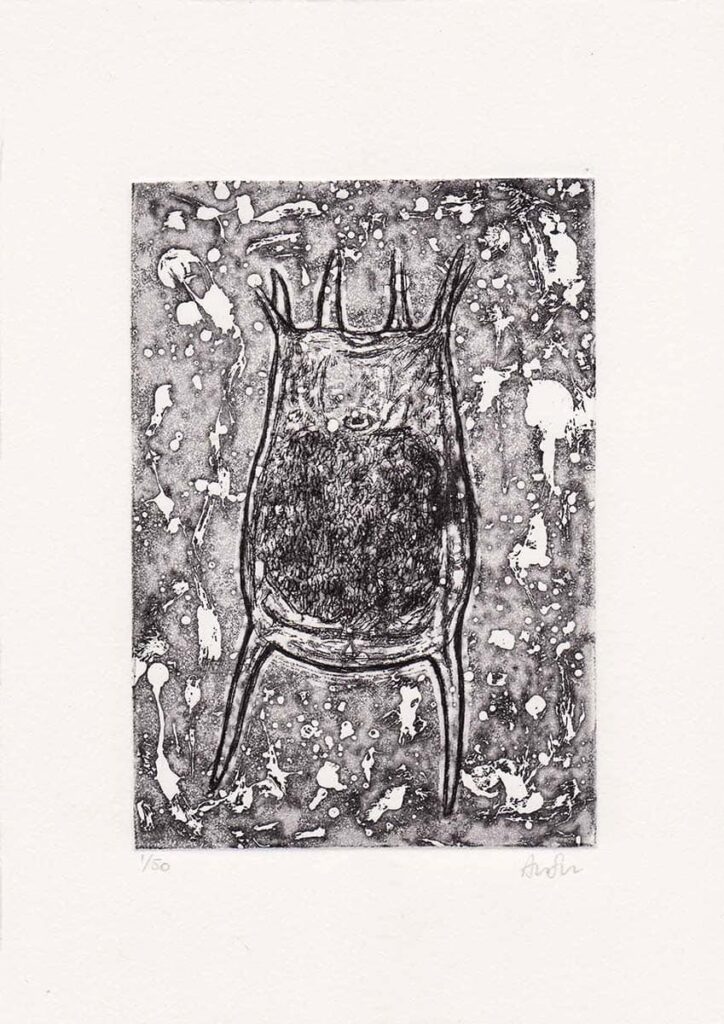
Microorganism 1
Microorganism 1 is an intaglio print made by me during a personal study on microorganisms in the aquatic world.
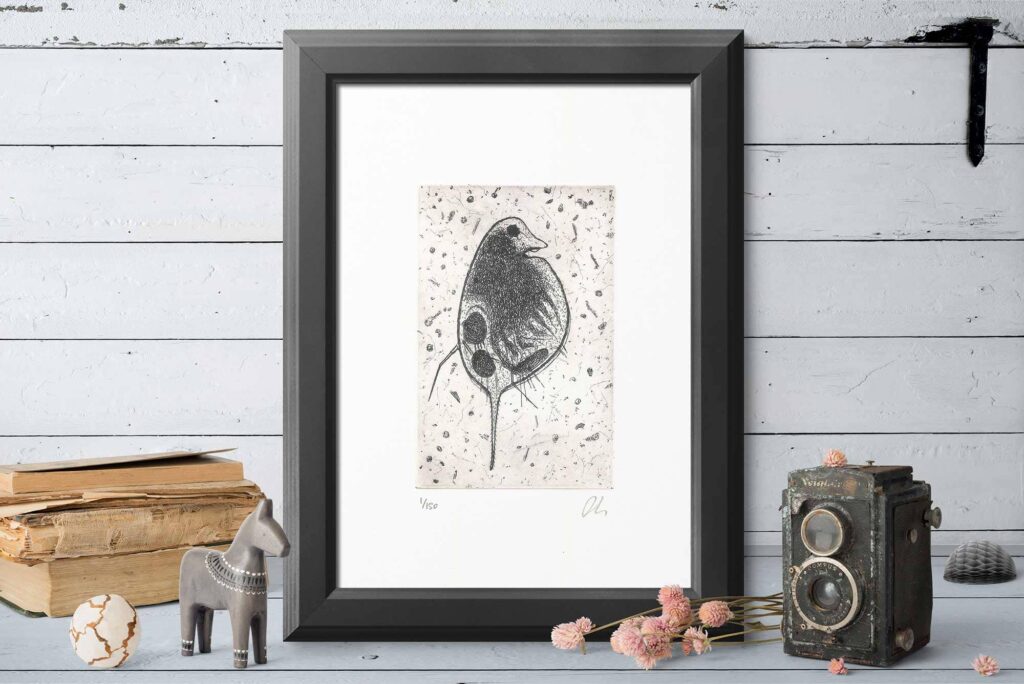
Microorganism 3
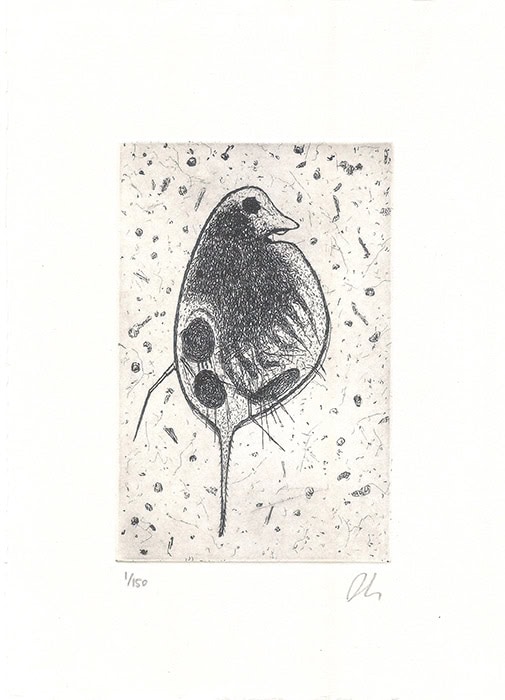
Microorganisms 3 is an intaglio print made by me during a personal study on microorganisms in the aquatic world.
Daphnia longispina is a planktonic crustacean belonging to the genus Daphnia (family “Daphniidae”), and is a freshwater cladoceran water flea.
Microorganism 4
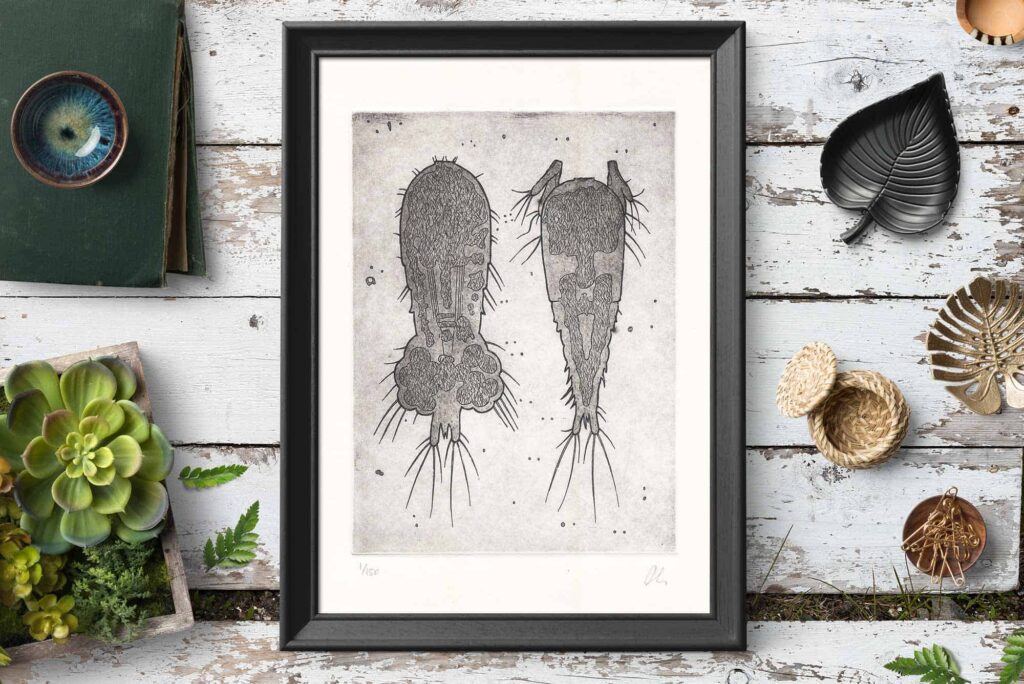
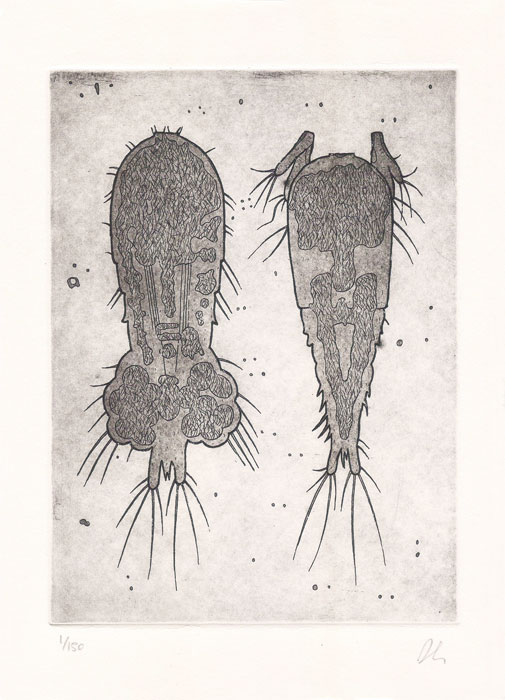
Microorganism 4 is an intaglio print made by me during a personal study on microorganisms in the aquatic world.
Cyclops strenuus is a common species of cyclopoid copepod found in small bodies of water in Central Europe: in this print, the female is on the left and the male is on the right. More specifically, these particular specimens are the ones found in Lake Tovel (Brenta Dolomites).
Microorganism 5
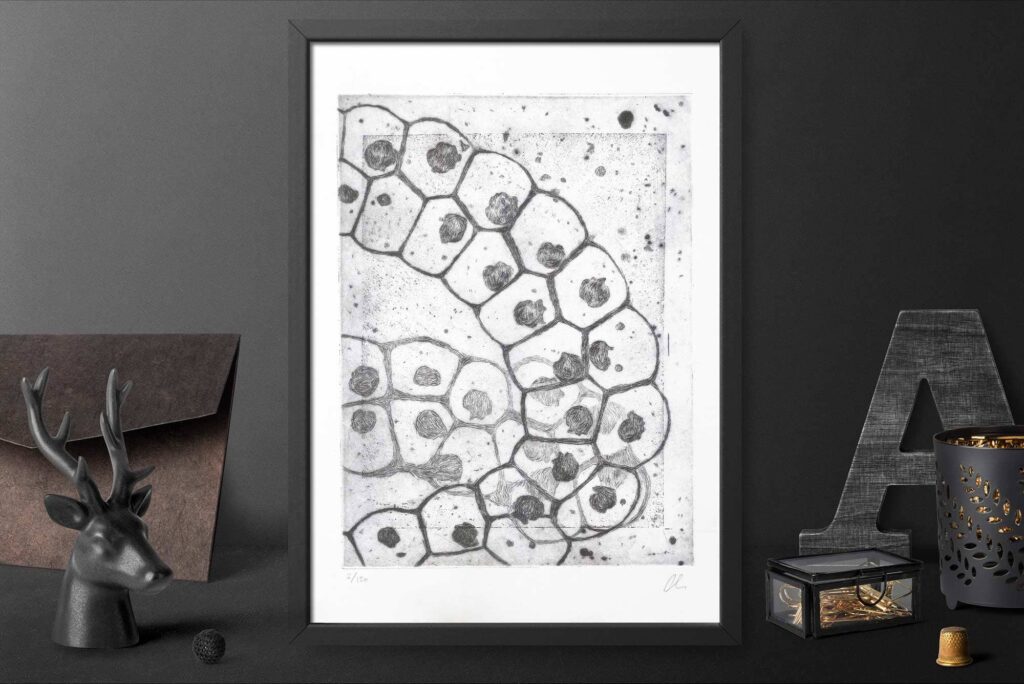
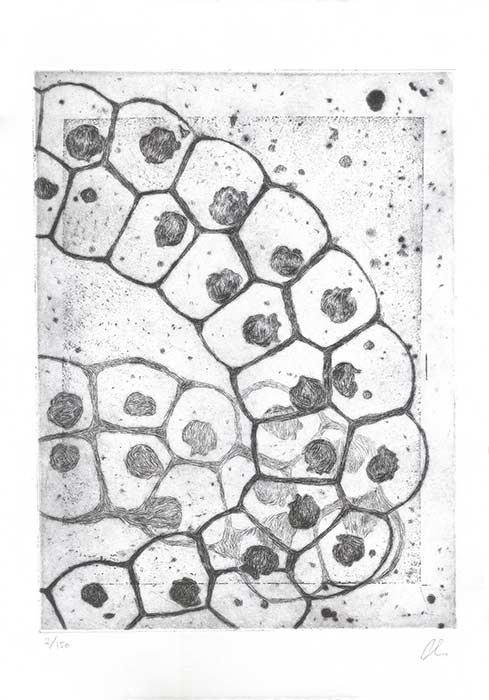
Microorganism 5 is an intaglio print made by me during a personal study on microorganisms in the aquatic world.
The subject depicts Lymnaea embryos inside the gelatinous cells of the egg mass. Lymnaea is one of the most widespread freshwater mollusks.
Microorganisms
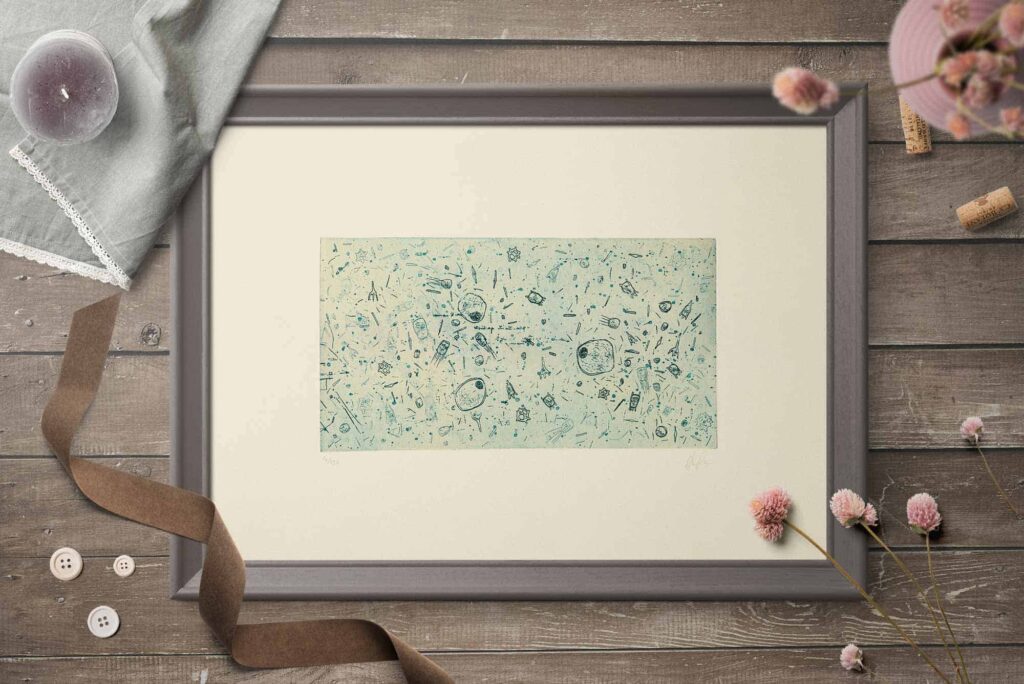
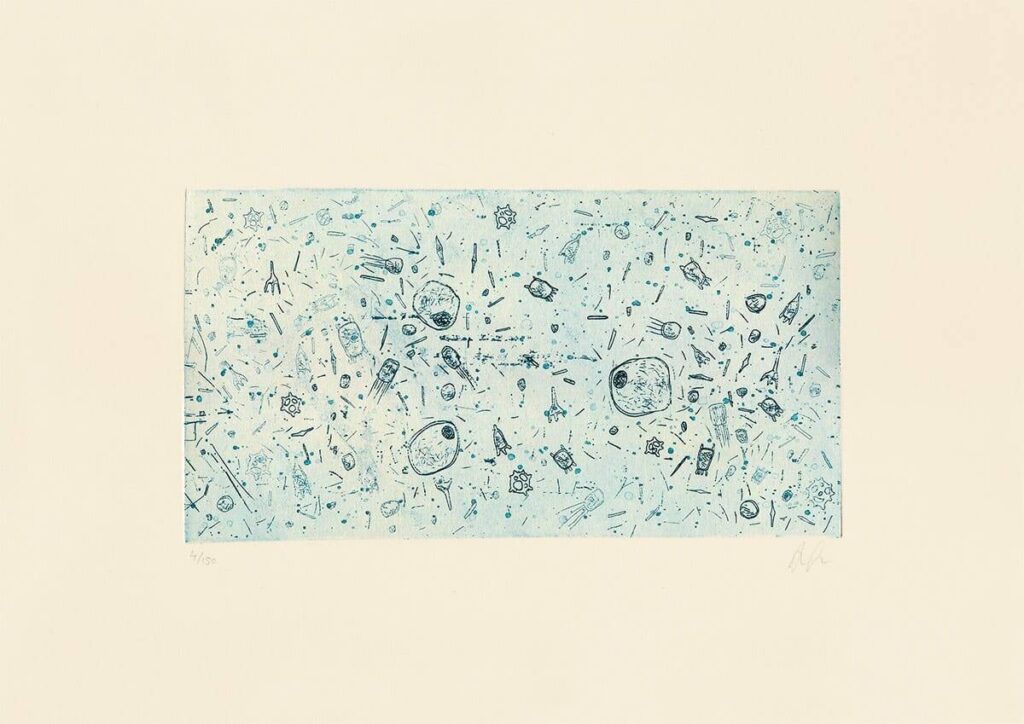
Microorganisms is an intaglio print on a zinc plate printed on 285 gsm Rosaspina paper.
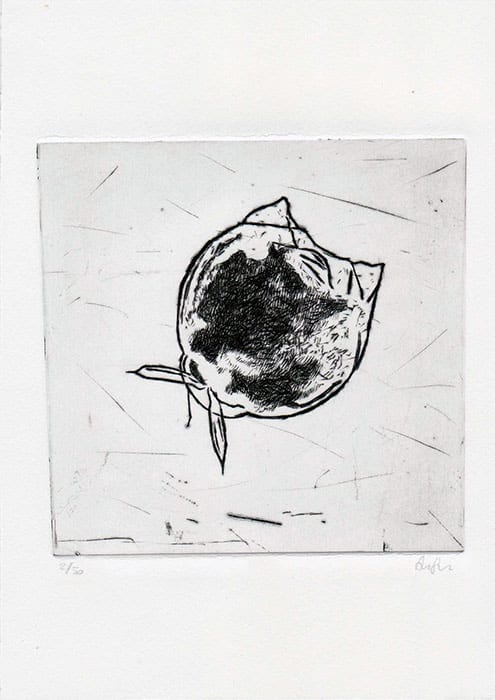
Microorganisms 2
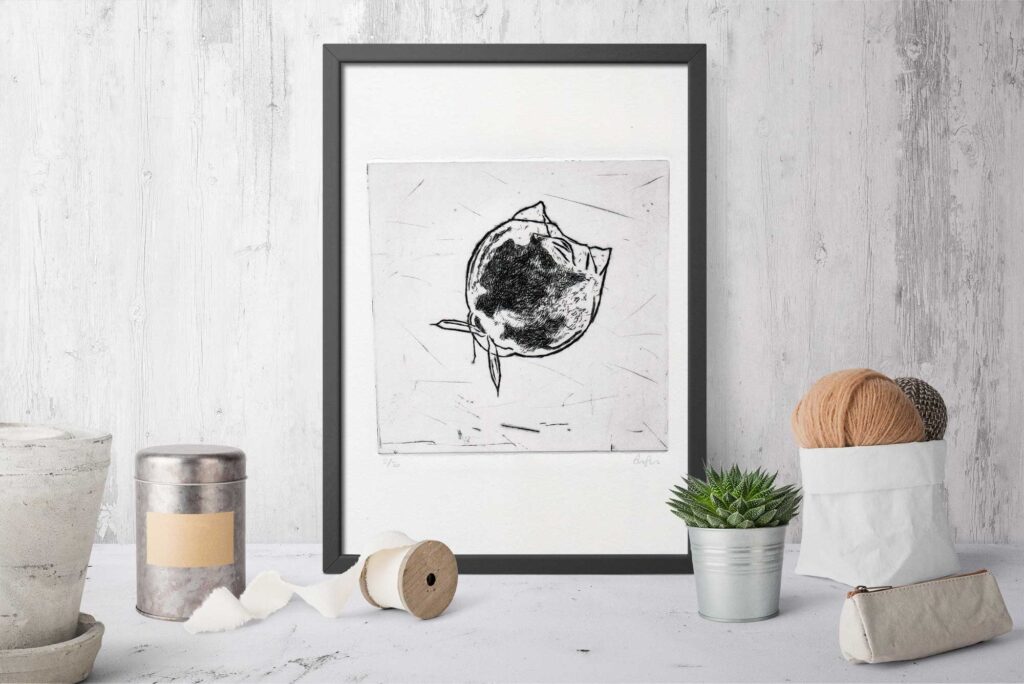
Microorganisms 2 is an intaglio print made by me during a personal study on microorganisms in the aquatic world.
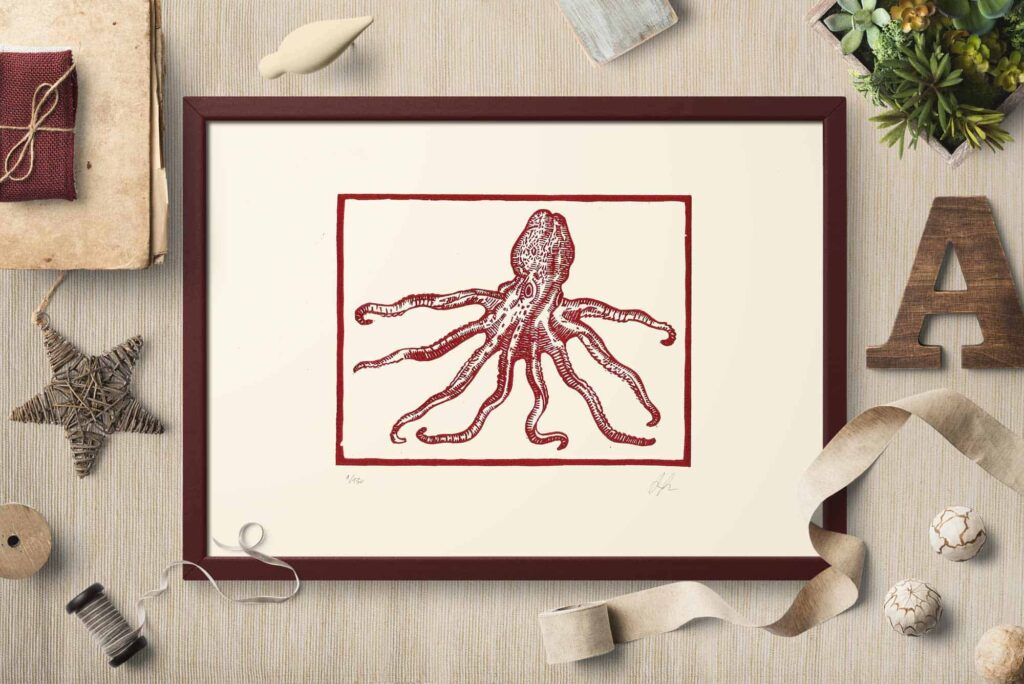
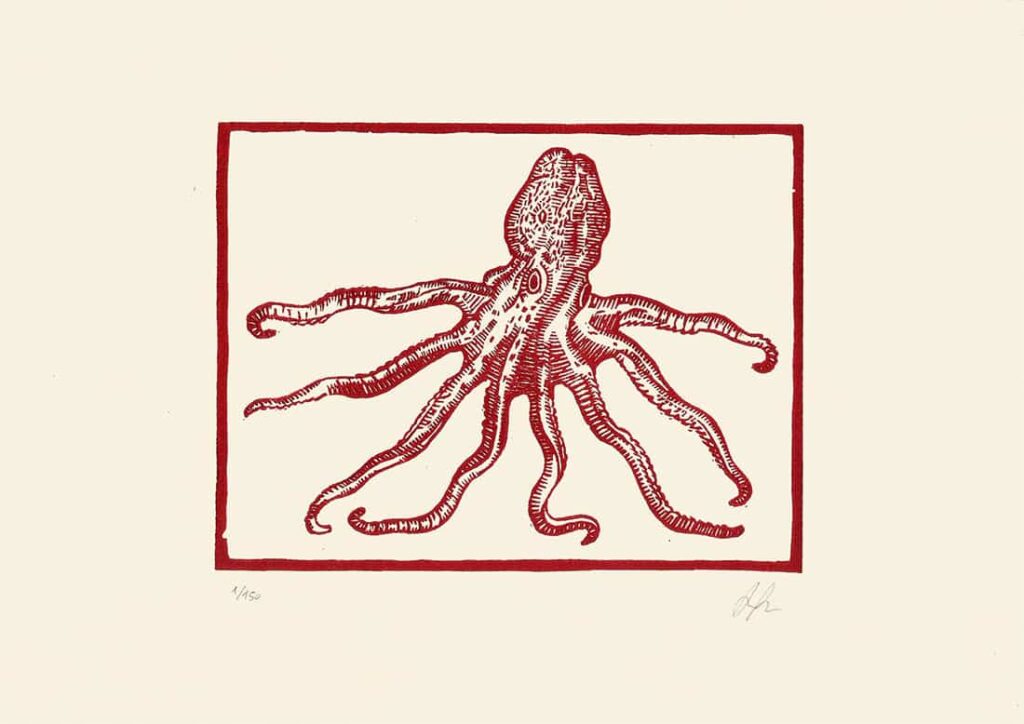
Octopus
The octopus is taken from a woodcut illustration from Historiae animalium by Conrad Gesner, an encyclopedic work — “a Renaissance inventory of zoology” — published in Zurich between 1551 and 1558, which sought to build a connection between ancient knowledge of the animal world and modern science.
Sold Out
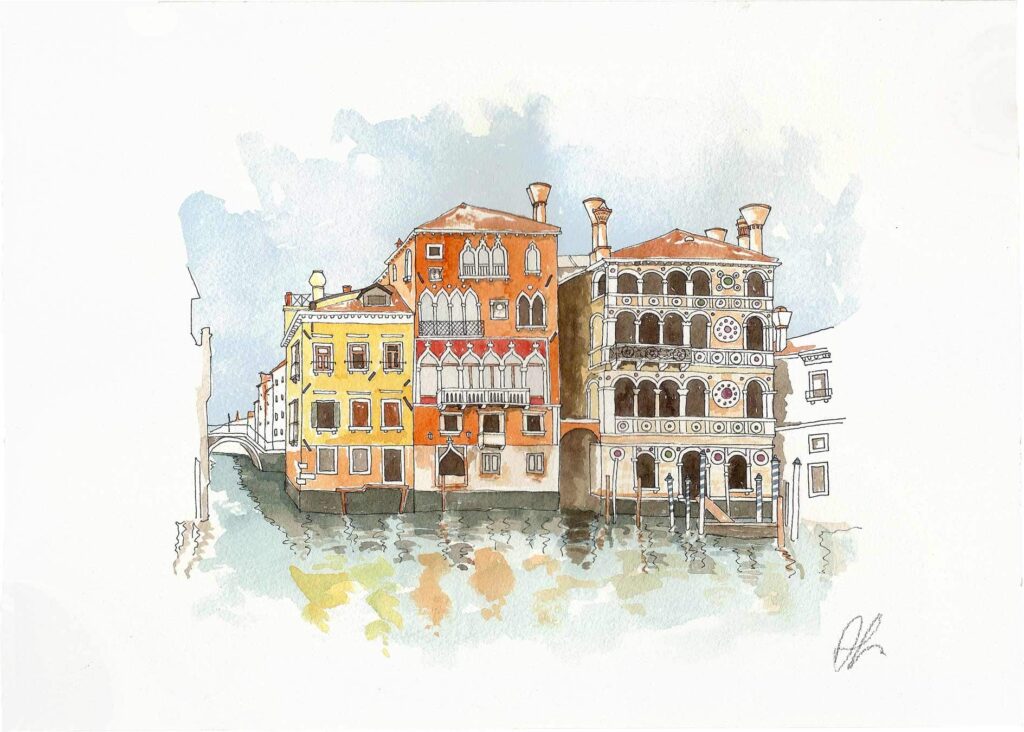
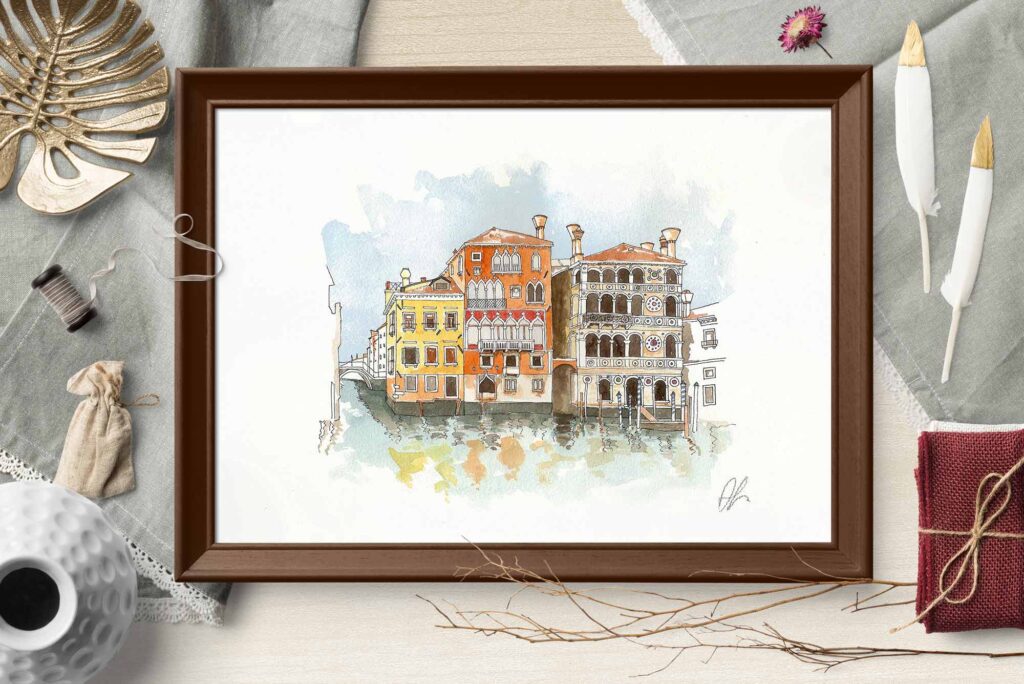
Palaces facing the Grand Canal with Palazzo Dario
This watercolor shows three of the main palaces facing the Grand Canal in Venice, in the Dorsoduro district. The first […]
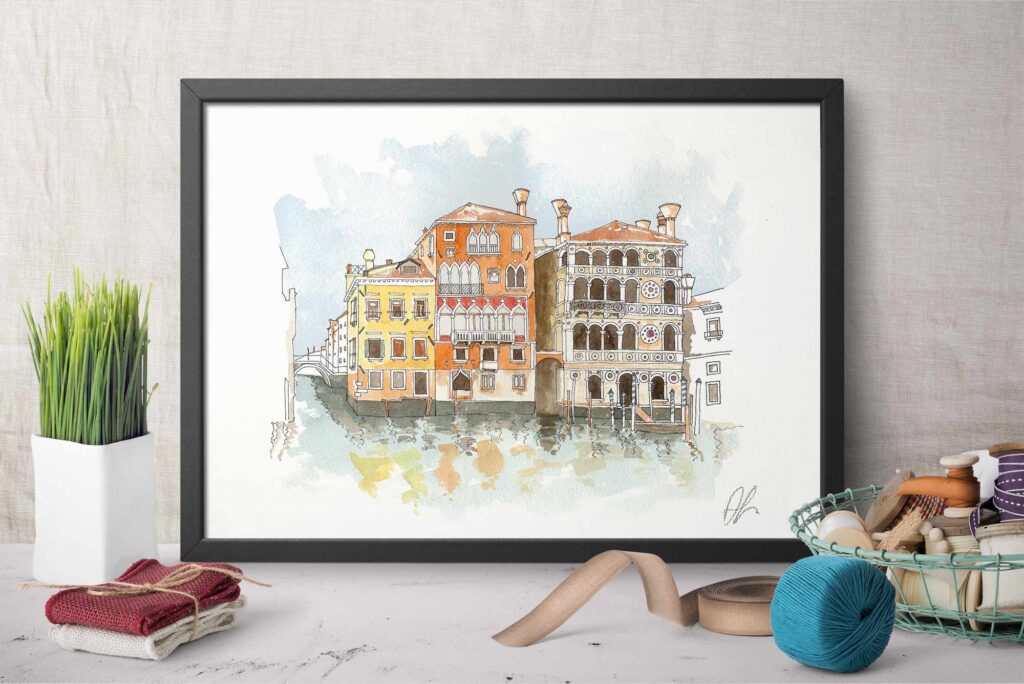
Palaces facing the Grand Canal with Palazzo Dario – Reproduction
This reproduction depicts three of the most famous Venetian palaces overlooking the Grand Canal, in the Dorsoduro district.
The first building on the left is a house on the Rio della Fornace that, in the 18th century, was a very active brick factory, or kiln.
At the center stands Palazzo Barbaro Wolkoff. Originally built according to the Venetian-Byzantine architectural style, the building was later renovated with the addition of Gothic elements during the 15th century. In 1894, Eleonora Duse lived on the top floor of the palace.
The last palace on the right is Palazzo Dario (or Ca’ Dario). The building is famous for the alleged curse said to hang over it: according to legend, its owners are destined to go bankrupt or die a violent death. The palace was commissioned from the architect Pietro Lombardo in 1479 by Giovanni Dario as a wedding gift for his daughter Marietta. The architectural beauty of Ca’ Dario contrasts with its reputation as a cursed palace—a name earned through the tragic fate shared by many of its owners.
Palazzetto Dandolo
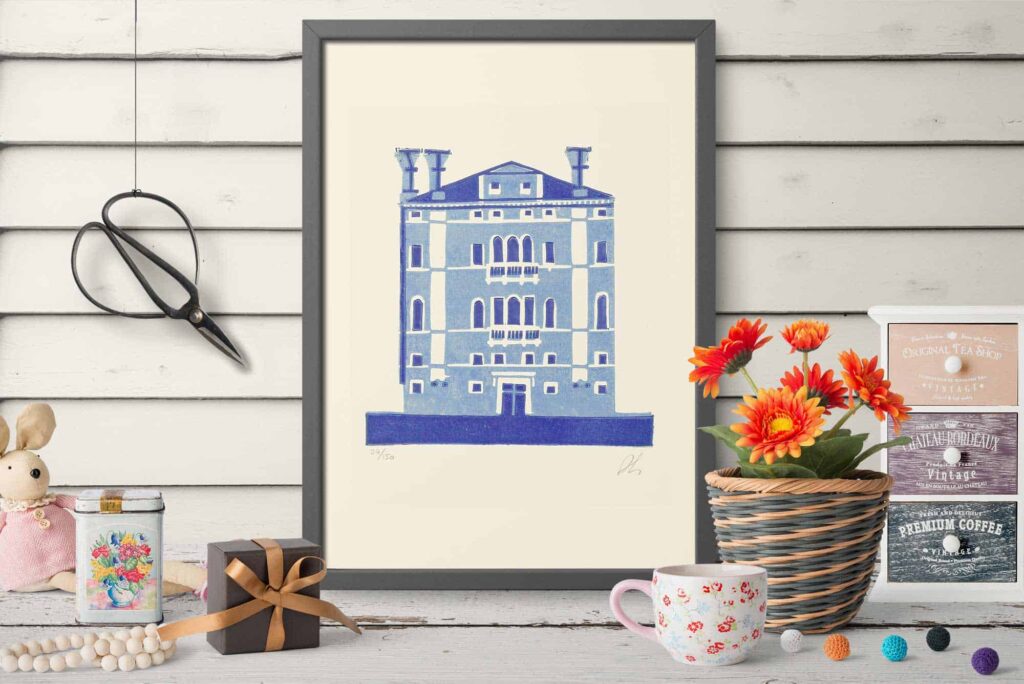
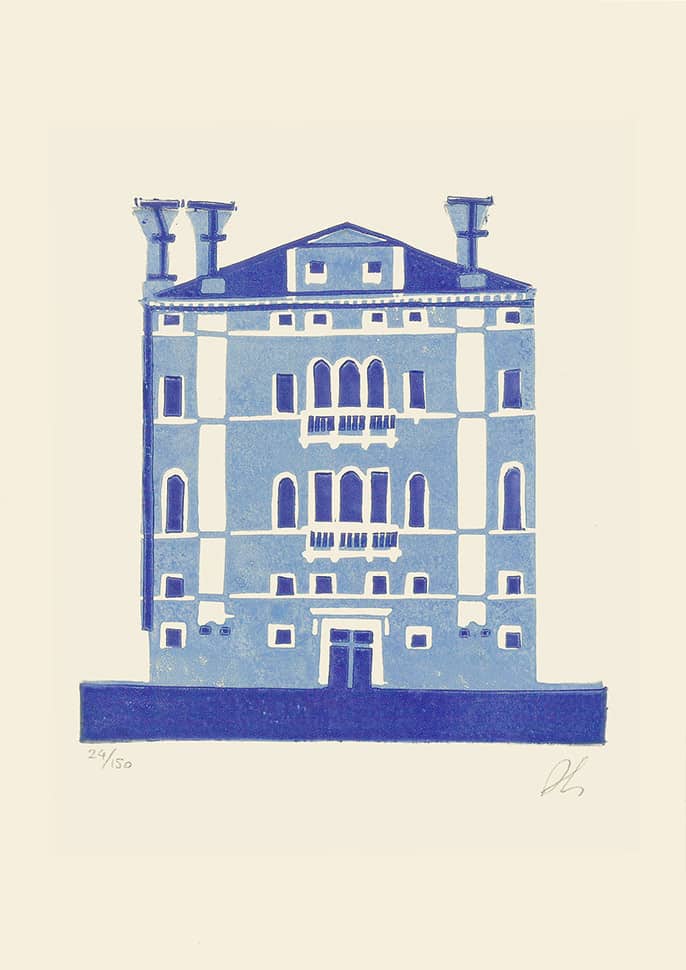
Palazzetto Dandolo on Fondamenta Dandolo (Campo Santi Giovanni e Paolo)
A small, well-preserved 17th-century palace, both in terms of its façade and interior. The two chimneys are part of the symmetrical perspective typical of minor Venetian architecture. This building appears in Bernardo Bellotto’s painting The Rio dei Mendicanti.
Sold Out
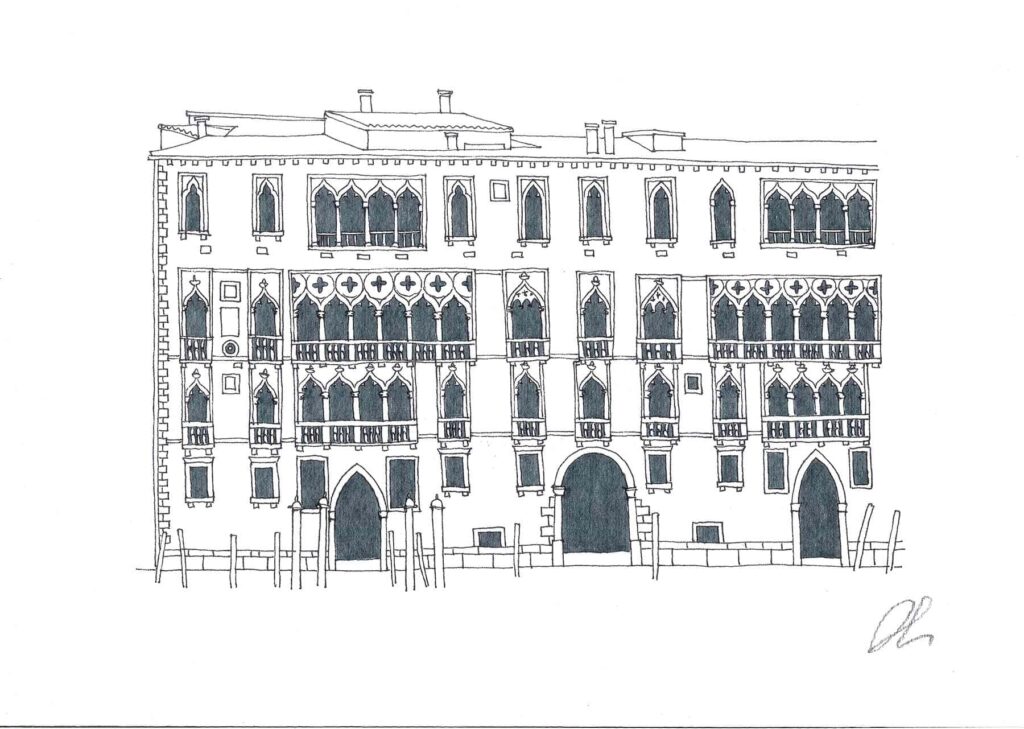
Palazzo Giustinian – Drawing
Palazzo Giustinian is a palace in Venice, in Dorsoduro district, and overlooking the Grand Canal next to Ca’ Foscari. It […]