

No products in the cart.
Original prints
Original prints handmade in Venice using traditional intaglio and linocut printmaking techniques.
Each artwork is created through a slow and precise artisanal process, where every print is slightly different from the others — and precisely because of this, unique.
Showing 25–36 of 45 results
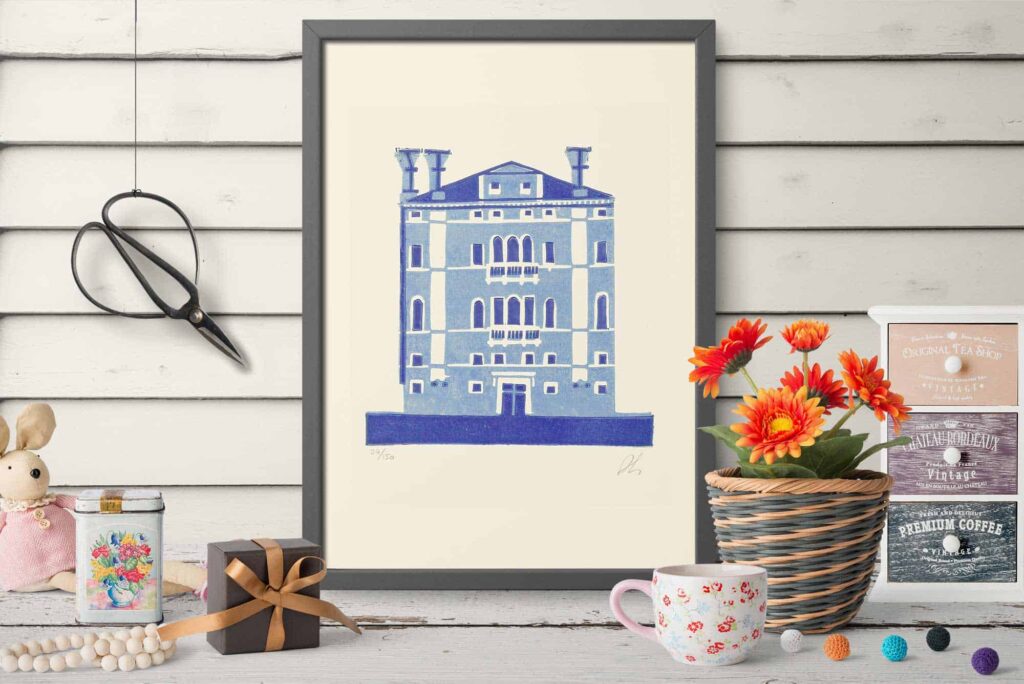
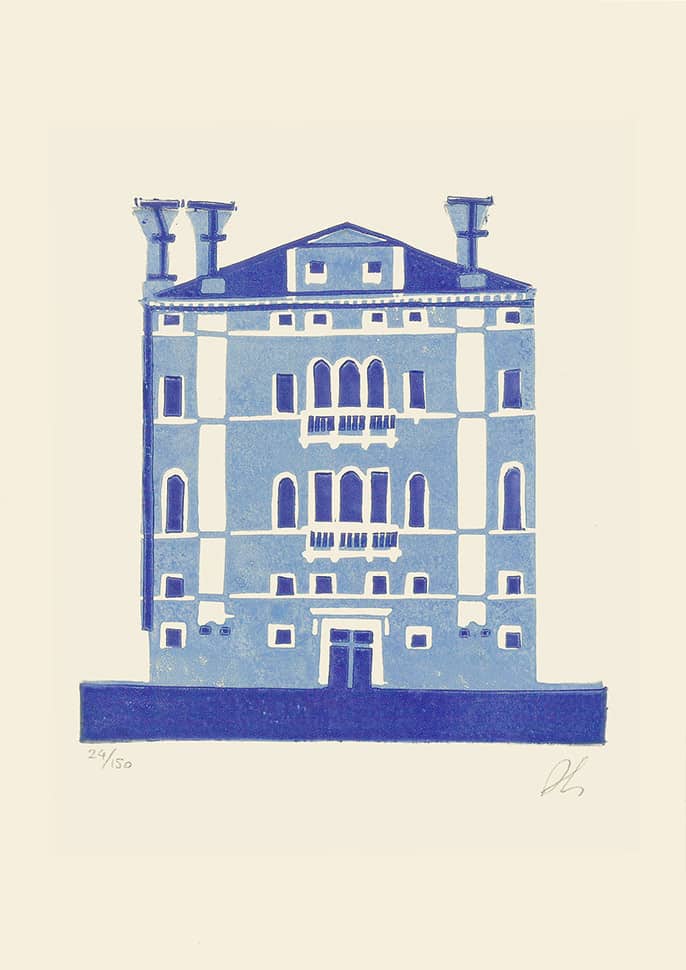
Palazzetto Dandolo
Palazzetto Dandolo on Fondamenta Dandolo (Campo Santi Giovanni e Paolo)
A small, well-preserved 17th-century palace, both in terms of its façade and interior. The two chimneys are part of the symmetrical perspective typical of minor Venetian architecture. This building appears in Bernardo Bellotto’s painting The Rio dei Mendicanti.
Sold Out
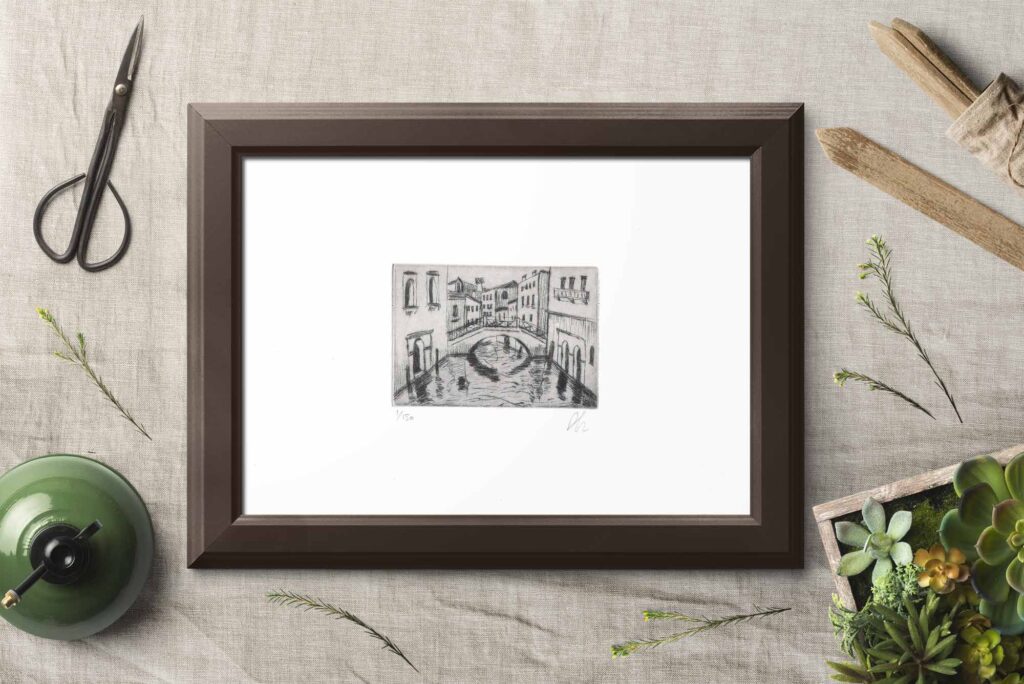
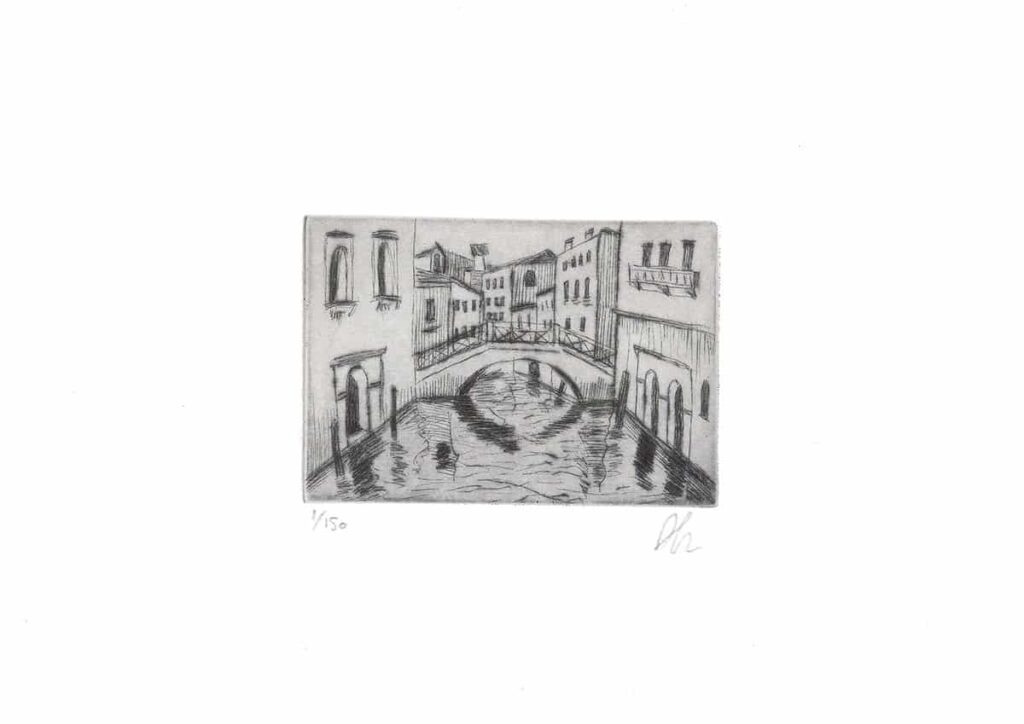
Piscina de Frezzaria Bridge — Drypoint
At the beginning of the 16th century, Frezzaria was an area dedicated to the production and sale of highly prized handcrafted goods, particularly arrows (hence the name Frezze). It is located in the San Marco district, very close to La Fenice Theatre.
Piscina Venier Palace
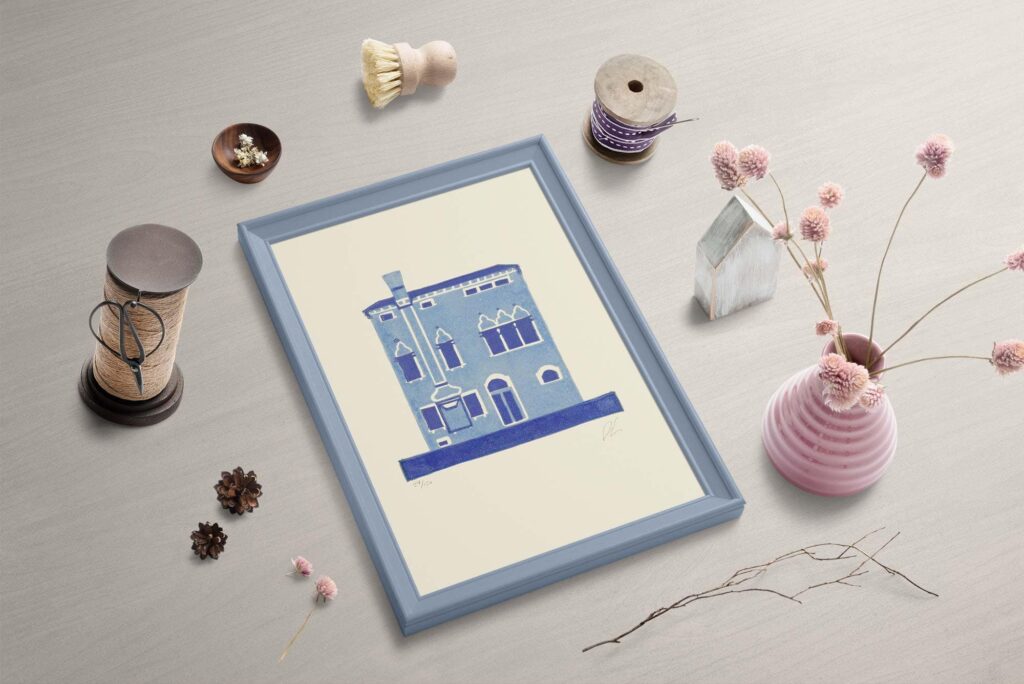
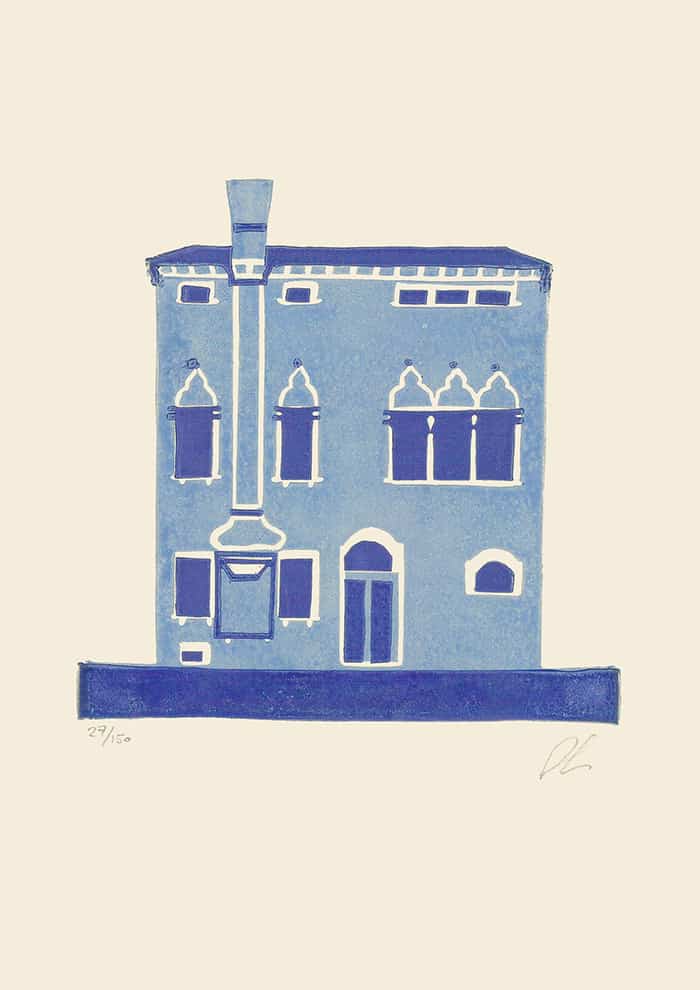
Palace in Piscina Venier (Sant’Agnese), in the Dorsoduro district, Venice
A small 15th-century palace, typical of Venetian architecture of the period: the spacing between the windows is irregular, and the ground-floor windows are independent from those on the upper floors; the entrance and the ground-floor windows are arranged around a large and elegant chimney.
Ponte Chiodo (Nail Bridge)
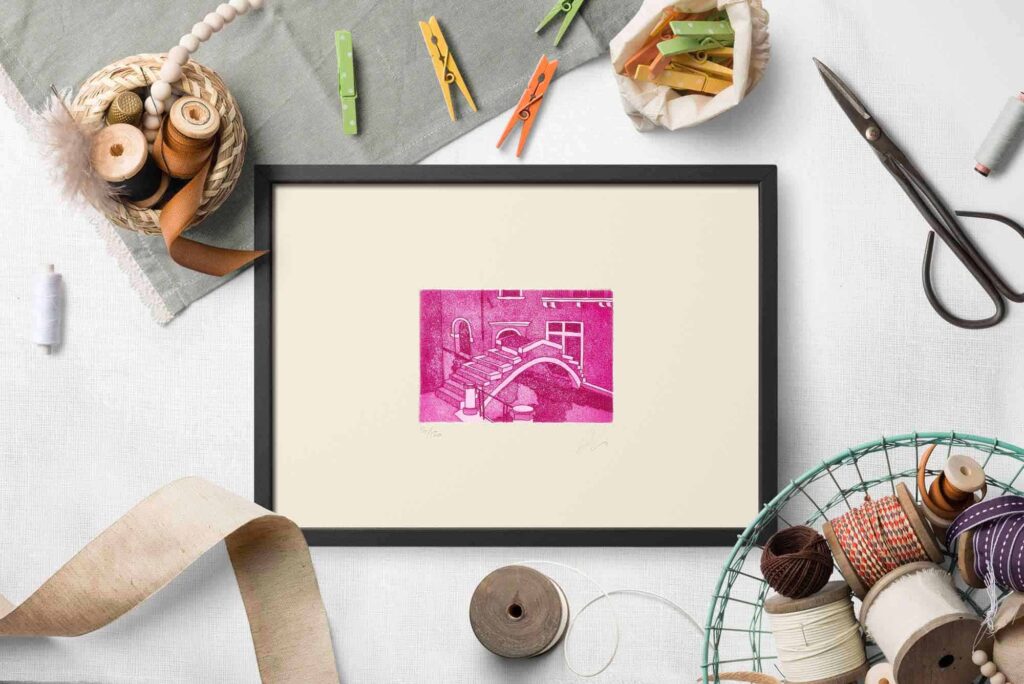
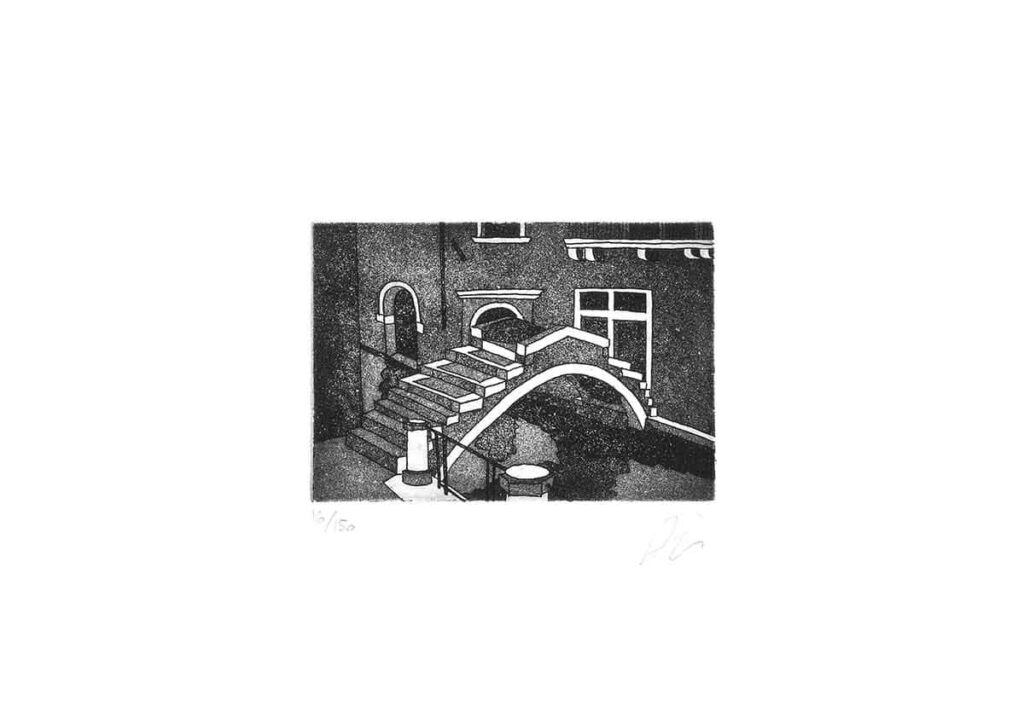
Chiodo Bridge is located in Venice, in the Cannaregio district. It crosses the Rio di San Felice and has a feature that makes it unique in Venice: it has no parapets. In past centuries, and up until the nineteenth century, most bridges in Venice did not have parapets. It was therefore decided relatively recently to equip the existing bridges with parapets (called spallette in Venetian dialect) in order to improve pedestrian safety.
The name “Chiodo” comes from the family who lived in the palace overlooking the bridge — the Chiodo family, in fact.
Another bridge without parapets can still be found in Torcello: the Devil’s Bridge.
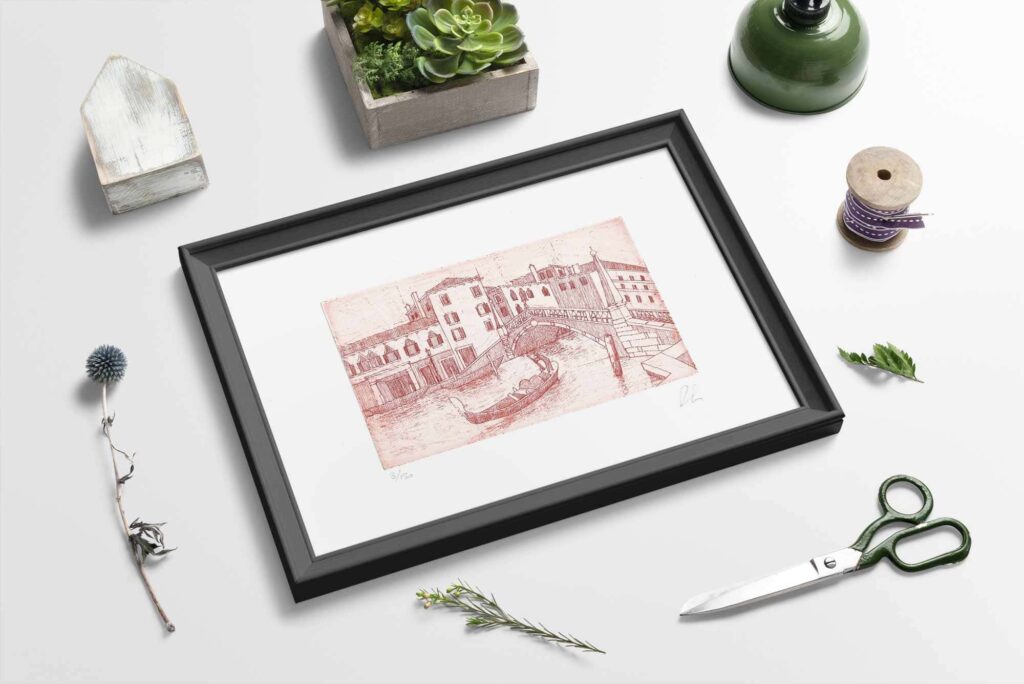
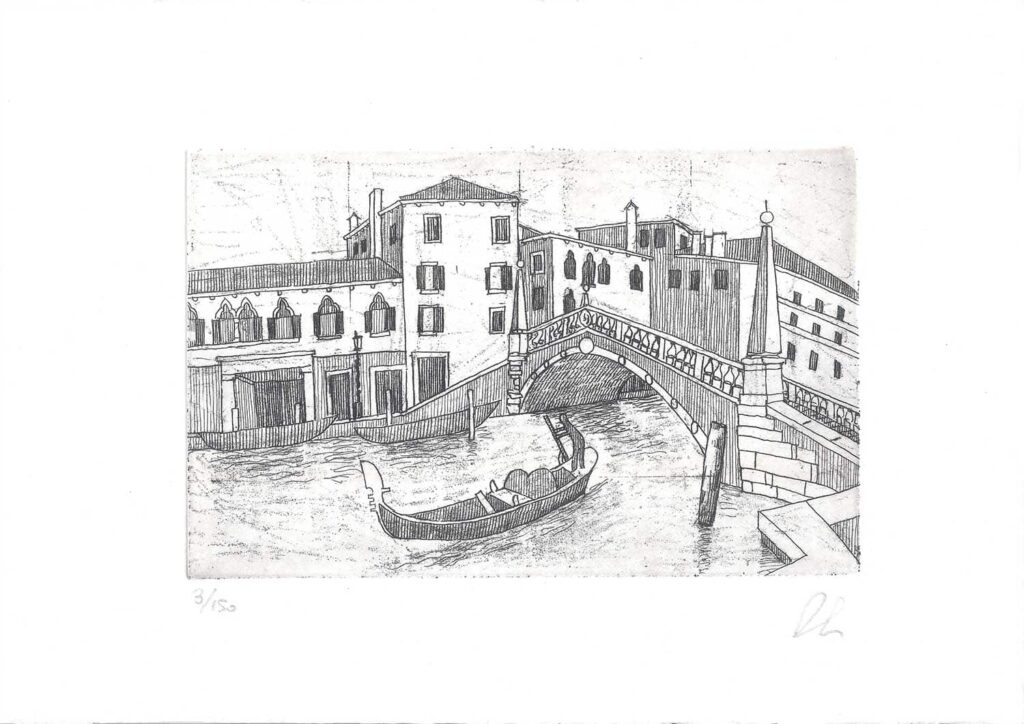
Ponte delle Guglie – Bridge of Spires
Guglie Bridge is a bridge in Venice, located in the Cannaregio district.
It is the only Venetian bridge adorned with pinnacles placed at the base of the railings: the spires from which it takes its name.
The Cannaregio Bridge was first built in wood in 1285. It was replaced by the current stone bridge in 1580, as testified by the inscriptions placed on the bridge itself. Restored in 1641 and 1677, it was rebuilt in 1823 with the addition of the spires, from which it took its current name.
Sold Out
Priuli Bridge
Priuli Bridge is a cast-iron bridge in the Cannaregio district that crosses the Rio Priuli (or Rio di Santa Sofia).
The name Priuli derives from a patrician family of the Republic of Venice.
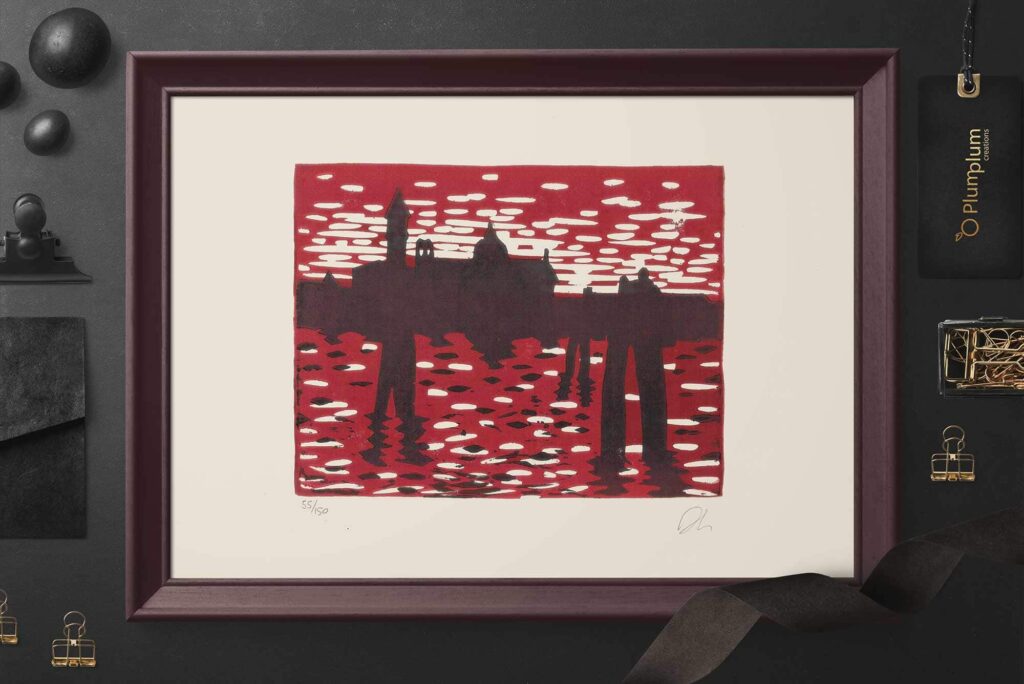
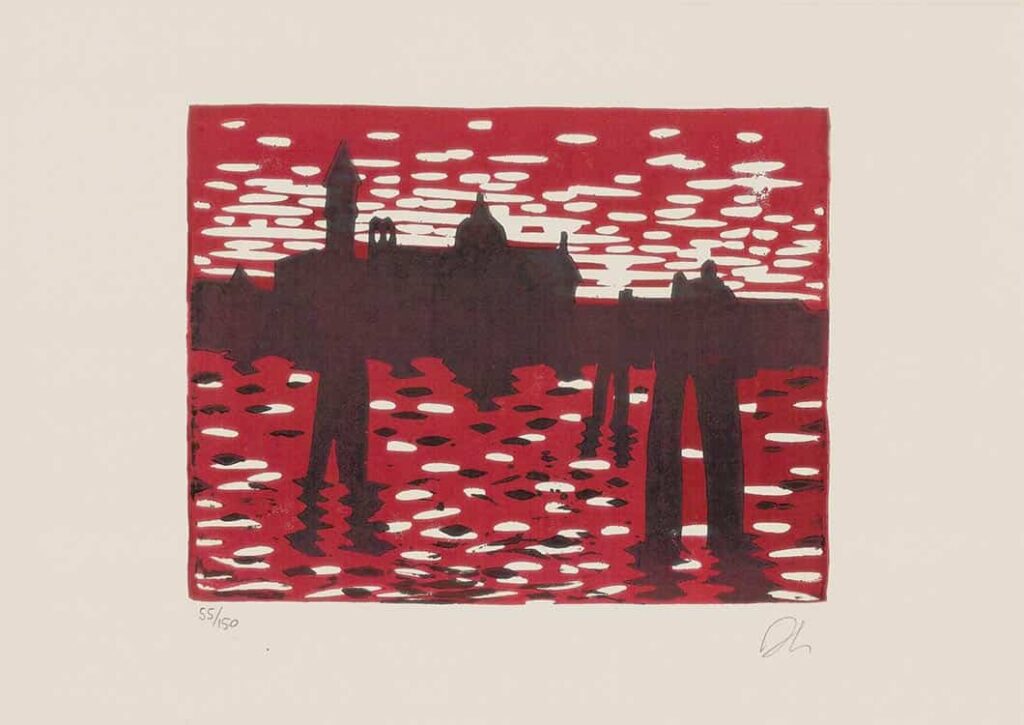
Redentore Skyline
The Church of the Redentore is a 16th-century church designed by the Italian architect Andrea Palladio, located on the island of Giudecca, directly facing the Zattere and the Giudecca Canal, and it was built as a votive church to thank God for delivering the city from a severe plague epidemic.
“Redentore Skyline” is a linocut print made with a vertical press on 200 gsm Favini Rismacqua ivory paper using intaglio ink.
Paper size: 11.69 × 8.27 inches (A4)
Image size: 7.32 × 5.71 inches
SOLD WITHOUT FRAME
Sold Out
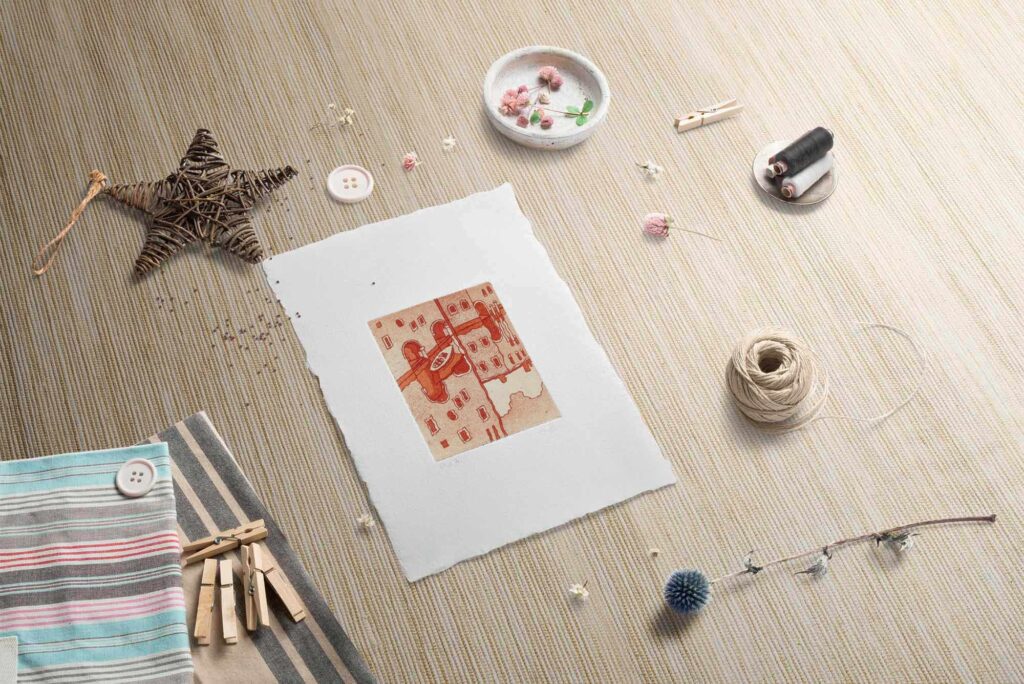
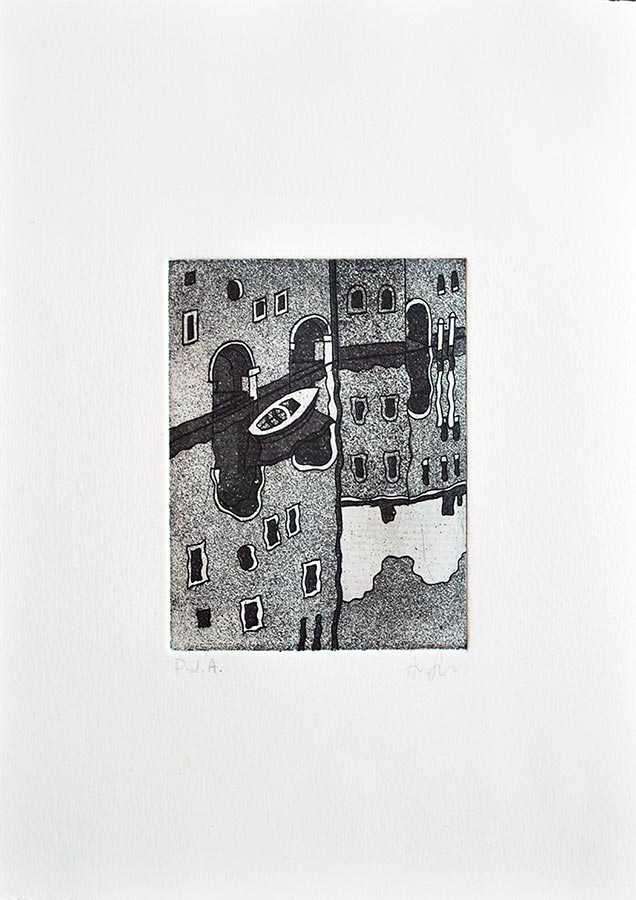
Reflections 01 – Boat
Intaglio print on a copper plate. The techniques used are:
– Etching, to create the lines of the drawing, and
– Aquatint, to achieve tonal gradations and create a sense of depth.
They are the result of a personal study on the reflections of Venice’s architectural elements in the water, almost creating a double of the city distorted by the constant breathing of the lagoon.
Sold Out
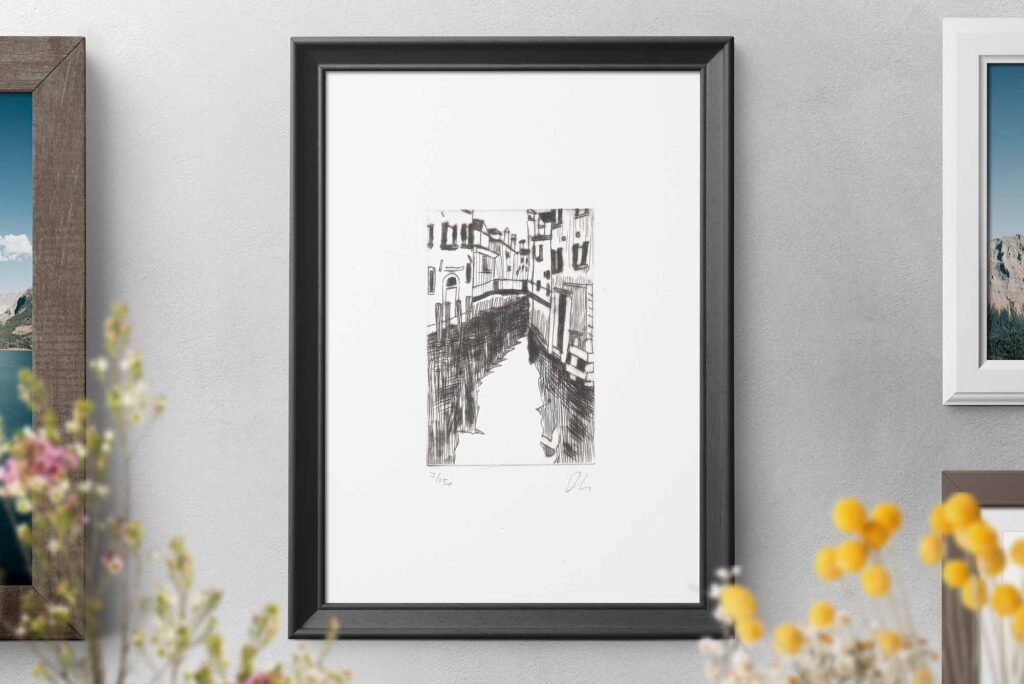
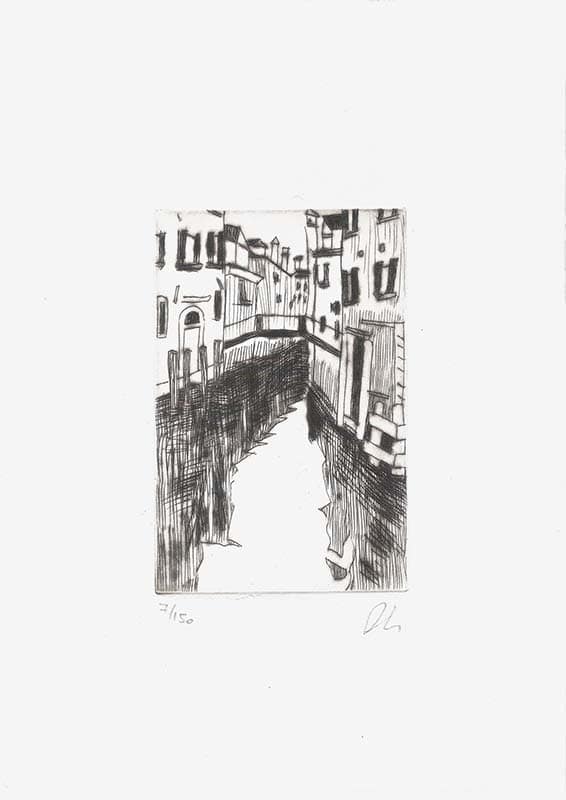
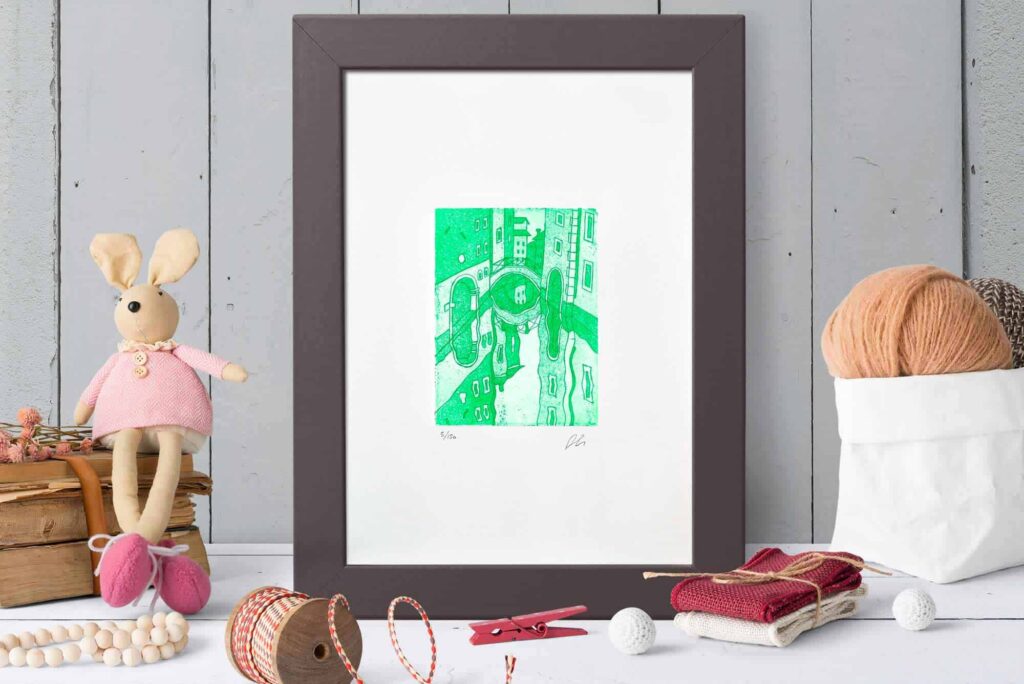
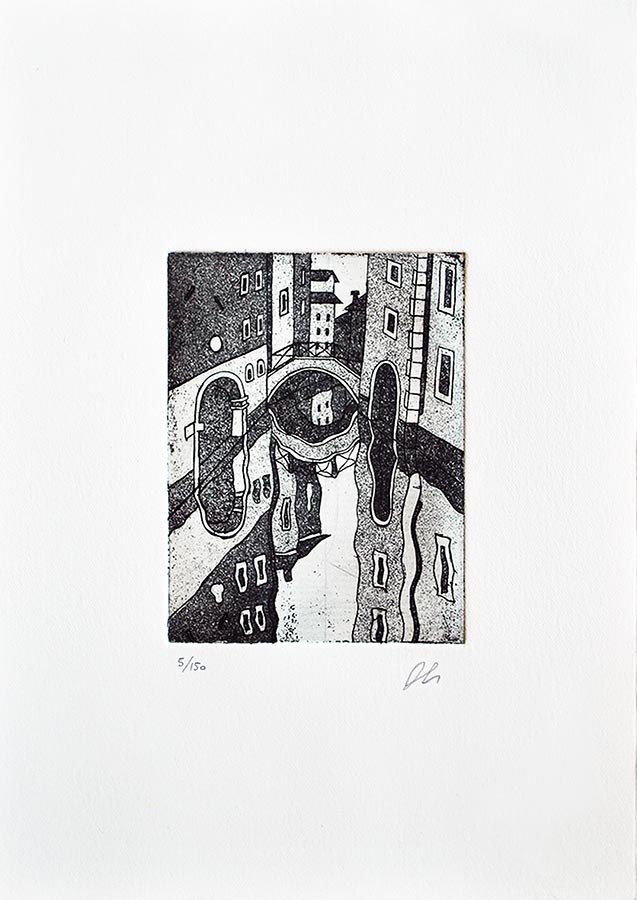
Reflections 02 – Bridge
Intaglio print on a copper plate. The techniques used are:
– Etching, to create the lines of the drawing, and
– Aquatint, to achieve tonal gradations and create a sense of depth.
They are the result of a personal study on the reflections of Venice’s architectural elements in the water, almost creating a double of the city distorted by the constant breathing of the lagoon.
Paper size: 7.09 × 9.84 inches
Print size: 3.19 × 4.17 inches
They are printed with intaglio ink on Rosaspina paper.
Sold unframed.
This item is handmade in my studio in Venice — slight color variations may occur, making each piece unique. The artwork may appear slightly different from the photos. Small imperfections or irregularities add character to the handcrafted piece, distinguishing it from mass-produced prints.
Sold Out
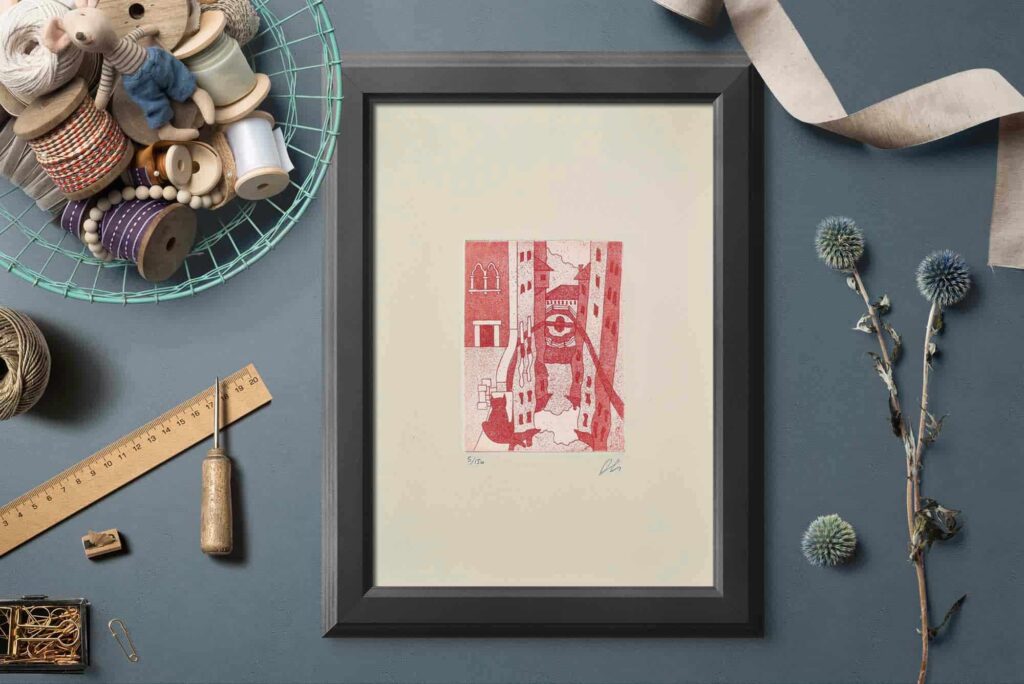
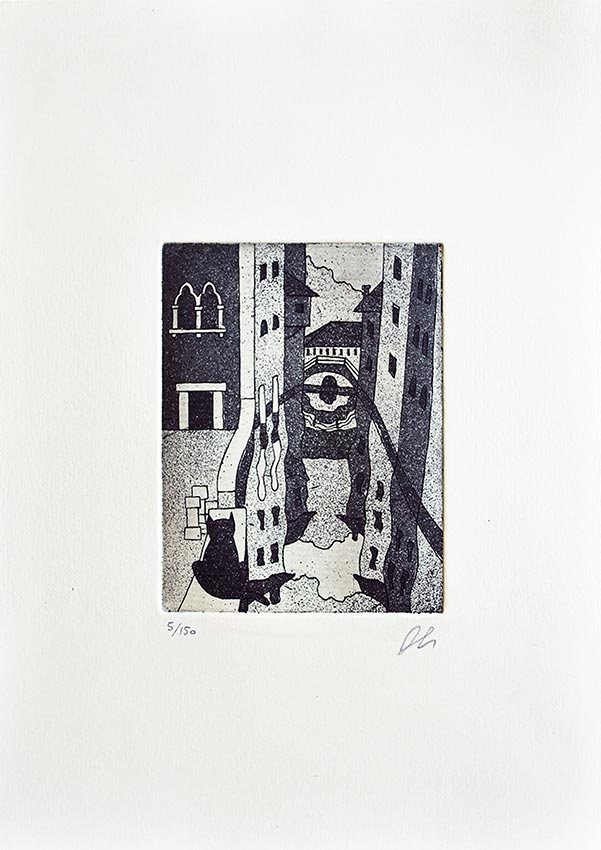
Reflections 03 – Cat
Intaglio print on a copper plate. The techniques used are:
– Etching, to create the lines of the drawing, and
– Aquatint, to achieve tonal gradations and create a sense of depth.
They are the result of a personal study on the reflections of Venice’s architectural elements in the water, almost creating a double of the city distorted by the constant breathing of the lagoon.
Paper size: 7.09 × 9.84 inches
Print size: 3.19 × 4.17 inches
They are printed with intaglio ink on Rosaspina paper.
Sold unframed
This item is handmade in my studio in Venice – slight color variations may occur, making each piece unique. The artwork may appear slightly different from the photos. Small imperfections or irregularities add character to the handcrafted piece, distinguishing this work from mass-produced prints
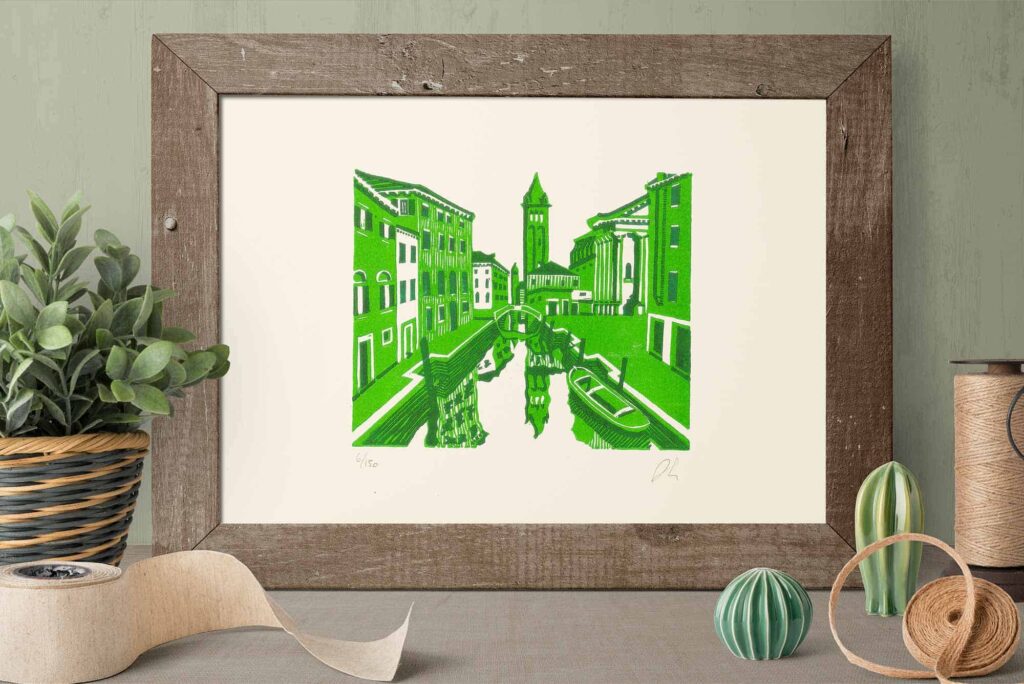
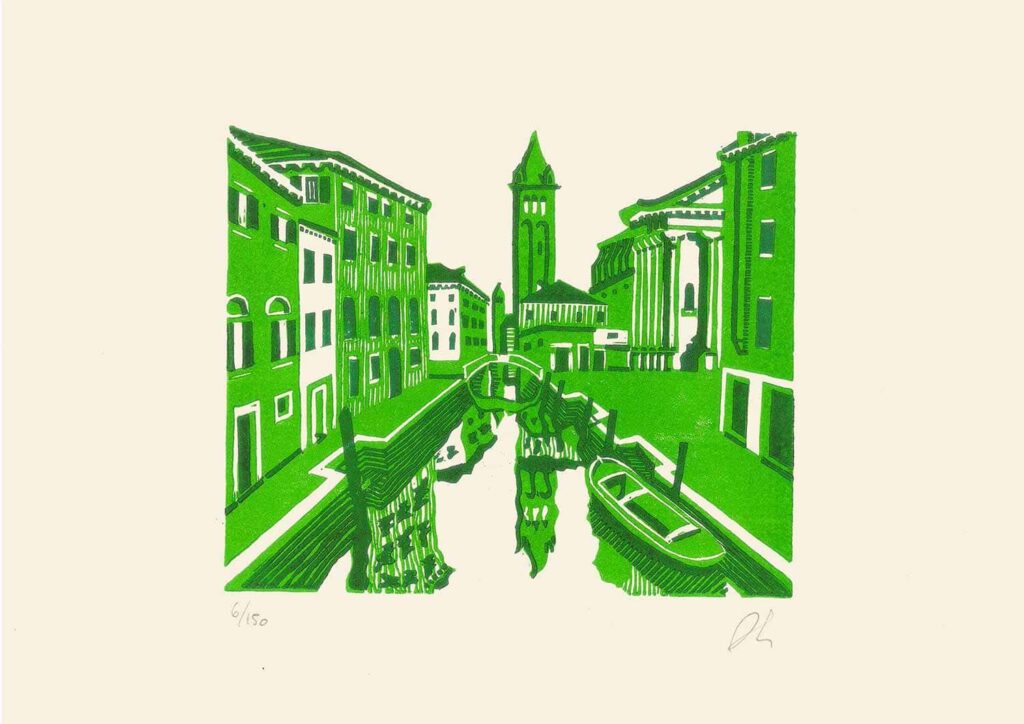
Rio di San Barnaba
The Rio di San Barnaba is located in the Dorsoduro district and takes its name from the Church and Campo San Barnaba overlooking the canal.
The print shows the stretch of canal from Ponte dei Pugni toward the Grand Canal: on the right, one can glimpse Campo San Barnaba facing the canal and which — as a small curiosity — was the setting for several famous films, including Indiana Jones and the Last Crusade starring Harrison Ford and Summertime with Katharine Hepburn (a film that shows a beautiful Venice in 1955).
Another typical feature of the Rio di San Barnaba is the presence of a beautiful barge (visible on the right in the print) that sells fruit and vegetables during the day.
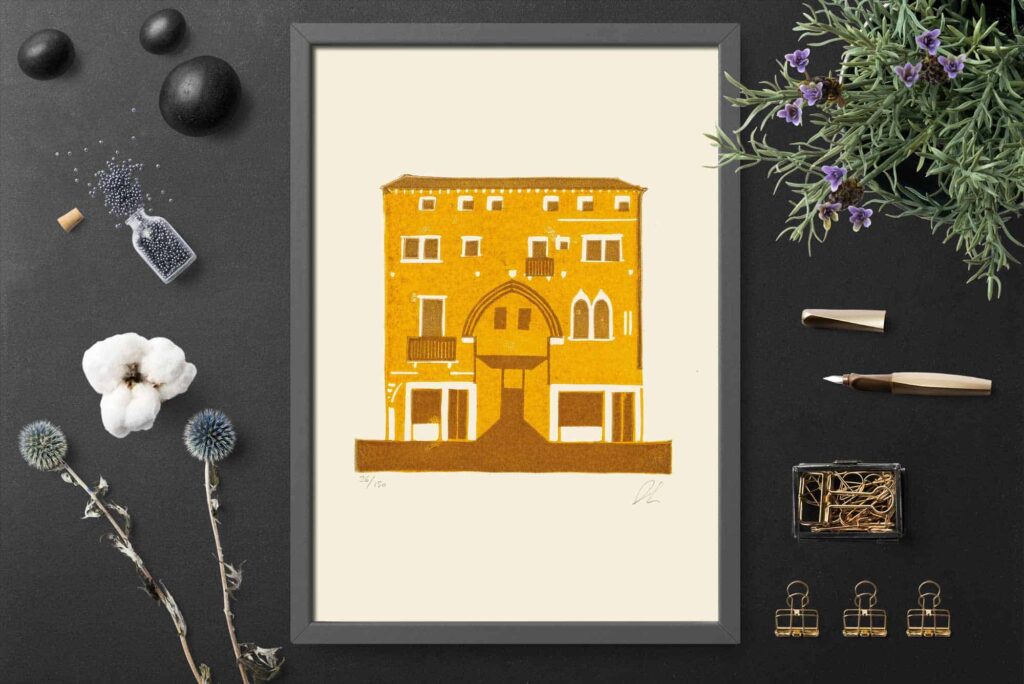
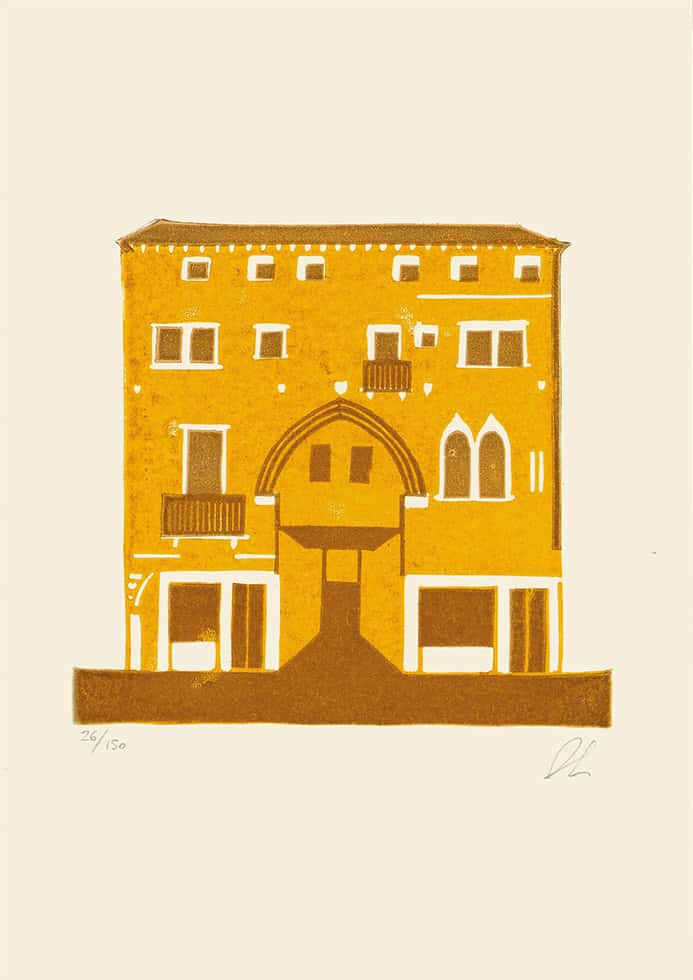
Salizada San Lio Palace
A small 13th-century palace located on Salizada San Lio.
Salizada means “paved,” and these streets were among the most important in Venice — so when only a few Venetian streets were paved with bricks, these were the first to be paved with the more expensive stone paving that can now be seen almost everywhere.