

No products in the cart.
Rio di San Barnaba
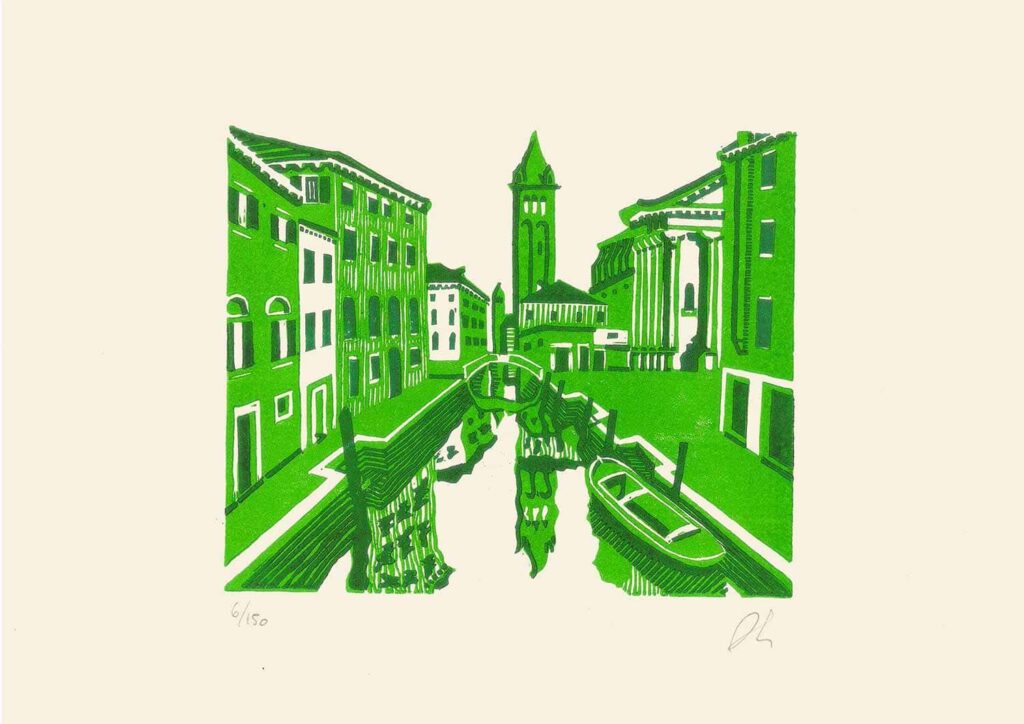
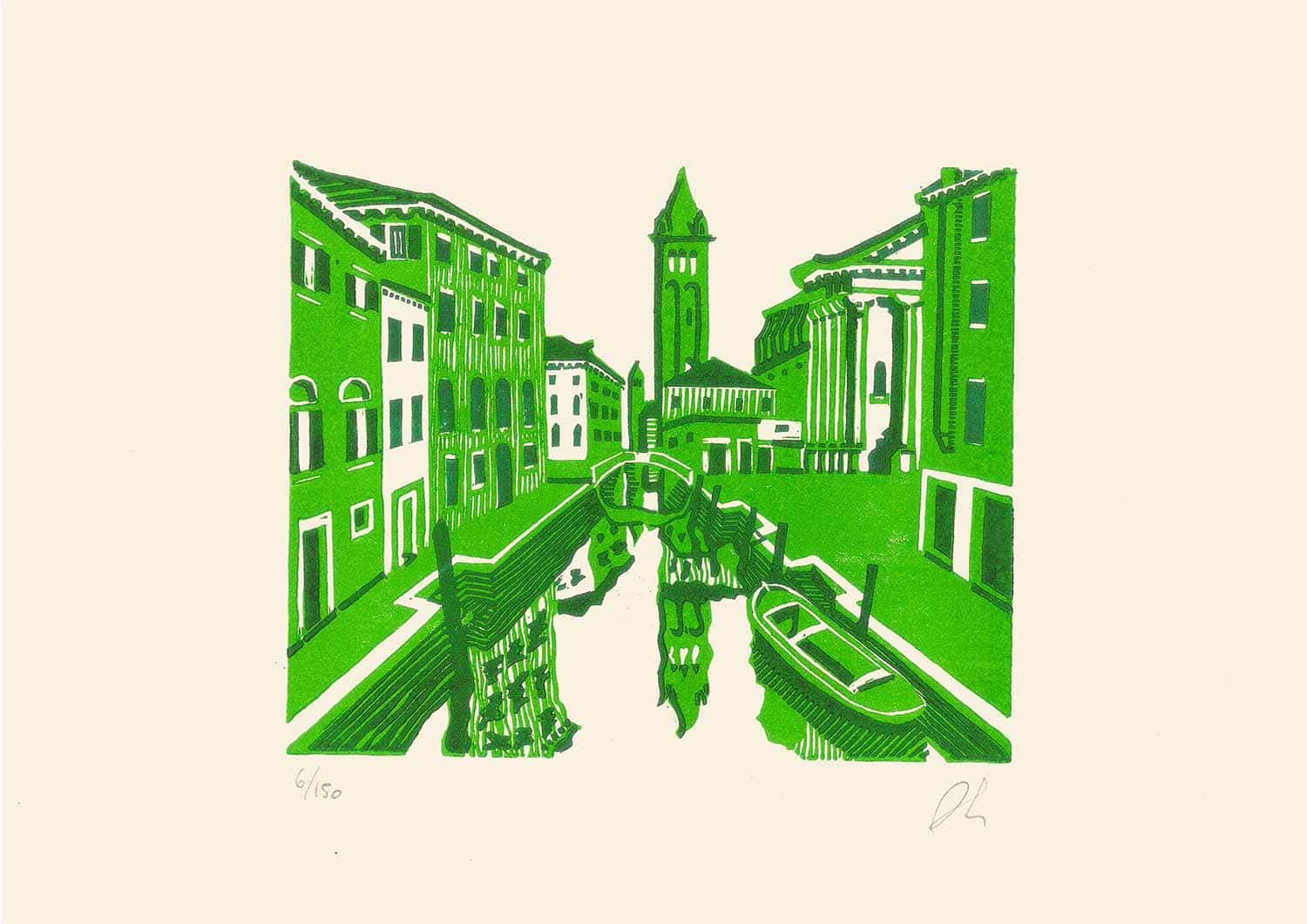
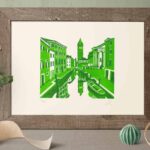
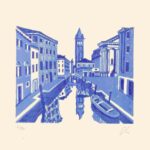
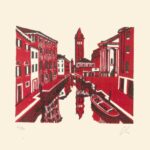
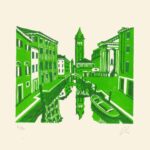
The Rio di San Barnaba is located in the Dorsoduro district and takes its name from the Church and Campo San Barnaba overlooking the canal.
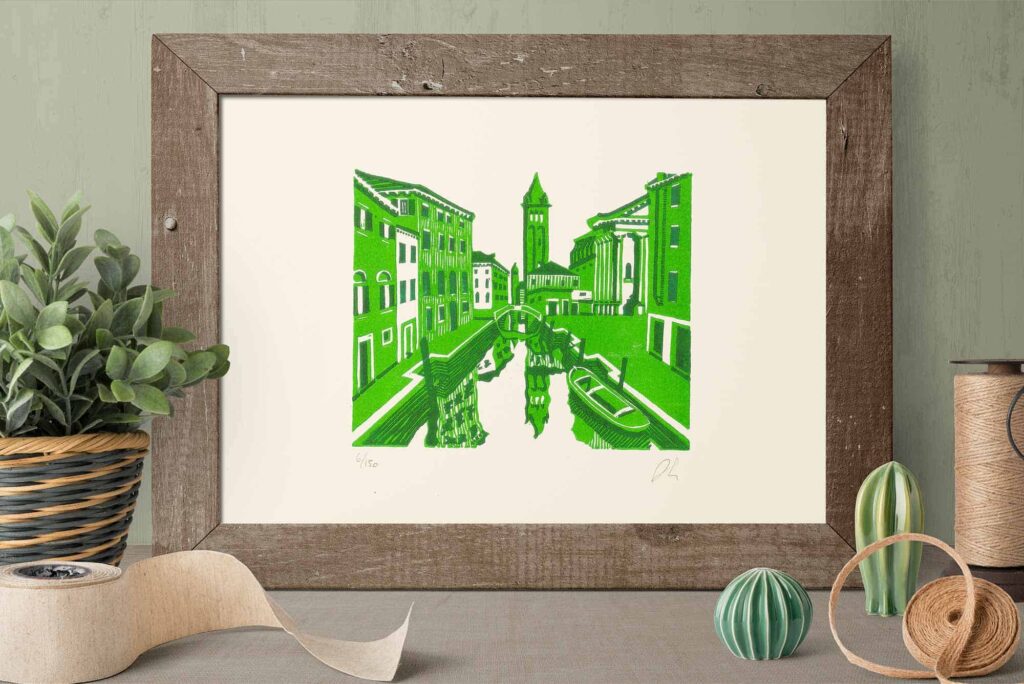
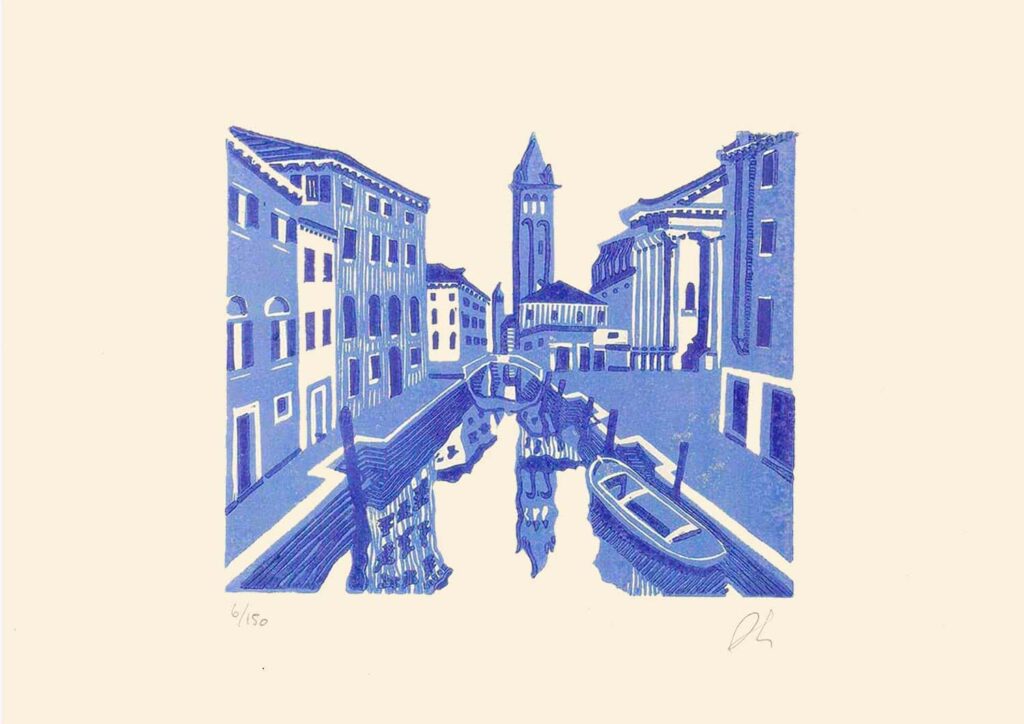
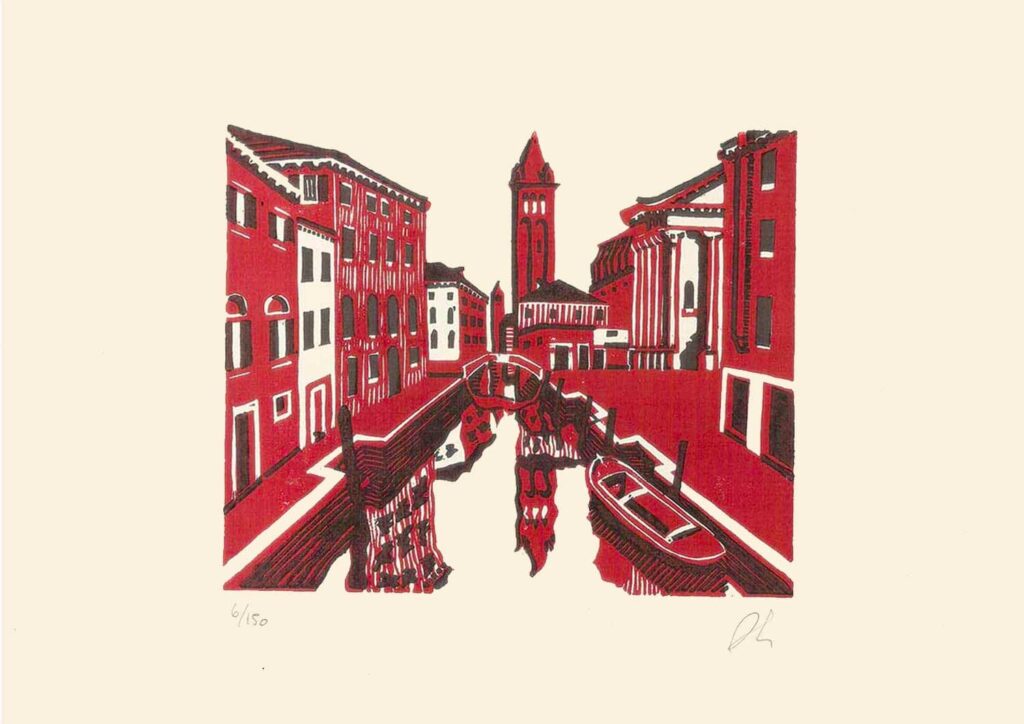
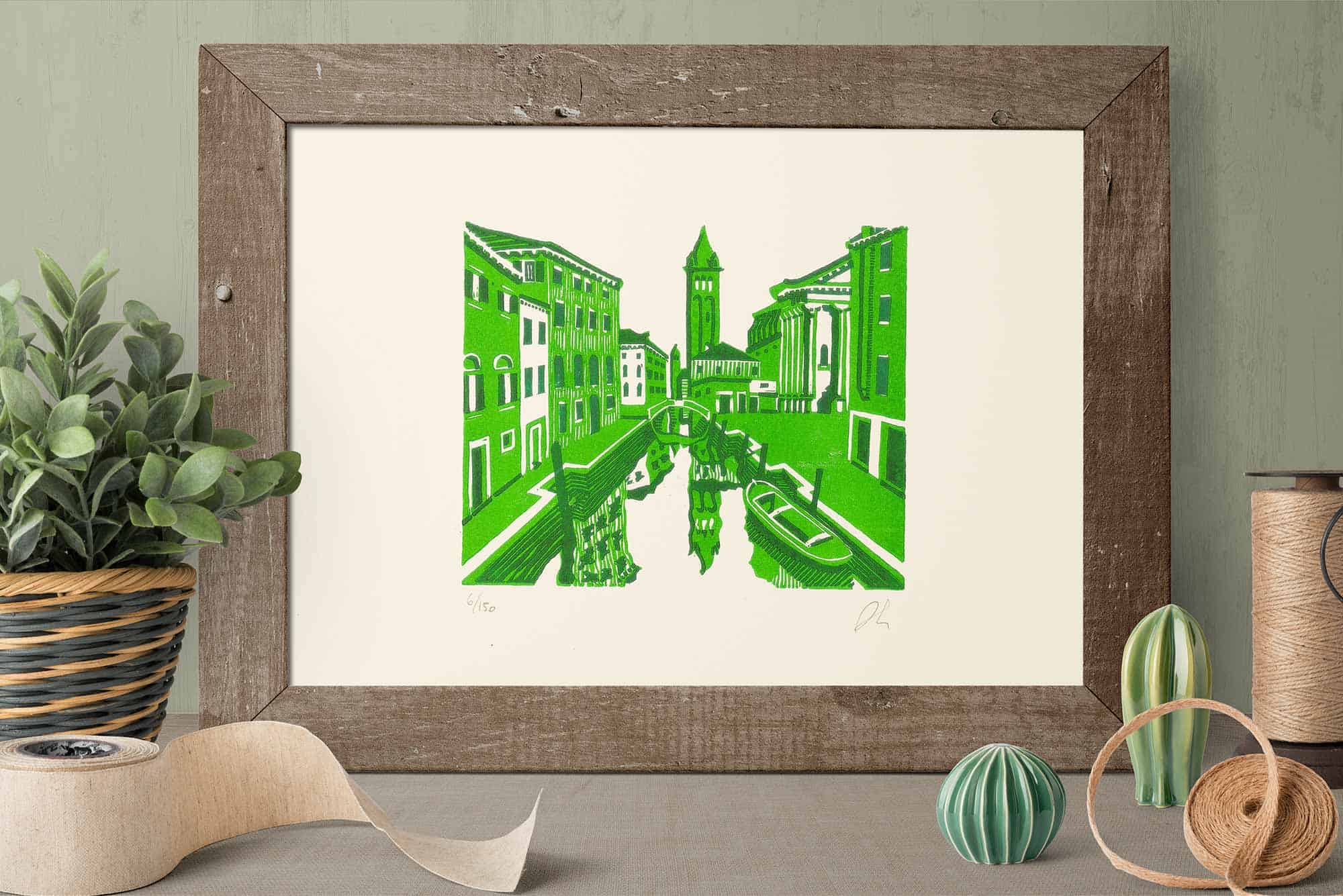
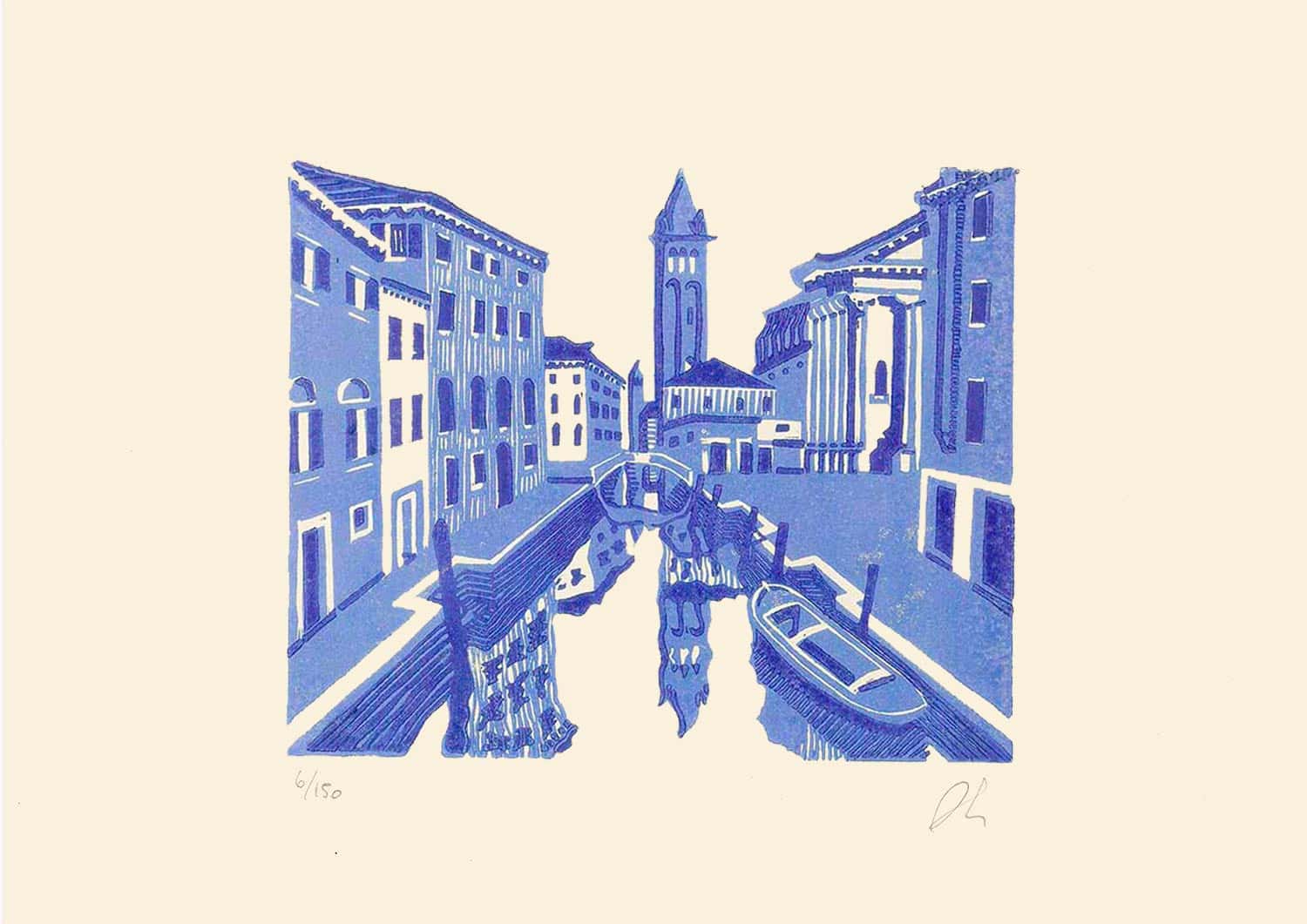
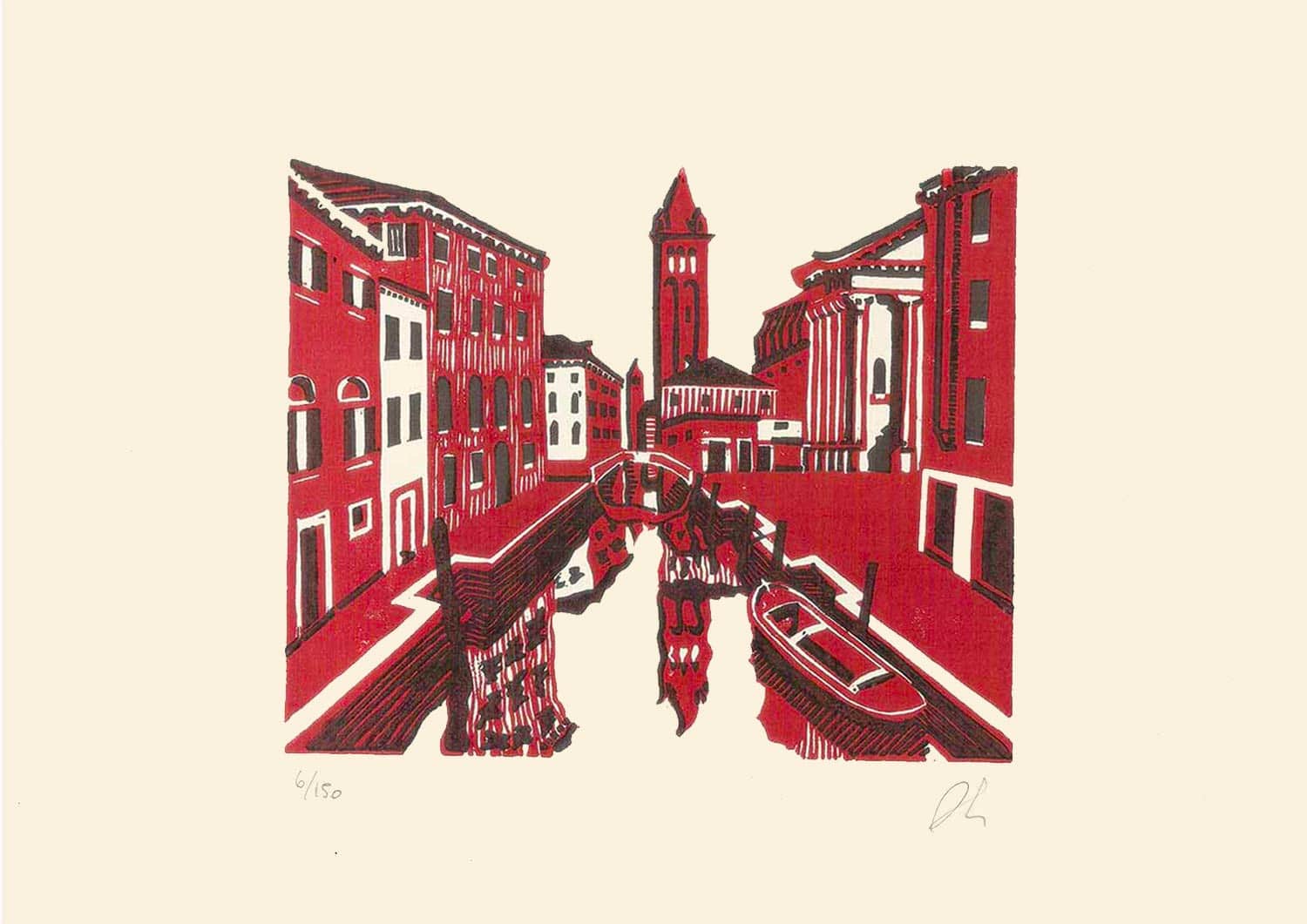
The print shows the stretch of canal from Ponte dei Pugni toward the Grand Canal: on the right, one can glimpse Campo San Barnaba facing the canal and which — as a small curiosity — was the setting for several famous films, including Indiana Jones and the Last Crusade starring Harrison Ford and Summertime with Katharine Hepburn (a film that shows a beautiful Venice in 1955).
Another typical feature of the Rio di San Barnaba is the presence of a beautiful barge (visible on the right in the print) that sells fruit and vegetables during the day.
€ 55,00
Rio di San Barnaba
€ 55,00
Linocut print made with a vertical press on 200 gsm Favini Rismacqua ivory paper using intaglio ink.
Paper size: 11.69 × 8.27 inches (A4)
Image size (W × H): 6.50 × 5.31 inches
SOLD UNFRAMED
| Print color | Blue, Green, Red |
|---|
Useful information
How much does shipping cost?
Shipping costs are:
24 EUR to Oceania and Australia
19 EUR to USA, South America, Asia and Africa
16 EUR within Europe (Italy excluded)
12 EUR within Italy
For orders over 150 EUR, shipping may be free.
How soon will my order be shipped?
I ship orders within 7 working days of order confirmation. Large orders or custom-made pieces may take longer to prepare. In these cases, I’ll let you know the expected shipping date.
How long does delivery take?
Within Italy, delivery usually takes 5–6 working days from shipment.
Within the EU: 7–9 working days.
Outside the EU: 10 to 15 working days.
How is the item shipped?
All items are shipped with great care via Poste Italiane.
Artworks are protected with tissue paper, rigid cardboard and a padded envelope to arrive in perfect condition.
What if my item arrives damaged?
If your package arrives damaged, please contact me as soon as possible at info@plumplumcreations.com and we will find a solution together.
Can I return an item?
Yes, you can exercise your right of withdrawal within 14 days of receiving the item.
Contact me and I will explain how to proceed. Return shipping costs are the responsibility of the customer.
Need specific information? Contact me.
You may also like…
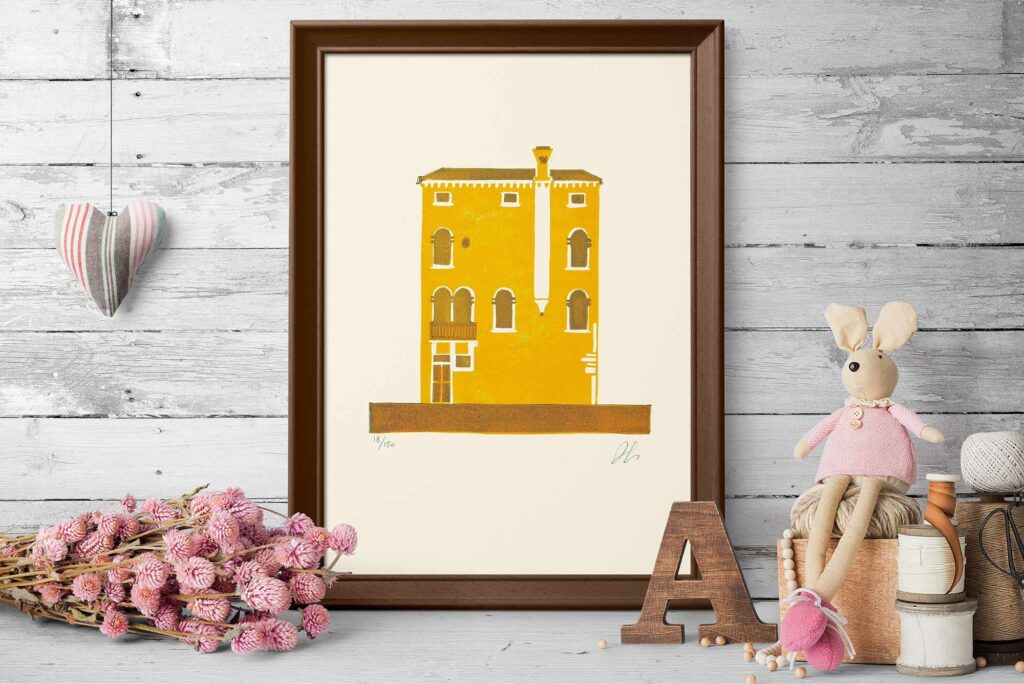
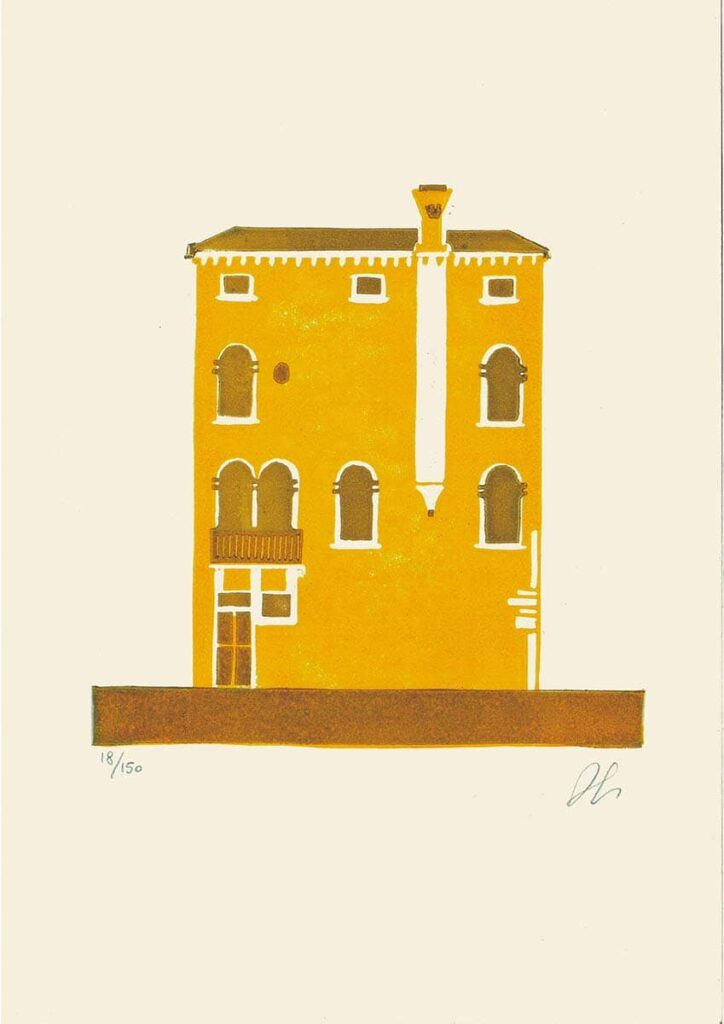
Fondamenta Ca’ Balà
A 16th-century house with a large hall on the first floor that served both as a living room and a passageway onto which the other rooms open. The windows along the edges of the walls are balanced by the vertical line of the chimney. The house was once frescoed, and some traces are still visible today.
“Fondamenta” means “foundation” in Italian, and describes the pedestrian embankment along a canal. It was (and still is today) a very busy area for loading and unloading boats, much like a dock.
This Fondamenta is very close to the Church of Santa Maria della Salute, one of the most famous churches in Venice.
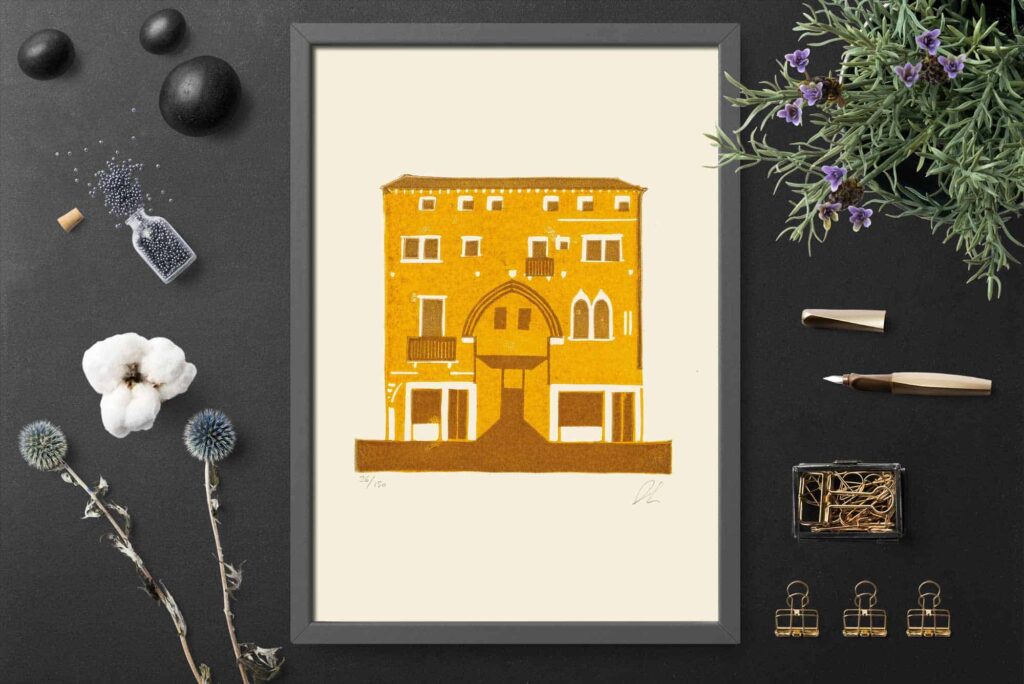
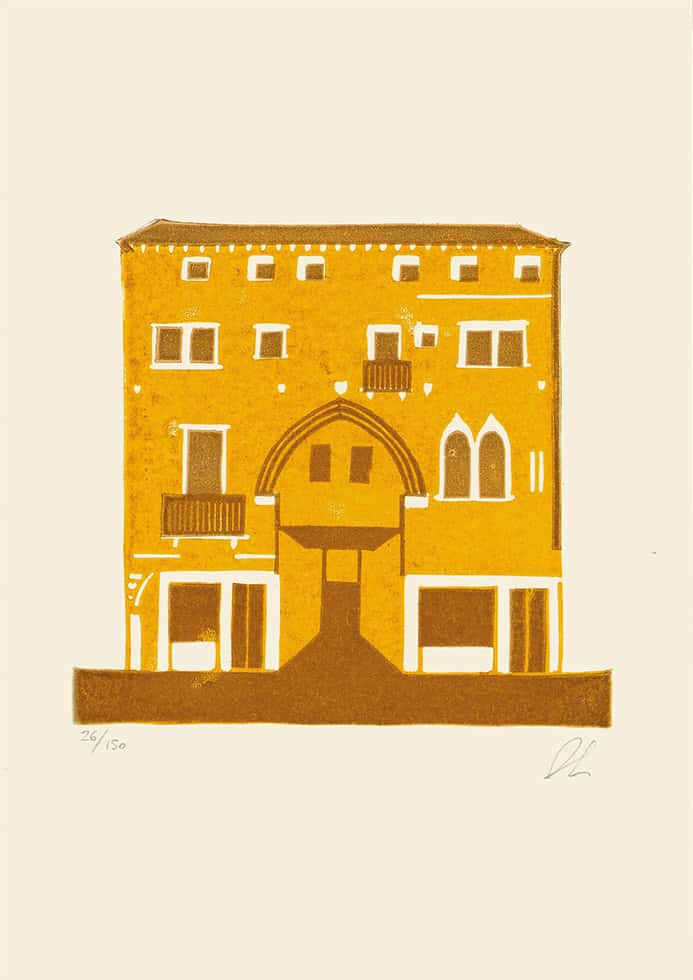
Salizada San Lio Palace
A small 13th-century palace located on Salizada San Lio.
Salizada means “paved,” and these streets were among the most important in Venice — so when only a few Venetian streets were paved with bricks, these were the first to be paved with the more expensive stone paving that can now be seen almost everywhere.
Palazzetto Dandolo
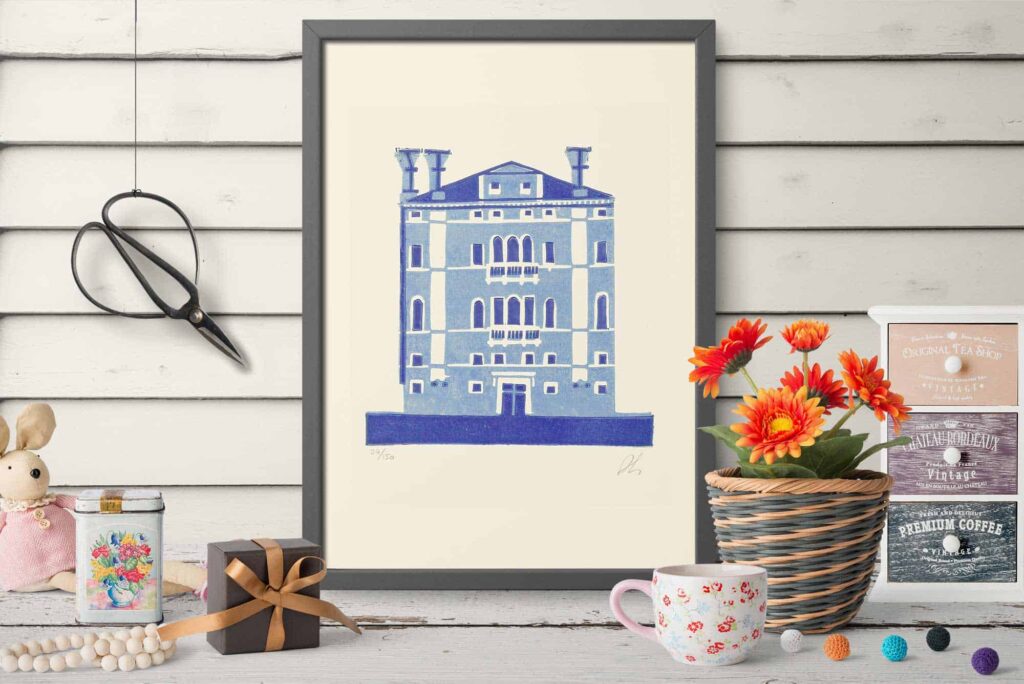
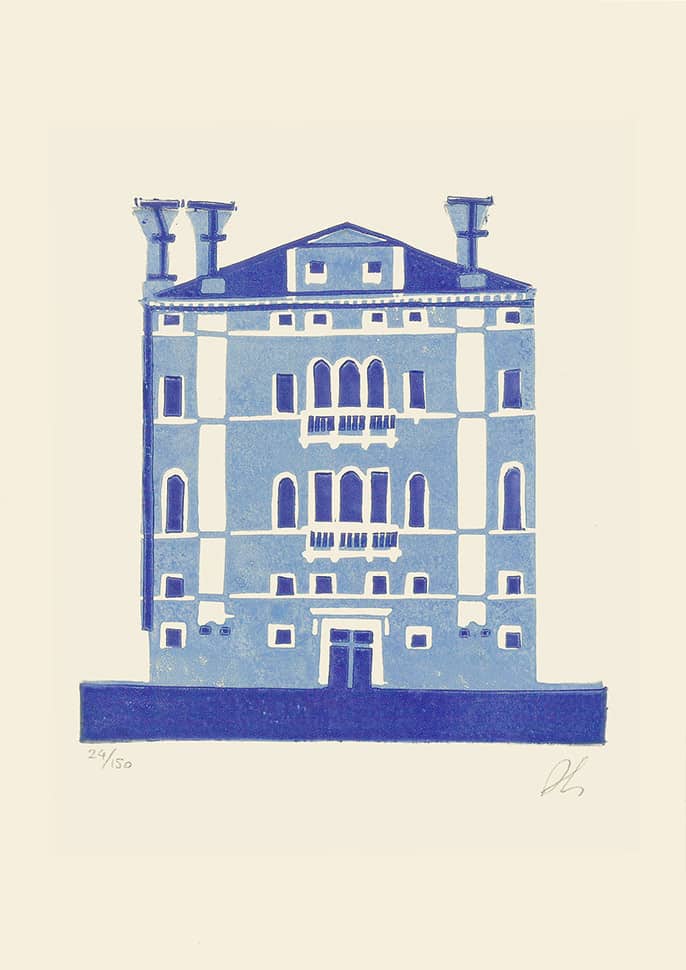
Palazzetto Dandolo on Fondamenta Dandolo (Campo Santi Giovanni e Paolo)
A small, well-preserved 17th-century palace, both in terms of its façade and interior. The two chimneys are part of the symmetrical perspective typical of minor Venetian architecture. This building appears in Bernardo Bellotto’s painting The Rio dei Mendicanti.
Calle dei Furlani Palace
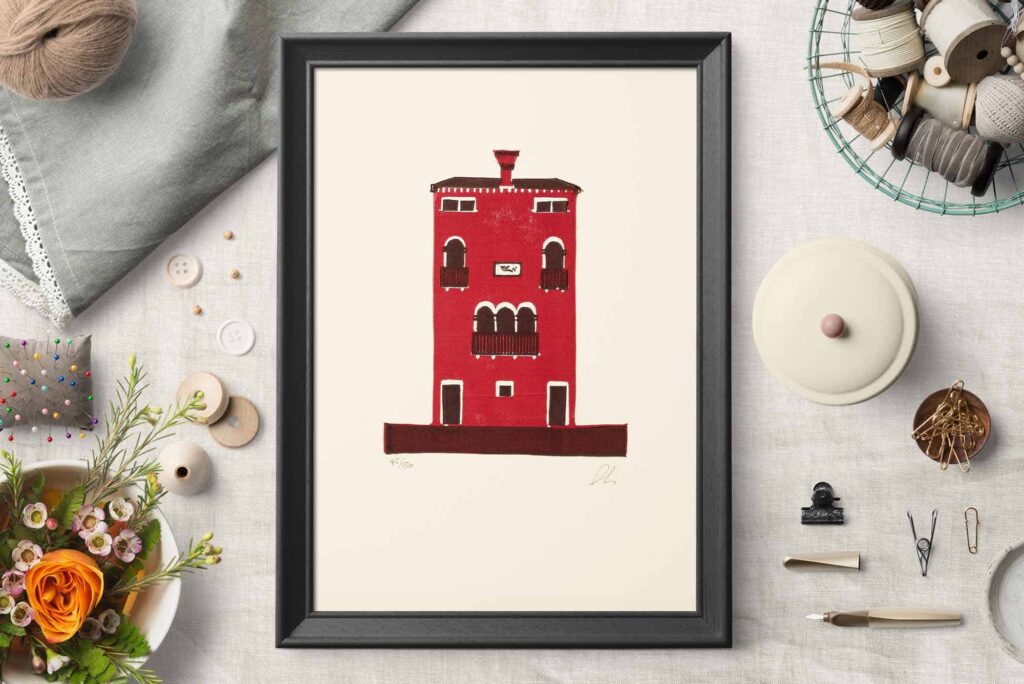
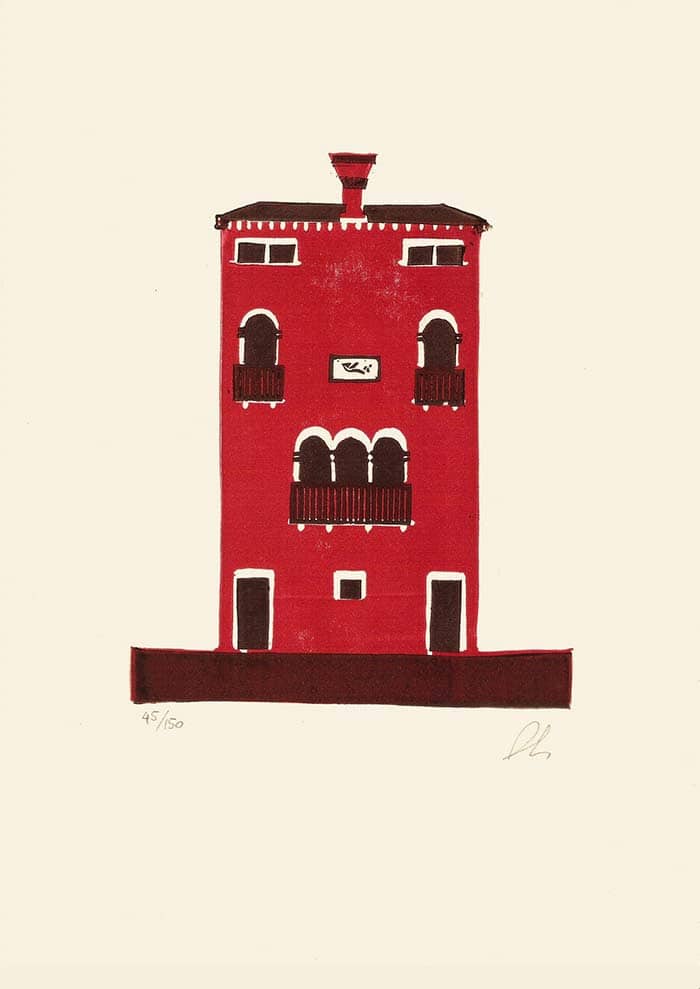
Palace in Calle dei Furlani, Venice (San Giorgio degli Schiavoni)
A characteristic 16th-century Venetian house with windows placed symmetrically on either side of the three-light window on the first floor. The original interior layout has been preserved. There are two staircases: one for the first floor and another for the two upper floors, which form a single apartment.
Related Products
Bookmark 04
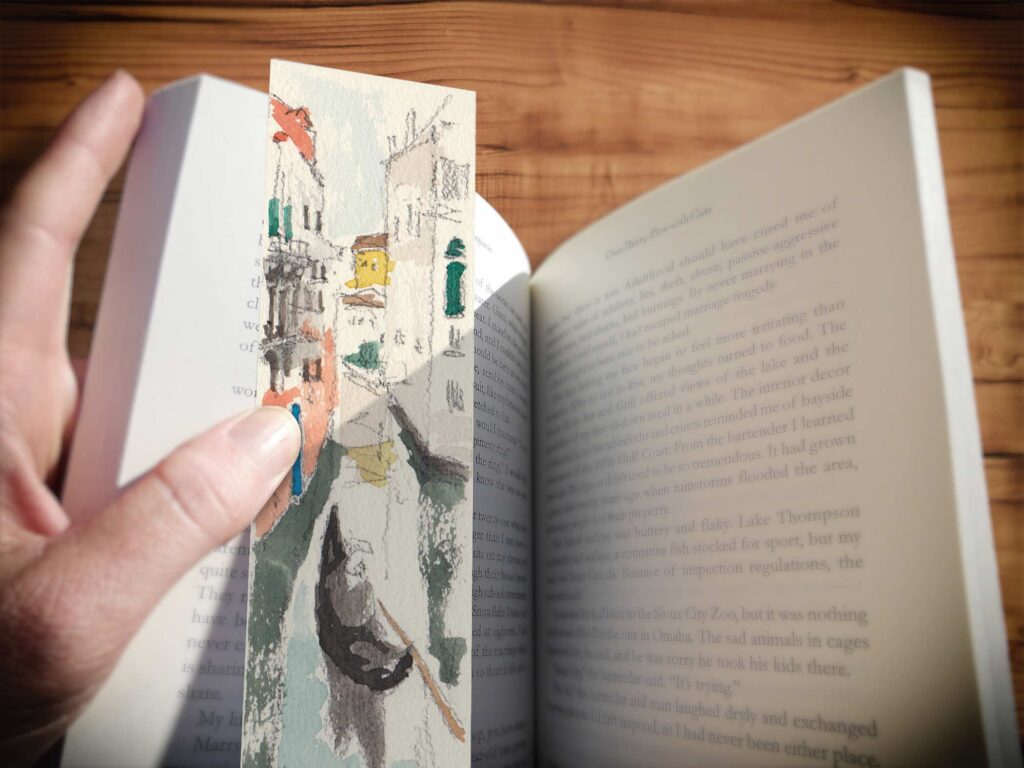
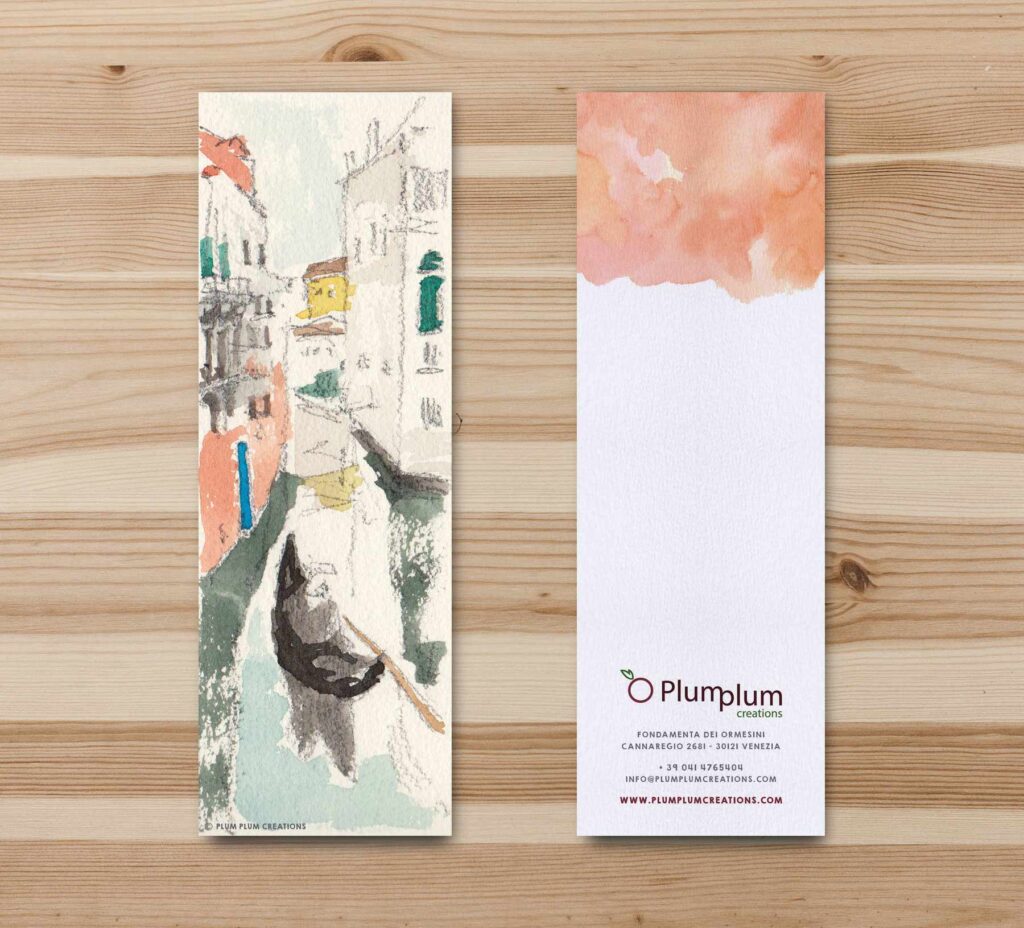
One of my original watercolors turned into a bookmark.
Printed on 300 gsm hammered paper.
Size: 2.3 × 7 inches.
“Rialto Bridge” Postcard
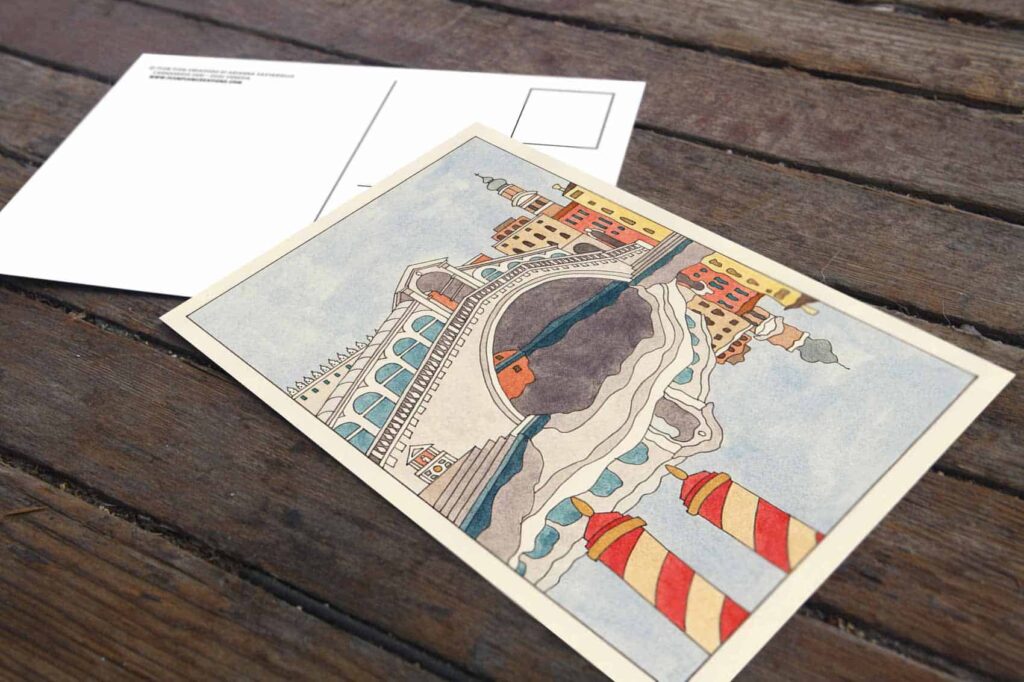
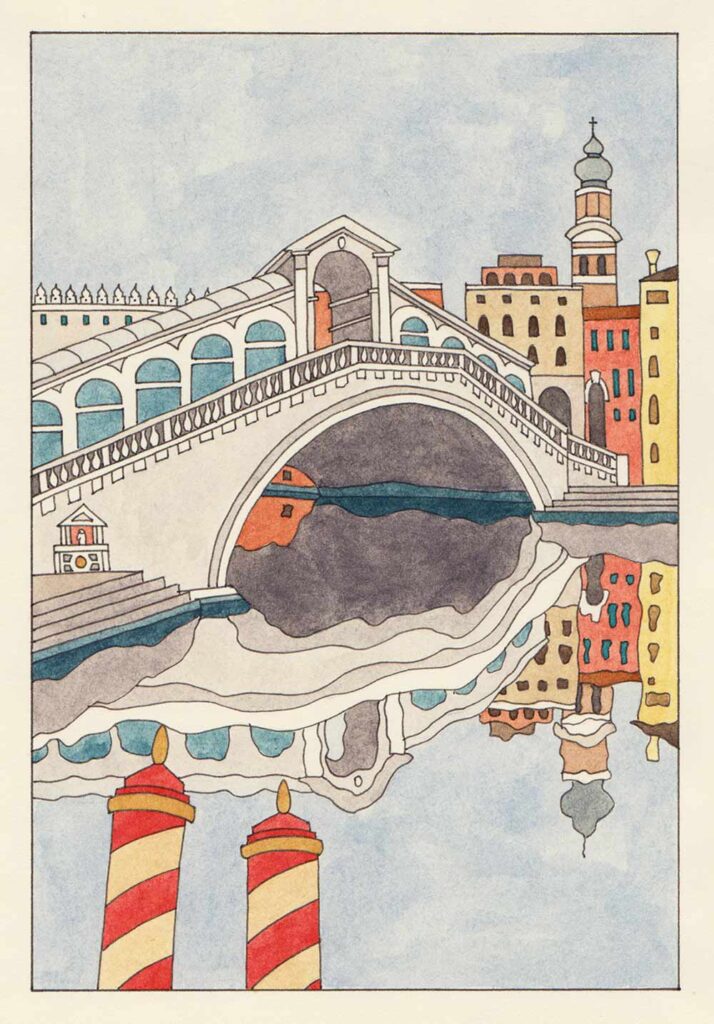
The Rialto Bridge is one of the four bridges that span the Grand Canal in Venice. It is the oldest bridge on the canal and once marked the boundary between the San Marco and San Polo districts. It is also one of the most famous bridges in the world, as it is a symbol of Venice.
The first bridge over the Grand Canal was a pontoon bridge built in 1181. It was replaced in 1255 by a wooden bridge. During the first half of the 15th century, two rows of shops were built along the sides of the bridge. In 1444, it collapsed under the weight of a crowd watching a boat procession, and it collapsed again in 1524. The idea of rebuilding the bridge in stone was first proposed in 1503, and the current single-span stone bridge, designed by Antonio da Ponte, was finally completed in 1591.
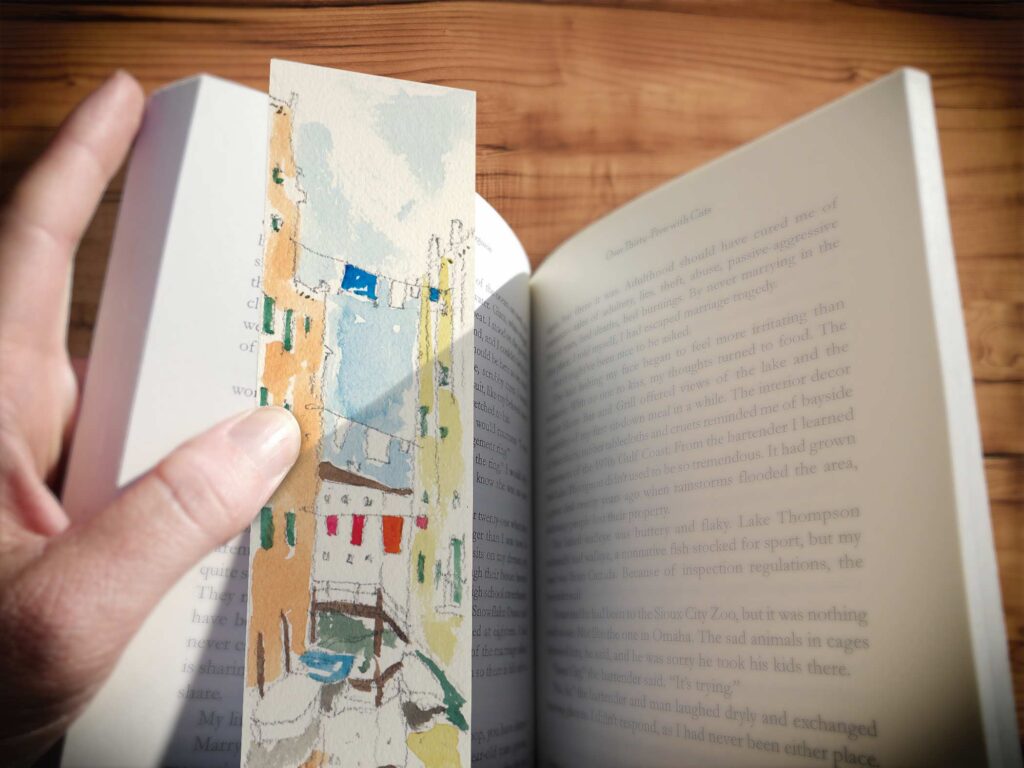
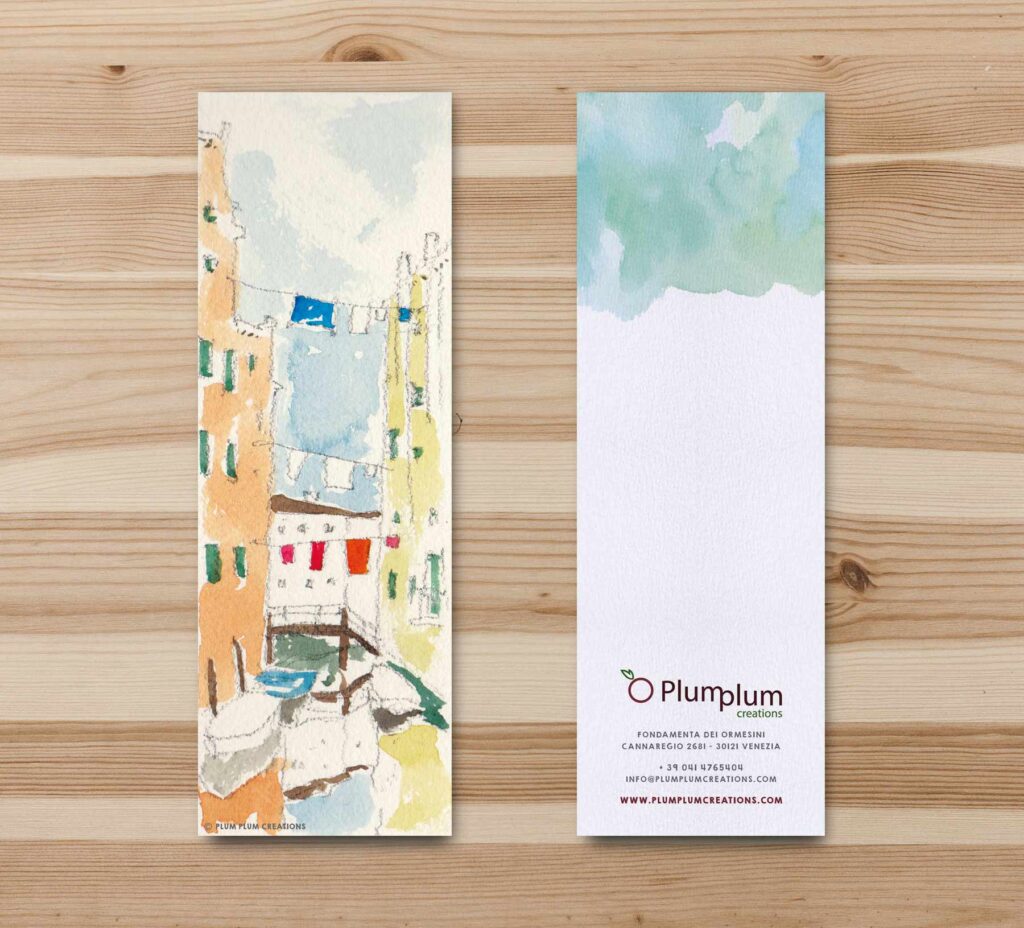
Bookmark 08
One of my original watercolors turned into a bookmark.
Printed on 300 gsm hammered paper.
Size: 2.3 × 7 inches.
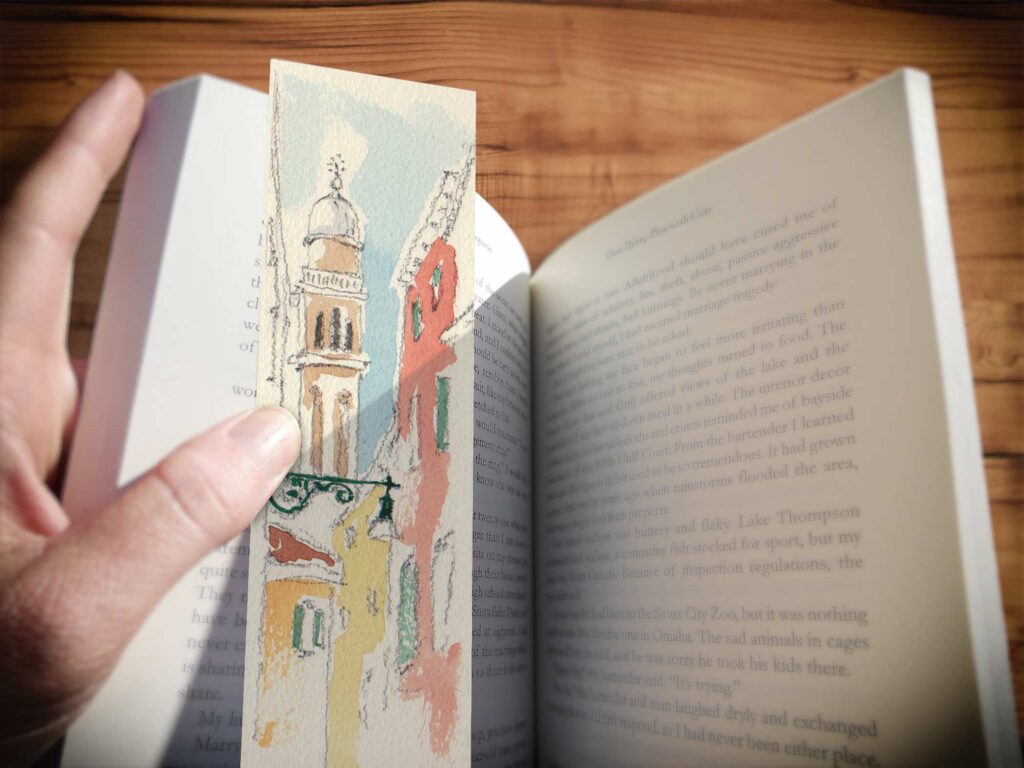
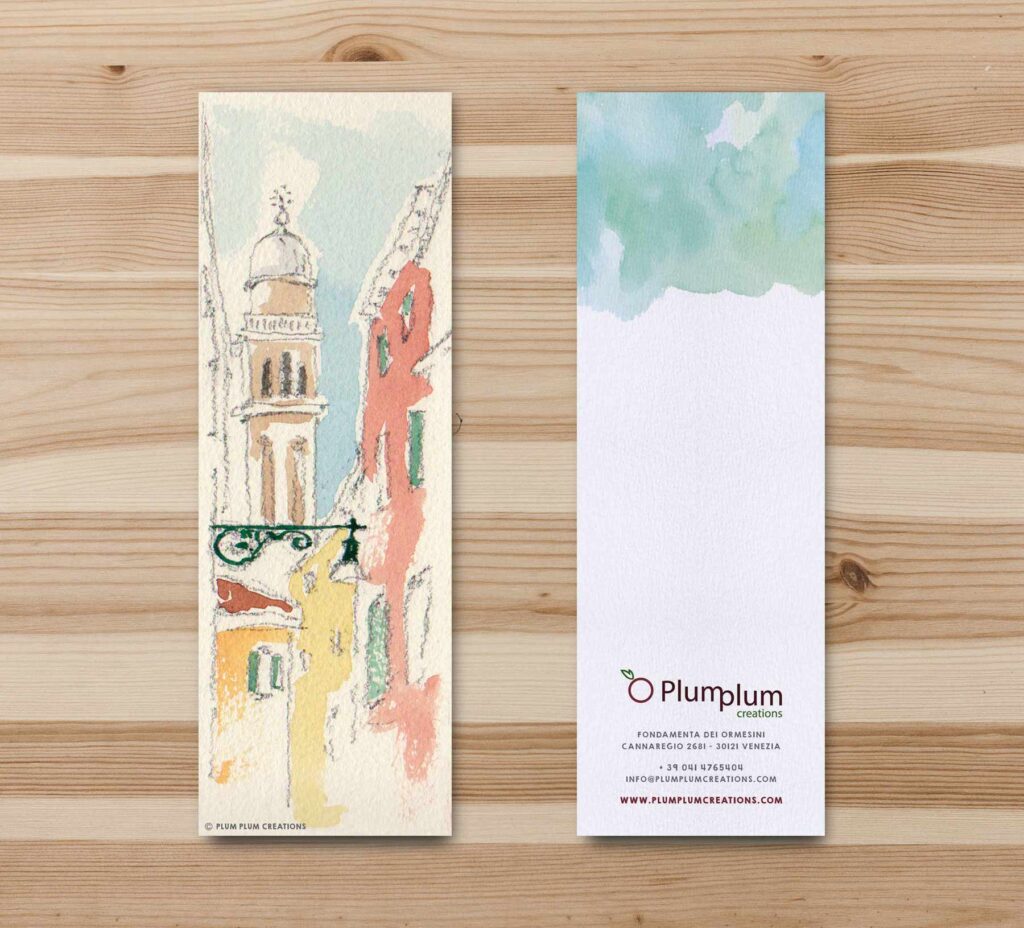
Bookmark 07
One of my original watercolors turned into a bookmark.
Printed on 300 gsm hammered paper.
Size: 2.3 × 7 inches.
Sold Out
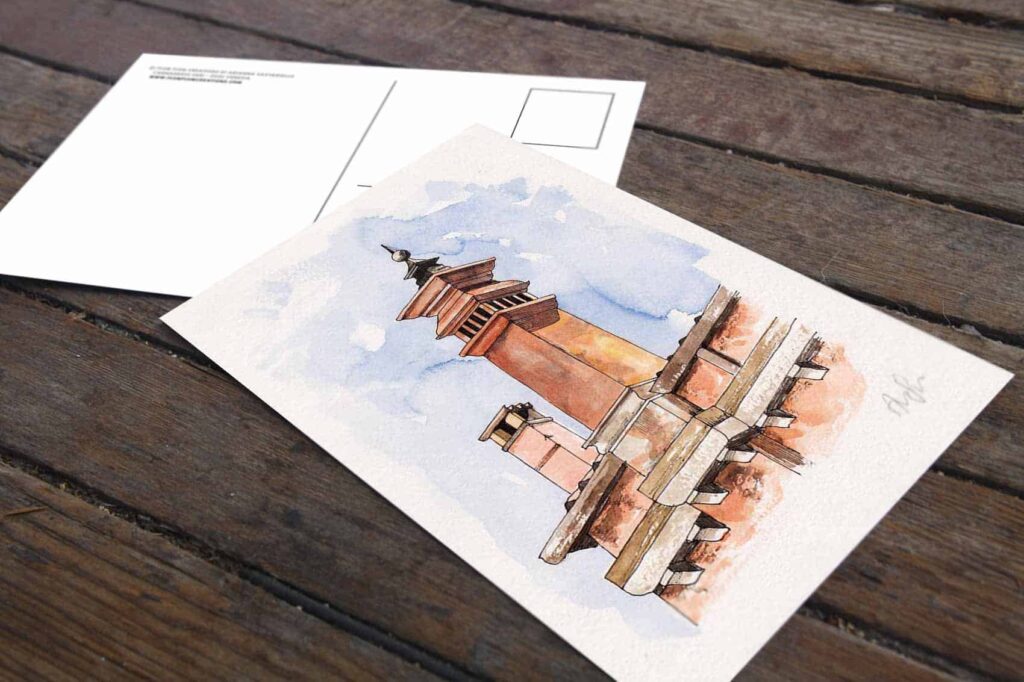
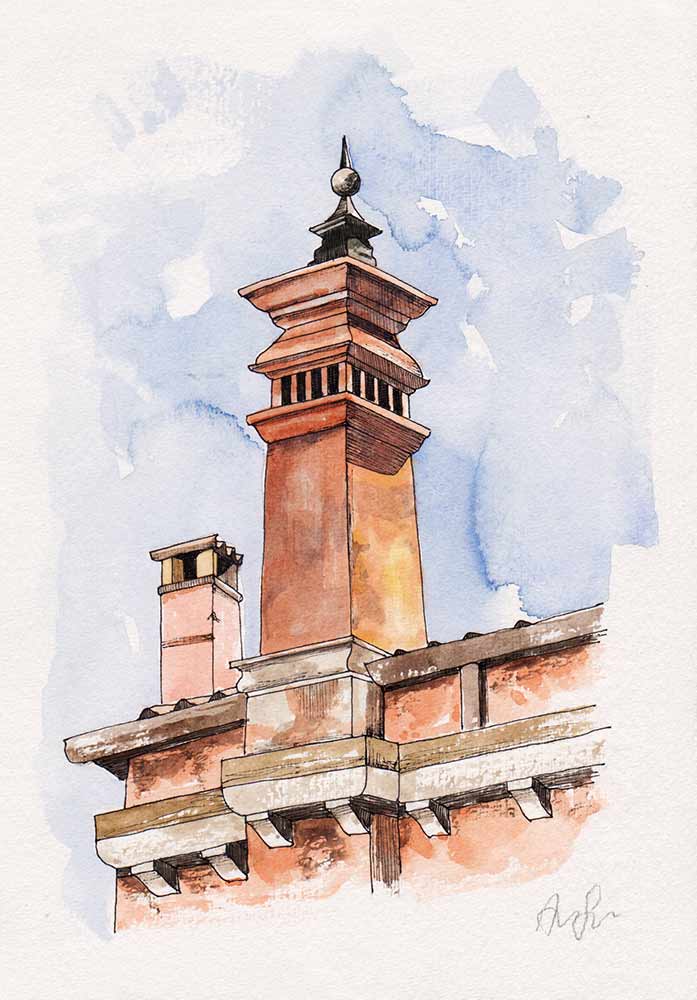
“Venetian Chimney 01” Postcard
Postcard of a chimney in San Giobbe, in the Venetian district of Cannaregio.
Postcard printed on 300 gsm paper.
Size: 4.5 × 6.5 inches
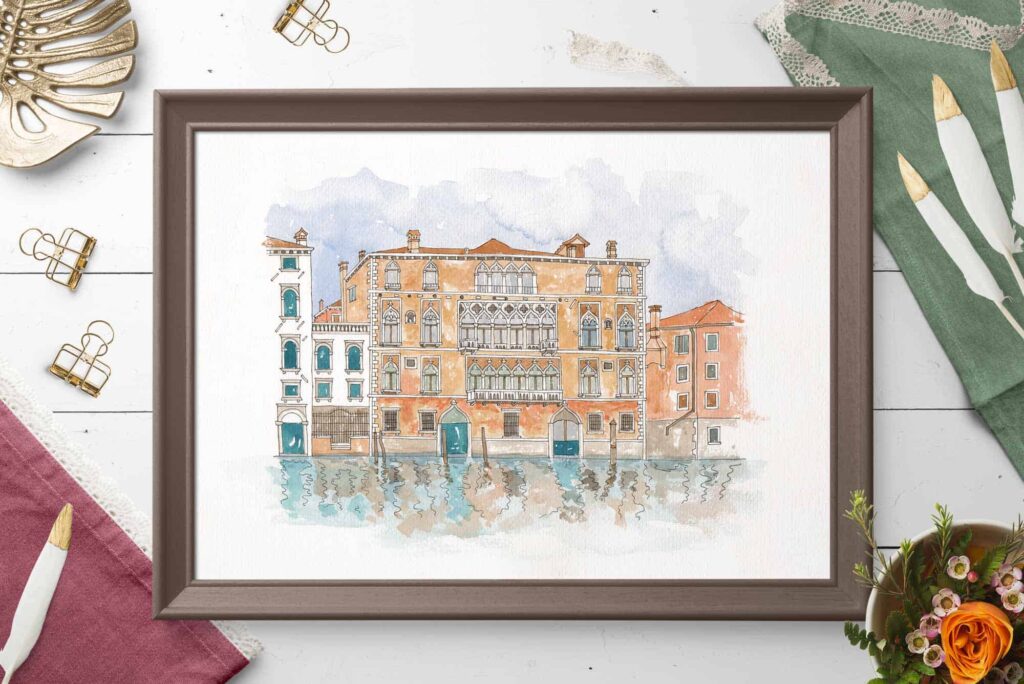
Bernardo Palace – Reproduction
Palazzo Bernardo, also known as Palazzo Giustiniani Bernardo, is a Venetian palace located in the San Polo district, not far from Campo San Polo, overlooking the Grand Canal.
The building was likely completed in 1442, when the Republic of Venice hosted the Duke of Milan, Francesco Sforza, and his wife Bianca Visconti there.
Reproduction printed on 260 gsm Modigliani ivory hammered paper.
Paper size: 13.78 × 9.84 inches.
SOLD WITHOUT FRAME.
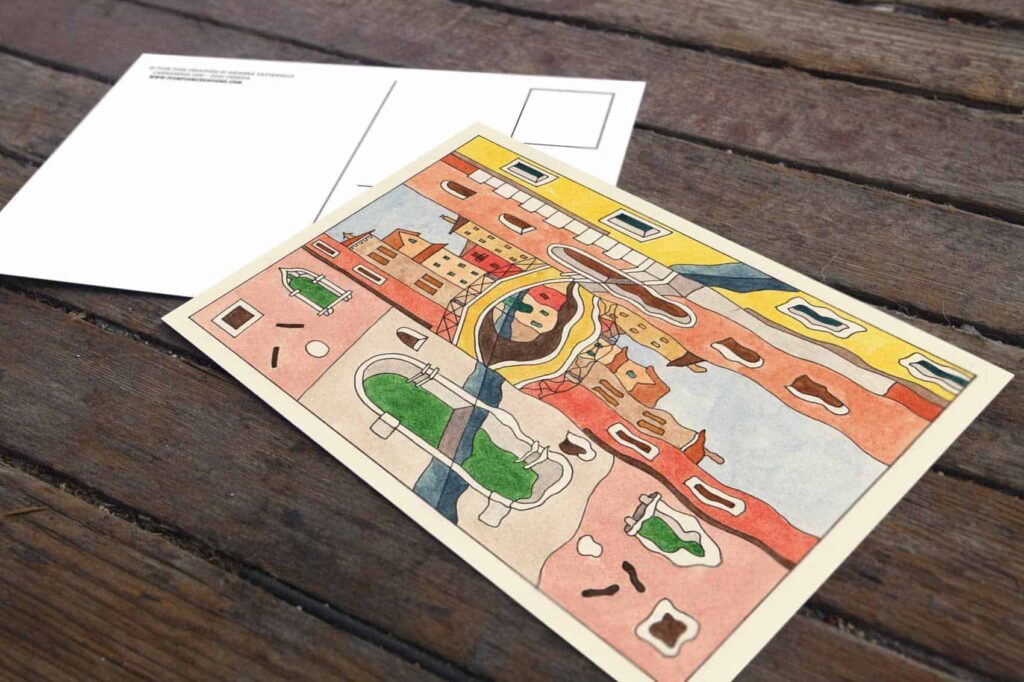
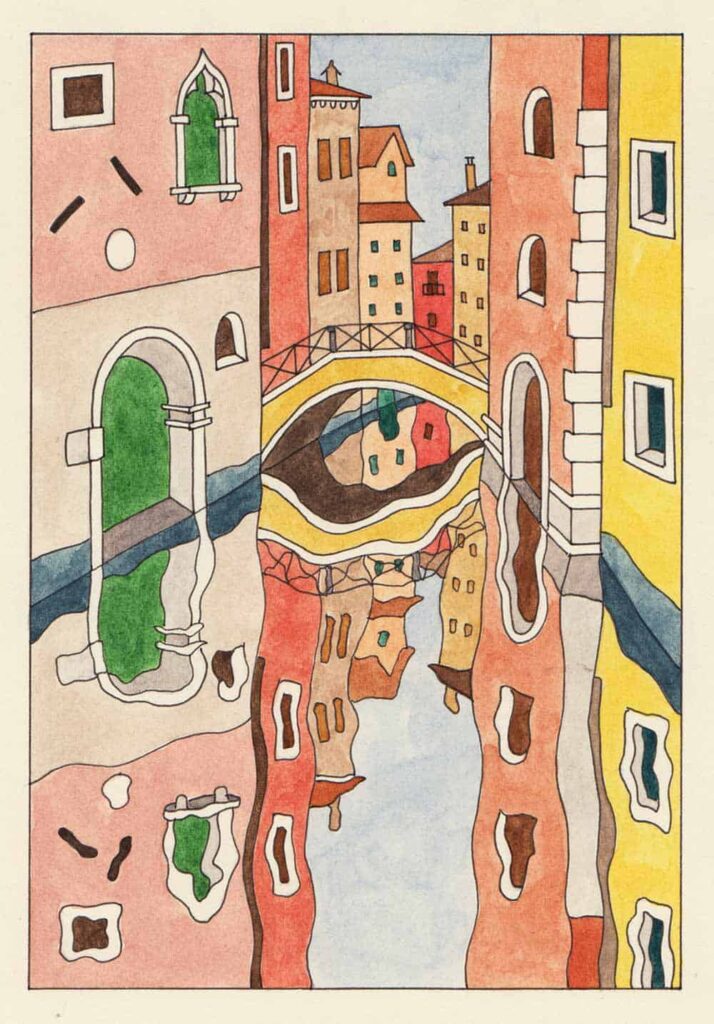
“Ponte degli Scudi” Postcard
Ponte degli Scudi is a bridge in the Castello district of Venice. Castello is the largest of the six districts of Venice.
If there is a district of Venice that can be described as truly “characteristic,” it is certainly Castello, with its canals, churches, and small gardens dating back to the 13th century. Here you can see clothes hanging out to dry between one window and another—this is the city you’ve always dreamed of!
Ponte degli Scudi is in the heart of Castello, near San Francesco della Vigna, just a short walk from the Arsenale.
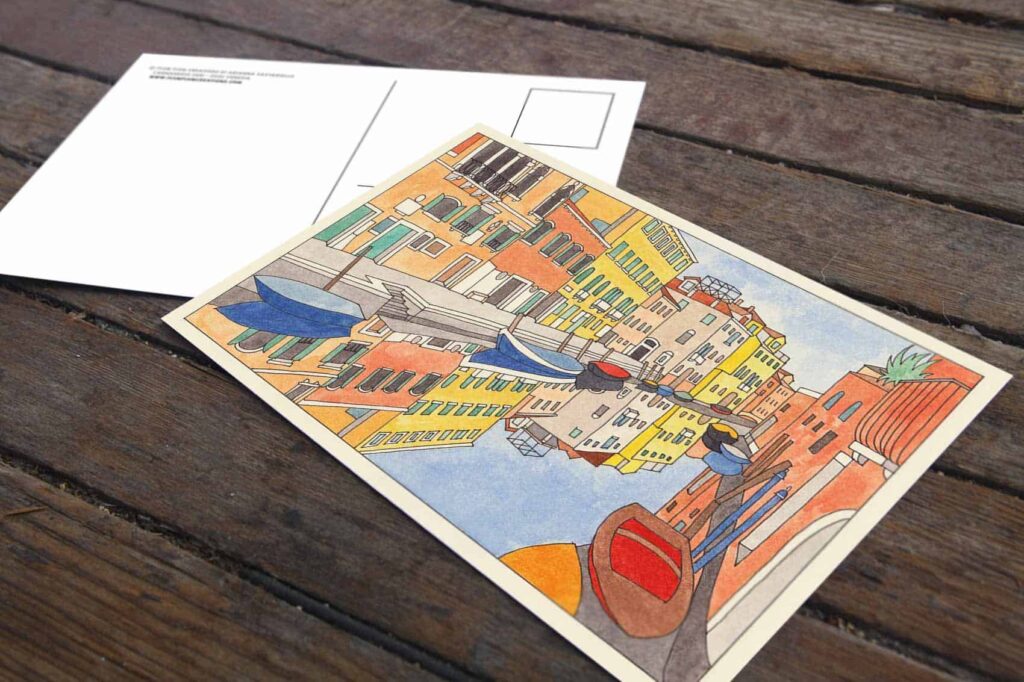
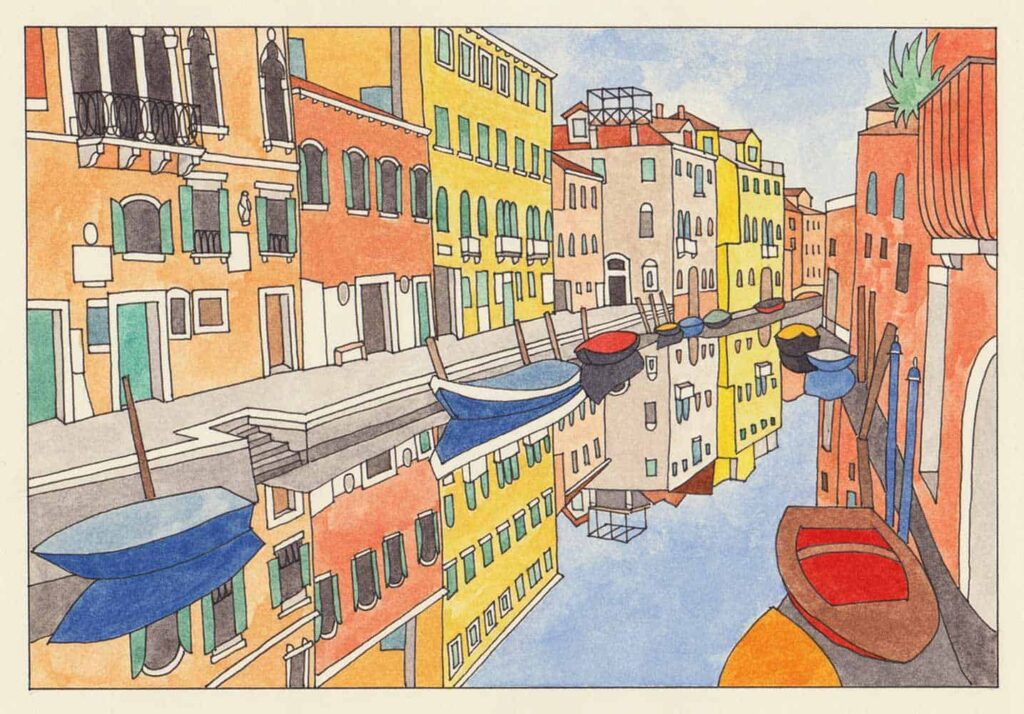
“Fondamenta dei Mori” Postcard
Along the route leading to Madonna dell’Orto lies the Fondamenta dei Mori, with the square of the same name, which takes its name from the three 13th-century statues of Moors wearing turbans set against the buildings of the campo. A fourth Moor, known as “Sior Antonio Rioba,” with an iron nose, stands at the foot of the bridge and, like Rome’s Pasquino, served as a voice for Venetian satire against the Republic.
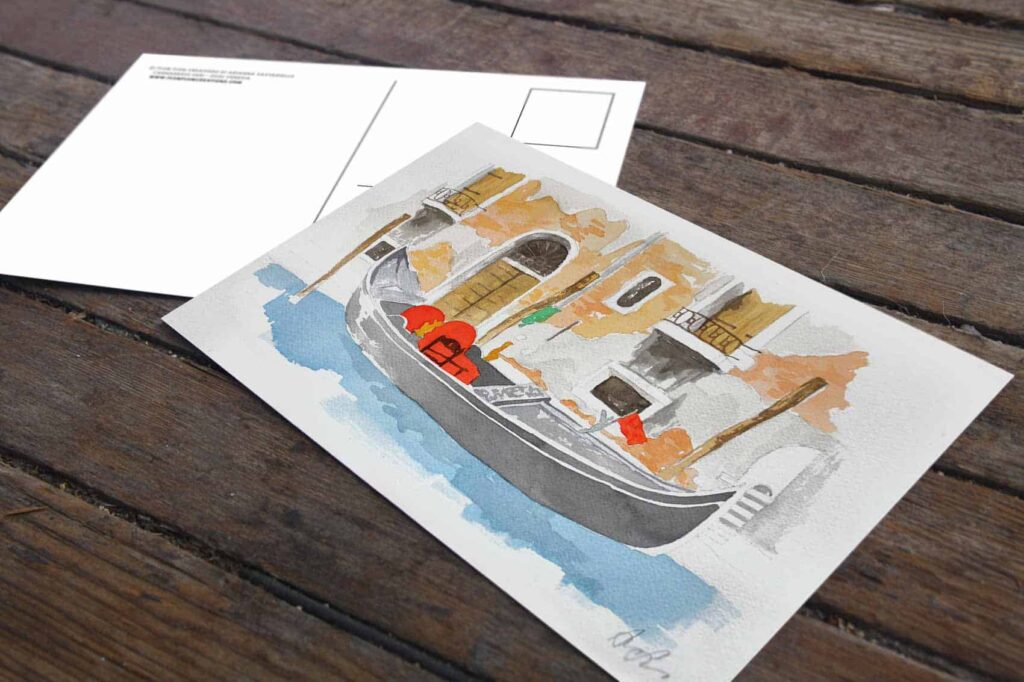
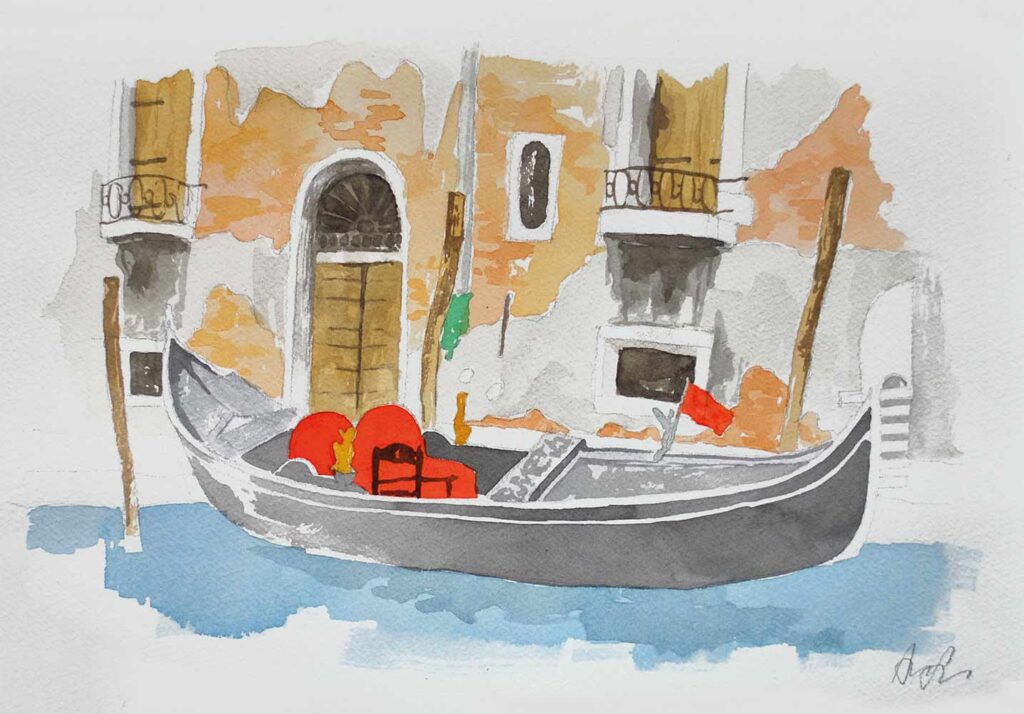
“Gondola” Postcard
The gondola is a traditional boat of the Venetian lagoon. Thanks to its maneuverability and speed, it was—until the advent of motorized boats—the most suitable vessel for transporting people in a city like Venice, where waterways have always been the primary means of transportation.
The gondola is made up of 280 different parts, crafted from eight types of wood. Its construction usually takes more than a year.
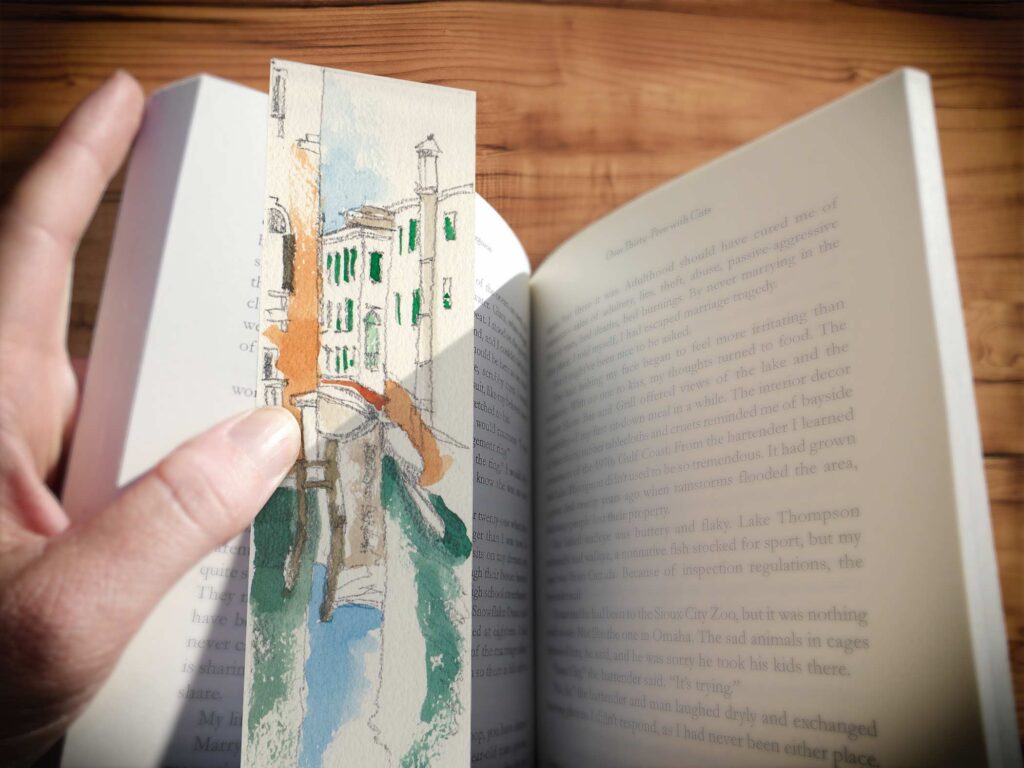
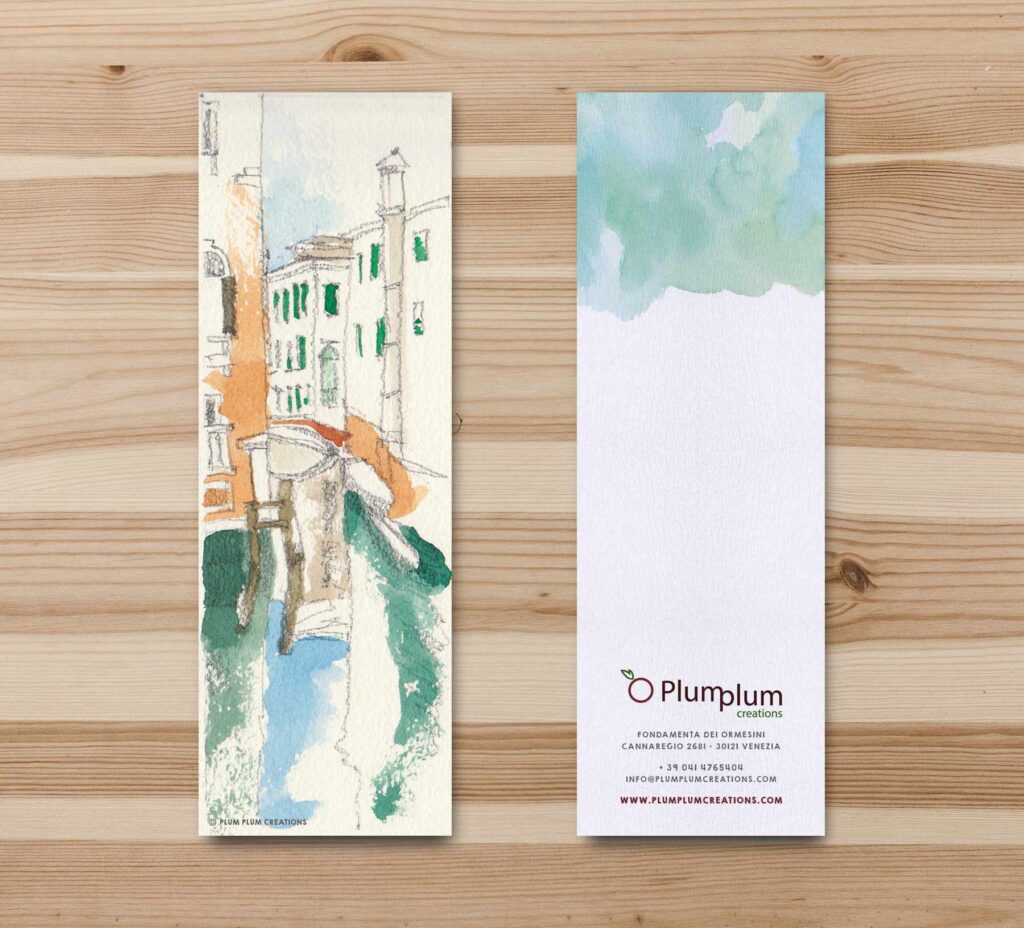
Bookmark 01
An original watercolor of mine turned into a bookmark!
Printed on 300 gsm hammered paper.
Size: 2.3 × 7 inches.
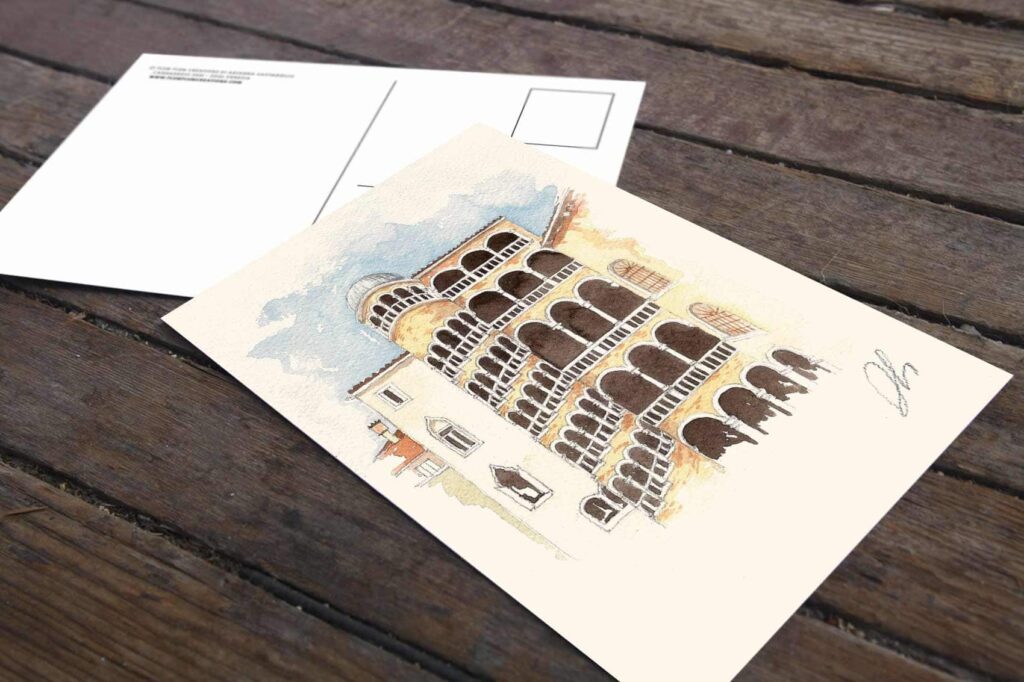
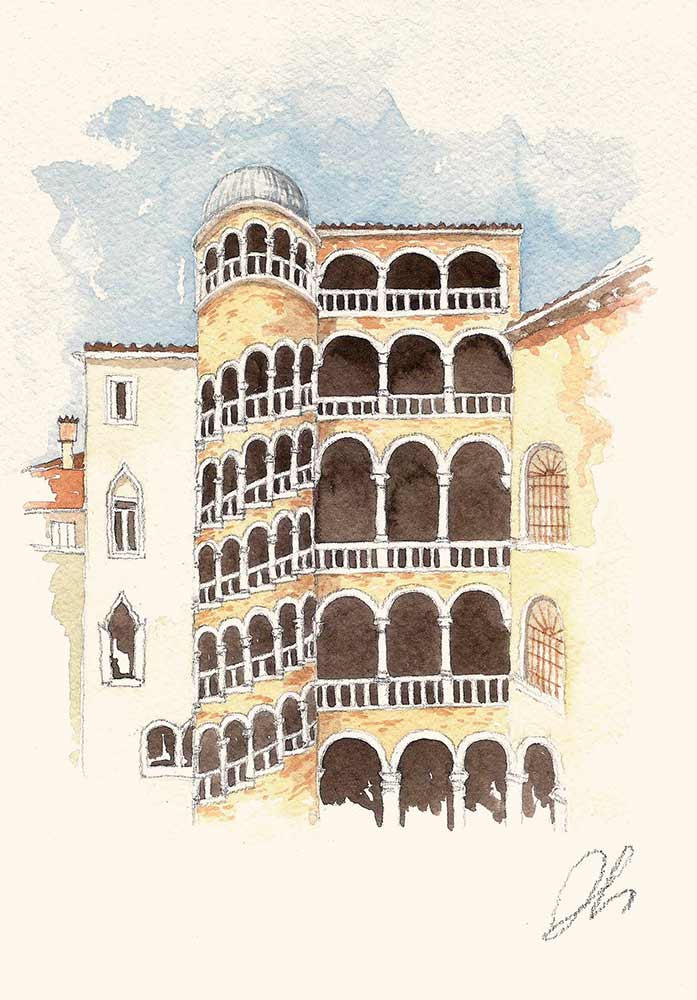
Postcard “Bovolo Staircase”
Scala Contarini del Bovolo Postcard
Postcard printed on 300 gsm paper.
Size: 4.5 × 6.5 inches
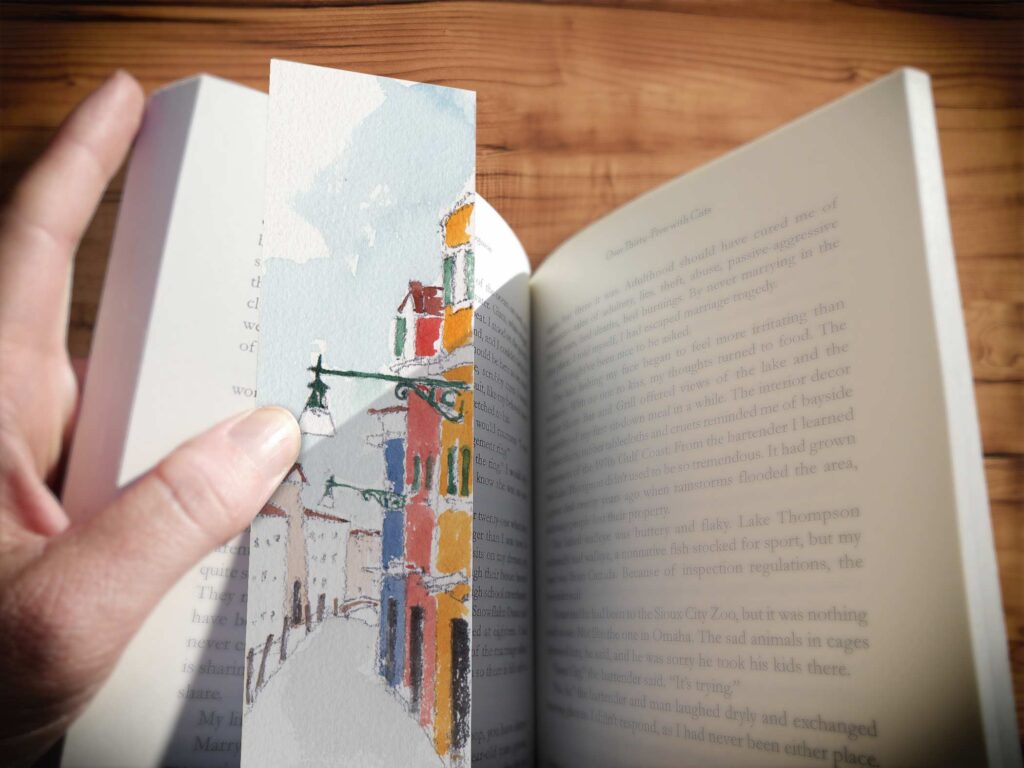
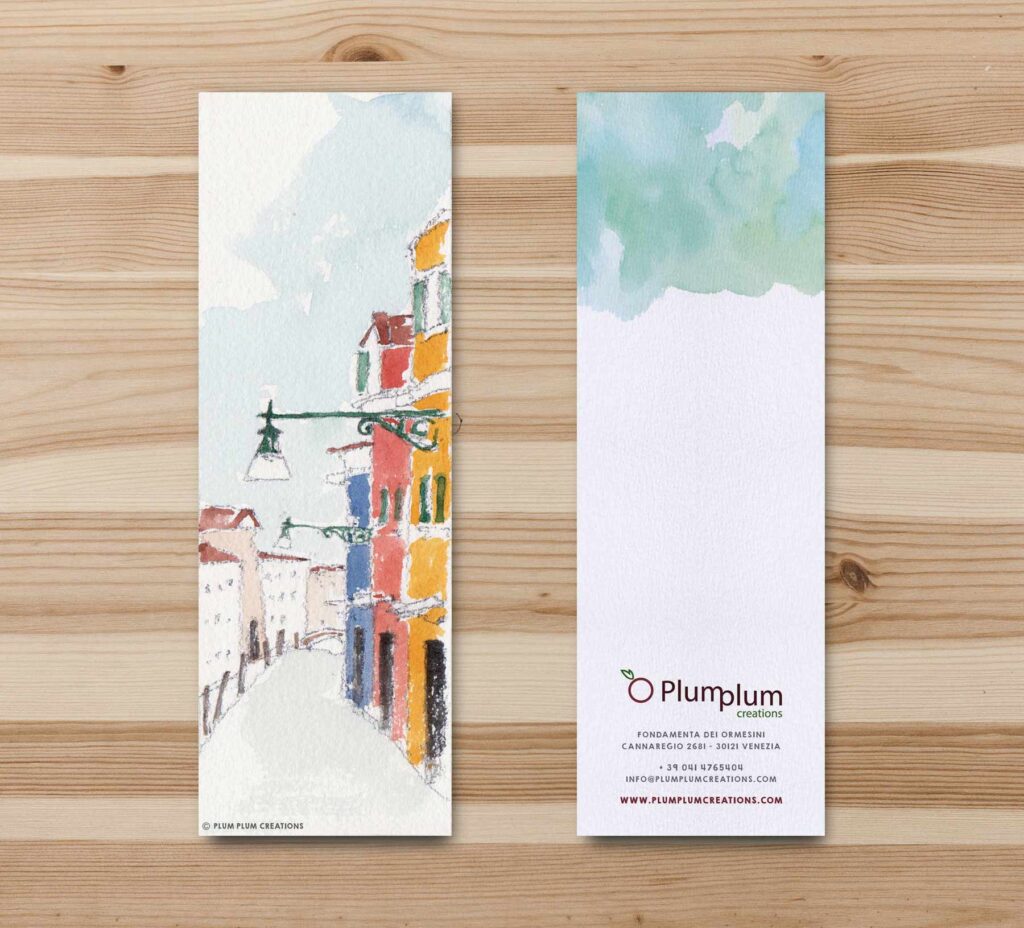
Bookmark 10
One of my original watercolors turned into a bookmark.
Printed on 300 gsm hammered paper.
Size: 2.3 × 7 inches.
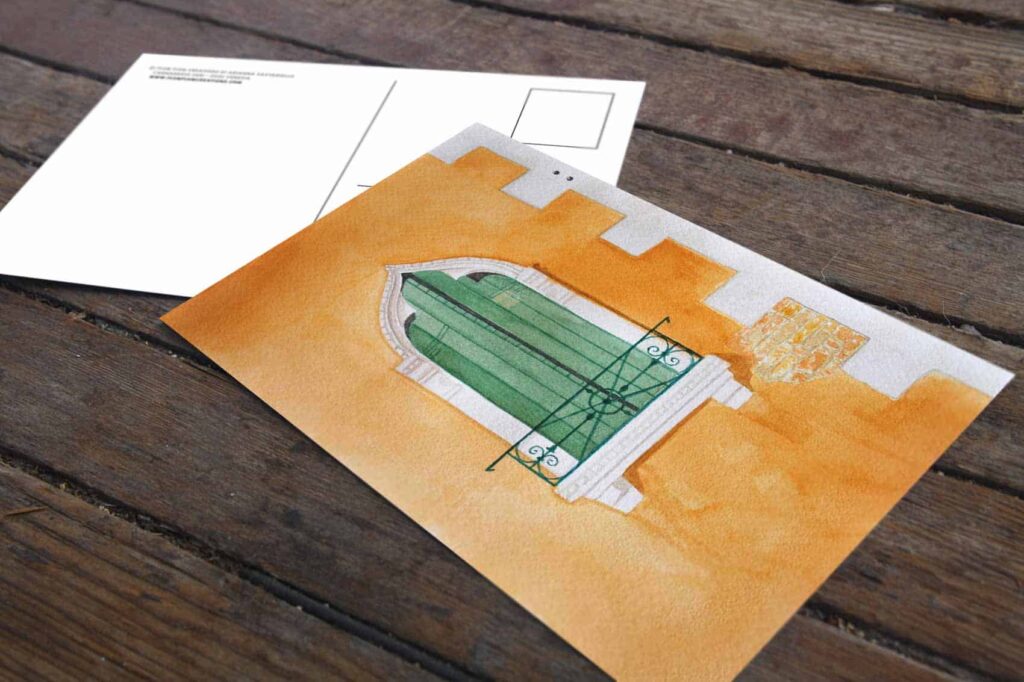
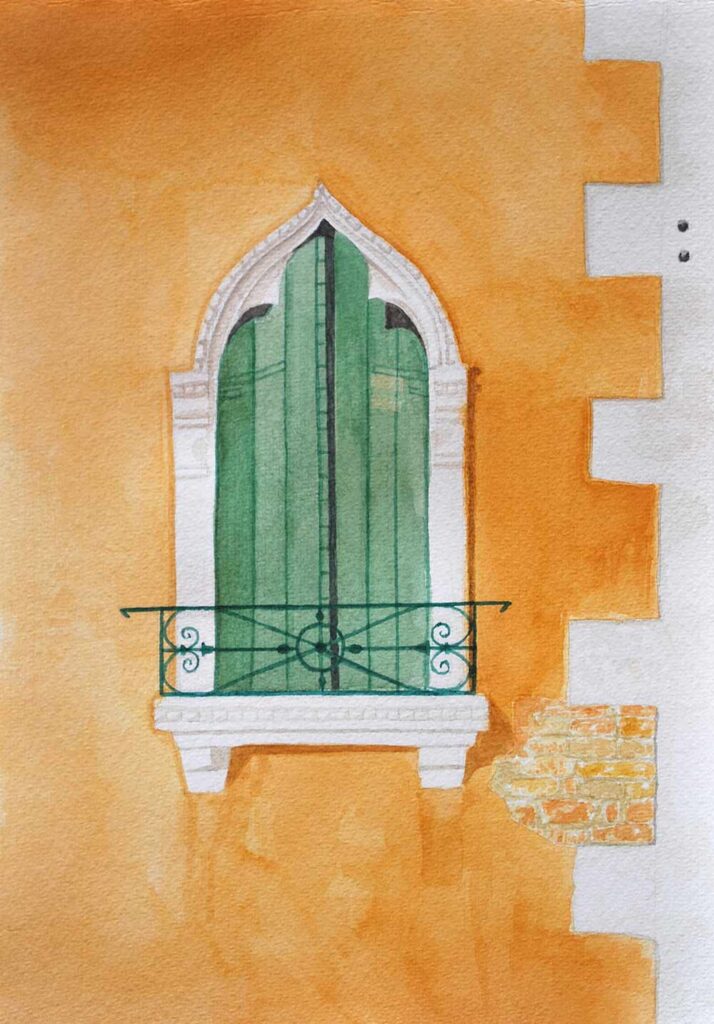
“Window” Postcard
Postcard of a Venetian window, based on one of my original watercolors.
Postcard printed on 300 gsm paper.
Size: 4.5 × 6.5 inches
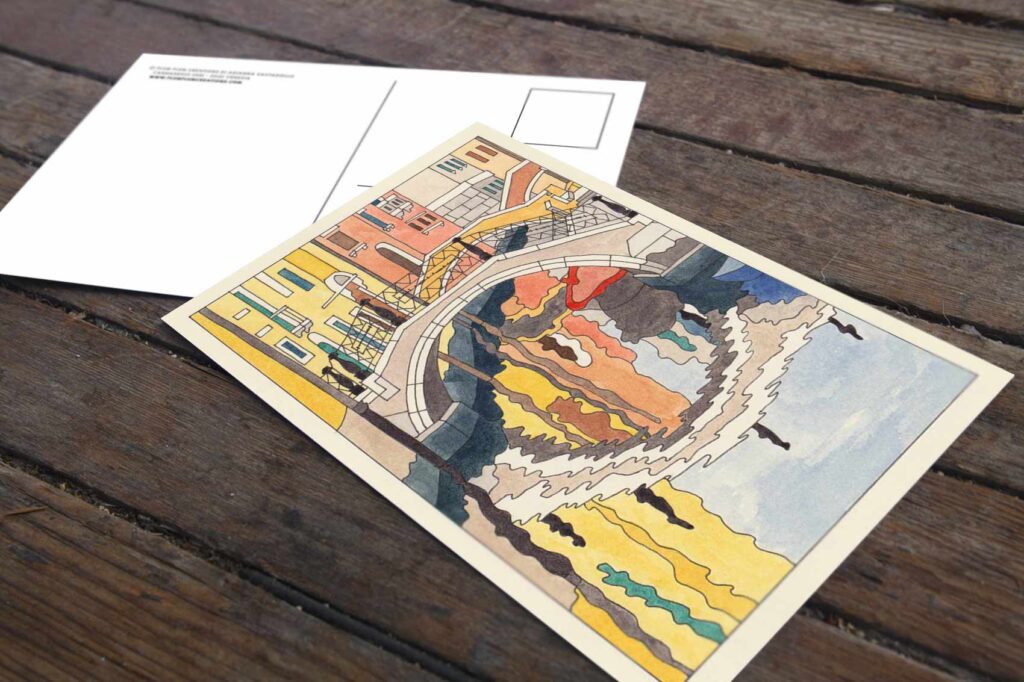
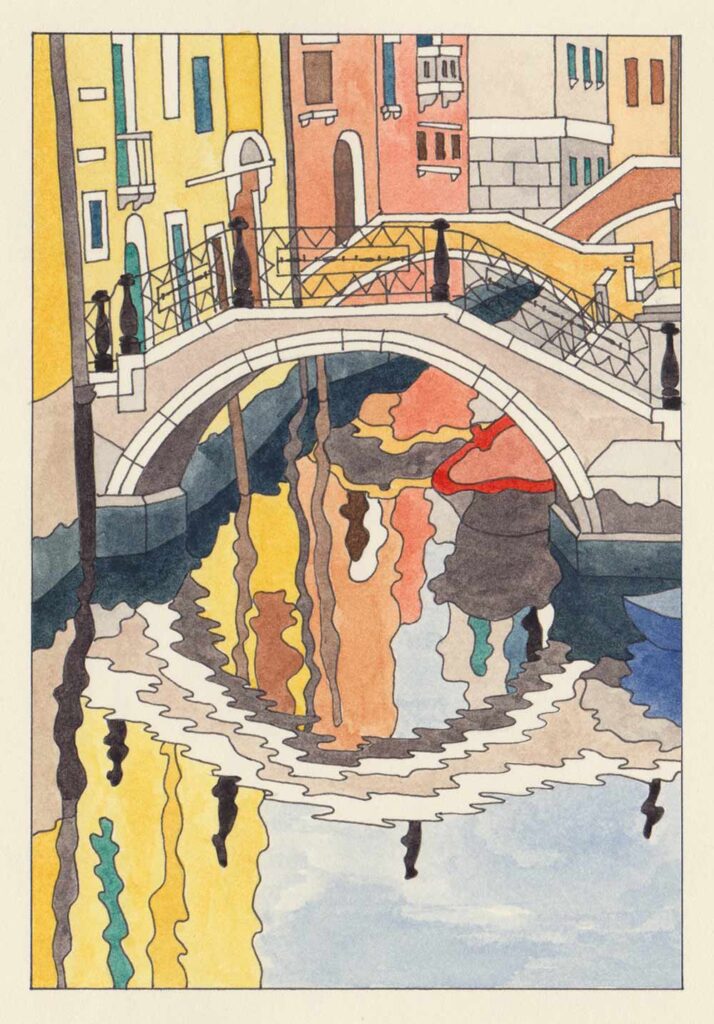
“Canal crossed by three bridges” Postcard
Canal crossed by three bridges – Postcard
A typical Venetian scene: a canal crossed by three bridges.
Postcard printed on 300 gsm paper.
Size: 4.5 × 6.5 inches
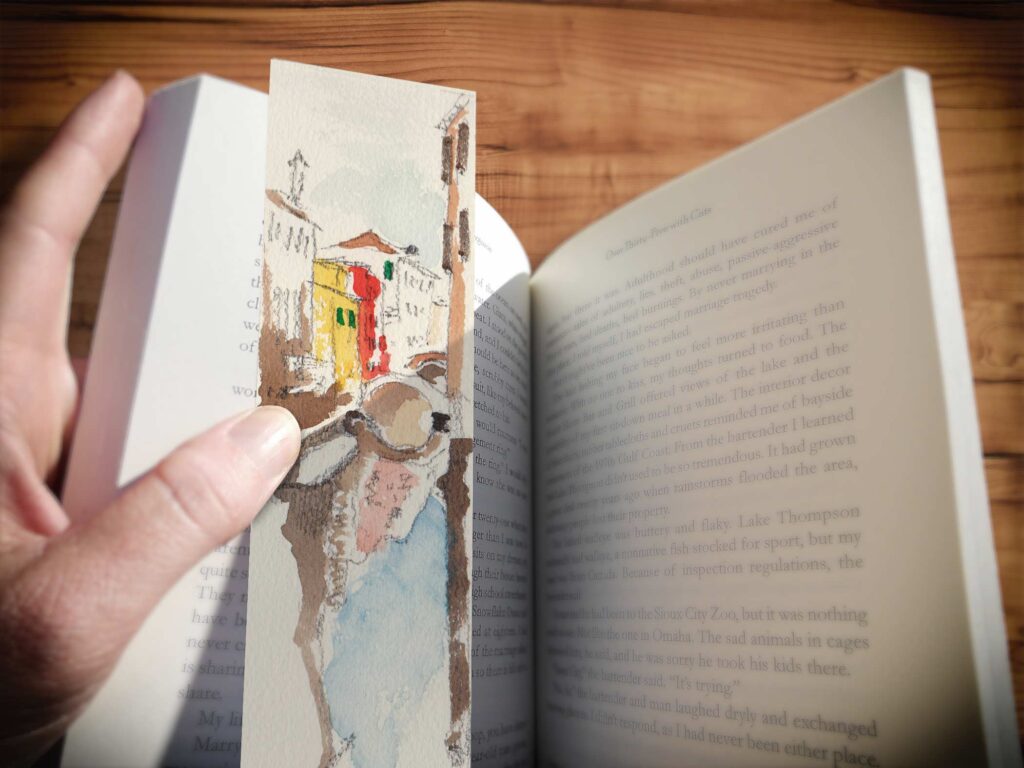
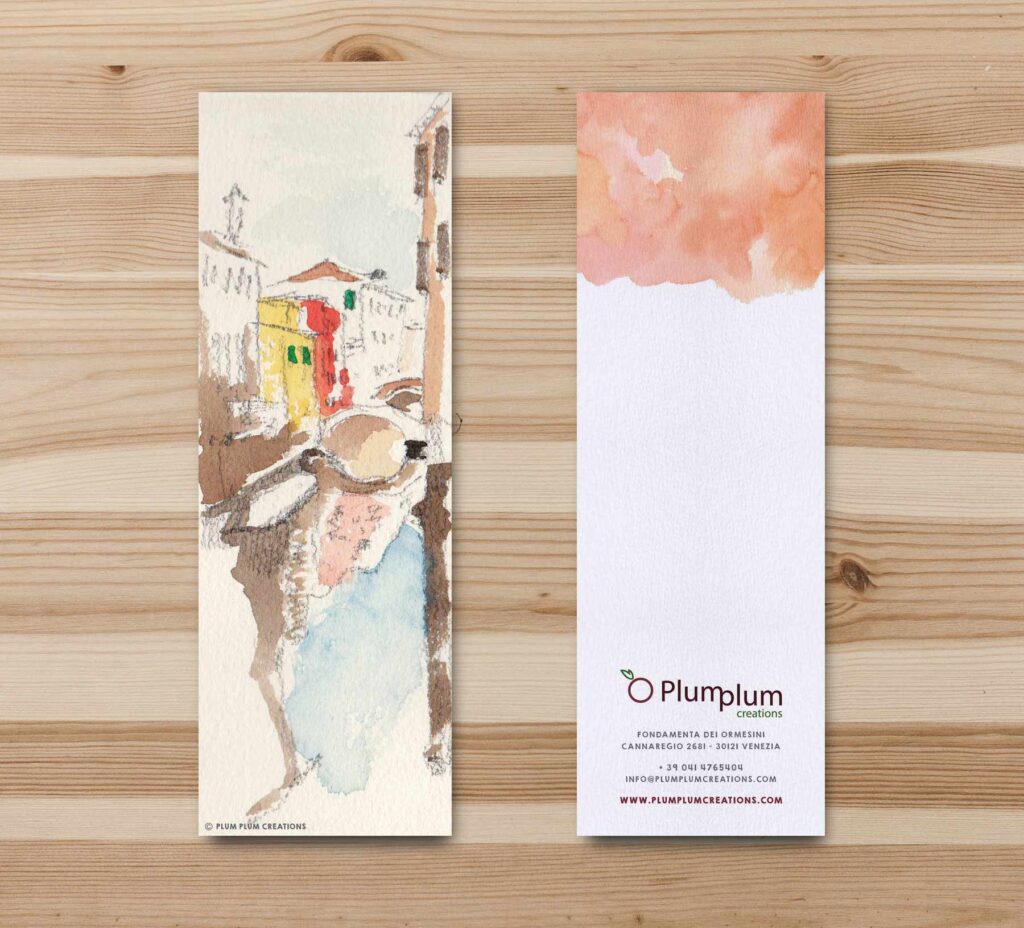
Bookmark 02
One of my original watercolors turned into a bookmark.
Printed on 300 gsm hammered paper.
Size: 2.3 × 7 inches.
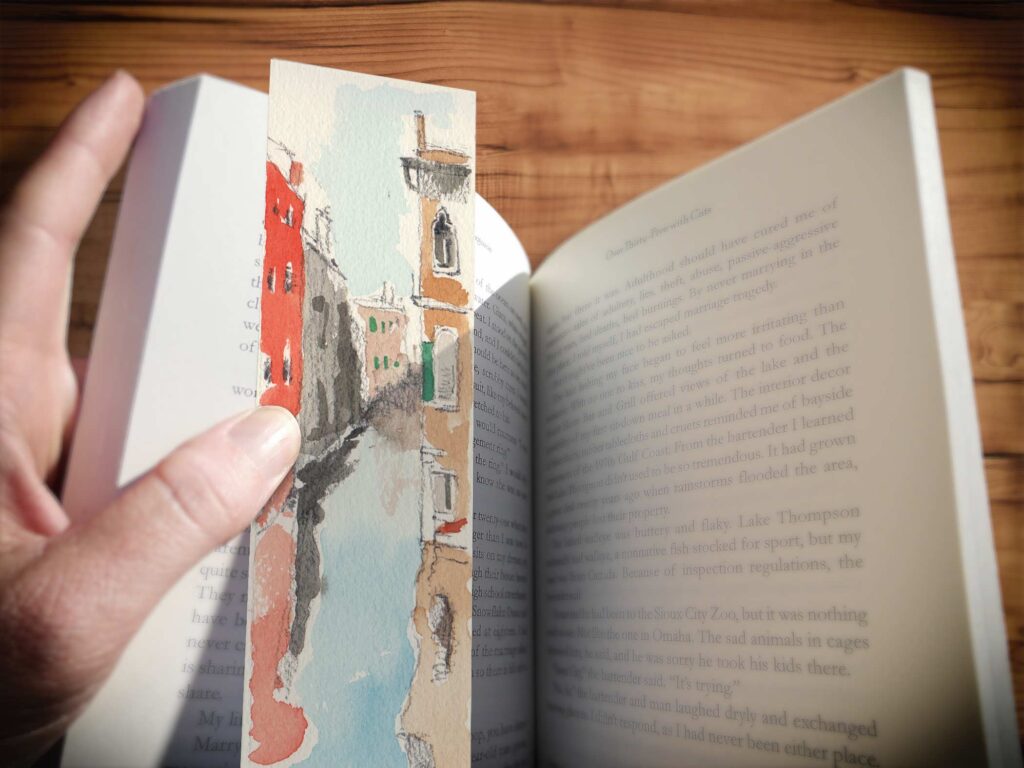
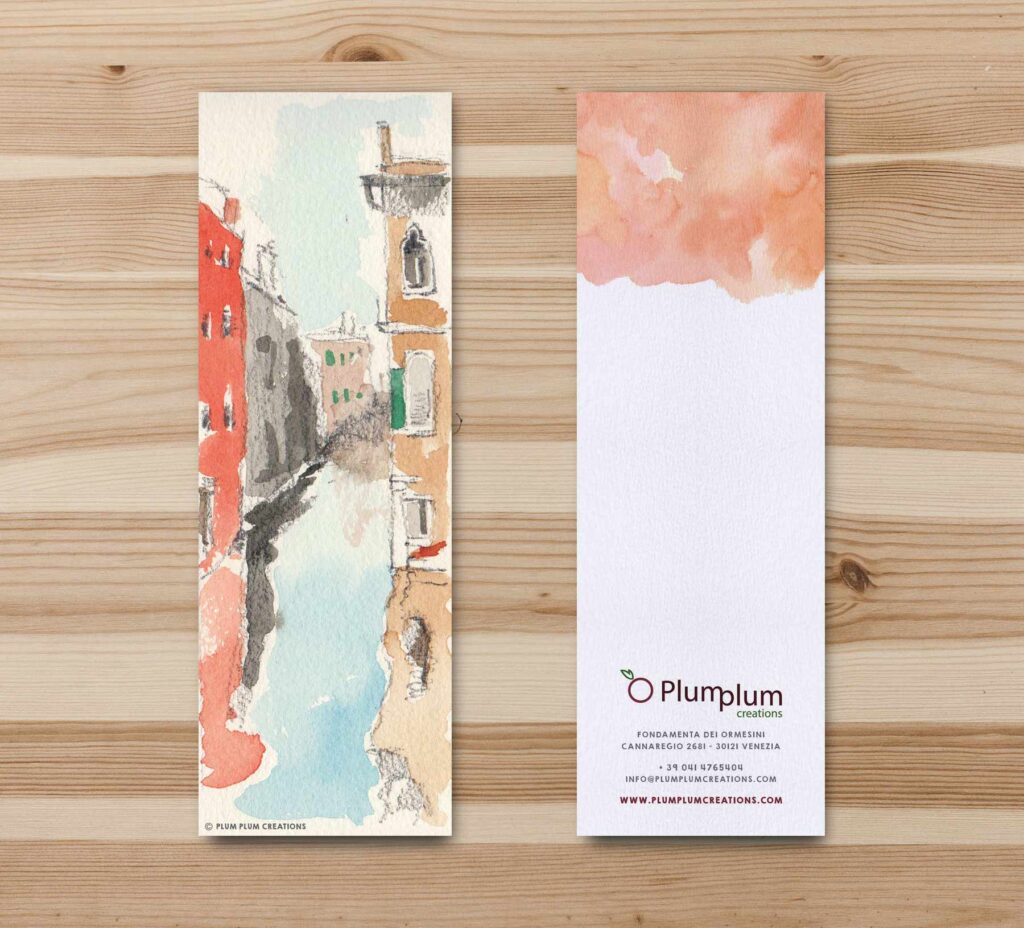
Bookmark 03
One of my original watercolors turned into a bookmark.
Printed on 300 gsm hammered paper.
Size: 2.3 × 7 inches.
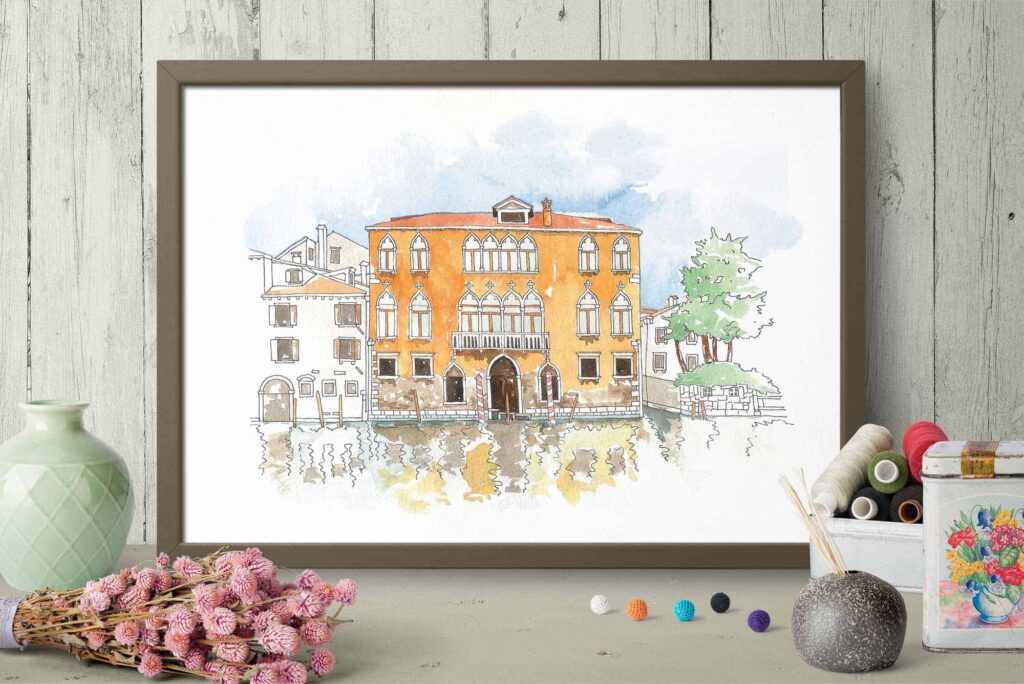
Foscarini Giovanelli Palace – Reproduction
Palazzo Giovanelli (also known as Palazzo Foscarini Giovanelli) is a palace in Venice, located in the Santa Croce district, overlooking the right side of the Grand Canal and the Rio di San Giovanni Decollato, just before the Fondaco dei Turchi.
Reproduction printed on 260 gsm Modigliani ivory hammered paper.
Paper size: 13.7 × 9.8 inches.
SOLD WITHOUT FRAME.
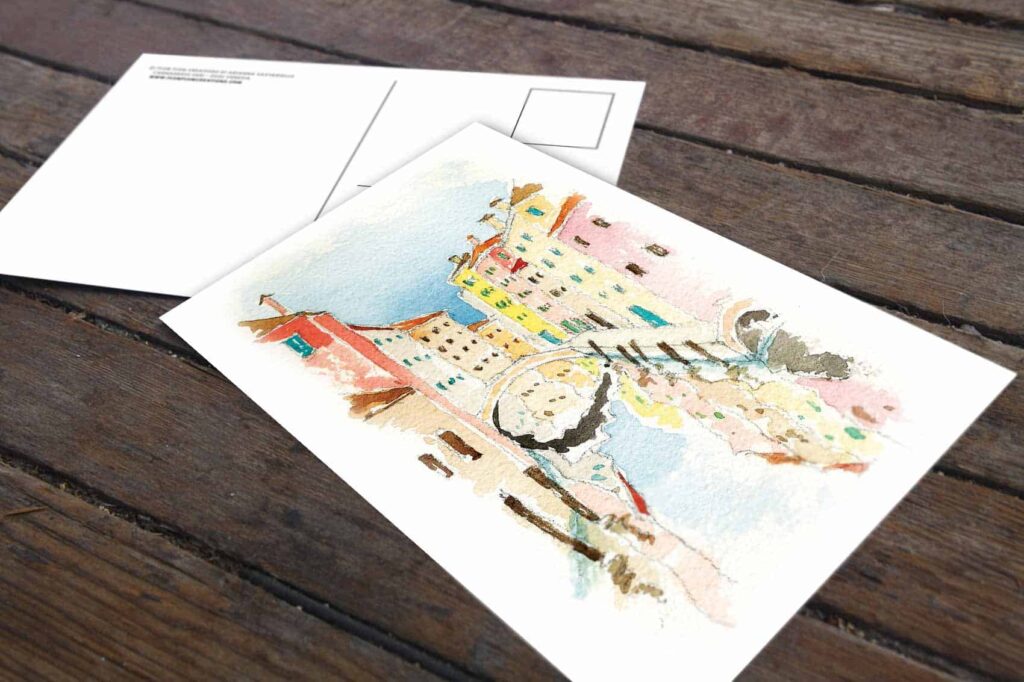
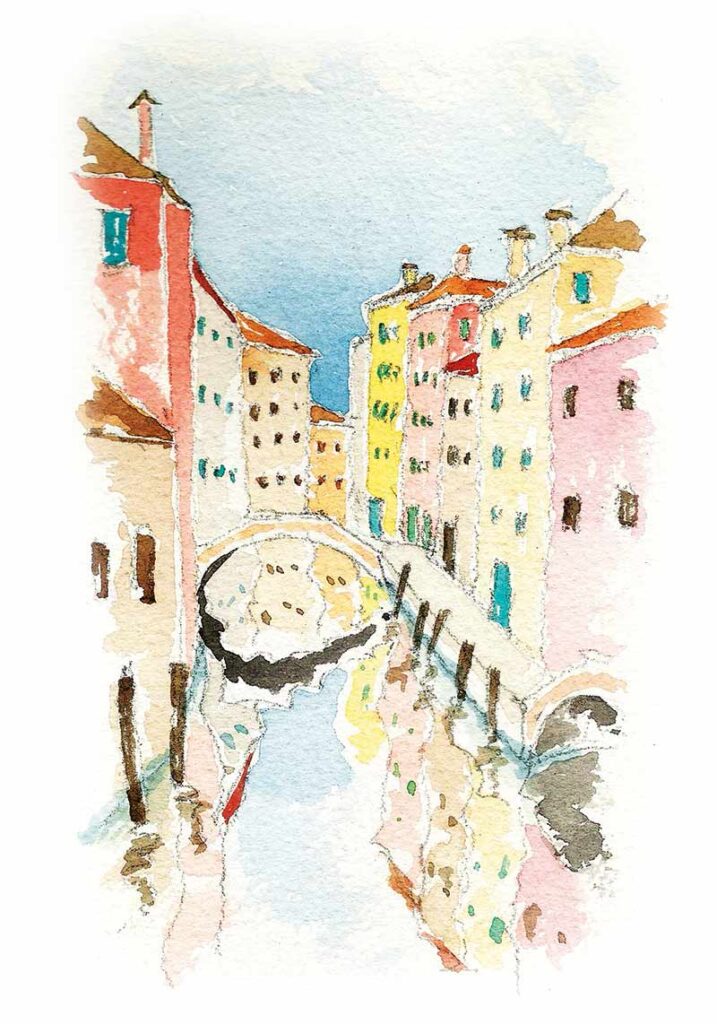
Postcard of a Canal in Castello district
Postcard depicting a typical Venetian view, with a bridge crossing a canal. Specifically, it shows a canal in the Castello district.
Postcard printed on 300 gsm paper.
Size: 4.5 × 6.5 inches
recent view product
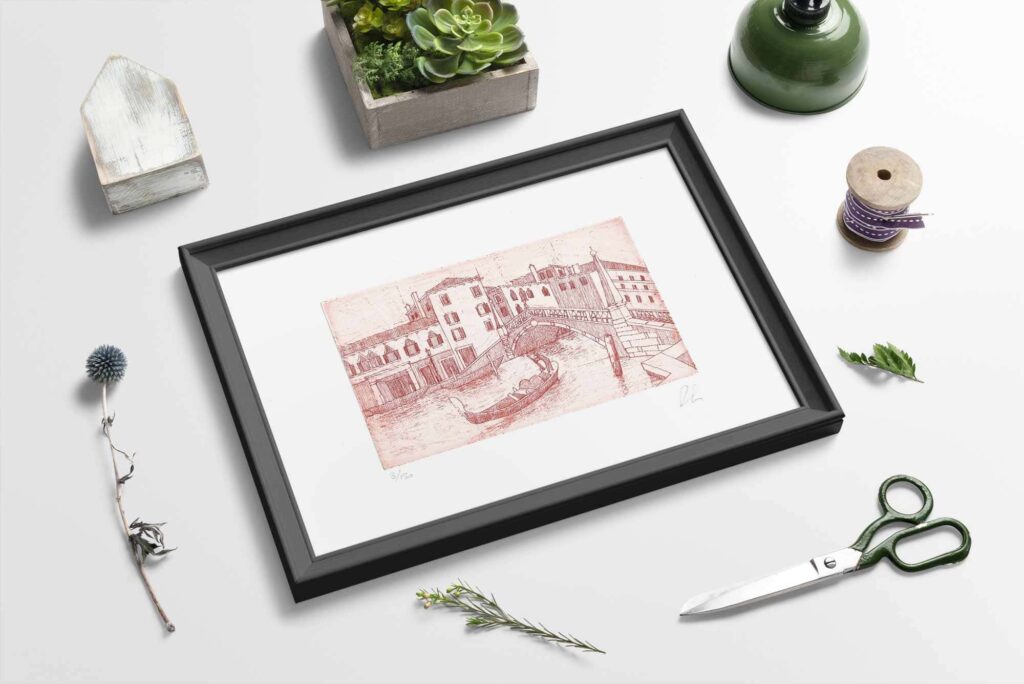
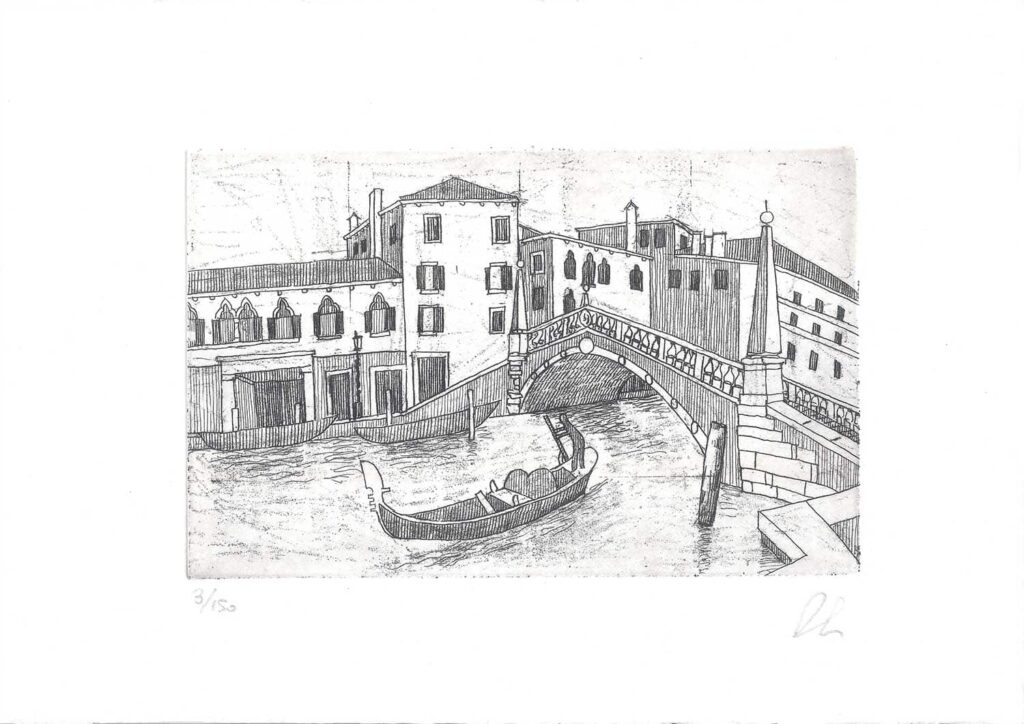
Ponte delle Guglie – Bridge of Spires
Guglie Bridge is a bridge in Venice, located in the Cannaregio district.
It is the only Venetian bridge adorned with pinnacles placed at the base of the railings: the spires from which it takes its name.
The Cannaregio Bridge was first built in wood in 1285. It was replaced by the current stone bridge in 1580, as testified by the inscriptions placed on the bridge itself. Restored in 1641 and 1677, it was rebuilt in 1823 with the addition of the spires, from which it took its current name.
Sold Out
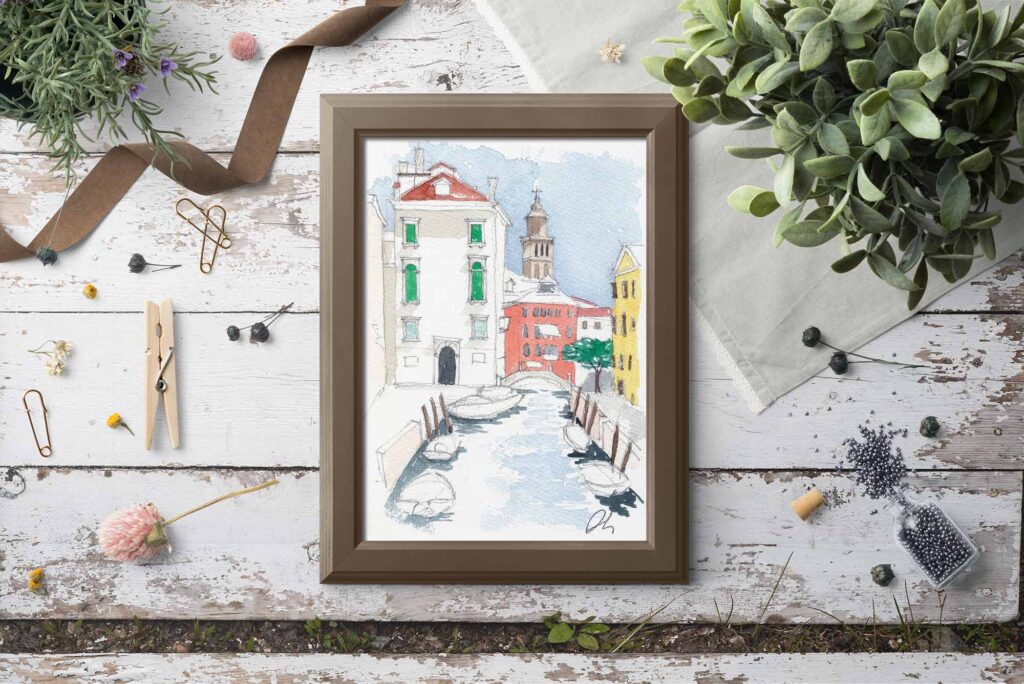
Rio di San Vio
The San Vio Canal (Saints Vito and Modesto Canal) is a Venice canal placed in Dorsoduro district, in the area […]
Sold Out
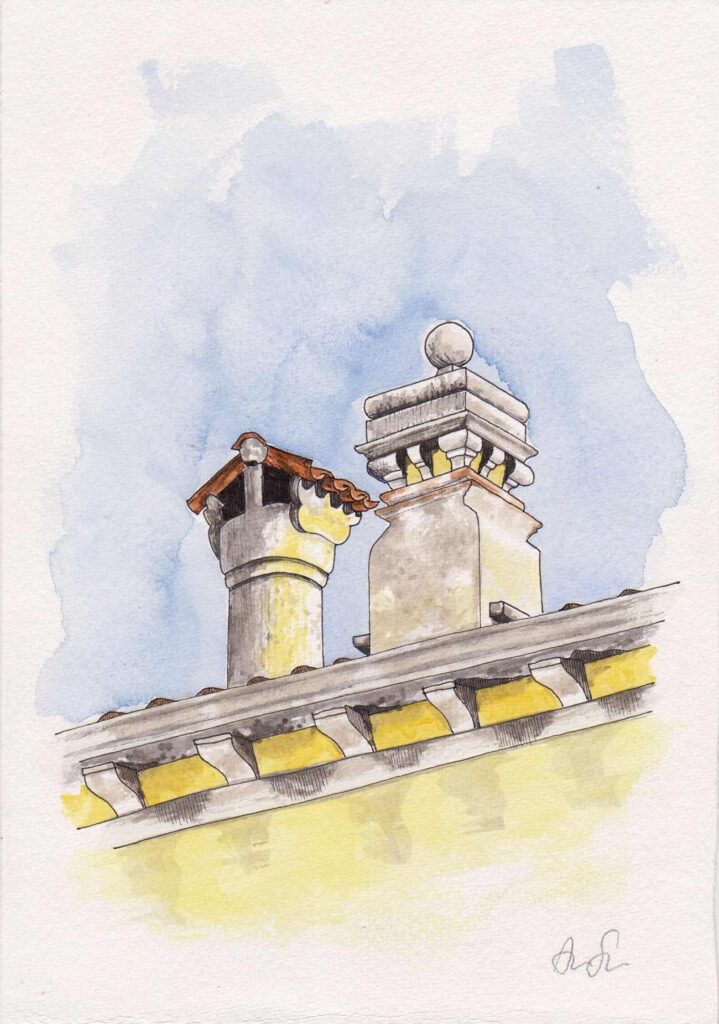
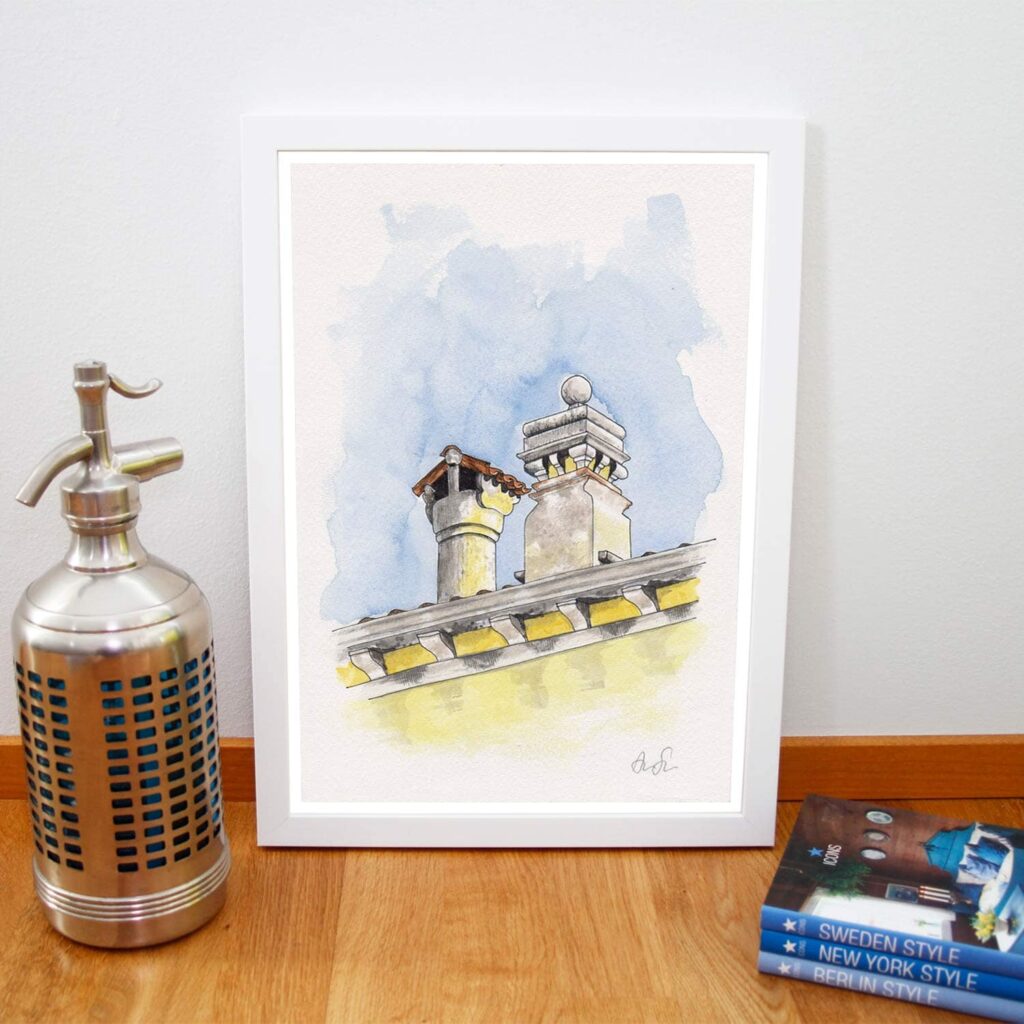
Venetian chimney 11
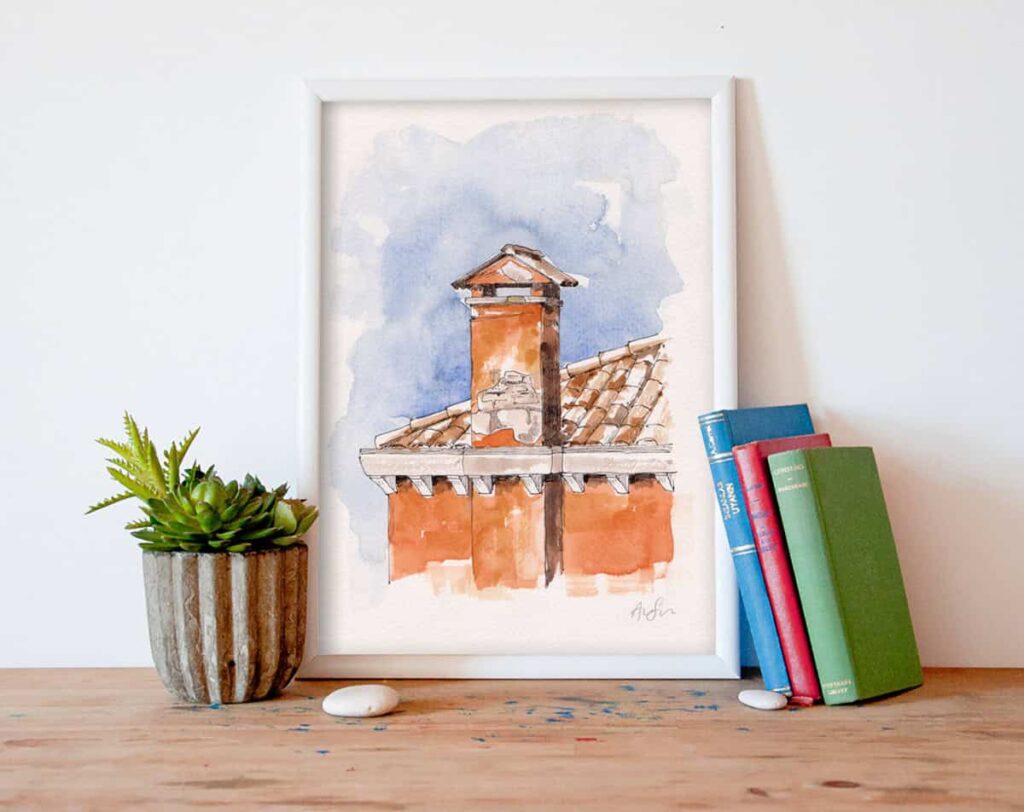
Original watercolor of a venetian chimney (Venetian Chimney 11) made on 300 gr white 50% cotton watercolor paper. Still life […]
Sold Out
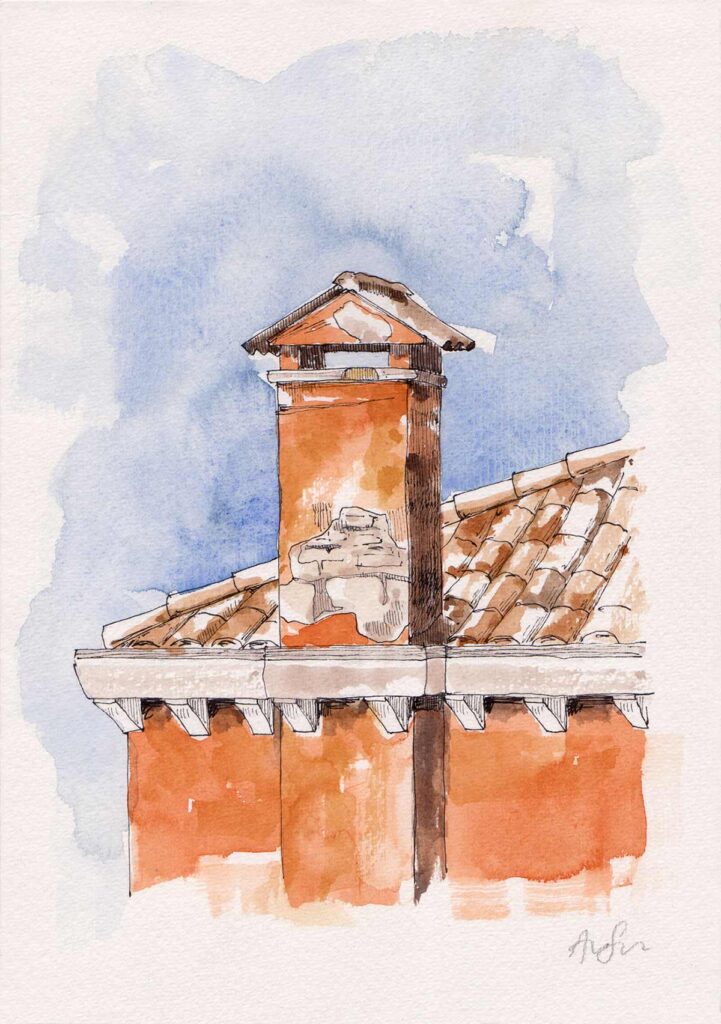
Venetian chimeny 08
Original watercolor of a venetian chimney (Venetian chimney 08) made on 300 gr white watercolor 50% cotton paper Paper size: […]
Canal crossed by three bridges
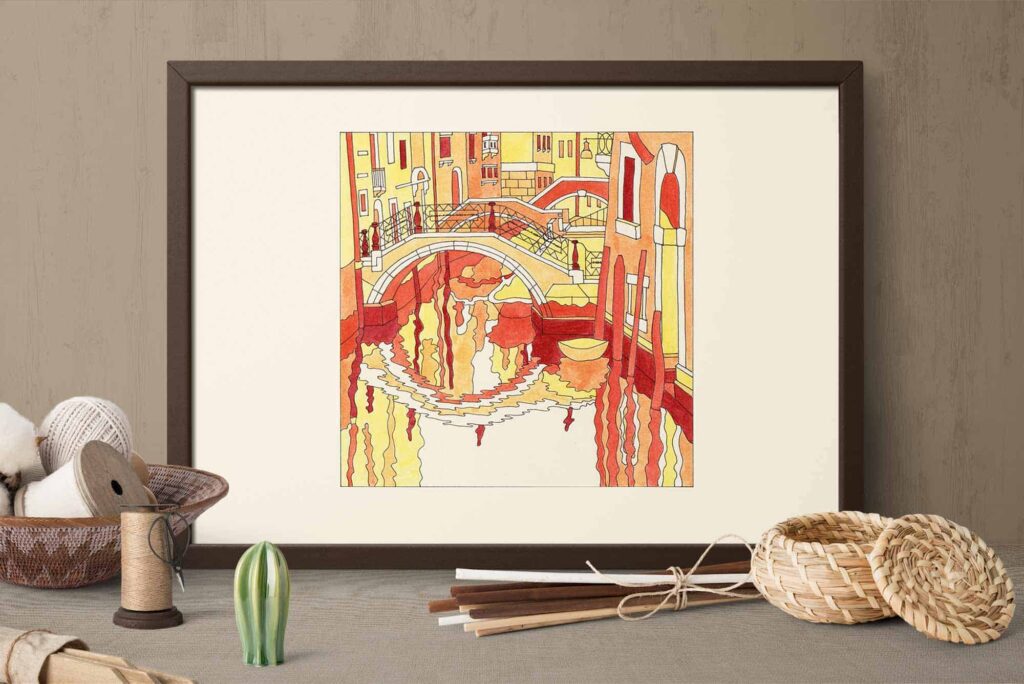
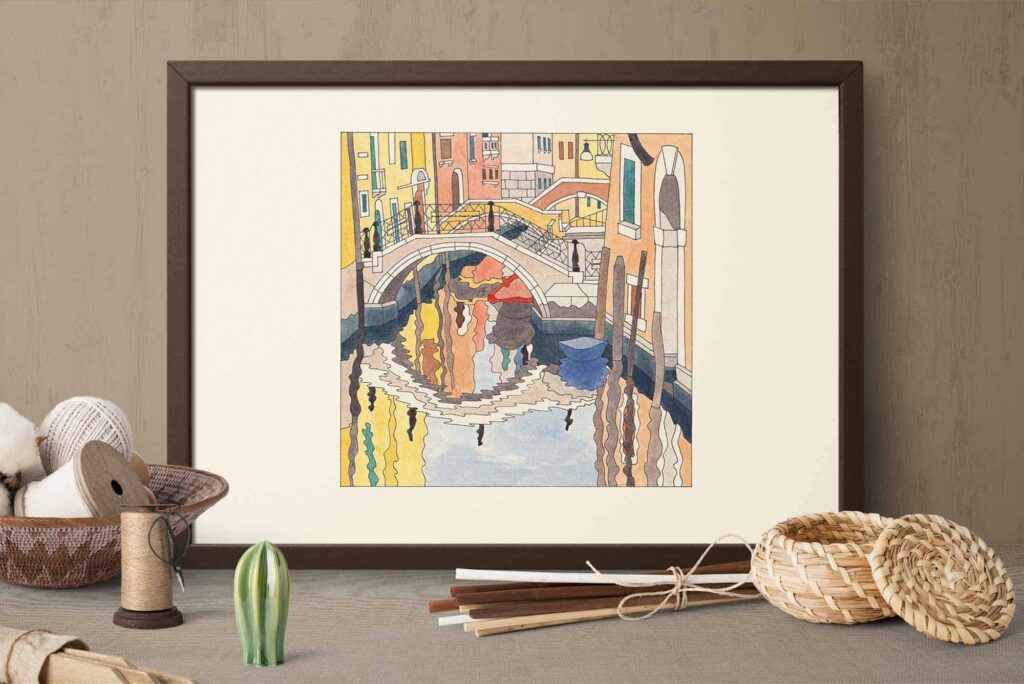
A typical Venetian landscape: a canal crossed by three bridges.
Reproduction printed on 260 gsm Modigliani ivory hammered paper.
Paper size: 13.50 × 9.69 inches
Image size: 7.60 × 7.64 inches